This site contains product affiliate links. We may receive a commission if you make a purchase after clicking on one of these links.
Picture a Saturday at a campsite with no hookups, the kind of site you picked precisely because nobody else did. The cooler needs power, the phones are dropping, and the nearest outlet is a bathhouse half a field away. This is the exact morning Vevor’s 1200W solar generator with its 200W panel was built for: you unfold the panel into the sun, plug in the battery, and by the time breakfast is cleaned up the station is quietly refilling itself for $645.90, panel included in the box.
Nineteen owners rate this kit 4.42 out of 5, which is a thin record, and this review treats it that way — the recommendation rests on the design and the arithmetic, not on a crowd of witnesses. The verdict up front: the panel changes what this station is. The same 806 watt-hour battery without a panel is a smaller purchase that waits on a wall outlet, while this kit makes its own power wherever the sun reaches, and that difference is worth the premium if your power problems happen away from home.
The panel is the whole point
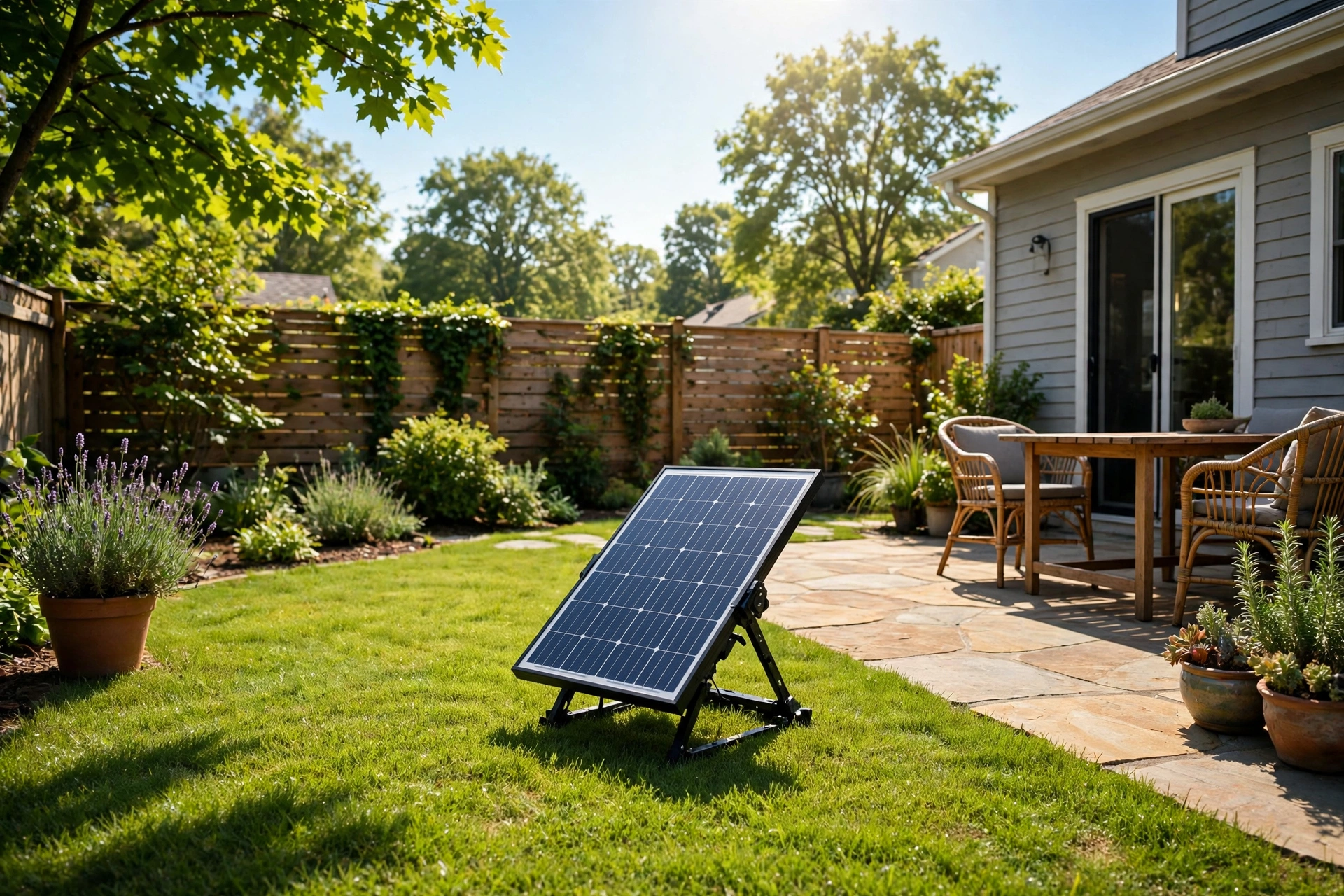
Most stations in this class treat solar as an accessory you buy later, which in practice means a second order, a second delivery, and a panel that arrives after the trip it was meant for. Here the 200W panel ships in the same box and folds down for travel, so the kit is complete the day it lands on your porch. Set in a sunny spot, the panel refills the 806 watt-hour battery in about five hours, which lines up beautifully with how a camp day actually runs: set it out in the morning, spend the day doing anything else, and come back to a full battery for the evening’s lights, cooler, and chargers.
The premium deserves a plain number. The panel-less version of this same 806 watt-hour, 1,200-watt station costs $481.90, so the kit’s extra $164.00 buys the folding 200W panel and the freedom that comes with it, at the cost of one output port — nine here against ten on the panel-less box. Whether that trade pays depends entirely on where you use the thing, and the rest of this review keeps coming back to that one question, because it is the only question this purchase really asks.
Nine ports, four of them real outlets
Four AC outlets at 120 volts and 16 amps anchor the layout, and that count matters more than the total, because household gear plugs straight in — the car fridge, the lights, the small appliances that make a campsite feel civilized and an outage feel manageable. Around them sit a 65-watt Type-C Power Delivery port that charges a laptop at working speed, a standard Type-C port, an 18-watt Quick Charge USB port for phones, a standard USB port for the small things, and a 12-volt car socket for vehicle gear. Phones, car fridges, speakers, cameras, and small appliances can all draw at once under the 1,200-watt ceiling, which is generous headroom for loads this size.
The battery underneath is lithium iron phosphate, the chemistry chosen for patience: up to 3,500 charge cycles and a service life of 10 to 15 years, watched over by a management system that guards against overheating, overcharging, and short circuits on every cycle. A station you charge at camp every weekend and lean on at home every storm needs exactly that temperament, because a battery that fades in three seasons is a rental, not a purchase.
Small enough to actually take along
The station weighs 25.79 pounds and measures 11.42 by 8.66 by 9.06 inches, in a tough ABS and polycarbonate case, which puts it in the honest carry-it-yourself class: trunk, closet shelf, RV cabinet, the corner by the back door. The folding panel travels with it, so the whole kit is a two-hand load from the car to the picnic table, and that portability is doing quiet work in this review — a power source only helps on the days it comes along, and this one is light enough that leaving it behind never wins the argument.
Refilling away from the panel is unhurried and predictable. A wall outlet does the job in about seven and a half hours, an overnight charge before any trip, and a car charger takes about nine hours while you drive, topping the battery off across a long haul. Between the sun at five hours, the wall overnight, and the car on the road, the kit almost never sits empty unless you work at keeping it that way.
At home, it moonlights as the outage kit
Travel may be the headline, but the kit pulls a second shift at home, and it is worth picturing that shift before you decide the panel would sit unused. When the power drops on a weekday evening, the station comes out of the closet and does the quiet work: phones charging on the counter, lights on in the room where everybody gathers, the small appliances that turn a blackout from an event into an inconvenience. Because it is a battery, it does all of that indoors, in silence, with nothing running outside in the rain and no fuel can to fetch from the garage at midnight.
The panel earns a little of its keep at home, too. After a long outage, a sunny morning puts charge back into the battery without waiting on the grid, and across a multi-day disruption that slow, free refill is the difference between rationing the lights and simply living around the problem. It will never outrun a fuel generator for raw endurance, and this review will not pretend otherwise, but for the far more common outage — hours, not days — a kit that refills itself from the yard is a genuinely comfortable thing to own. Readers building a home setup around it will find it pairs well with the rest of a prepared house, and its travel life stops feeling like a separate hobby and starts feeling like the same purchase, used twice.
The kit against its panel-less sibling and the bigger station
Three ways to buy into this battery family now sit in this site’s reviews, and the differences are simpler than the catalog makes them look. The table lines them up.
| Solar generator kit | 1200W station | 1800W station | |
|---|---|---|---|
| Price | $645.90 | $481.90 | $545.90 |
| Capacity | 806Wh | 806Wh | 1,008Wh |
| Continuous output | 1,200W | 1,200W | 1,800W |
| Output ports | 9 | 10 | 9 |
| Solar panel | 200W included | Sold separately | Sold separately |
| Best for | Camp, RV, off-grid days | Lowest-price first station | Essentials on an outage night |
Read the first two columns together and the decision makes itself. The panel-less 1200W station is the same battery for $164.00 less, and for a reader whose outages happen at home, within reach of a wall outlet, that cheaper box is the correct buy and this kit is money spent on a panel that will lean in the garage. The 1800W station splits the difference on price while skipping the panel entirely, trading sunshine for a bigger tank. The kit wins only where the sun is the plan — and where the sun is the plan, it wins outright, because this solar generator arrives ready to work while the others are still waiting on a second purchase.
The safety rule, stated plainly
Like every battery station, this kit is the indoor-safe half of backup power: silent and fume-free, welcome in the room where you sleep, where a fuel generator can never go. It remains a lithium battery under that friendly surface, so keep it dry, never charge a damaged unit, and let the management system hold its limits. And hold the size honestly in mind — 806 watt-hours runs essentials and small appliances with grace, while whole-house duty across a long outage still belongs to fuel, the job the dual-fuel inverter generator in this site’s reviews was built to do.
Who should buy it
Buy the kit if your power needs travel: campsites without hookups, RV weekends, tailgates, remote work days, and the kind of property work that happens a long extension cord away from the house. Buy it if you want one box and one panel, complete on arrival, with no accessory hunt standing between you and a working system. The reader who fits that description gets a genuinely satisfying machine — quiet and self-sufficient in a way a wall-charged battery never quite manages.
Skip it if your backup plan lives at home, because the panel-less station gives you the identical battery for $164.00 less, and skip it if you need a long owner record before spending, since nineteen reviews is a promising start rather than a settled verdict. For the camper and the road-tripper, though, this is the pick: buy the kit, keep the panel where the sun can find it, and enjoy the small daily pleasure of a battery that refills itself while you are busy doing anything else.
VEVOR 1200W Solar Generator with 200W Panel, 806Wh LiFePO4, 9 Ports
806 watt-hours, 1,200 watts and a folding 200W panel in the box — the complete solar kit at $645.90.