A tow-behind aerator with too little weight on it is an expensive way to scratch your lawn. The tines skip across hard ground, the plugs come out shallow or not at all, and you burn a Saturday for holes that close up in a week. Get the hitch, the weight, and the soil moisture right first, and the same machine pulls clean plugs across the whole yard.
The setup mistakes that cost you
Aerating dry soil. Hollow tines cannot bite into dry, hard ground, so they skate across the surface and leave short, broken plugs. Water a day or two before you aerate so the soil is moist but not muddy. If the ground is soggy, wait, because the machine will smear the holes and clog the tines instead of cutting clean plugs.
Running with no ballast. A tow-behind aerator without weight is the most common reason for shallow plugs. The drum or tray is there to be loaded, and an unloaded unit will ride over compacted soil rather than punching through it. If your plugs are coming out an inch deep or less, the machine needs more weight, not a second afternoon of the same passes.
Turning with the tines down. A drum full of coring tines does not pivot. Swinging it around at the end of a row with the tines engaged tears long arcs of turf and leaves bare crescents that take weeks to fill back in. Lift the tines before every turn, make a wide loop, and line up the next row before dropping them again.
Bringing the wrong tool to the job. A spike aerator and a plug aerator look similar from the driveway, but they do different work. Spikes punch holes without removing soil, which can press dense soil tighter around each hole. For compaction relief, confirm your unit has hollow coring tines that pull plugs out of the ground.
Hitch and weight setup for a tow-behind aerator
Most tow-behind aerators connect with a simple pin-style hitch: slide the tow bar onto the tractor’s hitch point, drop the pin through, and secure it with the clip. Check that the tow bar sits level and the pin is fully seated before you roll anywhere near the lawn. Check your tractor’s manual for its towing limits, and never tow an aerator with a machine the manufacturer does not rate for the job.
Before the first pass, walk the lawn and flag every shallow obstacle: sprinkler heads, valve boxes, shallow lateral lines, invisible pet fence wire, and landscape lighting cable. A coring tine will chew through any of them. Mow at your normal height a day or two before aerating so the machine rides evenly and you can see the flags.
For weight, use whatever your unit is built for: a water-fillable drum filled to the level your soil needs, or a tray loaded with concrete blocks or sandbags. Start with a moderate load and run a short test strip, then pull a few plugs and measure them. University of Illinois Extension turf notes put good plugs at about 2 to 3 inches deep, and Kansas State University turf guidance describes them as roughly 3/4 inch across and spaced about 3 inches apart. Add weight until your test strip hits that depth, and never exceed the maximum load in your operator’s manual. Strap blocks down so they cannot shift or bounce out mid-row.
The pass pattern
Run straight rows across the lawn with a slight overlap between passes, so no strip goes untouched between tine rows. Work across slopes rather than up and down them, and keep the tractor slow and steady so the tines have time to cut and release each plug. If the coverage looks thin after one pass, a second pass at a slight angle fills the gaps; good plug spacing often takes more than one pass.
At the end of each row, lift the tines, make your wide turn in the turning area, and set the next row before lowering them again. If your unit has a transport lock or a wheel-lift lever, use it for every turn and for crossing the driveway. The few seconds it takes beat repairing torn turf.
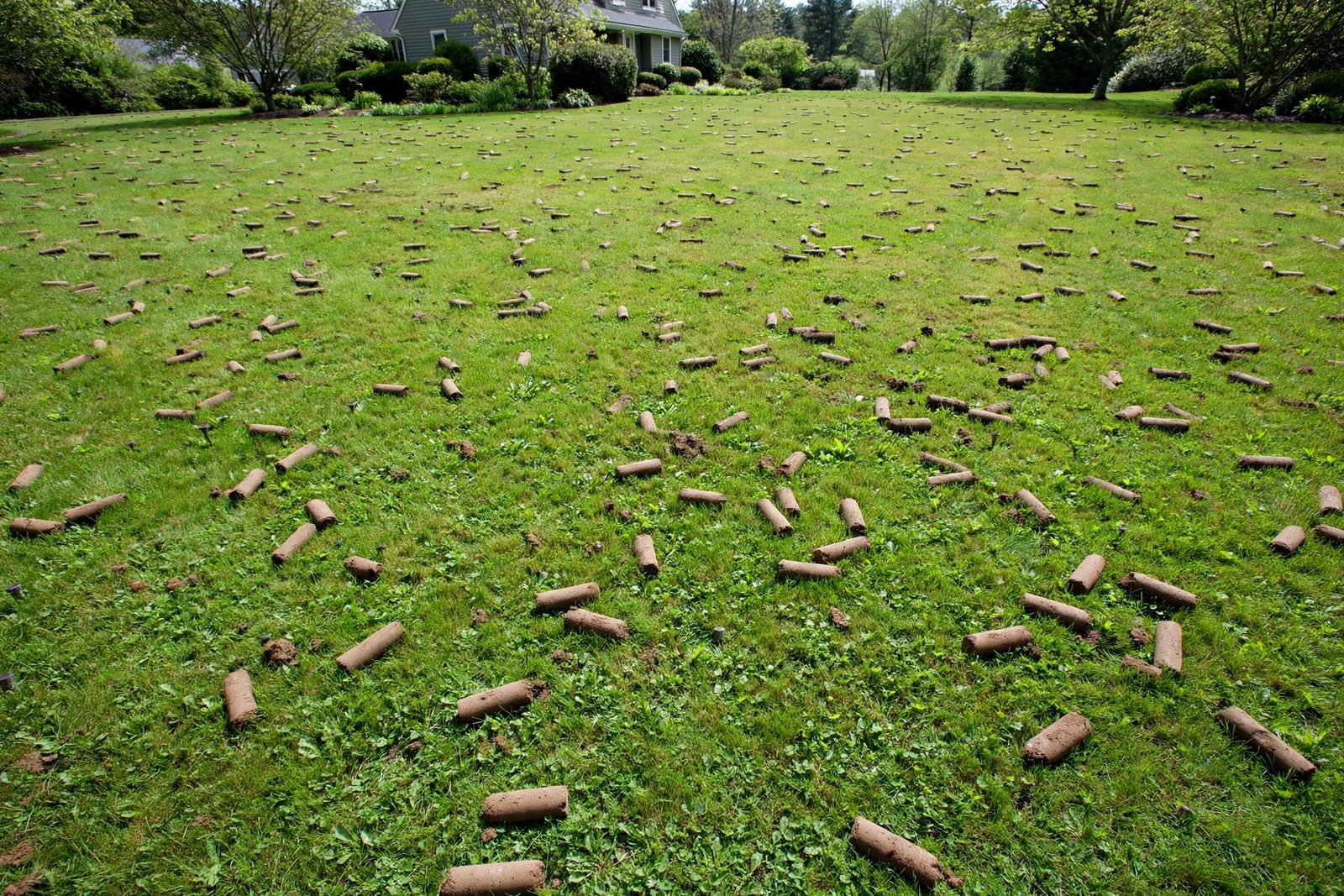
Watch the plugs as you go, not just the machine. Full, soil-colored cores lying on the surface mean the setup is right. Dust, crumbs, or tine marks with no plugs mean the soil is too dry or the unit still needs weight, and it is cheaper to stop and fix that now than to finish the lawn and find out later.
After the pass: plugs, water, and what comes next
Leave the plugs where they fall. Once they dry, run the mower over them to break them up, and the crumbled soil filters back into the holes and across the lawn. Water lightly after aerating to settle the soil, and keep heavy traffic off the lawn while it recovers.
What you do next depends on whether you seeded. If you overseeded into the fresh holes, the seed needs steady moisture and a careful mowing schedule, covered in should you aerate before or after overseeding and how soon you can mow after aerating. If the lawn still feels spongy underfoot after aerating, thatch may be the bigger problem; see dethatch or aerate first for how to check.
If you are still choosing a unit, the best tow-behind lawn aerators for larger yards roundup compares the main options by width and weight capacity. Run a test strip, dial in the weight that pulls full 2 to 3 inch plugs, and keep that setup for the whole lawn.