Late winter is when marigold timing gets decided, even though nothing goes in the ground for months. Seed packets come out, last frost dates get circled, and the gap between those two dates is the whole question.
Plant marigolds too early and a single cold night ends them. Plant too late and the plants spend June catching up instead of blooming.
The answer splits three ways: start seed indoors, transplant seedlings, or sow directly outside. Each has its own window, and French and African types do not share one.
When to Plant Marigolds Outdoors
Marigolds go outside after your last frost date, when nights stay reliably above 50°F. They are tender annuals, and frost does not just damage them — it kills them.
Soil temperature matters as much as air temperature. Seed germinates best when soil sits near 70°F, within a range of about 70 to 75°F.
Sow into cold, wet soil in April and germination drags or fails outright. Wait for warmth and seedlings typically emerge in 5 to 14 days.
Starting Marigolds Indoors
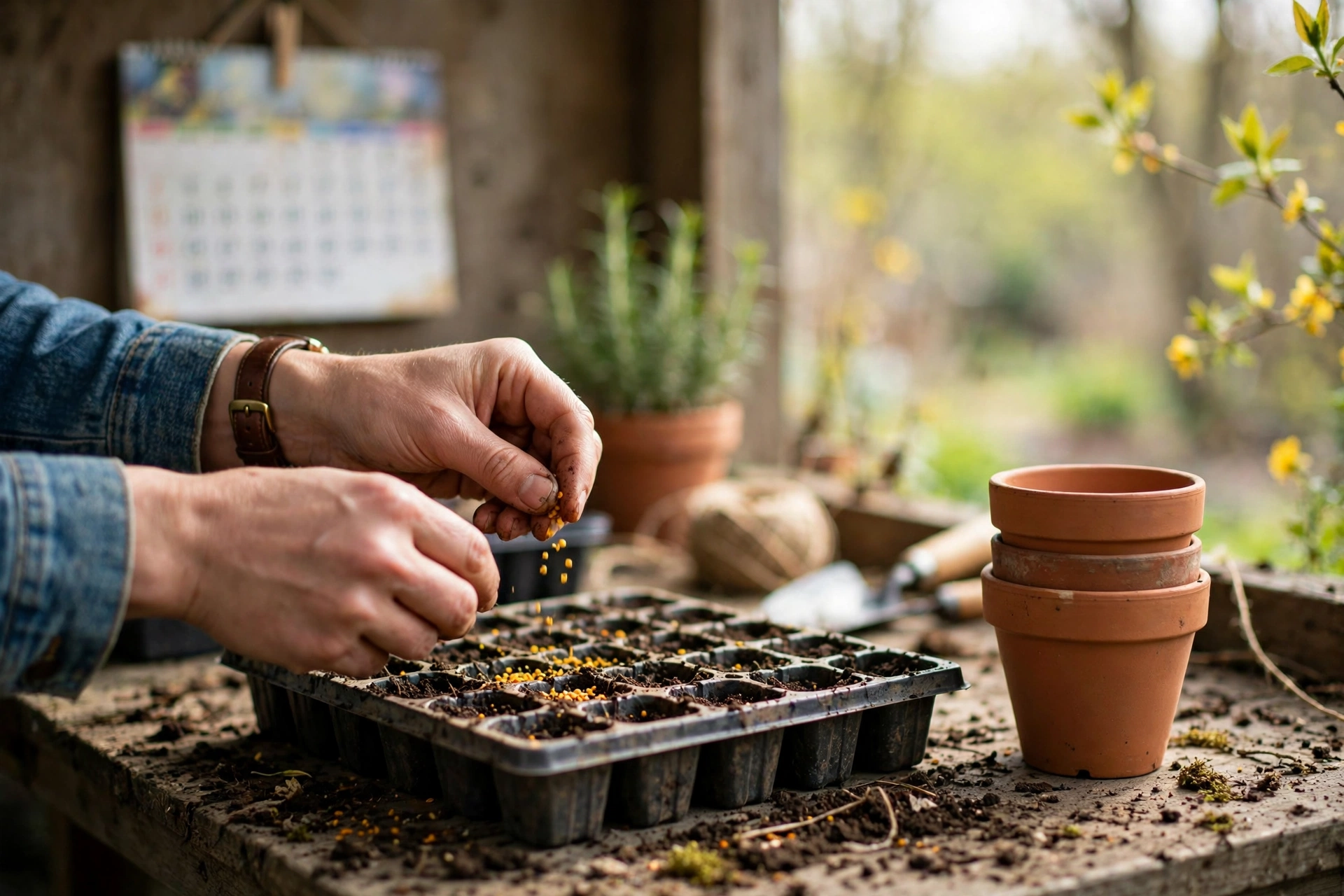
Start seed indoors 6 to 8 weeks before your last frost date. That timing produces sturdy transplants ready to harden off once nights warm.
Sow a quarter inch deep in trays or small pots, and keep the mix evenly moist. A warm spot speeds germination considerably.
Harden seedlings off over a week before transplanting. Move them outside for longer stretches each day, then plant them at the same depth they grew in the pot.
For step-by-step sowing depth and spacing, see growing marigolds from seed.
Direct Sowing After Frost
Direct sowing is the simplest route where the season is long enough. Scatter or row-sow after frost danger passes, cover with a quarter inch of soil, and water gently.
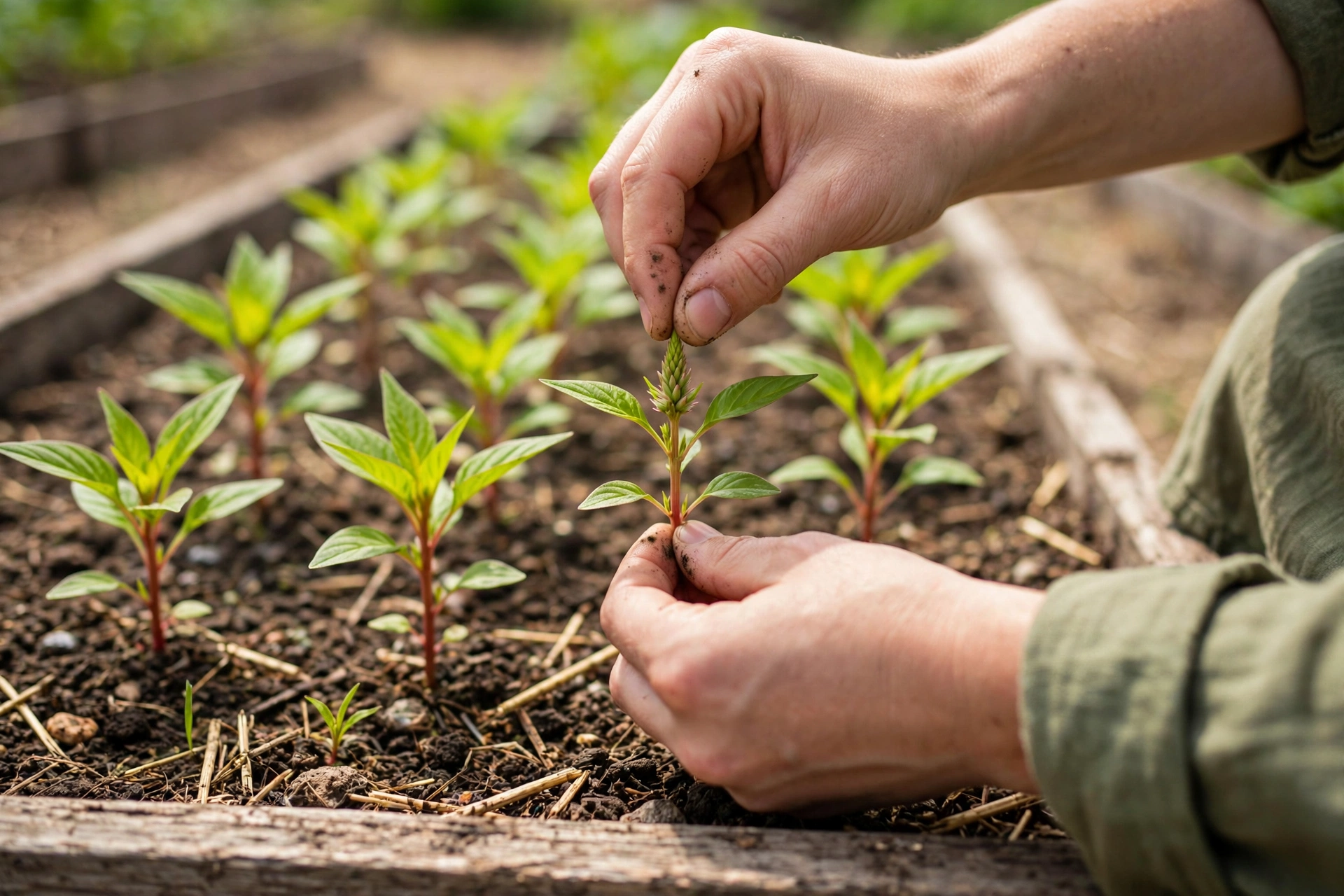
Thin seedlings once they have true leaves, spacing French types about 8 to 10 inches apart and taller African types 12 to 18 inches apart.
The soil at sowing time tells the story here. Press a palm flat on the bed at midday: if it feels genuinely warm rather than cool and damp, seed will move.
French vs. African Marigolds: Timing Differs
French marigolds (Tagetes patula) are the faster crop. They bloom sooner from seed, so a direct sowing after frost still gives a long display.
African marigolds (Tagetes erecta) need a head start. They take longer to reach flowering size, so starting them indoors at the early end of the 6-to-8-week window pays off.
African types also resent cold transplant shock more visibly, sulking for a week or more if set out into chilly soil. The full comparison is in French vs. African marigolds.
Timing by Zone, in Plain Terms
In Zones 3 to 5, indoor starting is close to mandatory for African types, and transplants usually go out in late May or early June.
In Zones 6 to 7, transplants and direct sowing both work from mid to late spring, once the frost date has passed.
In Zones 8 to 10, direct sowing from early spring onward is straightforward, and a second sowing in midsummer can carry color into fall. For variety choices worth that second sowing, see the best marigold varieties to grow from seed.
Common Timing Mistakes
Transplanting on the calendar instead of the forecast is the classic error. One 38°F night after a warm week can blacken a whole flat of seedlings.
Starting indoors too early is the quieter mistake. Leggy, root-bound plants transplant poorly and bloom later than a fresh, compact seedling set out a week later.
Sowing into soil below about 60°F wastes seed. The packet is not the problem in that case; the temperature is.
The Short Answer
Start marigolds indoors 6 to 8 weeks before your last frost, or sow them directly outside after frost when the soil nears 70°F.
Give African types the indoor start and French types the choice. That split, matched to your frost date, is the timing that produces blooms instead of replacements.