Your lawn feels spongy underfoot, like walking on a thick mat, and water sits on the surface after rain instead of soaking in. That spongy feel points at thatch, but compaction feels similar from above, and the two problems often show up together. The fix depends on which one you actually have, so check before you rent a machine.
What you are looking at: thatch or compaction
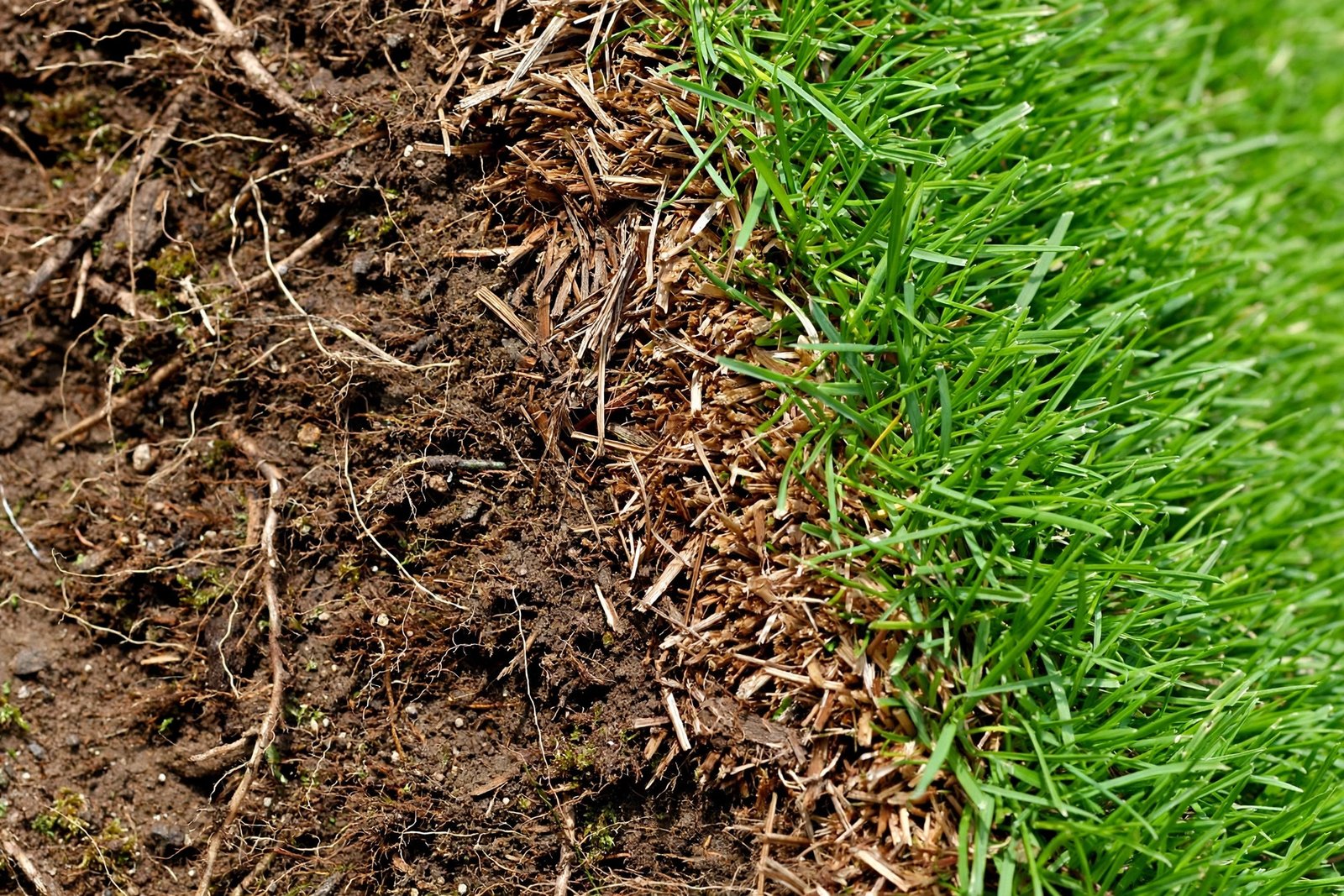
Thatch is the brown, fibrous layer of stems and roots sitting between the green blades and the soil. A thin layer is normal and even useful. University of Minnesota Extension guidance puts the line at about half an inch: below that, thatch is fine, and above it, it starts blocking water, air, and nutrients from reaching the soil.
Check the thatch first. Cut a small wedge of turf a couple of inches deep and measure the brown layer between the green growth and the soil. If it is thicker than half an inch, dethatching belongs on the list. If it is thin, thatch is probably not your problem, no matter how the lawn feels underfoot.
Check compaction second. Push a screwdriver into moist soil. If it slides in easily, the soil is reasonably open. If it stops short or takes real force in soil that is already damp, compaction is likely part of the picture. Lawns with heavy foot traffic, clay soil, or years without aeration tend to fail this check even when their thatch measures fine.
Rank the two checks before choosing a treatment. A spongy surface with a thick wedge layer points to thatch first. A hard surface that sheds water, with thin thatch and worn paths, points to compaction first. When both checks fail, you need both treatments, and the order matters.
Dethatch or aerate first: the order that works
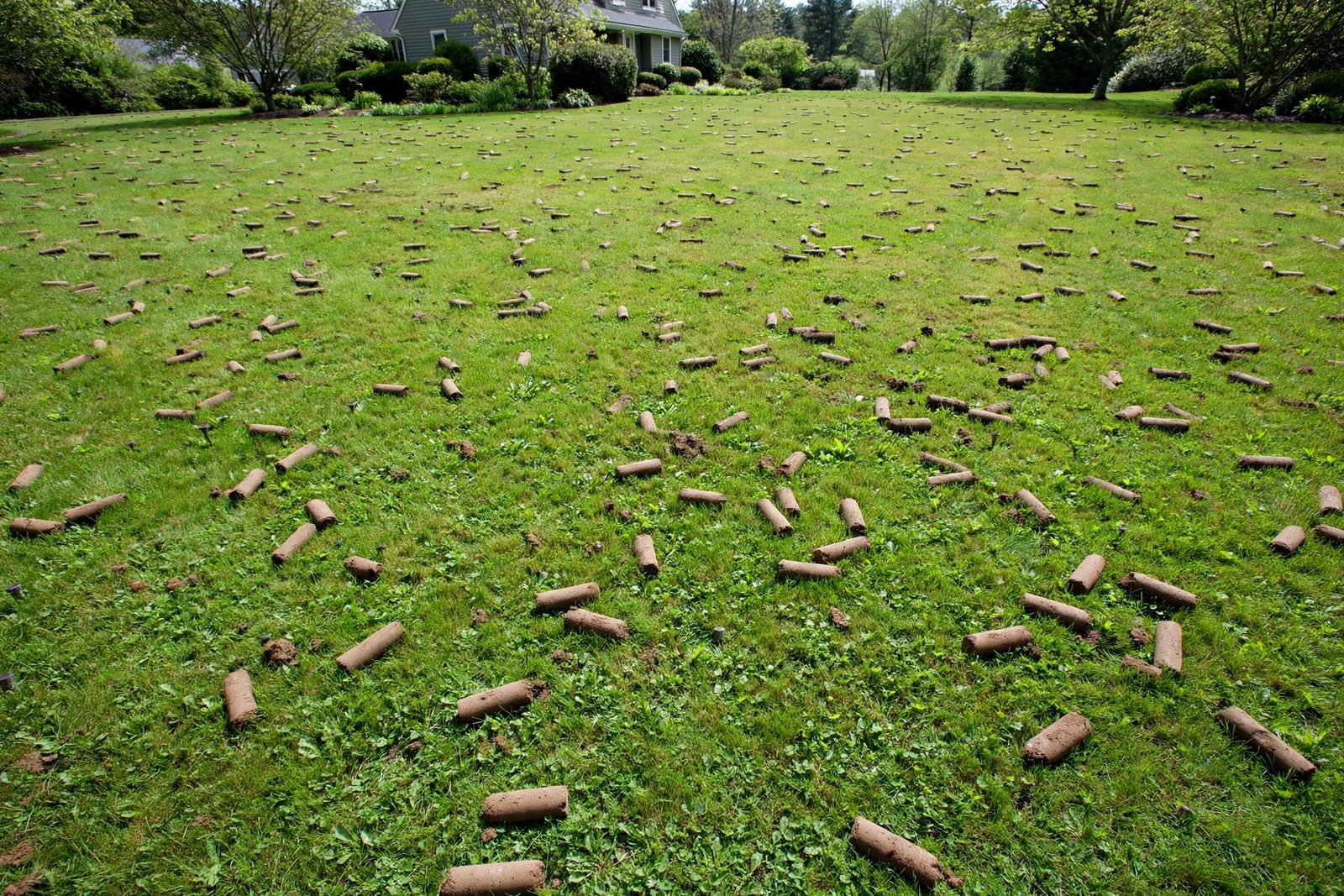
Dethatch first, then aerate. A thick thatch mat sits on top of the soil like a blanket, and an aerator run over it spends its energy tearing through organic material instead of pulling clean soil plugs. Clearing the mat first lets the tines reach actual soil, so each pass pulls full plugs instead of tangled, shallow ones.
Rake up all the dethatching debris before you start aerating. Leaving the loose thatch on the surface just feeds it back under the aerator drum, which defeats the point of clearing it. A clean surface is what makes the aeration pass count.
Both jobs can be done the same day when the grass is actively growing and the lawn is otherwise healthy. That is the efficient option in the fall window, when cool-season lawns recover fastest. If the lawn is already stressed by drought or heat, split the work instead: dethatch, let it recover, and aerate later in the same growing window rather than stacking two rough treatments on a struggling lawn.
When to do only one
Thatch over half an inch, soil feels normal. Dethatch only. Aerating a lawn whose real problem is a surface mat adds holes without removing the layer that blocks water in the first place. Clear the thatch, water, and let the lawn fill back in.
Compacted soil, thatch under control. Aerate only. Core aeration relieves compaction directly, and over time it helps slow thatch buildup by improving soil conditions and bringing soil microbes into contact with surface organic matter. It will not remove a thick mat on its own, but with thin thatch there is no mat to remove.
Neither check fails. Do neither yet. A lawn that is thin for another reason, such as shade, drought, or a fertilizer gap, will not improve from dethatching or aerating, and both treatments stress the grass. Diagnose the actual cause first.
Timing and recovery
For cool-season lawns, late summer into early fall is the best window for both jobs, because the grass is growing strongly and has weeks of good weather to recover. Early spring is a second choice, with shorter recovery time and more weed pressure in the opened turf. For warm-season lawns, wait until late spring or early summer, after the lawn has fully greened up. Never dethatch or aerate during drought, heat stress, or dormancy.
Expect a few weeks of active growth before the lawn looks like itself again, and longer if you overseeded into the opened turf. Keep the soil moist, hold off on pre-emergent herbicides that would stop seed from germinating, and follow the mowing guidance in how soon you can mow after aerating. If you are seeding, aerate before or after overseeding covers the sequence, and topdressing after aerating is worth considering for thin spots.
If your lawn needs a tow-behind unit for the aeration pass, how to set up and use a tow-behind aerator covers the hitch, weight, and pass pattern. Measure the thatch first. If it is over half an inch, dethatch, rake it clean, and aerate, in that order, inside the same active-growth window.