This post contains affiliate links. We may receive a commission if you make a purchase after clicking on one of these links.
A second rake for one tree feels like a waste of money. Then you watch the rake you already own skate over a mat of needles, dropping most of them back onto the grass, and the math changes. The problem is not effort. It is the tool.
Needles do not behave like leaves, so a rake built for leaves handles them badly. Here is why, what actually works, and when to put the rake down entirely.
Why a Regular Leaf Rake Fails on Needles
A standard leaf rake has wide, flexible tines spaced to catch broad leaves. A pine needle is thin enough to slip straight through those gaps.
What stays behind is worse than what you picked up. Needles interlock into a woven mat that the tines glide over instead of lifting, so each pass moves the top layer and leaves the bottom layer exactly where it was.
Pressing harder does not fix it. Flexible plastic tines bend and spring back without biting into the mat, and on a lawn they can skim grass crowns without ever getting under the needles.
What Actually Works on Needles
Three things matter, in this order: tine spacing, tine stiffness, and head width. Close tines catch needles instead of letting them through. Stiff tines bite into the mat instead of bending over it.
Width is a trade-off, not a virtue on its own. A wide head covers open lawn faster, but a narrower head works better under low branches, between shrubs, and along fence lines where needles pile deepest.
That is also why one rake rarely covers a pine-shaded yard. Open lawn wants width, tight spots want a narrow head, and matted needles want spring steel rather than plastic.
Best Overall: The Groundskeeper II Rake
The Groundskeeper II is the rake most often recommended for pine straw, and the design explains why. Its 21-inch head carries 28 angled, spring-loaded tines on a 55-inch fiberglass handle, so the tines dig into the needle mat and spring back instead of snagging.
Those round, springy tines are the key difference. They lift needles off grass and gravel without gouging the surface underneath, which is exactly where flat, stiff tines go wrong.
The trade-off is honest: at 21 inches wide, it takes more passes across open lawn than a big leaf rake, and if you lean into it on a soft mulch bed, the tines will dig in. Use a light touch on beds and save the pressure for the lawn.
The Groundskeeper II Rake
28 spring-loaded tines that bite into needle mats without tearing up the lawn underneath.
Runner-Up: Amazon Basics Adjustable Garden Rake
If the yard is small or the needles mostly collect in tight spots, the Amazon Basics adjustable rake is the sensible second choice. Its steel handle adjusts from 38.5 to 80.5 inches, and the narrow head reaches under shrubs and along edges where a wide rake cannot go.
It will not out-rake the Groundskeeper II on a deep mat of needles. Its tines are not as stiff or as closely sprung, so on thick, matted pine straw it takes more passes to get a clean result.
Buy it for tight spaces and light needle duty, not as the main tool for a pine-shaded acre. For that job, the Groundskeeper II earns its place first.
Amazon Basics Adjustable Garden Rake
An adjustable, narrow head that reaches the tight spots where needles pile deepest.
Not Recommended: The Standard Wide Plastic Leaf Rake
The rake most people already own is the one to skip for needles. Its wide, flexible plastic tines are built for broad leaves, and needles slip through the gaps or slide off the tine tips.
It is not a bad rake. It is the wrong rake for this job, and using it means raking the same patch twice and still leaving a thin layer behind. Keep it for leaves and buy the right tool for needles.
When a Sweeper or Blower Beats Any Rake
A rake is the right tool for beds, gravel, and tight corners. It is the slow tool for a big open lawn under several pines.
On open grass, a tow-behind or push lawn sweeper collects needles faster than any hand rake, and a leaf blower moves loose, dry needles off driveways and patios in minutes. Our guide to the best leaf blower for pine needles covers the blower side of that choice.
The practical split is simple: blow or sweep the open areas, rake the edges and beds. Doing the whole yard with one tool is how a Saturday disappears.
How to Rake Needles Without Tearing Up the Lawn
Rake when the needles are dry. Wet needles clump, weigh more, and mat harder into the grass, so a dry afternoon beats a damp morning every time.
Work in short strokes with a light grip, pulling toward you rather than pushing. Short strokes keep the mat lifting instead of rolling ahead of the rake head.
On beds, let the tines skim the surface. Digging into mulch pulls mulch out with the needles, and you will spend the next hour putting it back.
What to Do With the Pile
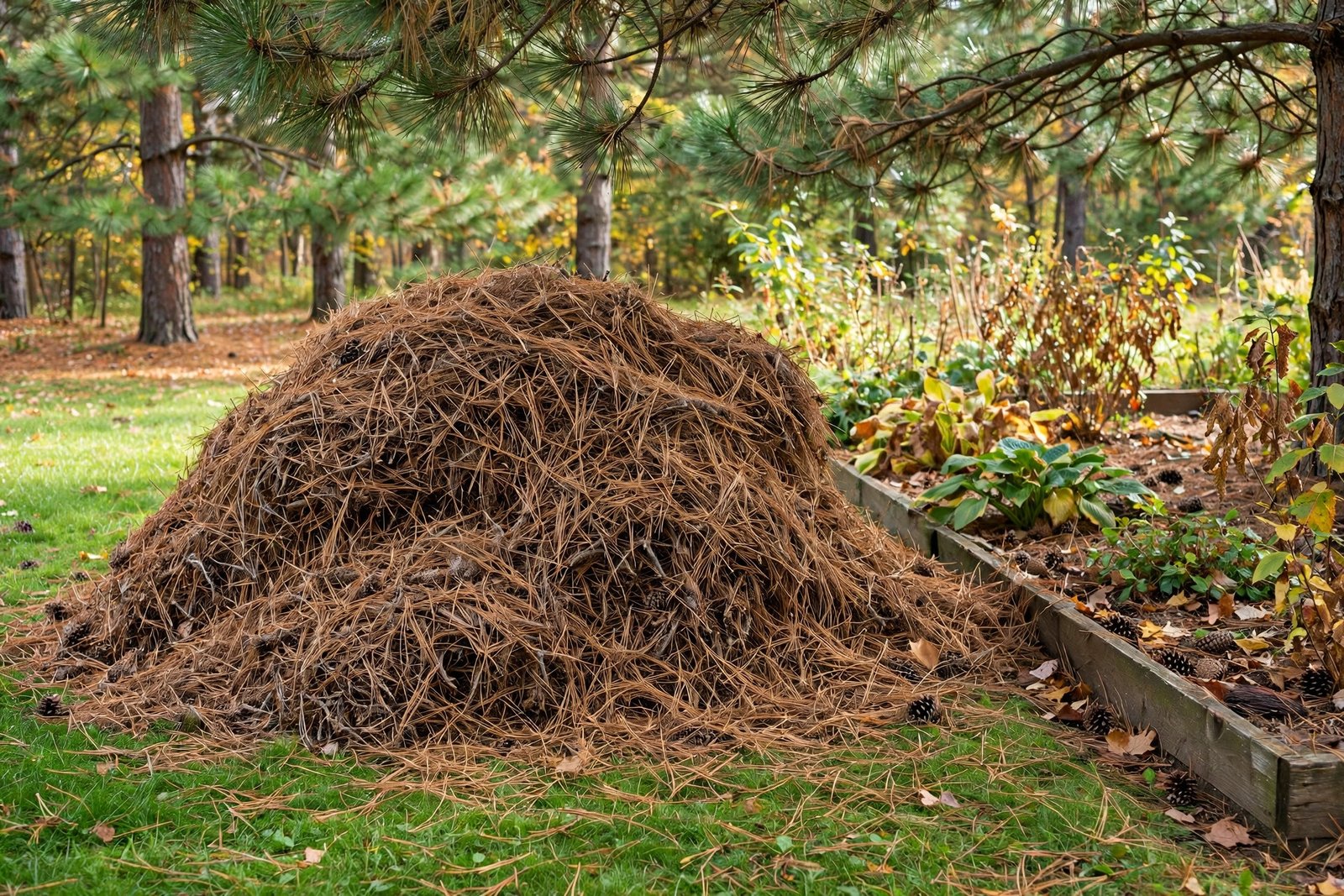
Needles you rake up are not waste. They make a useful mulch for acid-loving plants, as our comparison of pine needle mulch vs bark mulch explains, and they compost well if you handle them right — see how to compost pine needles faster.
One thing not to do with the pile: burn it casually. Needles burn fast and throw sparks, which is why burning pine needles in a fire pit needs more care than most people expect.
Bottom Line
Buy the Groundskeeper II if pine needles are a regular job in your yard. It is the one rake whose tines are actually designed for the mat needles form, and it earns its price the first fall you use it.
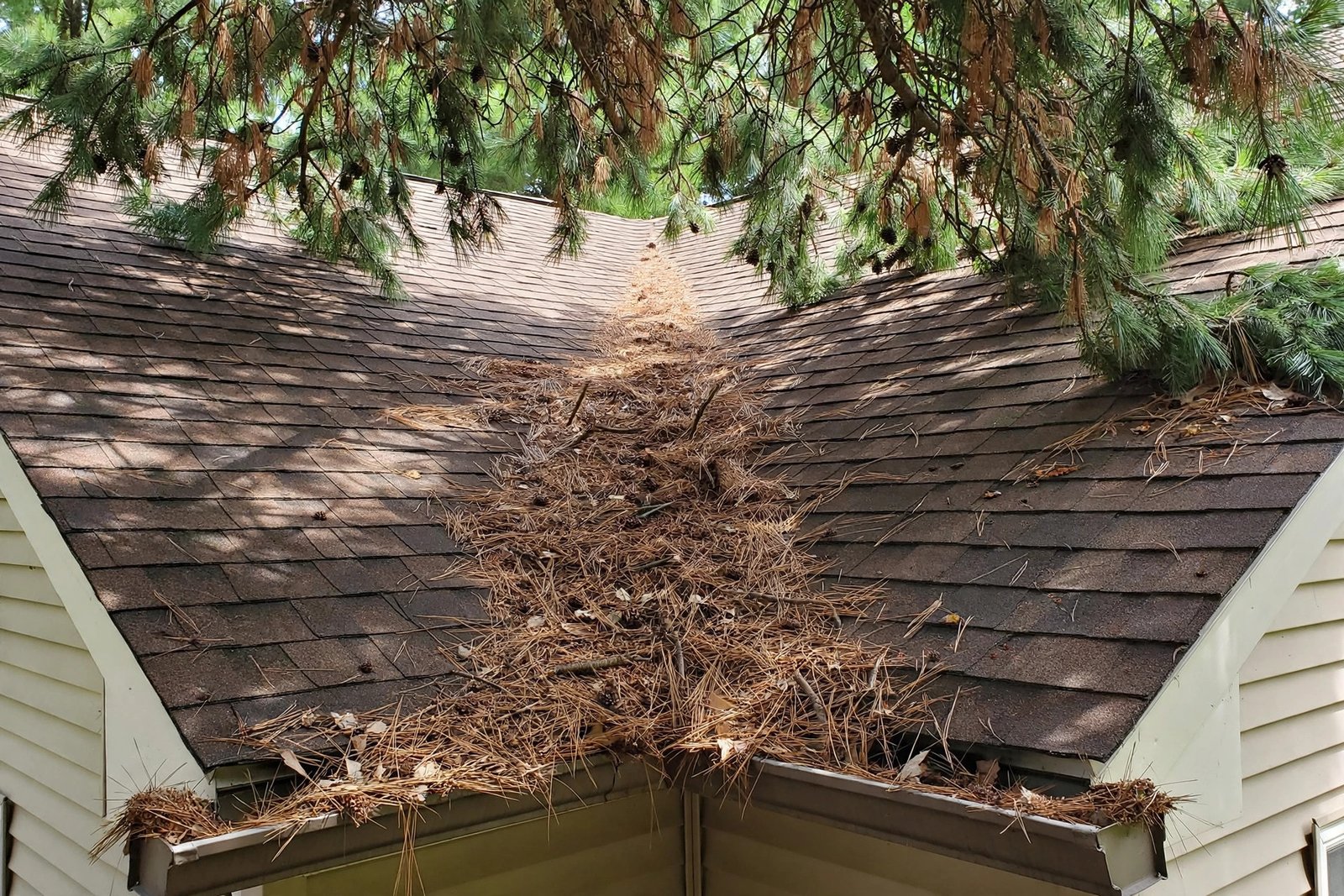
Add the adjustable rake for tight spots, keep the leaf rake for leaves, and let a blower or sweeper handle the open lawn. And when the needles end up somewhere a rake cannot reach, like the roof, that is a different job — see how to get pine needles off your roof without damaging shingles.