Landscape & Leisure is reader-supported. When you buy through links on our site, including Botanical Interests seed links, we may earn a commission at no extra cost to you. Prices change, so click through to confirm current pricing.
A sunflower is a simple decision until you stand in front of the seed rack. One packet grows a single 12-foot stalk with a dinner-plate bloom. The next grows a bushy plant covered in dozens of small flowers. The packet you grab decides whether August means one giant bloom or a vase that never empties.
The seven varieties below cover the whole range: giants for seed and spectacle, branching types for cutting, a dwarf for pots, and a blend for gardeners who want a little of everything. For how to grow whichever you pick, see our guide to spacing, staking, and harvest. For which type fits your goal — cutting, oil, or snacking — see our cutting vs. oil vs. snacking comparison. If you are building a cutting garden more broadly, our best cut flowers roundup and pollinator flowers roundup put sunflowers in good company.
Two Kinds of Sunflower, Two Kinds of Summer
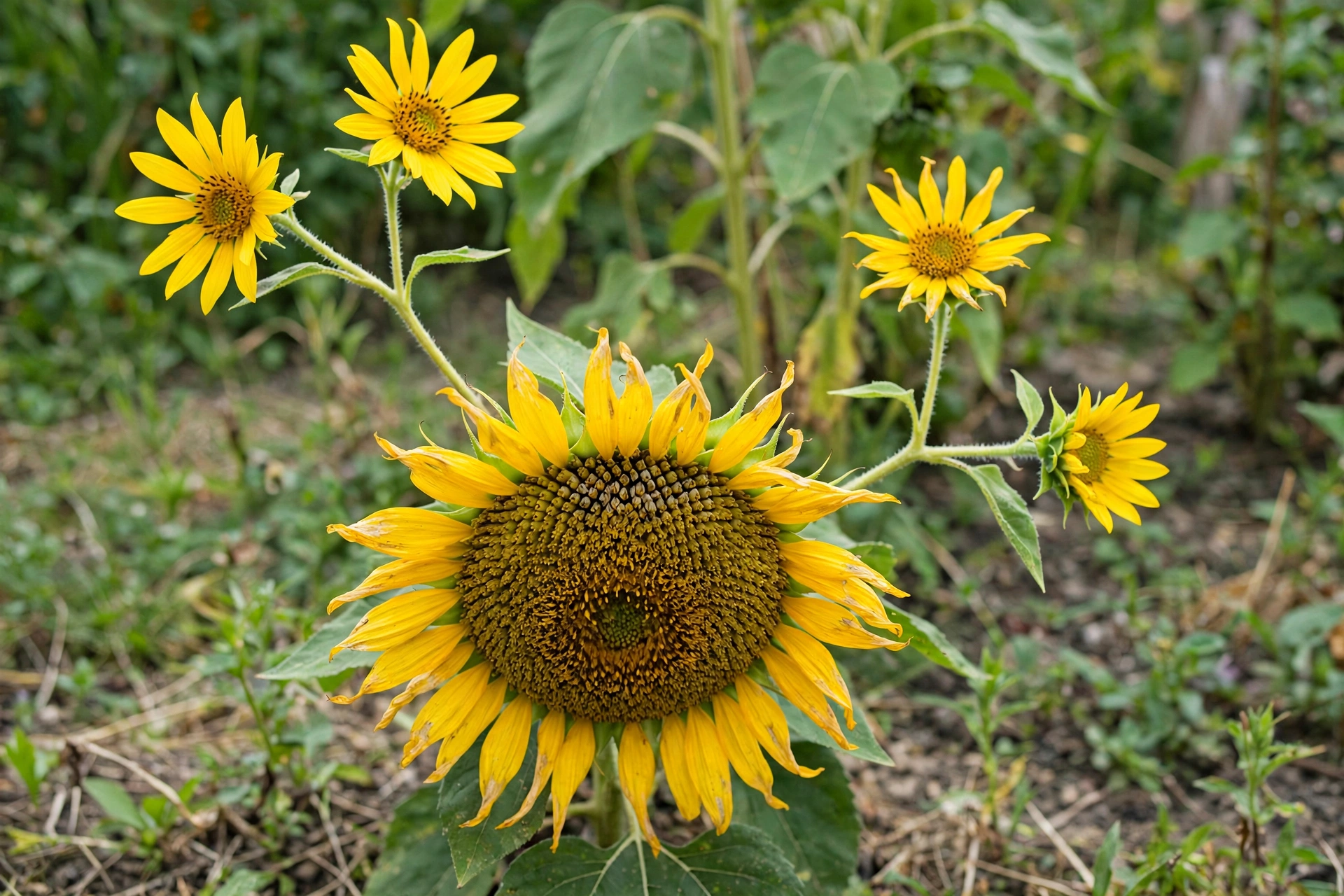
Before the varieties, one split decides almost everything. Single-stem types grow one stalk and one flower, and that flower is the whole show. Branching types grow a bushier plant that keeps throwing smaller blooms all summer, which is what you want if you cut stems for the house. The photo below shows the difference better than any description: one tall stalk, one giant head — and beside it, a shorter plant loaded with blooms.

Best Overall: Mammoth
Mammoth is the sunflower most people picture when they hear the word, and it earns that place honestly. A single stalk can reach 12 feet tall and carry one flower 10 to 12 inches across. It is not fussy about soil, it handles dry spells, and gardeners rate it a perfect 5.0 from 23 reviews — the highest rating of any sunflower in the collection. Plant a tight row and you get a living screen; sow a new batch monthly and the blooms keep coming.
The trade-off is that one flower is all you get per plant. Mammoth gives you spectacle and seeds, not bouquets. If you want armfuls of cut stems, the branching types below are the better buy.
Pros: 12-foot stalks with 10- to 12-inch blooms; highest gardener rating in the collection; drought tolerant and unfussy about soil; sow monthly for continual bloom.
Cons: one flower per plant — no cutting garden here; needs real height clearance and a sheltered spot.
Mammoth Sunflower Seeds
The classic giant — a 12-foot stalk, a dinner-plate bloom, and the highest gardener rating in the collection.
Best for Cutting: Evening Sun
Evening Sun is the workhorse of the cutting garden. Its branching plants throw 4- to 6-inch blooms in sunset shades — deep red, burnt orange, gold — several tones on a single plant, blooming in abundance over a long period. Gardeners rate it 4.7 from 27 reviews, and it keeps a vase full for weeks.
Here is the honest catch. The color varies more than the packet photo suggests. A few gardeners report plants that came up classic yellow with no red at all. That is the nature of a mixed-color variety, not a defect, but if you want a guaranteed deep red, look for a single-color red variety rather than a mixed-color one.
Pros: branching plants with weeks of blooms; sunset colors in several tones on one plant; strong 4.7 gardener rating.
Cons: color varies — some plants bloom plain yellow; needs regular cutting to keep producing.
Evening Sun Sunflower Seeds
Branching plants loaded with sunset-colored blooms — the cutting garden’s reliable producer.
Biggest Blooms: Mongolian Giant
If Mammoth is the classic giant, Mongolian Giant is the one that makes drivers slow down. Each single-stem plant produces one yellow flower up to 18 inches across, packed with extra-large seeds. Oregon State Extension lists it among the varieties that make large seeds great for snacking, and it grows fast — Botanical Interests notes you can almost watch it gain an inch or more a day. Gardeners rate it 4.5, though from just 6 reviews, the thinnest track record in this roundup.
The trade-off is the same as Mammoth’s, turned up louder. One bloom per plant, one shot at the season, and a head that heavy needs staking in any wind. It is also the variety most likely to disappoint if you crowd it: give it room or grow something else.
Pros: flowers up to 18 inches across; extra-large seeds for snacking and birds; very fast growing; drought tolerant.
Cons: one bloom per plant; needs staking and full spacing; only 6 gardener reviews so far.
Mongolian Giant Sunflower Seeds
An 18-inch bloom and extra-large seeds — the giant to plant when you want the whole street to notice.
Best for Pollinators: Lemon Queen
Lemon Queen is the sunflower the bees pick first. Its multi-branched plants carry 5- to 7-inch lemon-yellow blooms all summer, and its pull on native bees is strong enough that it is the variety used in the Great Sunflower Project, a study tracking native bee populations. Gardeners rate it 4.7 from 25 reviews, and in hot, dry gardens it has a reputation for outgrowing taller varieties.
It is also the easiest variety here to keep blooming. Sow a new crop every 2 to 4 weeks, up until 3 months before your first fall frost, and the flowers keep coming instead of ending in one big show. That is the plant to sow along a fence if you want bees working the garden from June to frost.
Pros: the strongest bee magnet here, used in a native-bee study; multi-branched with months of bloom; easy succession sowing; drought tolerant.
Cons: tall plants need their space; lemon yellow only — no color range.
Lemon Queen Sunflower Seeds
Multi-branched lemon blooms all summer long — the variety the bees find first.
Best for Containers: Teddy Bear Dwarf
Teddy Bear is the sunflower for gardeners without a big garden. It grows 24 to 36 inches tall, branches freely, and covers itself in 3- to 5-inch double blooms that look like golden pom-poms — no visible center disc, just shaggy petals. It works as a short hedge, a border plant, or a pot on a sunny patio, and it still makes a good cut flower. Gardeners rate it 4.2 from 27 reviews.
The trade-off is scale. Nothing about Teddy Bear is big, including the seeds, so this is not the plant for snacking or for a screen. It is the plant for a small space that still wants sunflowers in it.
Pros: just 2 to 3 feet tall — fits pots and small beds; double pom-pom blooms; multi-branching with lots of flowers.
Cons: small flowers and small seeds; no use as a screen or a snacking variety.
Teddy Bear Dwarf Sunflower Seeds
A 2- to 3-foot plant covered in golden pom-pom blooms — sunflowers for a patio or a small bed.
Best Pale Bloom: Vanilla Ice
Vanilla Ice is the quiet one in the patch, and that is exactly its job. Creamy, light yellow 3- to 5-inch flowers bloom on multi-branched, 5-foot plants, and the pale color reads beautifully in an evening garden and in a vase next to deeper colors. It is drought and heat tolerant, pollinators love it, and it blooms from summer to frost. Gardeners rate it 4.2 from 19 reviews.
The trade-off is that pale flowers photograph and read as smaller than they are, and Vanilla Ice will never be the plant that stops traffic. Plant it where you sit in the evening, not where the street sees it, and it does its best work.
Pros: creamy pale blooms that glow at dusk; multi-branched 5-foot plants; drought and heat tolerant; blooms summer to frost.
Cons: the palest color here — easy to overlook in a mixed bed; a modest gardener rating.
Vanilla Ice Sunflower Seeds
Creamy, light yellow blooms on branching 5-foot plants — the sunflower for evening gardens and pale bouquets.
Best Blend: Heirloom Beauties
Heirloom Beauties is the one-packet answer for a gardener who cannot choose. The mix holds three heirlooms: Lemon Queen in lemon yellow, Autumn Beauty in autumnal shades of orange, yellow, gold, and maroon bi-colors, and Velvet Queen in crimson and rust red. The plants are multiple-branching, so one packet fills a bed with 4- to 8-inch blooms in every warm tone, and the cutting keeps coming all summer. Gardeners rate it 4.7 from 23 reviews.
The trade-off is control. You do not choose which variety lands where, so a bed of Heirloom Beauties is a happy surprise rather than a designed arrangement. If you want a specific color in a specific spot, buy the single varieties instead.
Pros: three heirloom varieties in one packet; wide color range from lemon to crimson; branching plants with a long cutting season.
Cons: you cannot control which variety grows where; mixed heights and colors in one bed.
Heirloom Beauties Sunflower Seeds
Three heirlooms in one packet — lemon, autumn gold, and crimson blooms on branching plants all summer.
The One to Skip: Florist’s Sunny Bouquet
Florist’s Sunny Bouquet sounds like the perfect cutting mix — pollenless hybrids with names like Apricot Twist and Lemon Sorbet, bred for the vase. But it carries the lowest gardener rating in the whole sunflower collection, 3.6 from 17 reviews, and one of the highest packet prices. The cutting job it promises is done better, for less, by Evening Sun above. Skip the mix and buy the single varieties you actually want.
Side-by-Side Comparison
| Variety | Type | Blooms | Best for | Rating |
|---|---|---|---|---|
| Mammoth | Single-stem giant | 10–12 in, one per plant | Seeds, screens, spectacle | 5.0 (23) |
| Evening Sun | Branching | 4–6 in, sunset shades | Cutting, long bloom season | 4.7 (27) |
| Mongolian Giant | Single-stem giant | Up to 18 in, one per plant | Biggest blooms, snacking | 4.5 (6) |
| Lemon Queen | Branching | 5–7 in, lemon yellow | Pollinators, succession sowing | 4.7 (25) |
| Teddy Bear Dwarf | Branching dwarf | 3–5 in, double pom-poms | Containers, small beds | 4.2 (27) |
| Vanilla Ice | Branching | 3–5 in, creamy pale yellow | Evening gardens, pale bouquets | 4.2 (19) |
| Heirloom Beauties | Branching mix | 4–8 in, mixed warm tones | Color range, cutting | 4.7 (23) |
Final Thoughts
Plant Mammoth first. It is the sunflower most likely to make the summer feel like a summer, and the one your neighbors will ask about. Then add a branching type for the vase — Evening Sun if you want color, Lemon Queen if you want bees — and Teddy Bear if your garden is a patio. Read our spacing, staking, and harvest guide before you sow, because the one mistake that ruins a sunflower season is planting giants shoulder to shoulder and finding out in August.