You raked a season’s worth of pine needles into the beds by the house, and now the neat brown mulch is sitting right where you can see it from the kitchen window — which is also where you can see the foundation. That is when the worry arrives: did you just lay out a welcome mat for termites?
It is a fair question, and it has a clear answer. Pine needles are not the mulch to worry about, and the distance between the mulch and the house matters far more than the mulch itself. Here is how to tell the difference between a real risk and a tidy bed.
The Short Answer: No
Pine needles do not attract termites. The LSU AgCenter states it directly: “Pine straw appears to be the mulch that is least attractive to termites,” and its guidance for beds next to a house is to avoid wood chips there instead. Mulch of any kind does not summon termites from the surrounding landscape — Iowa State University has found no evidence that moist mulch conditions attract termite foragers — but some mulches feed them better than others once they are already in the area, and pine straw is the one they feed on least.
The reason comes down to cellulose. Termites eat cellulose, and wood-chip mulches are mostly cellulose, densely packed and slow to dry. Pine straw is the lowest-cellulose mulch in common use, according to LSU AgCenter horticulturist Dan Gill, and its loose structure lets air through so the layer dries out between rains. A termite colony needs constant moisture to survive, and dry, airy pine straw is a poor place to find it. That is why pine straw is the mulch LSU recommends for foundation plantings, not the one it warns against.
What Termites Actually Want
Understanding the diagnosis means knowing what the pest is looking for, and it is not your mulch. Subterranean termites — the kind that cause nearly all structural damage — live in the soil and need constant contact with moisture. They enter a home through the soil right next to the slab, piers, or any attached structure, which is why the ground in that strip is the most important real estate in the whole conversation.
Most homes in termite country have a chemical soil treatment protecting exactly that strip. Gill describes the treated band as about 4 inches wide and about 6 inches deep next to the slab, and that band is all that stands between the house and an infestation. Anything that bridges over it — soil, mulch, a board leaning against the wall — gives termites a covered path past the treatment and into the house unseen. The mulch itself is not the danger. The bridge is.
That is the distinction to hold onto: the question is never really “does this mulch attract termites?” but “does this mulch help termites reach the house without being seen?” Pine straw, kept at the right distance, does neither.
Why Pine Straw Is the Safest Mulch by the House
Ranked against the other common mulches, pine straw comes out ahead on every factor that matters to termites. Wood chips and shredded bark hold moisture, stay damp underneath for days after rain, and offer the most cellulose per square foot — which is why LSU’s guidance names wood chips specifically as the mulch to avoid in beds touching the house. Bark-based mulches are less favorable to termites than wood chips, but they can still be eaten.
Pine straw sits at the other end of that scale. Its needles knit into a mat that sheds rain rather than soaking it up, and the air moving through the loose layer dries the soil surface faster than a dense wood mulch would. It also breaks down slowly, so the layer stays open and airy instead of collapsing into the damp, compacted mat that termites favor. None of this makes pine straw termite-proof — no organic mulch is — but it makes it the least inviting option in the bed, and the gap you leave does the rest of the work.
If you want the full picture on using pine straw around the yard, our pine-needle mulch guide covers depth, slopes, and where it works best, and the pine straw coverage calculator works out how many bales a bed needs before you buy.
The Gap That Does the Real Work
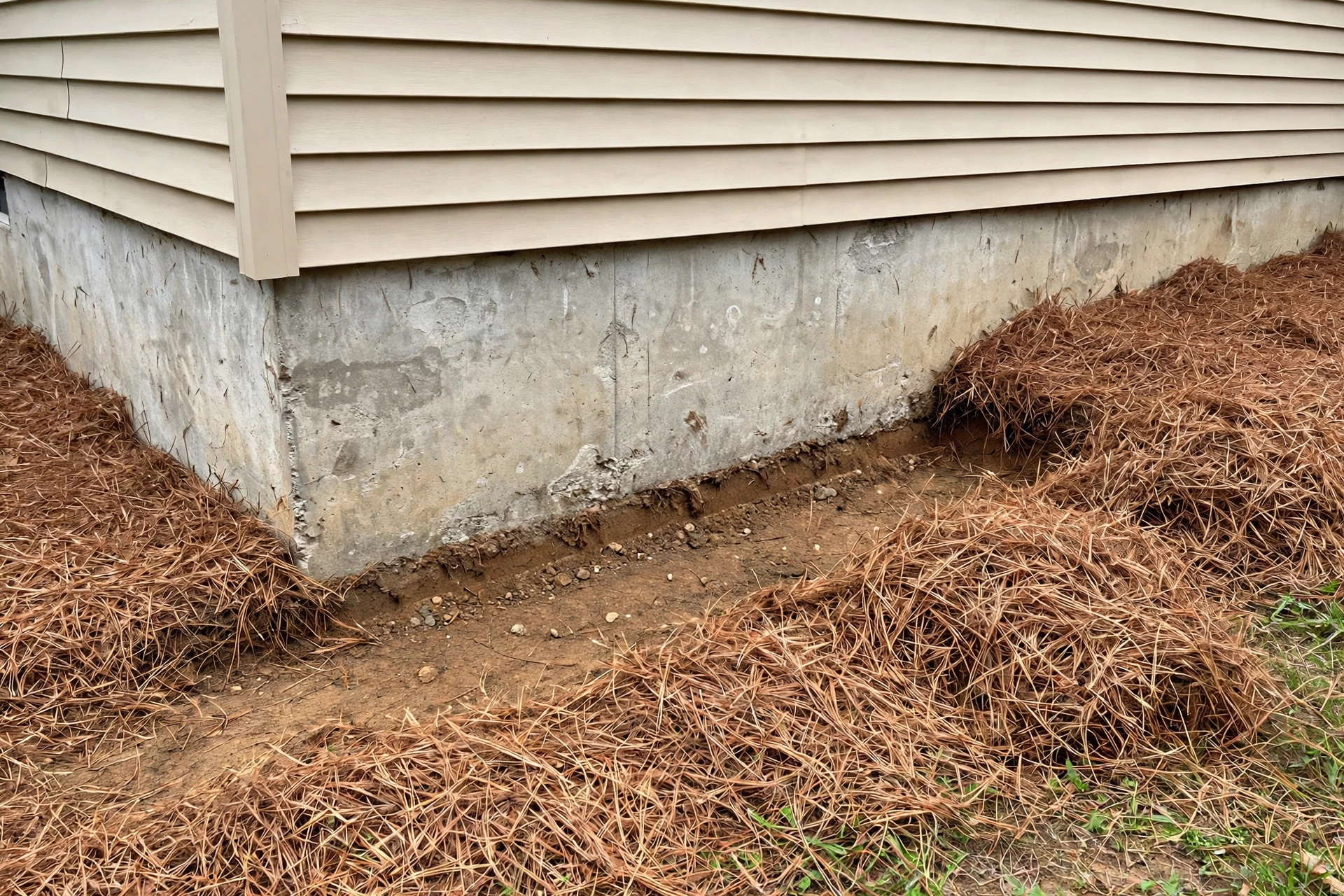
Keep mulch about 12 inches from the foundation. That is the LSU AgCenter’s figure for beds adjacent to the house, and it is the single most important number in this article. A foot of bare soil between the mulch and the wall leaves the treated band exposed, keeps the inspection zone dry, and forces any foraging termite to build its mud tube out in the open on the concrete, where you can actually see it.
The same thinking applies to the soil itself. When you prepare a foundation bed, do not dig into the soil within 8 to 12 inches of the slab or piers, and do not let added soil cover that strip. The treated band is only a few inches wide and a few inches deep — one careless pass with a shovel or one wheelbarrow of topsoil spread too close can bury it or break it, and the protection is gone before you notice. If you need to add soil or regrade near the foundation, call your termite company first so the treatment can be renewed.
Keep mulch off the trunk, too. Never let it touch bark, on a tree or a shrub, because mulch piled against a trunk holds moisture against wood that was never meant to stay wet — and the same damp, hidden contact that invites rot also invites the insects that follow it. Pull the layer back until you can see bare soil around the base, and leave it that way.
The Mistakes That Undo It
Most termite-friendly mulch jobs fail in the same few ways, and none of them involves choosing the wrong material. The classic one is the mulch volcano: needles or chips mounded against the siding or piled high around a trunk, closing the gap that was supposed to stay open. A volcano also hides the foundation wall from view, which means the first sign of trouble — a mud tube the width of a pencil climbing the concrete — goes unseen for a season or more.
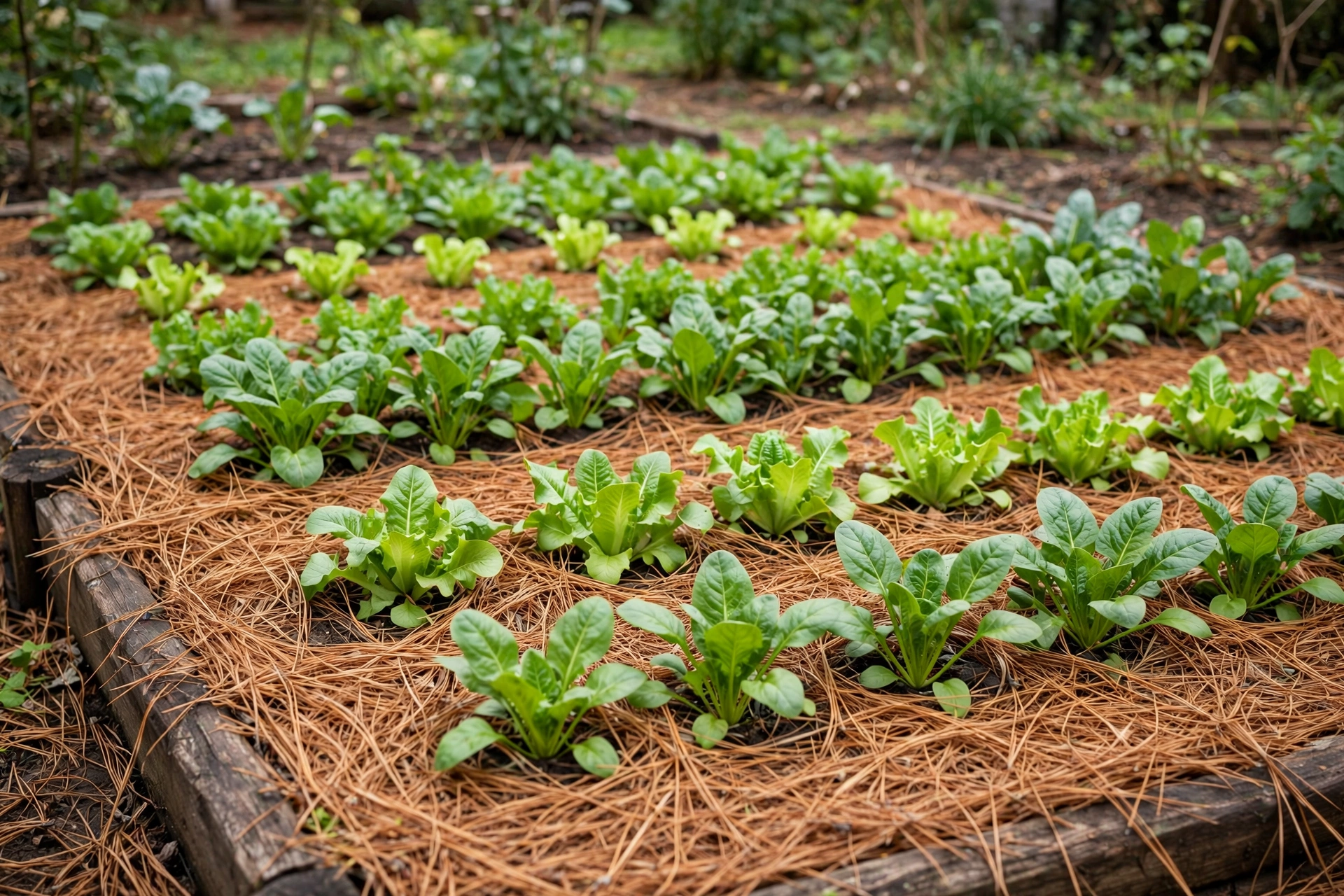
The second mistake is depth near the house. A thick layer holds moisture in the soil underneath it for longer, and that damp, insulated ground is exactly the environment subterranean termites need to survive while they forage. Keep the layer near the foundation on the thin side — 2 to 3 inches is enough to suppress weeds and hold moisture for the plants — and save the deeper mulching for beds out in the yard, away from the structure.
The third is swapping in wood chips for the foundation beds because they look tidier or last longer. They do last longer, and they also feed termites better and hold more moisture than pine straw. If you love the look of bark, use it in beds away from the house and keep pine straw — or gravel, or rubber mulch, which termites cannot eat at all — in the strip by the foundation.
What to Check Each Spring
Once the gap is in place, keeping it is a five-minute job, and spring is the time to do it. Walk the foundation with the mulch still low from winter and look for three things: mud tubes on the concrete or siding inside the bare zone, mulch that has crept back toward the wall over the winter, and any soil that has washed or been piled over the treated strip. Pull the mulch back to its 12-inch line, clear anything touching the siding, and you are done.
While you are there, check the downspouts and the grade. Water pooling against the foundation keeps the soil damp long after rain, and damp soil is what termites need more than any particular mulch. The ground should slope away from the house, and the splash from the roof should land well clear of the beds. A dry foundation strip is the best termite prevention a mulch bed can have, and it costs nothing to maintain.
Bottom Line
Use the pine straw by the house — it is the least termite-friendly mulch you can choose, and LSU’s guidance says so plainly. Keep it about 12 inches from the foundation, keep it thin near the wall, never let it touch a trunk or the siding, and never dig into or bury the treated soil band next to the slab. Do that, and the needles in your foundation beds are protecting your plants without giving termites anything they want.