Landscape & Leisure is reader-supported. When you buy through links on our site, including Botanical Interests seed links, we may earn a commission at no extra cost to you. Prices change, so click through to confirm current pricing.
By the time the summer heat settles in, the garden divides itself into two groups: the plants begging for water, and the ones that look better for the drought. Mediterranean herbs fall in the second group, and the reason is where they come from — rocky, sun-baked hillsides around the Mediterranean, where the soil drains fast and the rain stays away for months. Treat them like the vegetables next door and they sulk. They evolved for thin, rocky soil and long dry spells, and they still want that treatment.
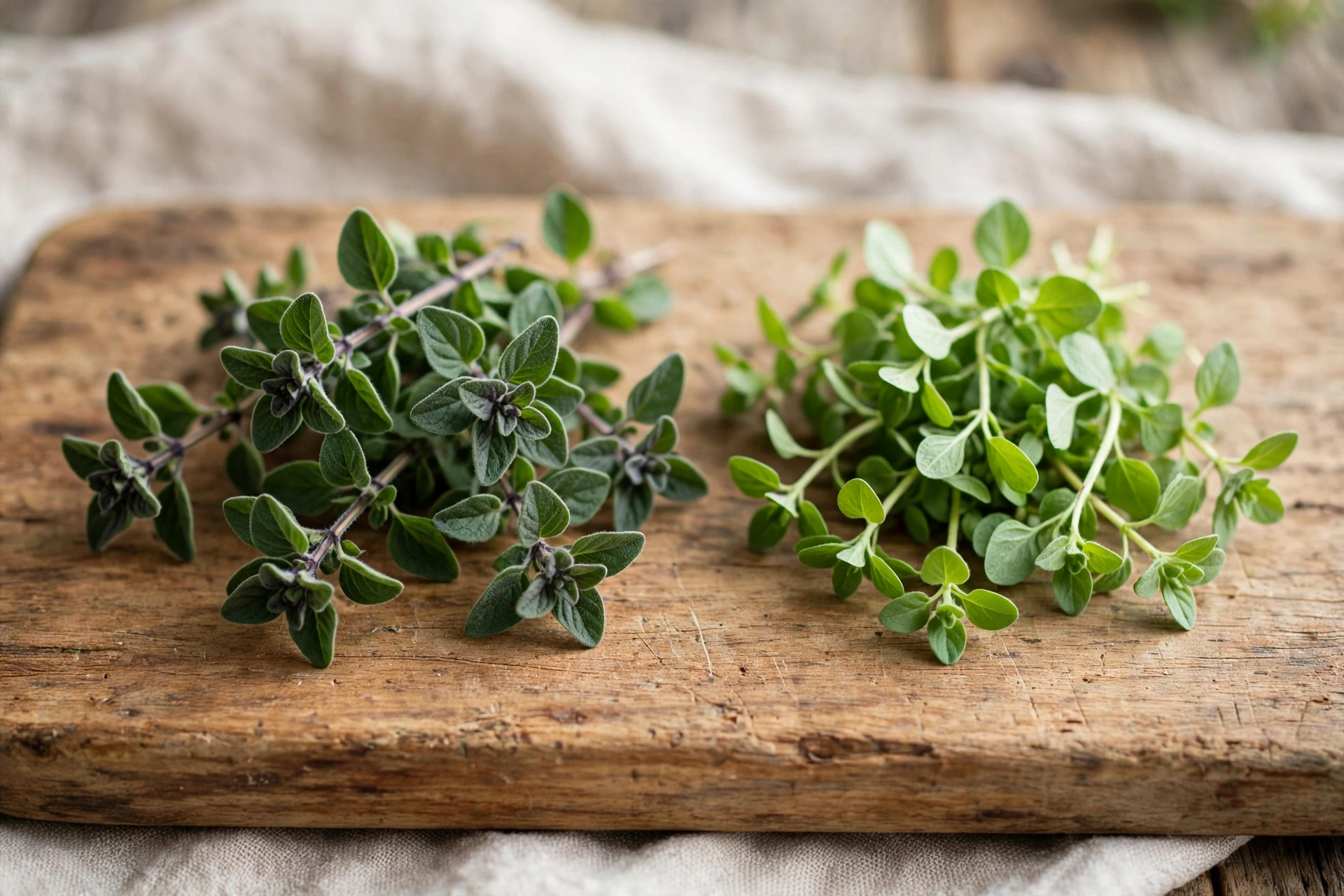
The short version is simple: full sun, lean soil that drains, and water only when the soil has dried out. The rest of this guide is the detail — how much sun, what to do about heavy soil, how often to water, and how to start each herb from seed. Our roundup covers which varieties to buy, and the oregano-versus-marjoram comparison sorts out the two that get mixed up most.
Why They Want It Tough
Most herbs are easy to grow, and the Mediterranean ones are the easiest of all — Clemson Extension puts it plainly: many are drought-tolerant, do not need very fertile soil, and resist insects and disease on their own. The catch is that the same kindness that helps a tomato — rich soil, steady water — works against these herbs. Very fertile soil grows lush leaves that lack flavor, because the fragrance oils that carry the taste are produced in the greatest quantity when the plants get plenty of sun and not much pampering.
That is the whole secret, and it runs against a gardener’s instincts. Rich soil and steady water help a tomato, and they work against these herbs. What these herbs want instead is sun, drainage, and a light hand with the hose.
Sun: Six Hours, Minimum
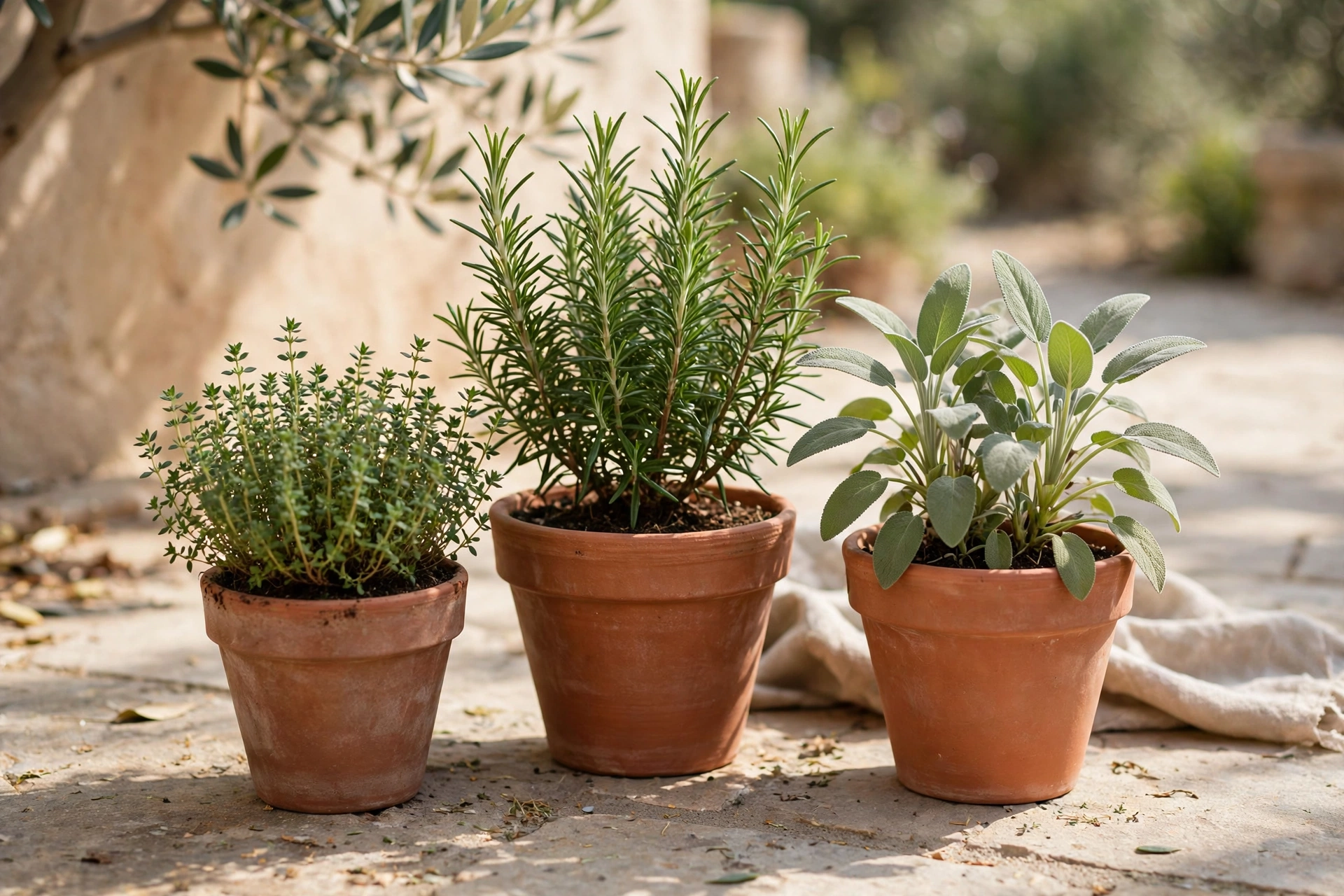
Almost all herbs grow best where they get at least six hours of sun a day, and the Mediterranean four are no exception. Rosemary and marjoram want full sun outright; thyme and sage will take full sun to part shade, but the flavor is strongest in full sun, because those fragrance oils need light to develop.
Put them in the sunniest spot you have — a south-facing bed, a sunny slope, or containers on the steps. If a spot gets less than six hours, the plants will still grow, but the leaves will be blander, and bland is the one thing a Mediterranean herb must never be.
Soil: Lean and Fast-Draining
The soil should drain quickly and sit around pH 6 to 7, with a moderate amount of organic matter — not the rich, compost-heavy mix you would build for vegetables. In heavy clay, work 2 to 3 inches of fine pine bark, cracked pea gravel, or coarse compost into the top 8 to 12 inches to open it up; in sandy soil, the same amount of fine pine bark, compost, or leaf mold helps it hold a little moisture without staying wet.
Raised beds are the easy fix when the native soil fights you, and a mulch of pea gravel or stone — 1 to 2 inches — keeps the crowns dry and the diseases down, which matters more for these gray-leafed herbs than for most plants. Very few herbs will grow in wet soil at all, so if water stands in the spot after rain, that spot is wrong for thyme, rosemary, sage, and marjoram no matter how sunny it is.
Skip the fertilizer unless a soil test says otherwise. Most herbs do not need a highly fertile soil, and the lush growth a heavy feeding produces is exactly the flavorless growth you are trying to avoid.
Watering: Soak, Then Wait
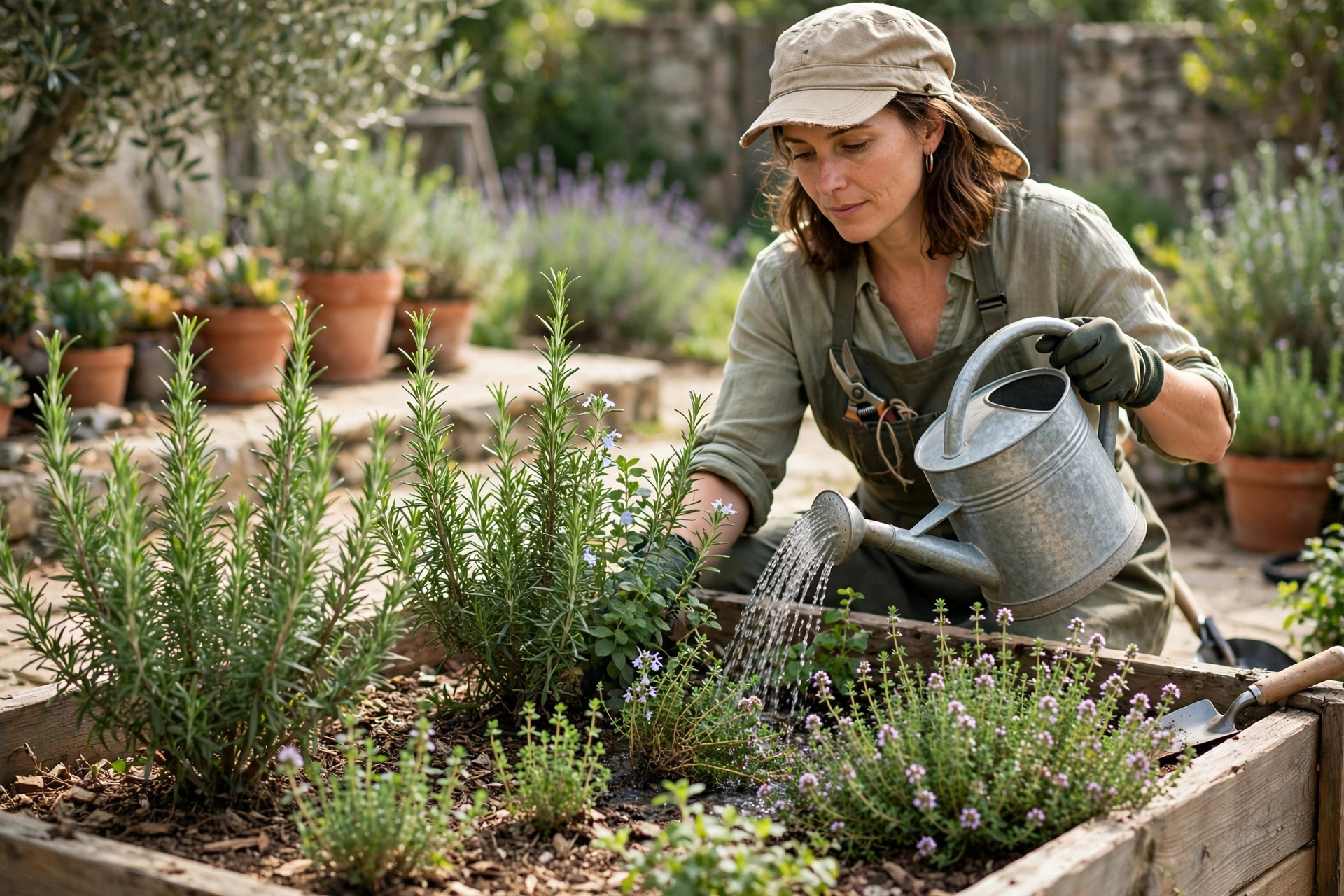
Water thoroughly, then let the soil dry out somewhat before watering again — that is Clemson Extension’s rule, and it is the one most gardeners get wrong with these herbs. The plants are drought-tolerant once established, but they still need moisture to grow, so the rhythm is a deep soak followed by a real dry spell, not a daily sprinkle.
Water early enough in the day that the leaves dry before nightfall. New plants want time to get established before summer heat, which is why fall or early spring planting suits the perennials. After that, the soil tells you when to water, not the calendar — and if you are the kind of gardener who waters on a schedule, these are the plants that will teach you to stop.
Starting Them from Seed
All four start indoors, and the differences are in the details: rosemary wants 10 to 12 weeks indoors, the others 6 to 8, and the sowing depths run from a pinch pressed into the surface to a quarter inch deep. The table below has the numbers for each one — and note the odd one out: marjoram can be sown outside 1 to 2 weeks before your last frost, while oregano waits until 2 to 4 weeks after it.
| Herb | Start indoors | Sowing depth | Germination | Direct sow |
|---|---|---|---|---|
| English Thyme | 6–8 weeks before last frost, soil 70–80°F | ⅛” | 10–15 days | 1–2 weeks after last frost, soil ≥68°F |
| Rosemary | 10–12 weeks before last frost, soil 65–75°F | Surface | 15–30 days | 1–2 weeks after last frost (mild climates), soil ≥60°F |
| Broadleaf Sage | 6–8 weeks before last frost | ¼” | 7–21 days | 1–2 weeks after last frost, soil ≥50°F |
| Marjoram | 6–8 weeks before last frost, soil 65–75°F | Press into surface | 10–15 days | 1–2 weeks before last frost |
| True Greek Oregano | 6–8 weeks before last frost, soil 70–78°F | Press into surface | 7–14 days | 2–4 weeks after last frost |
True Greek Oregano is sold out as a single packet right now — it comes in the Chef’s Herb Garden Seed Bundle in our roundup, which is the way to get it until the single packet returns.
Three Packets Worth Starting With
If you are starting from seed this season, these are the three packets that earn the effort: the highest-rated herb here, the slowest starter that rewards patience, and the hardiest one of all.
BEST OVERALL
English Thyme Seeds
The herb that asks the least and gives the most — evergreen, drought-tolerant, and the highest-rated pick here.
BEST FOR CONTAINERS
Rosemary Seeds
An evergreen shrub that turns a pot into a centerpiece — worth the slow start.
RUNNER-UP
Broadleaf Sage Seeds
The bold one — the hardiest herb here, and the flavor that makes stuffing taste like stuffing.
Winter: Who Comes Back
Sage is the hardiest of the four, a perennial in zones 4 through 8, and thyme is close behind at zones 5 through 9. Rosemary is the outlier: hardy only in zones 8 through 13, so north of there it lives in a container that spends summer outside and winter inside. Marjoram is perennial only in zones 9 and 10 and is grown as an annual everywhere else, so it gets re-sown each year rather than overwintered.
Drainage matters in winter too. These herbs struggle most in heavy, wet soil, so the raised bed or gravel mulch that keeps them dry in summer is doing the same job in the cold months.
Harvest: Cut Before They Bloom
Herbs should be harvested just before blooming, when the essential oils are at their peak — and early in the morning, after the dew dries but before the heat of the day. That timing is the difference between a sprig that perfumes the whole dish and one that tastes like damp leaves.
Each herb has its own cue. Pick thyme sprigs as you need them, and if the growth turns spindly, shear the whole plant 4 inches above the ground — new growth comes back denser — but never cut into the woody part or prune heavily in fall. Start picking sage leaves once the plants reach 6 inches tall, and cut the stems for drying when the plants reach about 12 inches, just as the flowers open. Rosemary is most fragrant just before the blooms appear, so cut sprigs as needed in the weeks before flowering. Marjoram and oregano can be picked any time the plant is at least 6 inches tall, and oregano’s flavor is at its best just before the plant flowers.
Prune or harvest regularly to keep the plants vigorous and well-shaped — and pinch out the tips of new plants to force them to branch and fill out.
What to Watch Next
If the leaves smell strong when you brush past them, the sun and the lean soil are doing their job. If they smell faint, the plants are getting too much water, too much shade, or too much food — and the fix is to back off all three. The one mistake that undoes all of it is the daily sprinkle: shallow, frequent watering keeps the roots near the surface and the crowns wet, which is exactly how these hillside plants rot. Soak, wait, and let the sun do the rest — and for the varieties themselves, our roundup has the four worth growing, while our culinary herbs roundup covers the rest of the kitchen garden.