Landscape & Leisure is reader-supported. When you buy through links on our site, including Botanical Interests seed links, we may earn a commission at no extra cost to you. Prices change, so click through to confirm current pricing.
That sunny strip by the patio — the one that bakes all afternoon while the rest of the garden begs for water — is the best real estate in your yard, and it is wasted on grass. Mediterranean herbs evolved for exactly that spot: hot sun, lean soil, and long dry stretches between drinks. The four varieties below are the ones worth growing from seed, plus the one bundle that covers the whole herb garden in a single order.
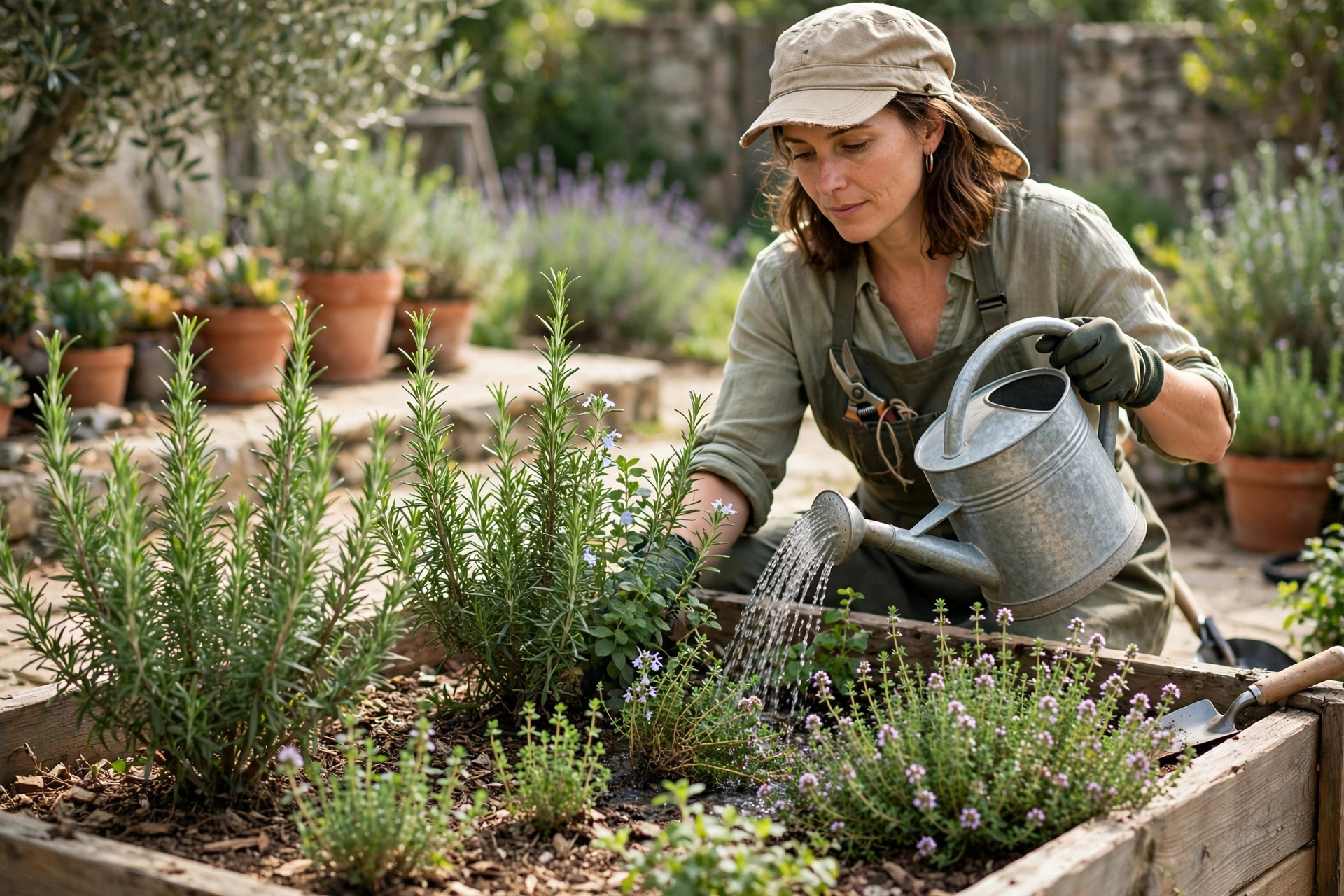
Our growing guide covers the sun, soil, and watering routine that keeps them flavorful, and the oregano-versus-marjoram comparison settles the mix-up every seed rack causes. Every pick below is in stock at Botanical Interests, with the price and rating shown as listed.

Best Overall: English Thyme
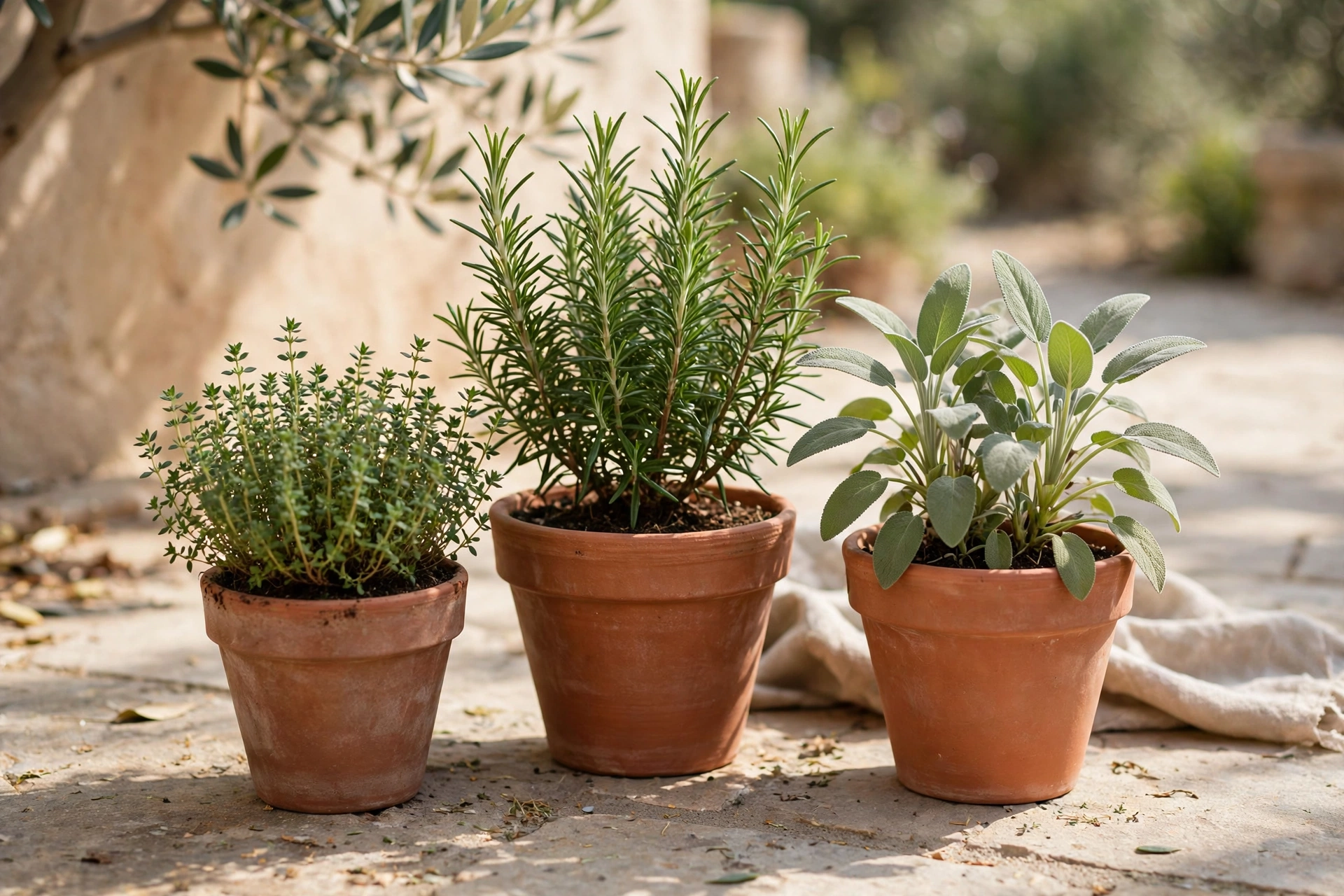
Thyme is the herb that asks the least and gives the most. The plants stay under a foot tall, the tiny quarter-inch leaves carry a woodsy flavor that belongs in almost everything, and the whole plant is evergreen, drought-tolerant, and deer-resistant — which is another way of saying it survives the neglect that kills fussier herbs.
It is a perennial in zones 5 through 9, so it comes back for years in most of the country. Start it indoors 6 to 8 weeks before your last frost at 70 to 80 degrees, or sow it outside 1 to 2 weeks after the last frost once the soil reaches 68 degrees. The seeds are small, so sow groups of 3 every 10 inches at an eighth of an inch deep, thin to one plant every 10 inches when the seedlings reach an inch tall, and give them 10 to 15 days to germinate. One packet sows up to 233 feet, which is enough thyme for the whole street. Gardeners rate it 4.7 from 20 reviews, the highest score in this roundup, and the packet runs $3.49. It is also essential in Herbes de Provence, so a single packet covers French cooking for the season.
Pros: highest-rated pick at 4.7 from 20 reviews; perennial in zones 5–9; evergreen and drought-tolerant; one packet sows 233 feet.
Cons: tiny seeds need a careful hand at sowing; don’t prune heavily in fall or cut into the woody part.
BEST OVERALL
English Thyme Seeds
The herb that asks the least and gives the most — evergreen, drought-tolerant, and the highest-rated pick here.
Runner-Up: Broadleaf Sage
Sage is the bold one. Its flavor is assertive enough to stand up to pork, game, and cheese, and it is the herb that makes stuffing taste like stuffing — which is why it earns the runner-up spot even though it is the biggest plant here, growing past two feet tall on a semi-woody shrub with gray-green, pebbly leaves.
It is a perennial in zones 4 through 8, the hardiest of the four, and it wants full sun to part shade in well-drained soil. Sow a quarter inch deep, in groups of 3 every 12 to 18 inches, and thin to one plant every 12 to 18 inches once the seedlings reach 2 inches tall. Germination takes 7 to 21 days. Start it indoors 6 to 8 weeks before your last frost, or sow it outside 1 to 2 weeks after, once the soil reaches 50 degrees. You can start picking leaves once the plants reach 6 inches tall, and for drying, cut the stems when the plants reach about 12 inches, just as the purple-blue flowers open. The packet runs $2.99, and gardeners rate it 4.5 from 14 reviews.
Pros: hardiest of the four, perennial in zones 4–8; bold flavor for rich dishes; edible purple-blue flowers that draw pollinators.
Cons: it grows past 2 feet, so it needs more room than thyme; the flavor is strong enough to overwhelm a delicate dish.
RUNNER-UP
Broadleaf Sage Seeds
The bold one — the hardiest herb here, and the flavor that makes stuffing taste like stuffing.
Best for Containers: Rosemary
Rosemary is the herb that turns a pot into a centerpiece. It grows past two feet tall, an evergreen shrub with narrow gray-green needles that smell of pine, and it is as happy in a container as it is in the ground — which is fortunate, because it is only hardy in zones 8 through 13, and most northern gardeners will be bringing it inside for winter anyway.
Rosemary is also the slowest starter here, and that is the honest trade-off for the beauty: germination takes 15 to 30 days, and the seeds want 10 to 12 weeks indoors before your last frost at 65 to 75 degrees. Sow the seeds on the surface — they need light to germinate — in groups of 5 every 12 to 18 inches, and thin to one plant every 12 inches, or 36 inches if you are growing it as a perennial. Outside, it wants full sun and soil of at least 60 degrees, and in cold climates the right move is a container that spends summer outside and winter inside. It is most fragrant just before the blooms appear, and the lavender flowers draw pollinators. The packet runs $2.69, the cheapest here, and gardeners rate it 4.1 from 32 reviews — the lowest score of the four picks, which tracks with the slow, fussy start.
Pros: the best-looking herb here, evergreen and ornamental; thrives in containers; drought- and heat-tolerant; $2.69.
Cons: slowest to germinate at 15–30 days; hardy only in zones 8–13, so northern gardeners grow it in a pot; lowest rating of the four picks.
BEST FOR CONTAINERS
Rosemary Seeds
An evergreen shrub that turns a pot into a centerpiece — worth the slow start.
Best for Mild Flavor: Marjoram
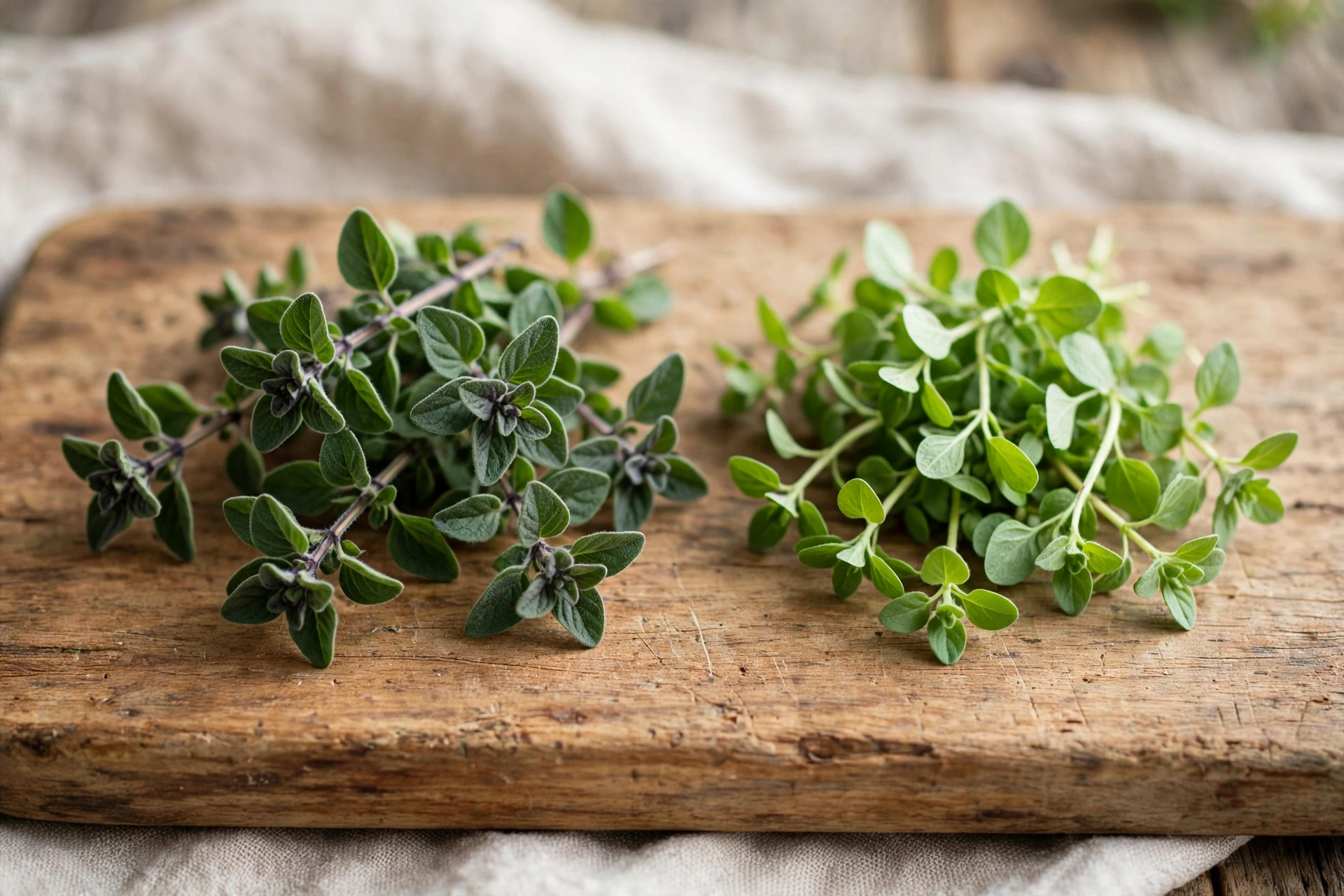
Marjoram is oregano’s gentler cousin, and the one to grow when oregano’s punch is too much. Its flavor is milder but more complex than oregano’s, with a hint of balsam, and it is the herb that belongs in German sausage and herb breads — dishes where oregano would elbow everything else off the plate.
It is the only annual in this roundup for most of the country, perennial only in zones 9 and 10, so plan on starting it fresh each year. The seeds are very small — press them into the surface rather than burying them — and start them indoors 6 to 8 weeks before your last frost at 65 to 75 degrees. Outdoors, sow groups of 4 every 12 inches, thin to one plant every 12 inches, and expect germination in 10 to 15 days. Unusually for a warm-climate herb, it can be sown outside 1 to 2 weeks before your last frost. The plants reach 12 to 24 inches, and you can pick leaves, flowers, or sprigs any time the plant is at least 6 inches tall. The packet runs $4.49, the priciest single packet here, and gardeners rate it 4.3 from 6 reviews.
Pros: the mildest, most complex flavor here; can be sown outside before the last frost; drought-tolerant and deer-resistant.
Cons: $4.49, the priciest single packet; an annual for most gardeners, so it needs re-sowing every year; only 6 reviews so far.
BEST FOR MILD FLAVOR
Marjoram Seeds
Oregano’s gentler cousin — milder, more complex, and the right herb when oregano would take over.
Best Way to Start: Chef’s Herb Garden Seed Bundle
If the four varieties above feel like four separate orders, the bundle is the shortcut. Twelve packets for $36.99 — thyme, sage, and rosemary among them, plus basil, dill, chives, mint, fennel, cilantro, tarragon, parsley, and True Greek Oregano, the one herb in this roundup that is sold out on its own. The bundle arrives in gift packaging, which makes it the easiest version of this whole project to give someone.
Gardeners rate it 4.9 from 18 reviews, the highest score of anything in this roundup. If you are starting an herb garden from nothing, this is the one order that covers it — and the oregano inside it is the way to get True Greek Oregano while the single packet is sold out.
Pros: 12 packets for $36.99, including the sold-out oregano; highest-rated item here at 4.9 from 18 reviews; gift-ready packaging.
Cons: you get twelve herbs whether you want them all or not; mint spreads aggressively and fennel self-seeds freely, so both want their own space.
BEST WAY TO START
Chef’s Herb Garden Seed Bundle
Twelve packets in one order, including the sold-out oregano — the shortcut to a full herb garden.
The Ones to Skip
Two oreganos sit outside the picks, for opposite reasons. True Greek Oregano is the culinary oregano — the one Italian and Greek chefs reach for — and it is sold out as a single packet right now, so there is no point ordering it alone. The bundle above is the way to get it until the single packet comes back.
Kirigami Ornamental Oregano is in stock at $4.99, and it is beautiful — hop-like bracts that shift from soft green to rosy-purple, with tiny lavender flowers inside — but it is an ornamental, grown for containers and bouquets, not for the kitchen. Buy it for a window box, not for your pasta sauce.
How the Four Compare
| Variety | Best for | Zones | Height | The one thing to know |
|---|---|---|---|---|
| English Thyme | Everyday cooking | 5–9 | Under 12″ | Highest-rated pick, 4.7 from 20 reviews; one packet sows 233 feet |
| Broadleaf Sage | Rich dishes, stuffing | 4–8 | Over 24″ | Hardiest of the four; bold flavor, edible purple-blue flowers |
| Rosemary | Containers, ornamental | 8–13 | Over 24″ | Slowest to germinate, 15–30 days; most fragrant just before blooming |
| Marjoram | Mild flavor | 9–10 perennial | 12″–24″ | An annual up north; sow outside before the last frost |
Bottom Line
Start with English Thyme — the highest-rated pick here, a perennial in zones 5 through 9, and a single packet sows 233 feet. Add Broadleaf Sage for rich dishes and Rosemary for the pot by the door, and let Marjoram handle the recipes where oregano would take over. If you want the whole herb garden in one order, the Chef’s Herb Garden Seed Bundle covers all of it, including the sold-out oregano. For the routine that keeps them flavorful — sun, soil, and watering — read our growing guide, and if the oregano-versus-marjoram question is still open, our comparison settles it. If you grow other herbs too, our culinary herbs roundup covers the rest of the kitchen garden.