Landscape & Leisure is reader-supported. When you buy through links on our site, including Botanical Interests seed links, we may earn a commission at no extra cost to you. Prices change, so click through to confirm current pricing.
The tray is on the bench, the mix is damp, and the kale seed in your palm is smaller than you expected — a good sign, because kale asks for very little depth and gives back for months. Get three things right, the start, the thinning, and the order you pick the leaves, and a kale row mostly tends itself from there.
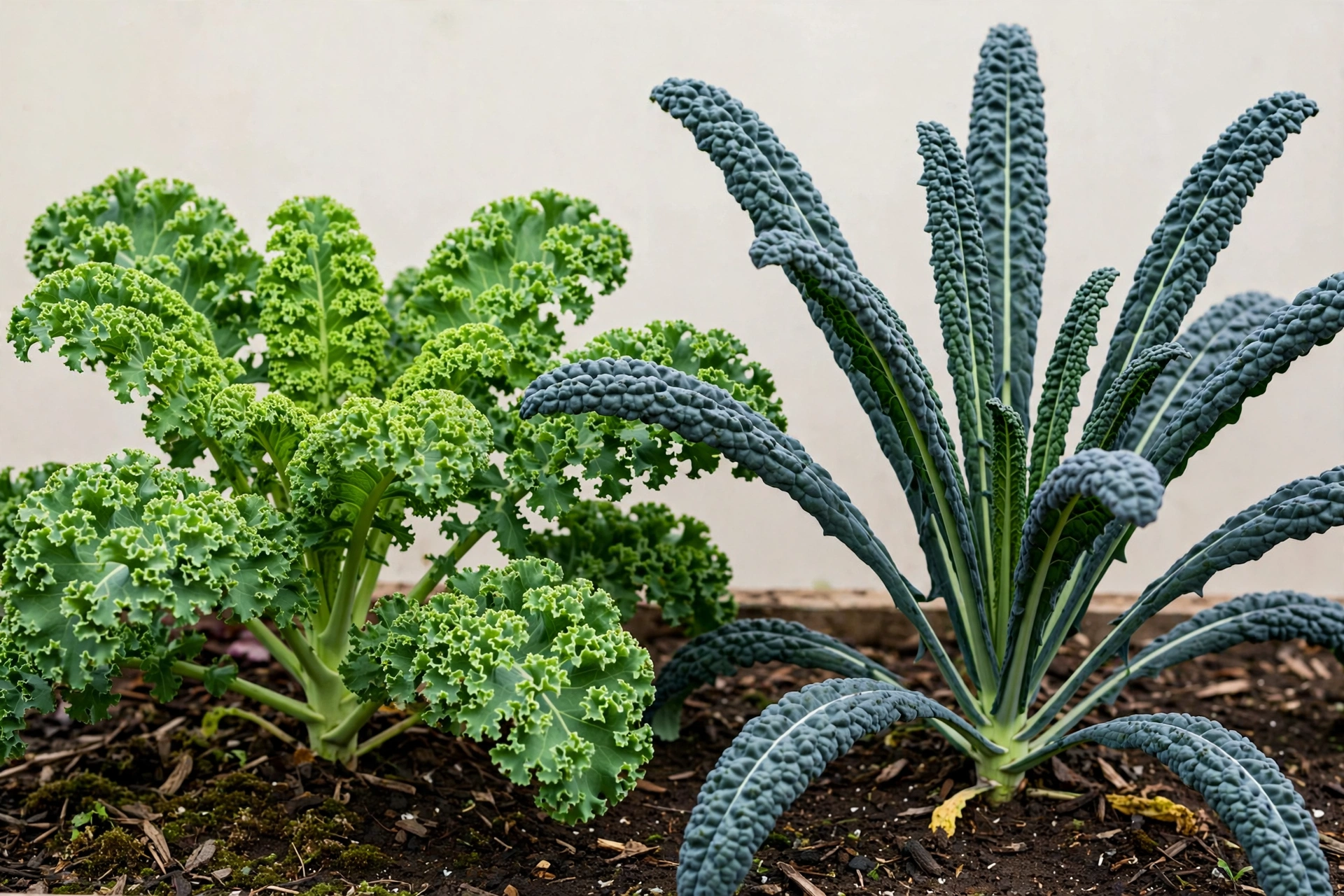
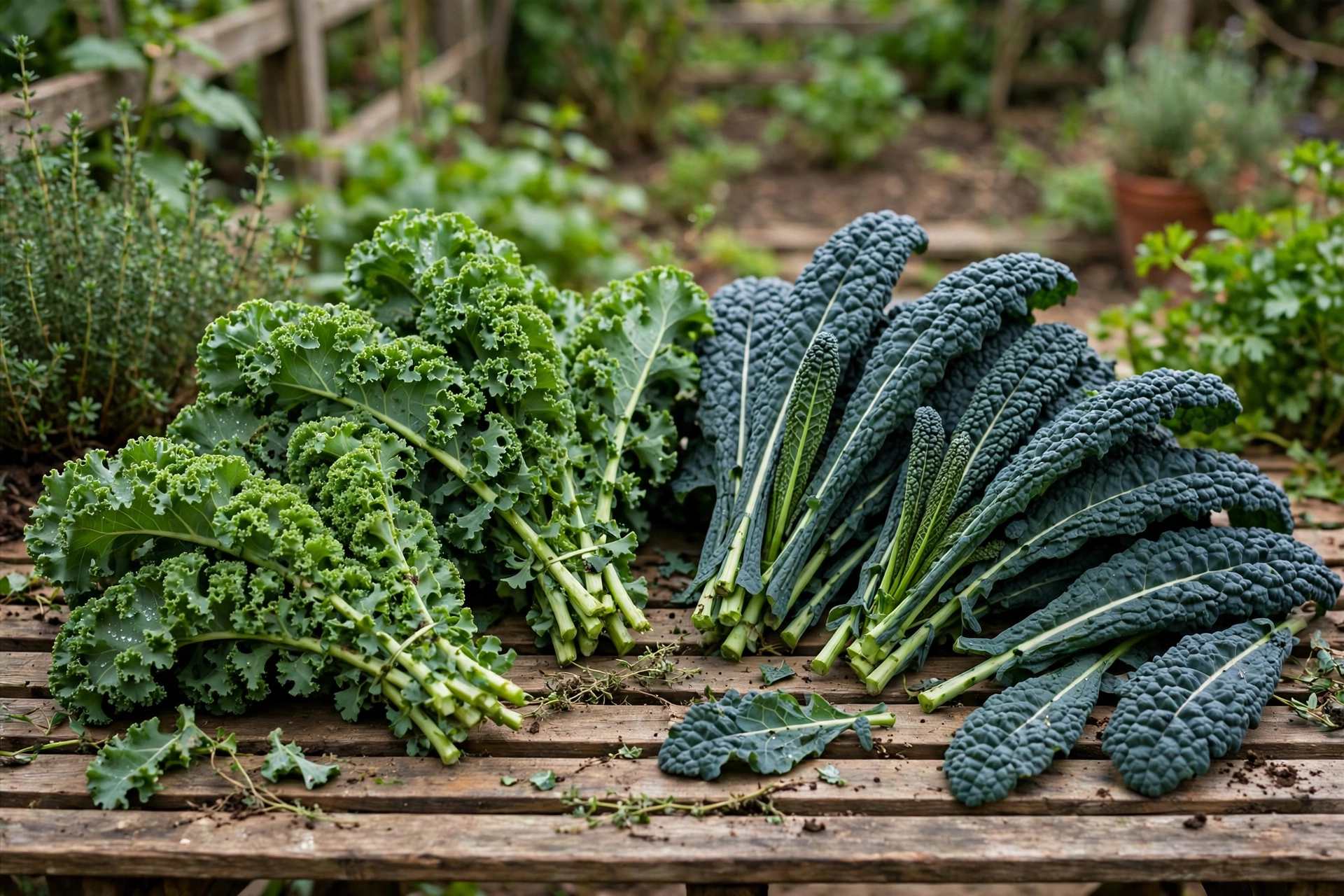
This guide uses the varieties from our kale varieties roundup, and the leaf-shape choice behind them is settled in our curly vs. lacinato comparison. Kale is a brassica, so the timing habits here rhyme with our brassicas for short seasons roundup if your bed holds cabbage and broccoli too.
Start Indoors, or Sow Where It Will Grow?
Starting indoors is the recommended route for kale, and the timing is forgiving. Sow 4 to 6 weeks before your average last frost date, a quarter inch deep, and keep the soil at 65 to 85 degrees, where germination takes 5 to 10 days. Transplants go out after those 4 to 6 weeks of indoor growth, sturdy and already past the stage where a cold snap or a hungry bird ends the story.
Direct sowing works too, on a clear schedule. Sow 1 to 2 weeks before your average last frost date, once the soil is above 45 degrees, for a spring and summer crop. For a fall crop, work backward instead: start indoors 12 to 14 weeks before your average first fall frost, or direct sow 10 to 12 weeks before it. In mild climates, a fall sowing can carry over for a very early spring harvest.
| Step | Timing | Depth / spacing | Notes |
|---|---|---|---|
| Start indoors | 4–6 weeks before last frost | 1/4 inch deep | Soil 65–85°F; sprouts in 5–10 days |
| Direct sow, spring | 1–2 weeks before last frost | 1/4 inch deep | Soil above 45°F |
| Fall crop | Start 12–14 weeks before first fall frost | 1/4 inch deep | Or direct sow 10–12 weeks before frost |
| Thin | At 1 inch tall | 1 plant every 18 inches | Rows 24 inches apart |
Sowing: A Quarter Inch and a Group of Three
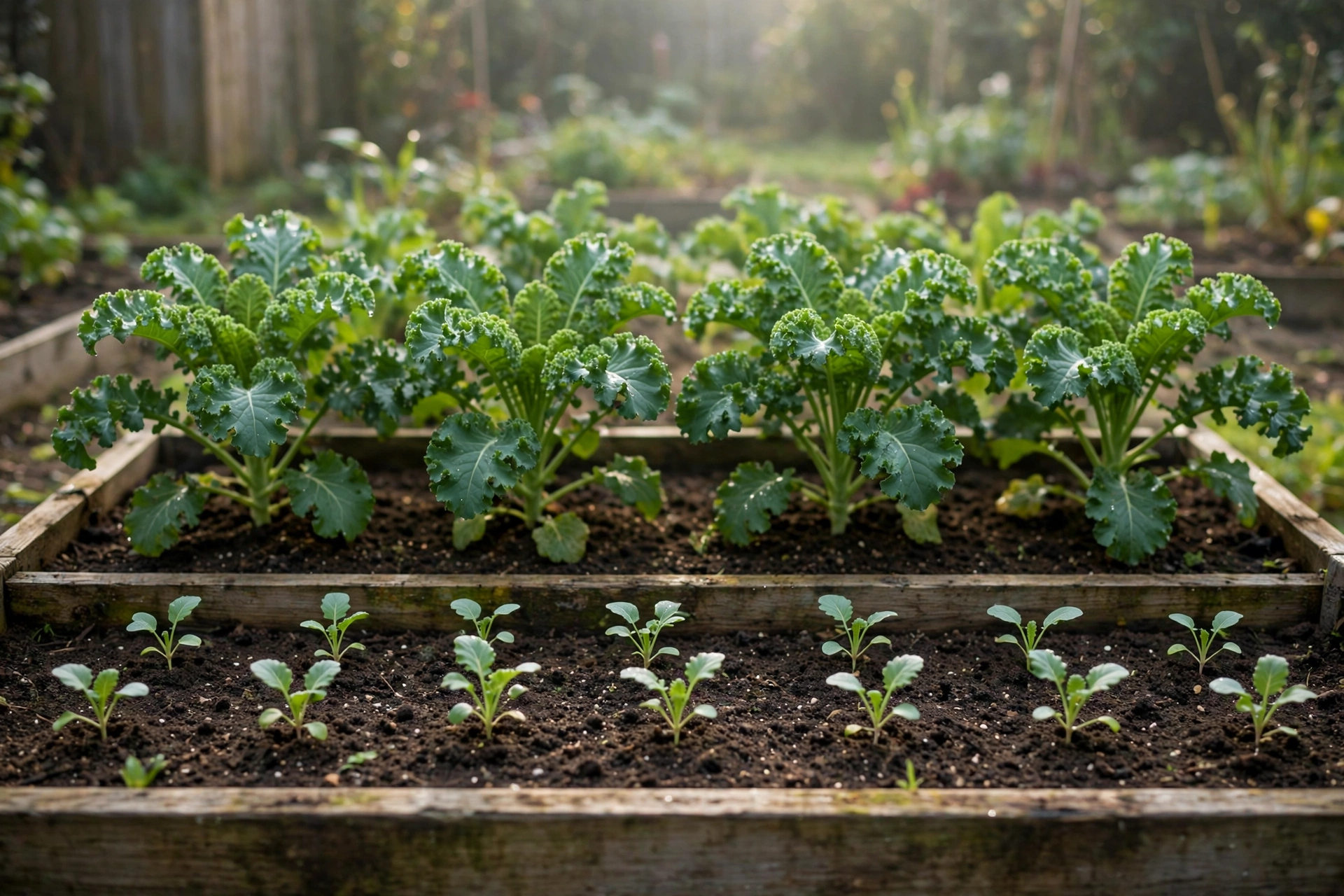
Kale seed goes a quarter inch deep, no deeper, and the spacing pattern is the same for every variety in this cluster: a group of 3 seeds every 18 inches, with rows 24 inches apart. The group of three is insurance, not a plan for three plants, because kale seed is reliable enough that you will usually thin, not fill gaps.
Full sun is the light requirement across the board. A bed that gets morning shade in high summer will still grow kale, but the packet guidance is full sun, and the plants that get it grow stockier and hold their leaves longer into the season. Keep the seedbed evenly moist until the sprouts show, which at the right temperature is under two weeks.
Thinning: The Step That Decides the Harvest
Here is where kale rows succeed or quietly fail. When the seedlings stand 1 inch tall, thin each group to a single plant, one every 18 inches. It feels wasteful, especially when all three seedlings look healthy, and it is the most important ten minutes you will spend on the crop.
The reason is in the mature sizes. Lacinato types grow tall past 24 inches, and a lacinato in Premier Blend can reach 24 to 48 inches. Three plants sharing one station shade each other, stall, and give you a tangle of small leaves instead of the armfuls of full leaves an 18-inch spacing produces. Snip the extras at soil level rather than pulling them, so the keeper’s roots stay undisturbed.
The thinnings are not waste, by the way. Kale can be harvested as baby greens when the leaves are 2 to 4 inches tall, so a crowded patch thinned a little late still gives you a salad on its way to proper spacing.
Harvest: Outer Leaves First, a Third at a Time
Pick from the outside in and from the bottom up. Outer leaves can be harvested as baby greens at 2 to 4 inches, and once the plants are full-sized you take the lowest leaves first, leaving the center to keep growing. For fast regrowth, harvest no more than a third of the plant at a time — that pace keeps the plant producing instead of pausing to recover.
The calendar rewards patience in both directions. Lacinato Dinosaur gives baby greens in 21 days and full plants in about two months, Dazzling Blue runs 30 to 60 days, and Redbor takes 50 to 60 days to reach its purple best. Cool fall weather is a feature, not a threat: kale is frost tolerant, Dazzling Blue was bred to be more cold hardy than traditional lacinato, and Redbor’s color and curl intensify as temperatures drop. A row still standing when the tomatoes are long gone, its leaves stiff with morning frost and sweetening in the cold, is kale doing exactly what it was planted to do.
Three Varieties That Cover the Season
You do not need all five roundup picks in the ground. These three cover an early harvest, a main crop, and a fall finish, and each one follows the same sowing pattern above.
Lacinato Dinosaur Kale Seeds
Baby greens in 21 days, full dark leaves in about two months — the main-crop kale.
Premier Blend Kale Seeds
Four kales in one packet — baby greens in 25 days and a mixed row to taste through.
Dazzling Blue Kale Seeds
The fall finisher — a lacinato bred more cold hardy than the traditional type.
Bottom Line
Start kale indoors 4 to 6 weeks before last frost, thin it to one plant every 18 inches without negotiating with yourself, and pick the outer leaves a third at a time. Do those three things and the row will feed you from the first baby greens at three weeks to the last frost-sweetened leaves of fall.