Landscape & Leisure is reader-supported. When you buy through links on our site, including Botanical Interests seed links, we may earn a commission at no extra cost to you. Prices change, so click through to confirm current pricing.
Two packets, same glossy picture of a leafy green plant — and yet one of them will give you flat, dark straps you can slice into ribbons, while the other fills your arms with ruffles. Kale looks interchangeable on the seed rack, and it is anything but, because the leaf shape you choose decides how the plant cooks, how it handles cold, and how soon you eat.
The five packets below cover the real jobs: a tender lacinato for salads and pasta, a colder-hardy lacinato for short seasons, a blend that hedges every bet in one row, a sweet flat-leaf type for baby greens, and a purple curly kale that earns its keep in a pot. Our growing kale guide covers the sowing and thinning that get any of them to size, and our curly vs. lacinato comparison settles the leaf-shape question head-on. If kale is sharing the bed with other leafy greens, our mustard greens vs. kale comparison is worth a look before you order.
Start with the Leaf, Not the Name

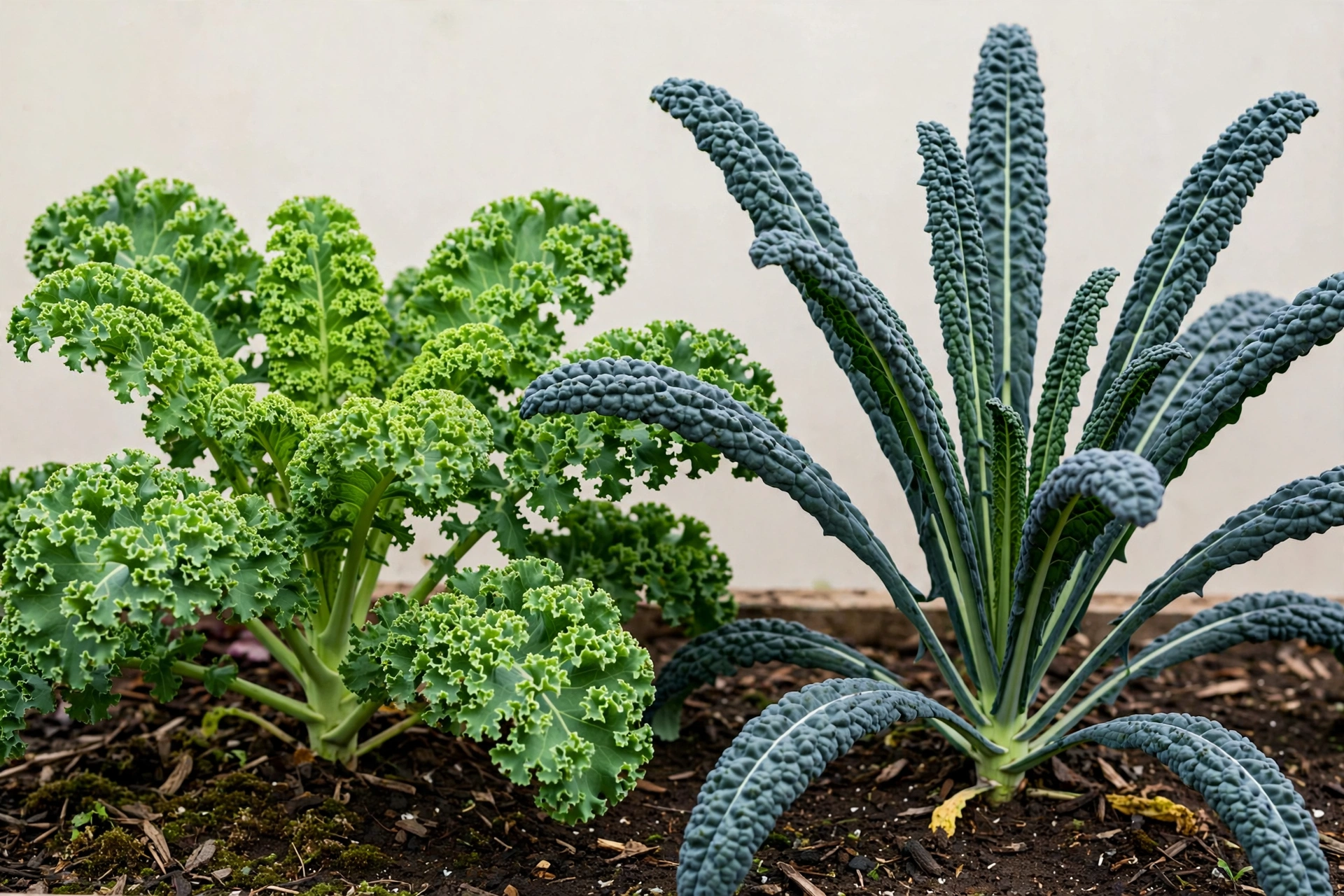
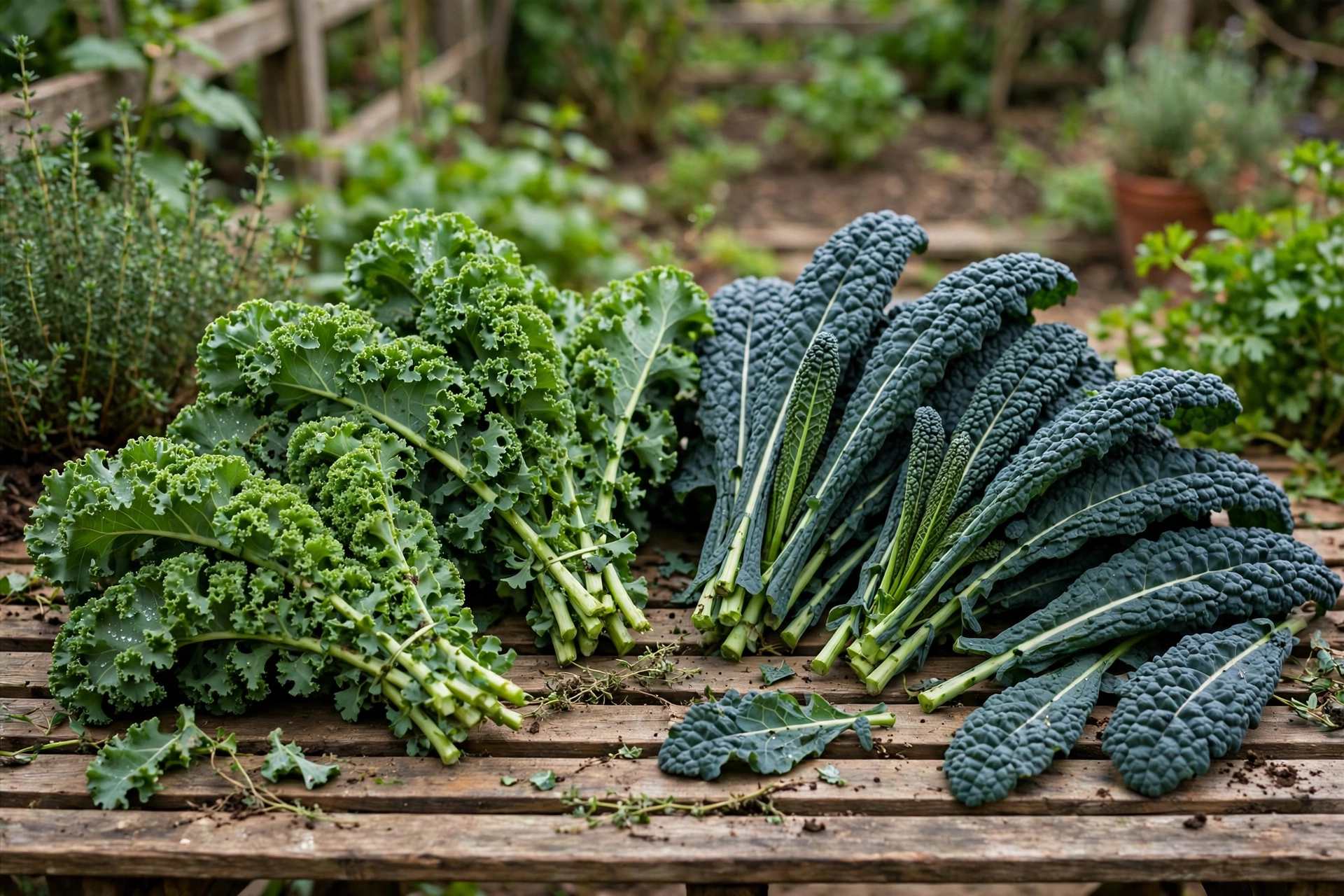
Kale comes in three working shapes. Lacinato leaves are long, narrow, and heavily crinkled, with a tender texture that slices cleanly and wilts fast in a pan. Curly leaves are broad and frilled at the edges, sturdier in the bunch and slower to break down, which suits soups and chips. Flat Russian types sit between the two, with smooth, oak-like leaves and red veins, and they are the tenderest of the three as baby greens.
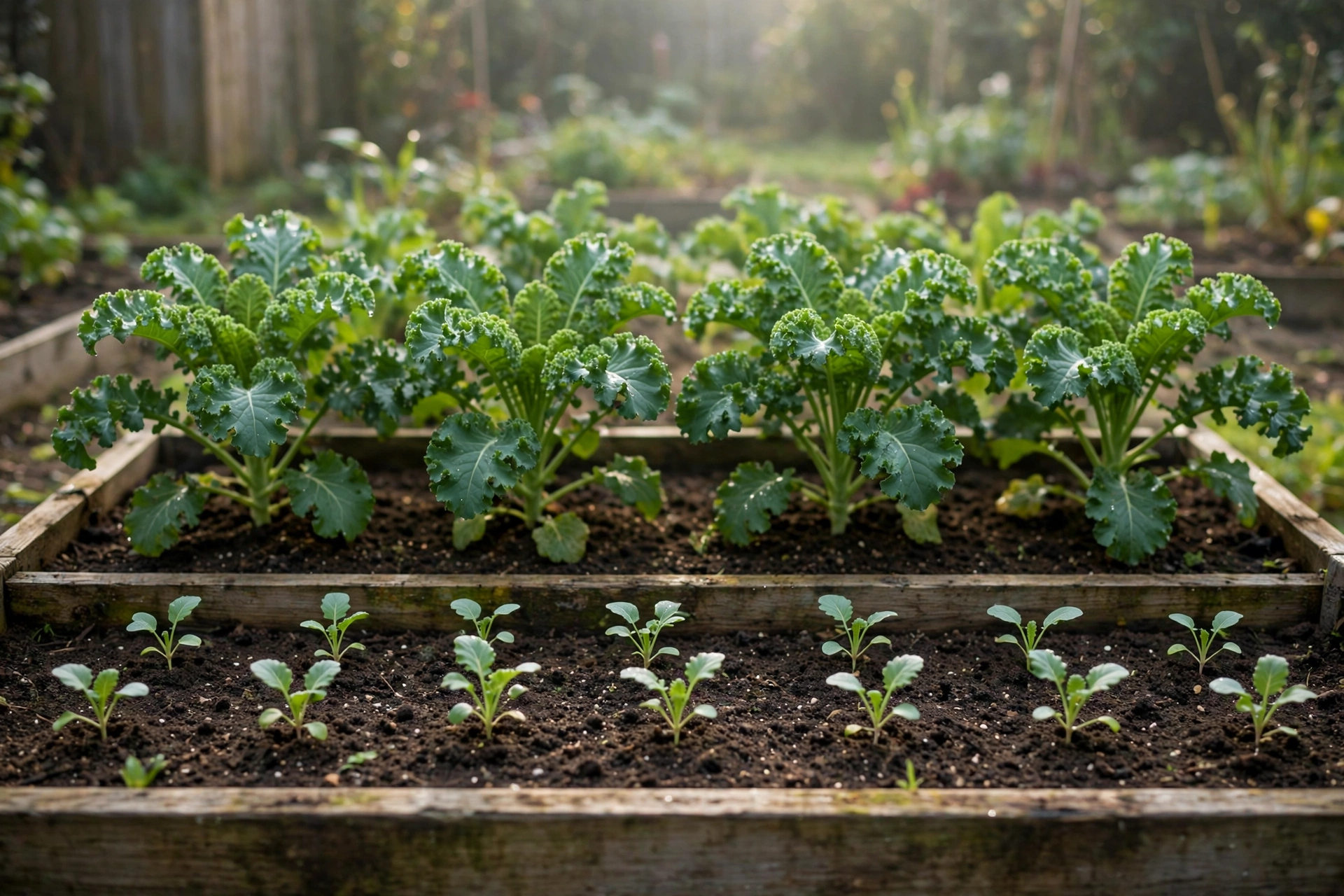
Every variety here shares the same basic manners, which makes choosing easier. All of them sow a quarter inch deep, germinate in 5 to 10 days in soil at 65 to 85 degrees, and want a group of 3 seeds every 18 inches, thinned to one plant every 18 inches once the seedlings stand an inch tall. Pick the leaf you want to eat, and the growing takes care of itself.
Best Overall: Lacinato Dinosaur Kale
If you plant one kale, plant this one. Lacinato Dinosaur is an 18th-century heirloom with very dark green, heavily crinkled leaves about 3 inches wide, and it has the longest track record on this page for a reason: the flavor is tender and mild, the plants grow tall past 24 inches, and the harvest starts almost embarrassingly early.
You can cut the first shoots as baby greens in just 21 days, when the leaves are 2 to 4 inches tall, or let the plants size up to full leaves in about two months — the listed range is 21 to 62 days. Gardeners rate it 4.8 out of 5 from 41 reviews, tied for the strongest rating here, and the packet runs $2.69 to $5.99 depending on size and whether you choose the organic option. For salads, kale chips, and the Tuscan-style pasta dishes the packet itself suggests, nothing else here is as versatile.
Pros: baby greens in 21 days; tender, mild leaves; tall, productive plants past 24 inches; 4.8 out of 5 from 41 reviews; conventional and organic packets.
Cons: the flat leaves are less sturdy than curly types for long-cooked soups; tall plants need the full 18-inch spacing to size up.
Lacinato Dinosaur Kale Seeds
Tender dark lacinato leaves, baby greens in 21 days, full plants in about two months.
Best for Cold Climates: Dazzling Blue Kale
Dazzling Blue takes the lacinato leaf and toughens it up for fall. It is a lacinato type bred to be more cold hardy than traditional lacinato, and it shows it in the garden: blue-green leaves with a lavender-to-purple midrib, with some leaves deepening toward purple as the weather cools.
The numbers suit a short season well. Dazzling Blue matures in 30 to 60 days, with tender baby greens ready in about 30 days, grows tall past 24 inches, and rates 4.8 out of 5 from 25 reviews at $3.49. One packet sows up to 76 feet of row, so a single packet covers a spring sowing and a fall sowing without running short. If your kale season ends with hard frosts rather than gentle ones, this is the lacinato to trust.
Pros: more cold hardy than traditional lacinato; ready in 30 to 60 days; striking purple midrib; good for containers; 4.8 out of 5 from 25 reviews.
Cons: leaf color varies plant to plant, from green to purple, so a uniform ornamental row is not guaranteed; still a tall plant that wants full spacing.
Dazzling Blue Kale Seeds
A cold-hardier lacinato with a purple midrib — baby greens in about 30 days.
Best for Variety in One Packet: Premier Blend Kale
Some gardeners know exactly which kale they want. The rest of us would rather taste our way there, and Premier Blend is built for that. One packet mixes four varieties: Dwarf Blue Curled at 12 to 15 inches with frilly blue-green leaves, Dwarf Siberian Improved at the same compact height, the tall dark lacinato sold as Nero Toscana at 24 to 48 inches, and Red Russian at 24 to 36 inches with reddish-purple veins.
That spread is genuinely useful, because you harvest baby greens in 25 days, let the plants you like best grow on to maturity at 55 days, and learn your own preference in a single row. Premier Blend rates 4.8 out of 5 from 31 reviews and costs $2.69 to $5.99 depending on packet size. The honest trade-off is control: the mix decides the proportions, so a gardener who wants a full row of one type should buy that type instead.
Pros: four distinct kales in one packet; baby greens in 25 days; compact and tall types together; 4.8 out of 5 from 31 reviews.
Cons: you cannot choose the mix proportions; the tall lacinato in the blend can shade its shorter neighbors if the row is crowded.
Premier Blend Kale Seeds
Four kales in one packet — curly, Siberian, lacinato, and Red Russian — for one varied row.
Best for Baby Greens and Tender Leaves: Red Russian Kale
Red Russian is the kale for people who think they do not like kale. Brought to North America in 1885, it is sweet and tender all the time rather than only after frost, with flat, smooth, gray-green leaves, wavy margins, and red veins that make the row pretty enough to plant where people can see it.
Harvest starts fast here, too: baby greens in just 21 days, ready for mesclun mixes, garnishes, and a quick saute. Red Russian rates 4.8 out of 5 from 20 reviews and costs $2.99, the simplest price on this page. Grow it for the early, tender cuts and let a lacinato carry the big-leaf harvest beside it, and the two together cover the whole season.
Pros: sweet and tender without waiting for frost; baby greens in 21 days; attractive red-veined leaves; 4.8 out of 5 from 20 reviews; $2.99.
Cons: the tender leaves wilt quickly after picking, so harvest close to mealtime; fewer reviews behind its rating than Lacinato Dinosaur.
Red Russian Kale Seeds
Sweet, tender, red-veined leaves — baby greens in 21 days, no frost required.
Best for Color and Containers: Redbor Kale
Redbor is the kale you plant where the garden meets the patio. This hybrid curly type starts blue-green and deepens to purple and magenta as temperatures drop, and the color and curl both intensify in fall, when the plants can carry through hard freezes. At 12 to 24 inches, it is the most compact full pick here, and it is listed as good for containers.
It matures in 50 to 60 days, rates 4.3 out of 5 from 20 reviews, and costs $6.49 — the priciest packet on this page, with one packet sowing up to 16 feet. That price is the trade-off, and it is worth naming plainly: you are paying for the hybrid’s color and cold tolerance, not for row length. In a pot beside pansies and violas, where the plant has to be beautiful and edible at once, Redbor earns it.
Pros: purple-magenta color deepens in cold weather; extremely cold tolerant through hard freezes; compact 12 to 24 inches; good for containers.
Cons: $6.49 is the highest price here; 4.3 out of 5 is the lowest rating among our full picks; one packet sows only about 16 feet.
Redbor Kale Seeds
Finely curled leaves that turn purple-magenta in the cold — color and harvest in one pot.
The Five Picks, Side by Side
| Variety | Leaf type | Days | Rating | Best for |
|---|---|---|---|---|
| Lacinato Dinosaur | Lacinato, dark and crinkled | 21–62 days | 4.8/5 (41) | All-round use |
| Dazzling Blue | Lacinato, purple midrib | 30–60 days | 4.8/5 (25) | Cold climates |
| Premier Blend | Mix of four varieties | 25–55 days | 4.8/5 (31) | Variety in one row |
| Red Russian | Flat, red-veined | Baby greens in 21 days | 4.8/5 (20) | Baby greens, tenderness |
| Redbor | Curly, purple in cold | 50–60 days | 4.3/5 (20) | Color, containers |
One We Would Skip as a First Kale: Dwarf Blue Curled
Every roundup owes you an honest pass, and ours is Dwarf Blue Curled. It is a hardy 1800s variety with bluish-green, frilly leaves, ready in 55 days at $3.49, and there is nothing wrong with the plant itself. Gardeners simply rate it 3.7 out of 5 from 12 reviews, well below every other kale here, and the same curly leaf is available inside Premier Blend if you want to try it alongside stronger-rated types. Start with Lacinato Dinosaur instead, and add Dwarf Blue Curled later only if its old-fashioned curl is exactly what your soup pot wants.
Bottom Line
Plant Lacinato Dinosaur first — it is the tenderest all-rounder, with the deepest review base on this page. Add Dazzling Blue where fall comes hard, Red Russian for the early baby greens, and Redbor only where its purple fall color will actually be seen. That ordering spends your seed money where the ratings and the harvest both back it up.