Landscape & Leisure is reader-supported. When you buy through links on our site, including Botanical Interests seed links, we may earn a commission at no extra cost to you. Prices change, so click through to confirm current pricing.
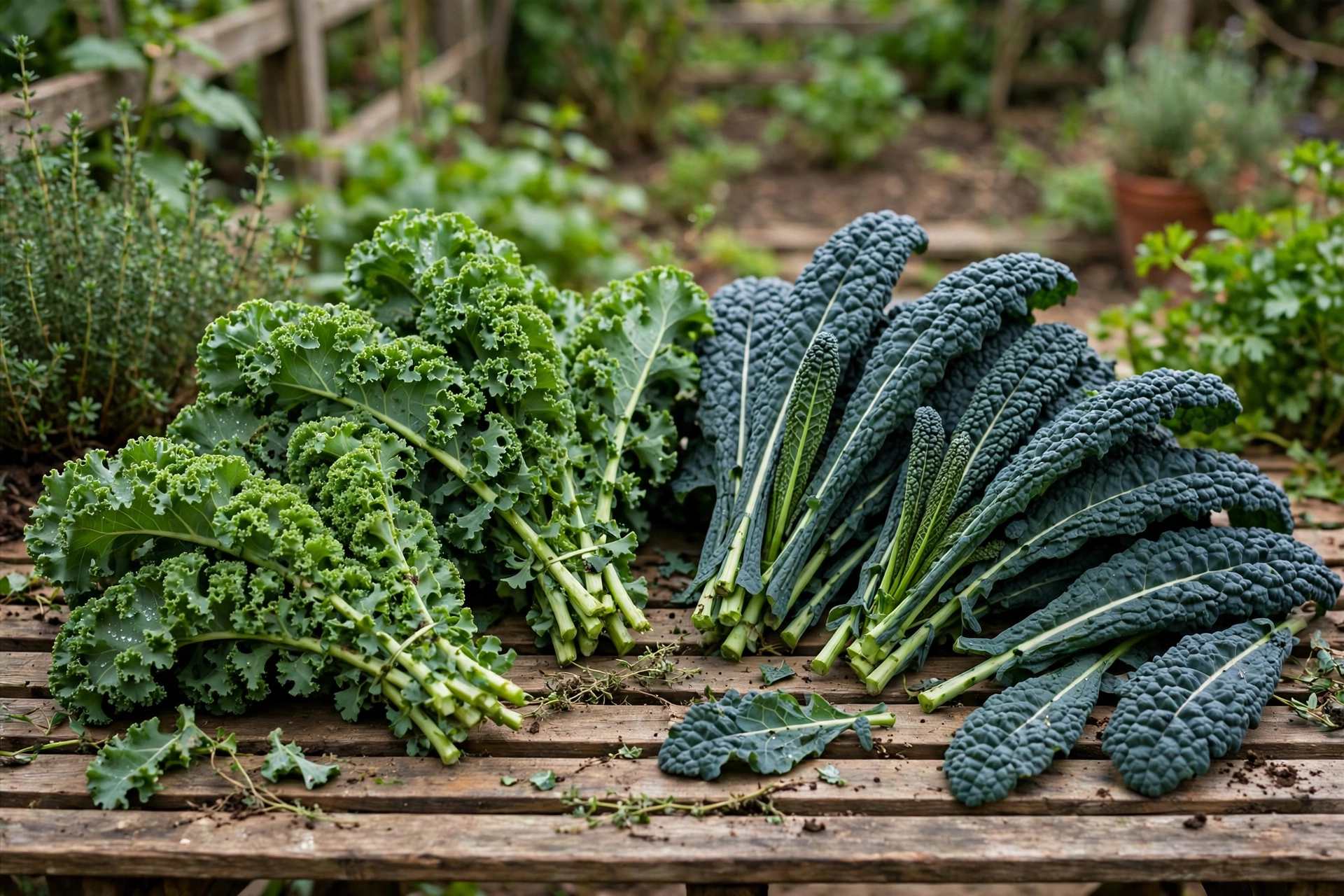
You come in from the garden with an armful of kale and the difference announces itself before the leaves reach the sink: the curly bunch is all volume and bounce, the lacinato lies flat and orderly in dark straps. Same crop, same bed, two very different leaves — and which one you plant should follow from what you actually cook.
Our kale varieties roundup rates the individual packets on both sides of this split, and our growing kale guide covers the shared sowing routine. If a third leafy green is competing for the same space, our mustard greens vs. kale comparison handles that choice separately.
The Leaf Itself
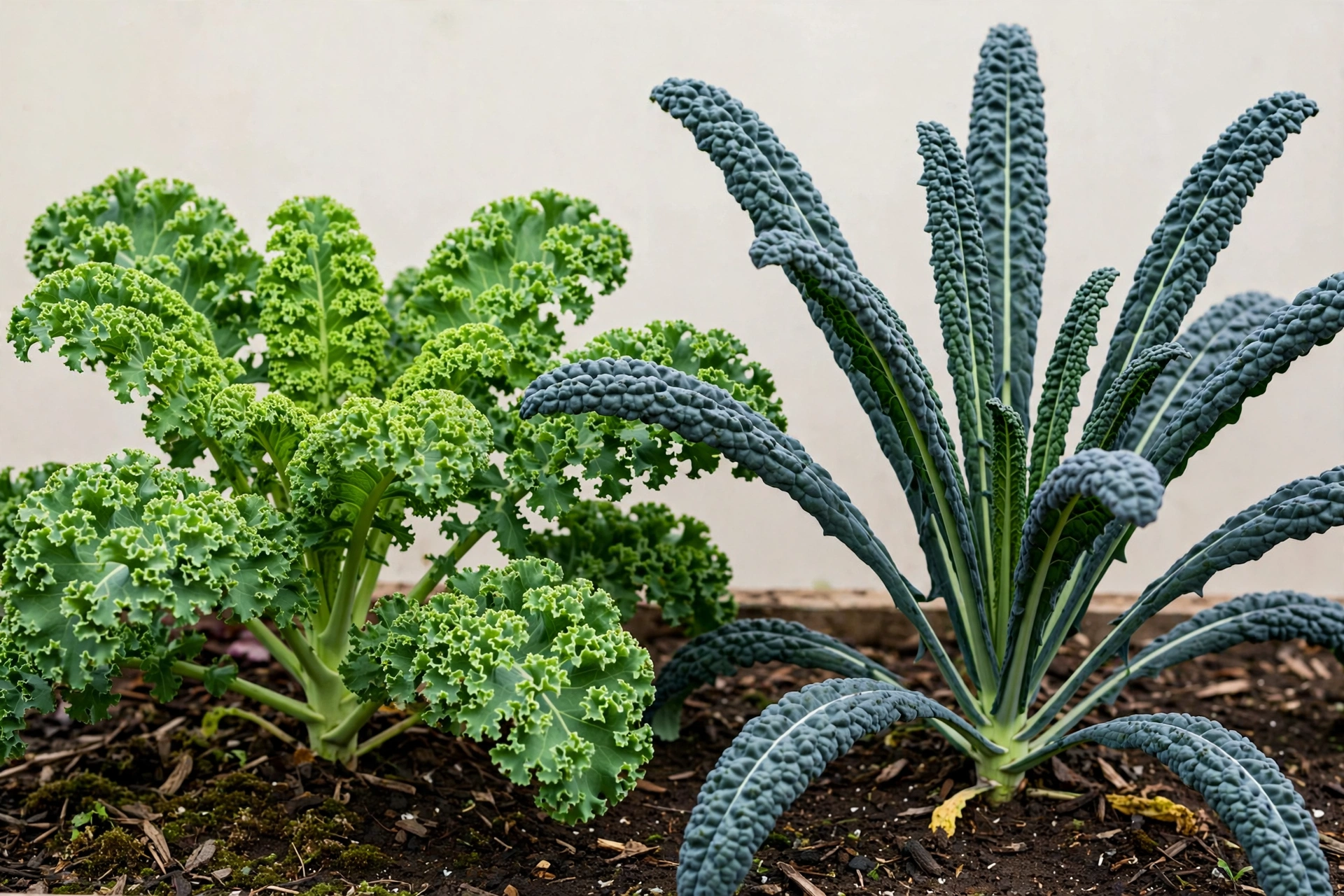
Lacinato leaves are long and narrow — about 3 inches wide on Lacinato Dinosaur — and heavily crinkled, with a dark green to nearly black color. The shape is the point: a flat-ish strap you can stack, roll, and slice into thin ribbons in seconds, with no frill trapping grit or dressing.
Curly leaves are broad, with frilled, ruffled edges that give a bunch its volume. Redbor, the curly hybrid here, has finely curled leaves that start blue-green and deepen to purple and magenta as temperatures drop. A curly bunch fills a colander fast, and the ruffled edges crisp at the tips in a hot pan or oven in a way a flat leaf never quite manages.
Texture and the Kitchen
Lacinato is the tenderer leaf for fresh use. Lacinato Dinosaur is described as a tender kale favored for salads, and Dazzling Blue, its cold-hardier cousin, is aimed at kale salads and other fresh dishes, with baby greens ready in about 30 days. Sliced thin and dressed early, lacinato softens willingly, which is why it owns the salad bowl in this comparison.
Curly kale holds its structure. That sturdiness is a liability in a raw salad unless you work the dressing in, and an asset everywhere heat is involved over time: soups that simmer, chips that need an edge to crisp, and bunches that have to survive a few days in the refrigerator without going limp. Choose by the dish you make most, not the dish you admire most.
Cold, Size, and the Shape of the Plant
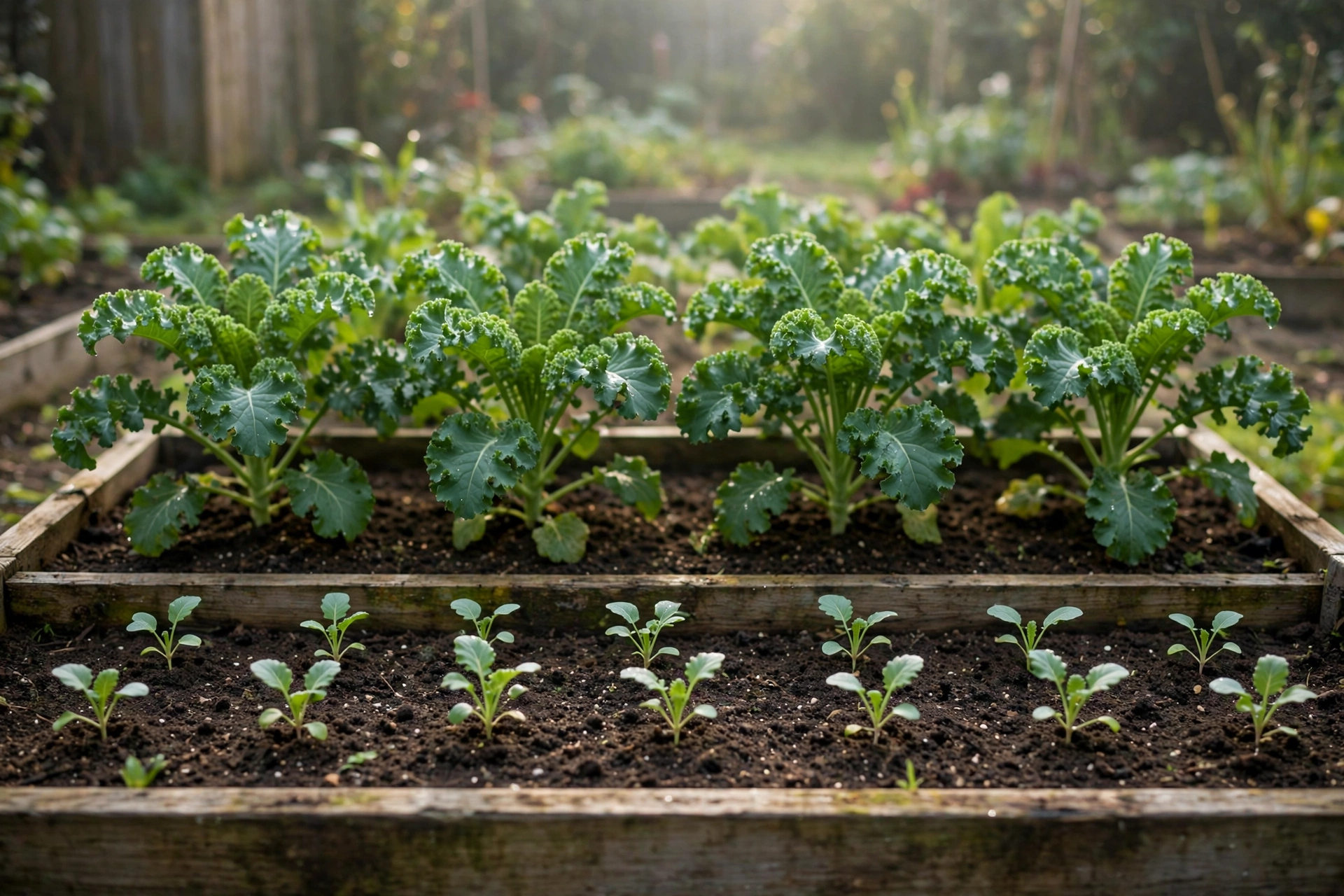
Both types are frost tolerant, and both sow exactly the same way — a quarter inch deep, a group of 3 seeds every 18 inches, thinned to one every 18 inches, in full sun. The differences show up in stature and in how far the cold tolerance stretches.
Lacinato plants grow tall, past 24 inches, and the lacinato inside Premier Blend is listed at 24 to 48 inches. Dazzling Blue was bred specifically to be more cold hardy than traditional lacinato, which closes lacinato’s one real gap. Redbor stays more compact at 12 to 24 inches, is listed as good for containers, and is extremely cold tolerant, carrying through hard freezes while its purple color intensifies. A tall bed favors lacinato; a pot on the patio favors Redbor.
| Trait | Lacinato | Curly |
|---|---|---|
| Leaf | Long, narrow, about 3 inches wide, heavily crinkled | Broad, finely curled, frilled edges |
| Best kitchen use | Salads, ribbons, quick wilting | Soups, chips, longer keeping |
| Plant size | Tall, past 24 inches | 12–24 inches for Redbor |
| Cold note | Frost tolerant; Dazzling Blue bred more cold hardy | Extremely cold tolerant; color deepens in cold |
| Example varieties | Lacinato Dinosaur 4.8/5 (41); Dazzling Blue 4.8/5 (25) | Redbor 4.3/5 (20) |
The Picks on Each Side
Lacinato Dinosaur Kale Seeds
The lacinato standard — tender dark straps, baby greens in 21 days, 4.8 out of 5.
Dazzling Blue Kale Seeds
Lacinato bred more cold hardy, with a purple midrib — 30 to 60 days, 4.8 out of 5.
Redbor Kale Seeds
The curly side’s best case — compact, container-friendly, purple-magenta in the cold.
Bottom Line
Plant lacinato first. Lacinato Dinosaur is tender where curly is sturdy, faster to the table with baby greens in 21 days, and rated 4.8 out of 5 by more gardeners than any curly variety here — and if your winters are the worry, Dazzling Blue answers it on the lacinato side. Add Redbor when you want a compact, purple, container-friendly plant for soups and fall color, and let it be the second kale in the garden rather than the only one.