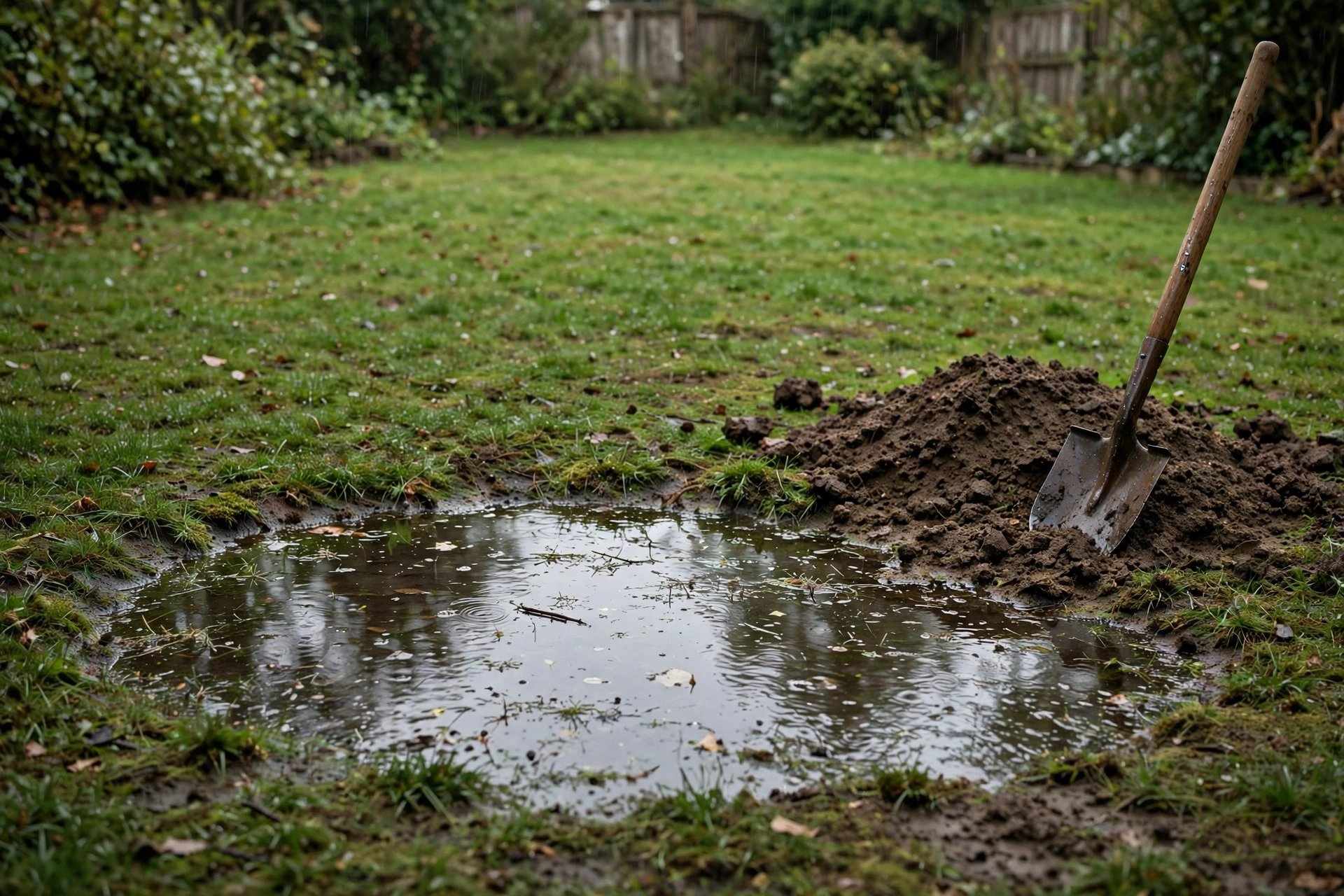
Rain ends and the puddle against your foundation is still there at dinner, dark and still, soaking the wall you least want wet. The grass beside it stays soft underfoot long after the rest of the yard has dried, and the mulch in the bed has floated into a little tide line a foot from the house.
Water pooling at your house foundation is worth fixing promptly, because that wall is holding back soil, moisture, and pressure all at once. The good news is that most pooling has an ordinary cause you can find in one walk around the house, and the cheapest fixes solve it far more often than drains do.
Start by watching where the water comes from
Go out during a steady rain, or just after one, and watch each side of the house separately. You are looking for the source, not just the puddle, because a puddle is only where water stopped.
Gutter overflow. If water sheets over the edge of a gutter or pours from a joint, the gutter is clogged, undersized for that roof section, or sloped the wrong way. One overflowing corner can dump hundreds of gallons against a single stretch of foundation in a single storm.
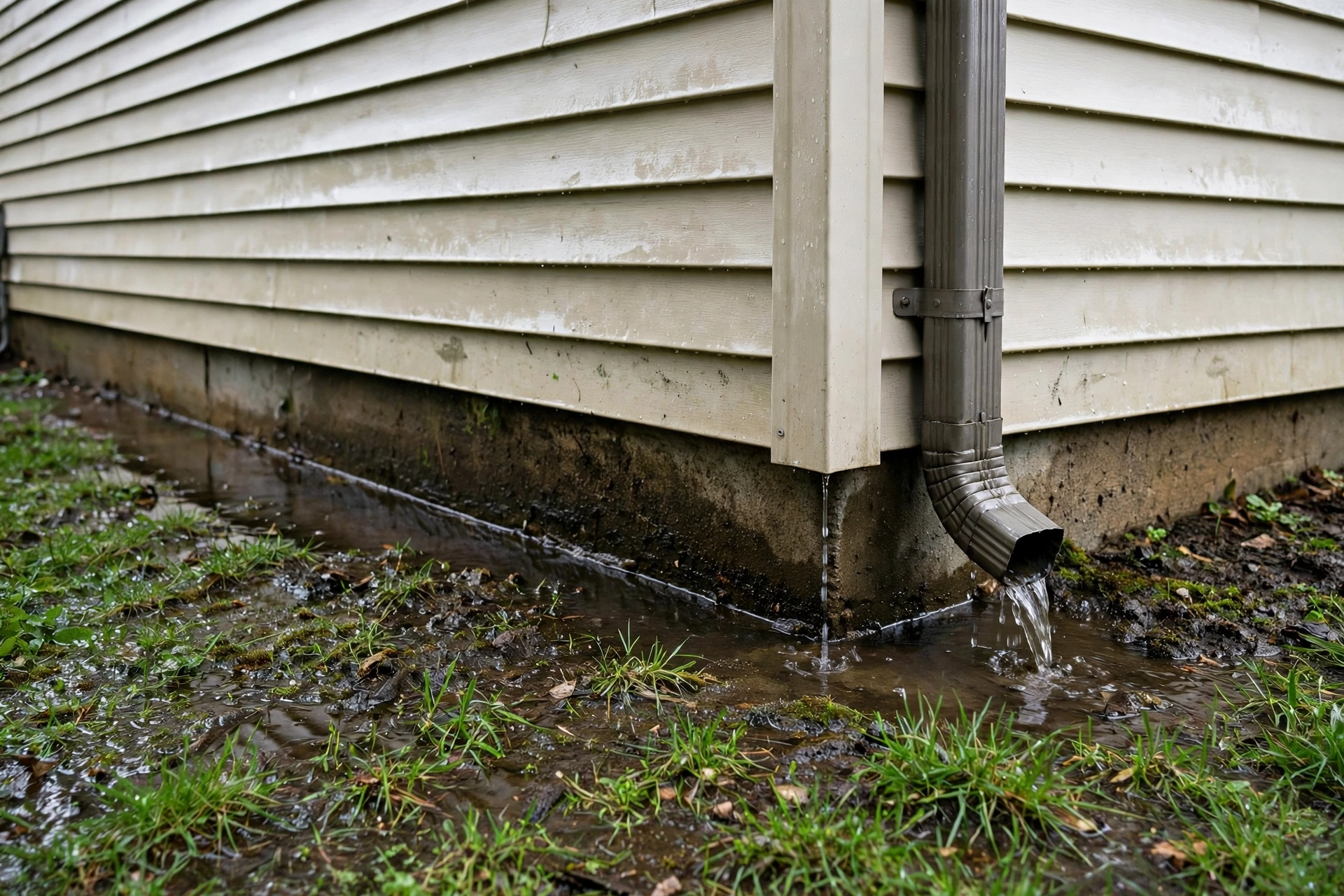
Short downspouts. A downspout that ends right at the foundation delivers roof water to the worst possible place. Look for elbows that stop at a splash block, extensions that have slipped off, and outlets buried under mulch where nobody can see whether they still work.
Negative grade. If the soil beside the house sits flat or tilts back toward the wall, every rain walks straight home. You can check with a long level or a straight board and a tape measure: the ground should fall away from the house, not toward it.
Settled backfill. The soil dug out when the house was built was put back looser than the ground around it, and over years it settles into a shallow trough right against the wall. That trough collects water even when the rest of the yard grades correctly, which is why pooling often hugs the foundation in a neat, narrow band.
Fix 1: Clean the gutters and check the downspouts
Do this first, before you move a single shovelful of soil. Scoop leaves and grit from the gutters, flush each downspout with a hose, and confirm that water runs freely out the bottom instead of backing up at a joint.
While the hose is running, stand where you can see the outlet. If the flow is weak or the downspout rattles with debris, clear it now, because a partly blocked downspout overflows at the top in heavy rain and looks exactly like a grading problem from the ground.
This step costs an afternoon and nothing else. For a surprising number of houses, it is also the whole fix.
Fix 2: Extend every downspout away from the house
Each downspout should carry water at least 4 to 6 feet from the foundation, and farther on flat or clay lots where water spreads instead of soaking in. A splash block alone does not do this job — it slows the splash, but it still releases the water within inches of the wall.
Above-ground extensions are the simplest option and the easiest to inspect, while buried extensions keep the outlet out of the way of mowers if they daylight at a visible point downslope. Either way, keep the outlet visible and clear of mulch, because an outlet you cannot see is an outlet you will not notice failing. The full distance and layout guidance is in downspout extensions: how far water should drain from the house.
After a rain, walk the line again. The soil at the new outlet should be wet, and the soil at the foundation should finally be merely damp — that contrast tells you the roof water has a new address.
Fix 3: Regrade the soil against the foundation
If the gutters run clean and the downspouts reach far enough, grade is the next place to look. Soil should fall at least 6 inches in the first 10 feet from the foundation, which works out to about a 5% slope — enough that water keeps moving without the bed looking like a ramp.
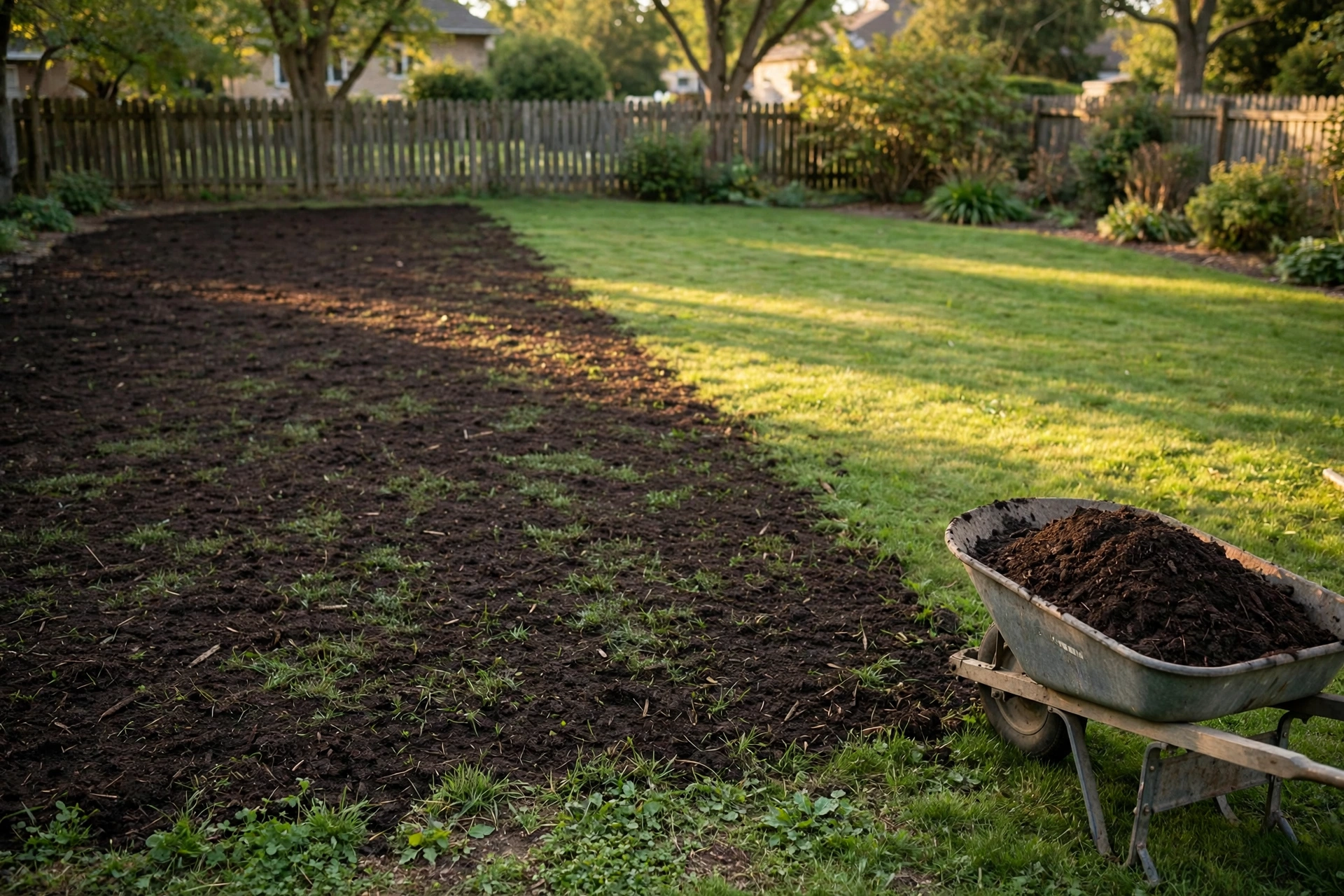
Build that fall with clean fill soil, not mulch and not loose topsoil full of wood chips, because organic material settles and holds moisture against the wall. Pack each layer as you go, keep the finished grade a few inches below siding and brick weep holes, and leave any window wells with their own clear drainage path.
Work in the settled trough first. In many yards, filling that one band and restoring the fall fixes the pooling completely, even when the homeowner was braced for a trench across the lawn.
Fix 4: Add drainage only when the first three fixes are not enough
Sometimes the lot itself works against you: a hill above the house sends surface water down, the soil is heavy clay, or the yard has no slope to borrow. That is when a drain earns its cost.
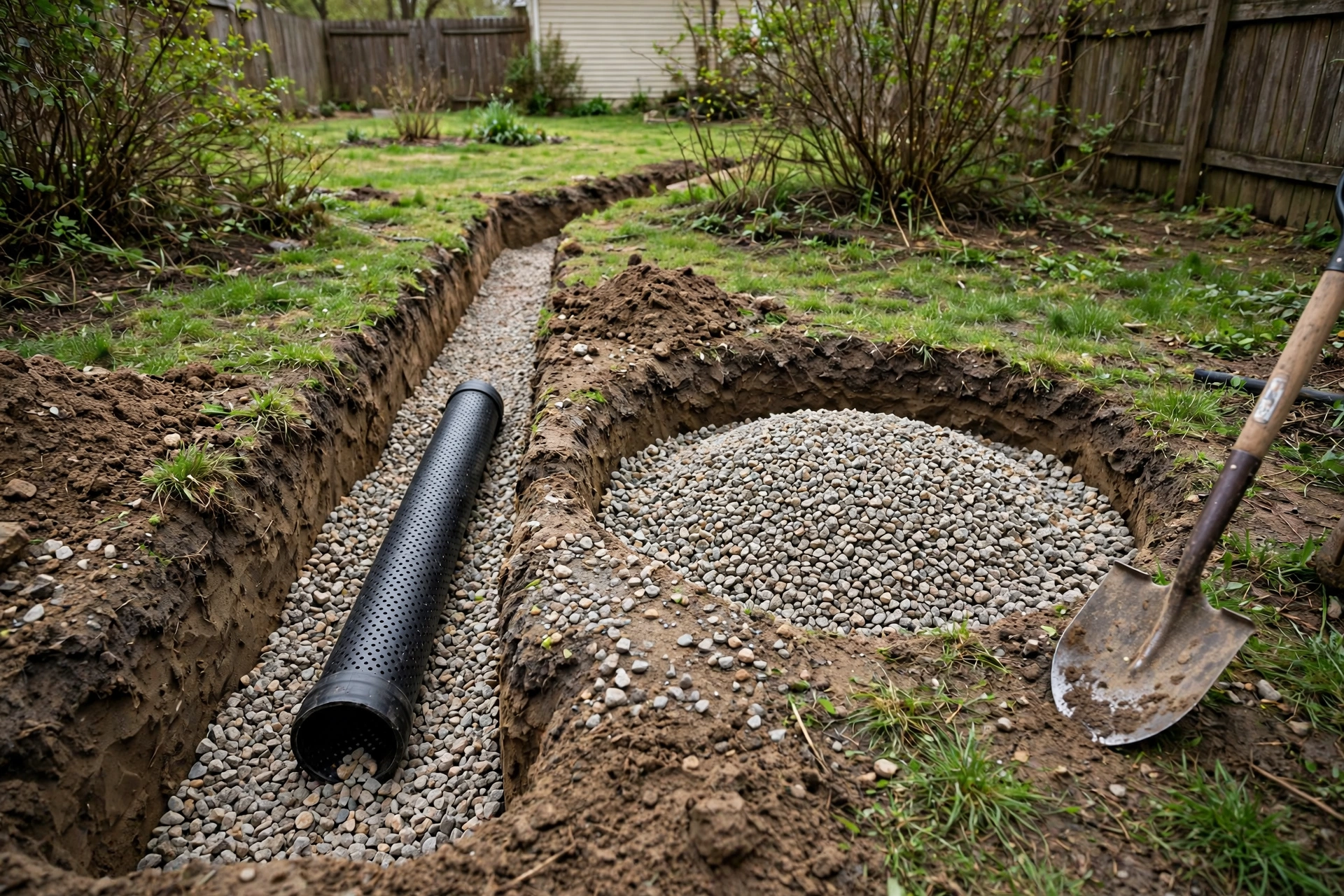
A French drain intercepts water moving through the soil and carries it to an outlet, while a dry well collects a modest volume and lets it soak in slowly on site. Choosing between them matters, because the wrong one fails expensively — see French drain vs dry well for the head-to-head. If the wet area sits away from the house in the middle of the lawn, the approach in how to stop water pooling in a low spot may fit better than a foundation drain.
Two cautions belong here. Never route drainage toward a septic field, and never solve your pooling by sending the water onto a neighbor’s lot — both create bigger problems than the puddle did.
When the wet yard is bigger than the foundation
If the whole backyard stays soft, not just the strip by the house, you are dealing with a yard-wide drainage pattern rather than a foundation problem alone. Start with the foundation fixes above anyway, since they protect the house first, then work through the broader options in how to fix a muddy backyard.
On a still evening after rain, the fixed yard sounds different — no drip line drumming against the wall, no squelch along the bed edge when you step out to check. That quiet is worth more than it sounds, because it means the water is leaving on your terms.
How to tell the fix worked
Wait for a real rain, not a drizzle, and walk the foundation within an hour of it ending. The soil against the wall should be damp at the surface and firm underfoot, with no standing water anywhere along the bed and no fresh tide line in the mulch.
Check inside, too, if you have a basement or crawl space. A musty smell that fades over the following weeks, and efflorescence — the white mineral crust water leaves on concrete — that stops spreading are both signs the wall is finally drying between storms instead of staying loaded with moisture.
If one short stretch still pools while the rest of the house stays dry, treat that stretch as its own small problem rather than redoing the whole yard. A single settled section of backfill or one downspout doing the work of two is usually hiding there, and a targeted lift of soil or one longer extension closes it.
Bottom line
Diagnose before you dig: clean the gutters, extend every downspout at least 4 to 6 feet out, and restore a 6-inch fall in the first 10 feet from the wall. Do those three in order, watch one good rain, and only then spend money on a drain — most foundation pooling ends at step two or three.