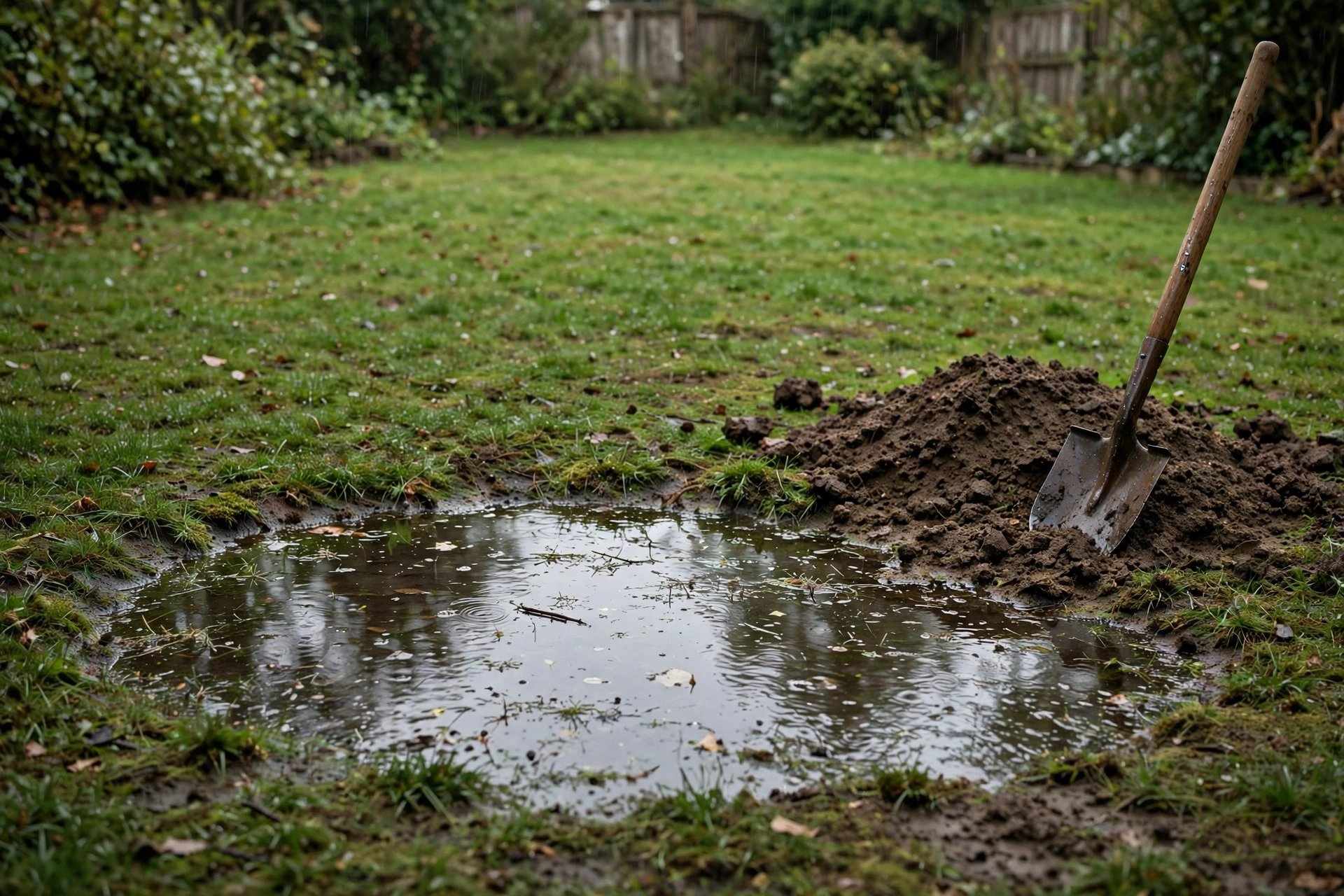
Every rain leaves the same bright mirror in the middle of your lawn, and two days later the grass underneath has gone thin and yellow. You can set a chair leg in that spot and feel it sink, while the rest of the yard firms up and gets mowed on schedule.
A low spot pools because water follows the ground you give it, and that dip is the lowest address on the lawn. The fix depends on how deep the dip is and whether the water has anywhere better to go, so measure before you order soil.
Why the dip keeps winning
Most low spots are settled ground, not original design: fill that compacted unevenly, a trench line that sank, or years of soil washing out of one shallow bowl. Each rain delivers more water than the dip can absorb, and grass roots sitting in that water suffocate, which is why the patch thins even though it is the wettest ground you own.
Depth decides the approach. A dip of 2 inches or less across a broad area is a filling job; a deeper bowl, or one that collects water from a slope or a downspout, is a drainage job wearing a filling job’s clothes.
Fill and grade a shallow spot, in thin lifts
1. Mow short and mark the edge. Cut the grass in the dip as short as you safely can and mark where the ground starts to fall, so you fill the bowl and not just its center.
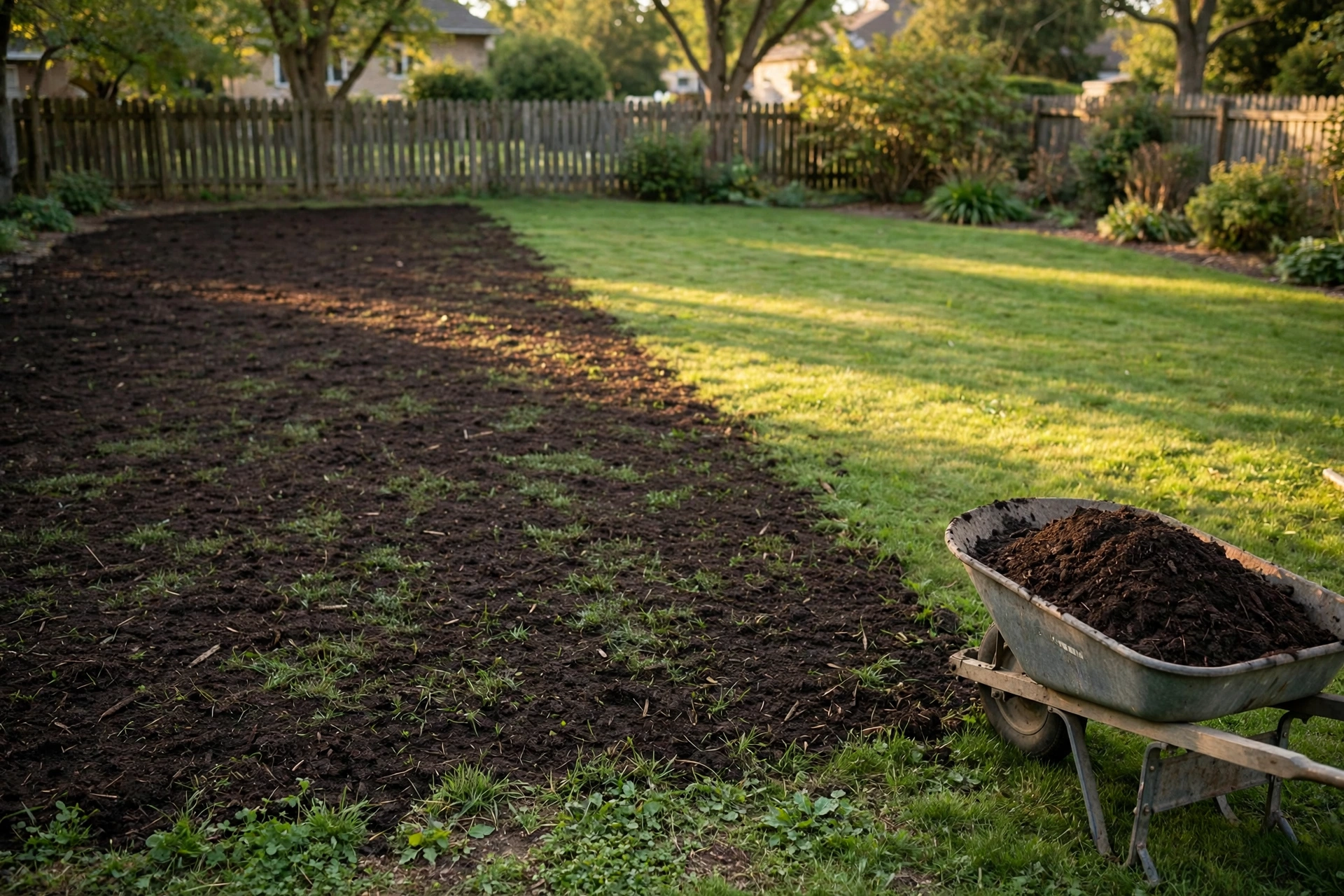
2. Add topsoil in thin lifts. Spread no more than about half an inch of topsoil at a time over living grass, so the blades poke through and keep growing. For a deeper fill, remove the sod first, fill and level the soil, then replace the sod or re-seed the bare ground.
3. Level, water lightly, and repeat. Rake each lift level, water it just enough to settle, and check the grade after it dries. Two or three thin lifts a few weeks apart beat one thick layer, which smothers the grass and settles into a new, smaller dip.
4. Re-seed what you covered. Where lifts buried the grass or you filled bare soil, seed promptly and keep the seedbed moist until the new grass is established — fall and spring, when temperatures favor germination, are the forgiving windows for this work.
When filling just moves the problem
Fill raises your dip, but the water that used to stop there still has to stop somewhere. If the surrounding grade is flat, you will often watch the puddle re-form a few feet away at the next-lowest point, slightly smaller and just as annoying.
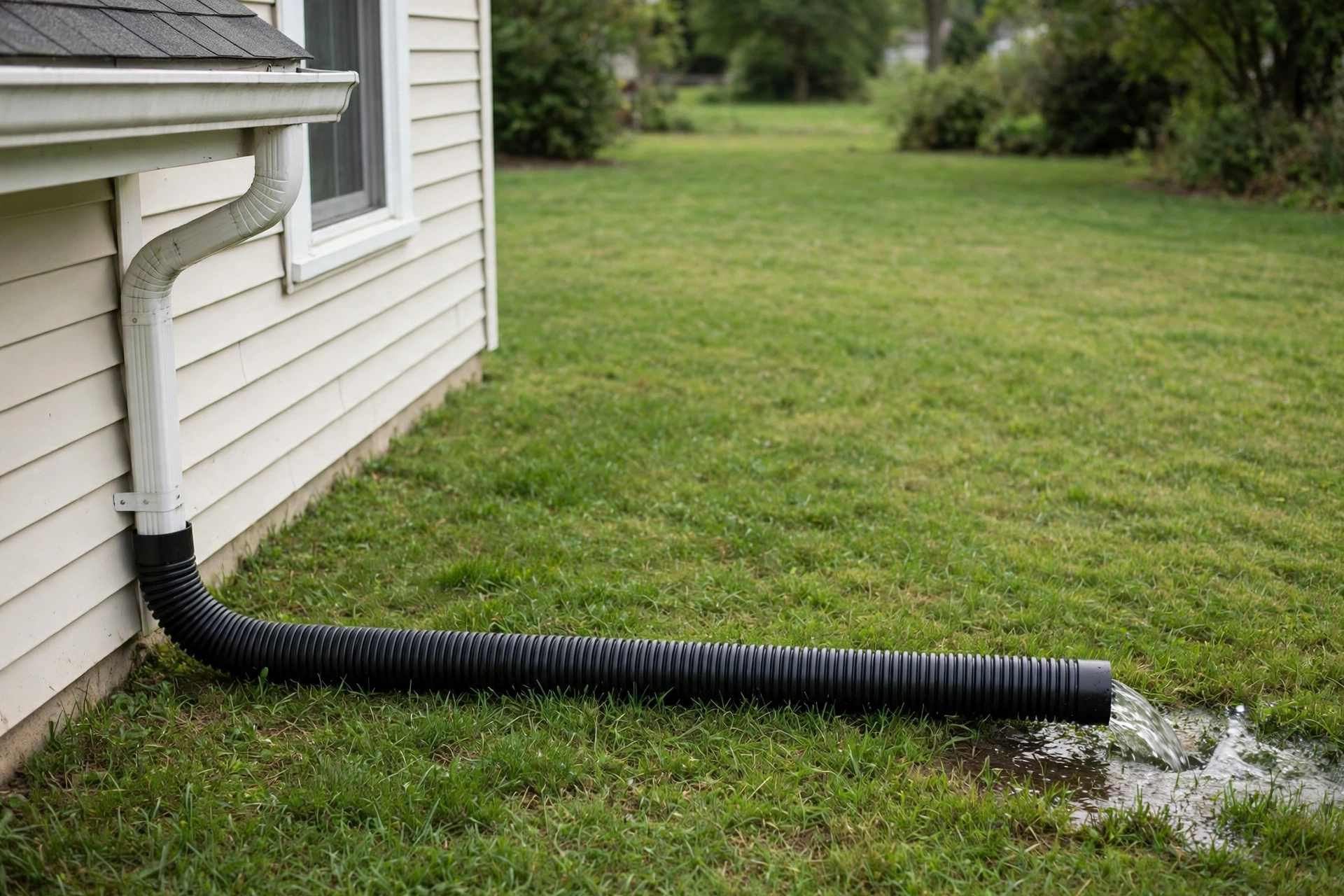
That is the signal to stop adding soil. When a filled spot passes its puddle along, the yard is not asking for more dirt — it is asking for a route. The same is true when the dip refills from a downspout or a hillside: fix the source first, starting with the checks in how to fix water pooling at your house foundation.
Give the water a route: swale or rain garden
A swale is a wide, shallow channel with gently sloped sides, graded so water flows slowly along it to a lower outlet instead of sitting in one bowl. Mowed as lawn, it looks like a soft fold in the yard, and it suits spots that collect water from a broad area because it moves that water while it is still shallow.
A rain garden takes the opposite approach: a shallow planted basin, set where water already collects, filled with deep-rooted plants that tolerate wet feet and dry spells in turn. The basin holds a storm briefly and lets it soak in on site, which works well at the bottom of a gentle slope and poorly in heavy clay that barely drains at all.
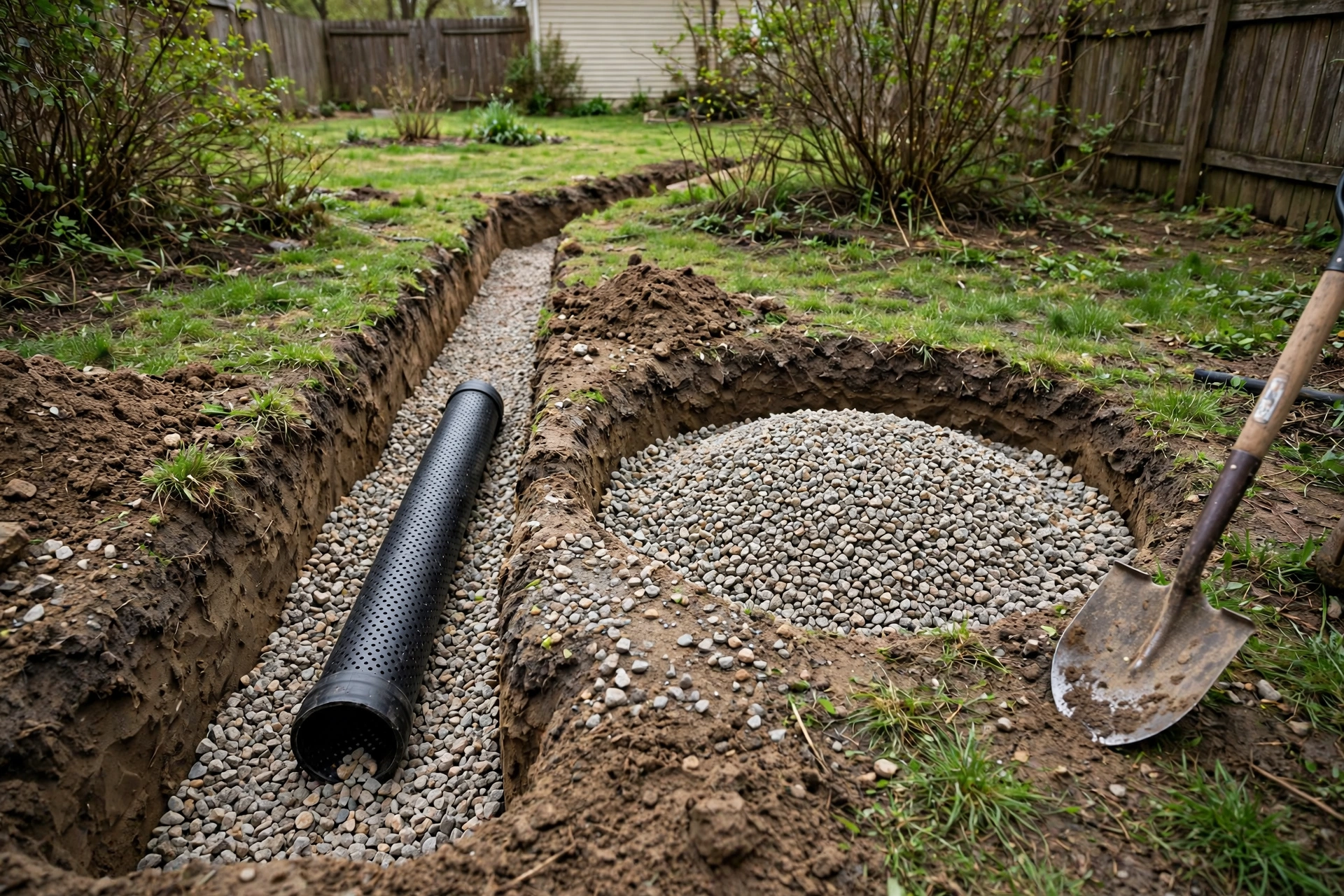
When the volume is large or the water arrives underground along a whole strip, neither option may be enough on its own — that is the case laid out in French drain vs dry well. And keep every route clear of two destinations: never drain toward a septic field or onto a neighbor’s lot.
The mosquito deadline
Standing water has a clock on it. Water that sits beyond 48 to 72 hours is standing long enough for mosquitoes to breed in it, which turns a lawn problem into a patio problem on the first warm evening.
Use that window as your test after each fix: if the mirror is gone within a day of rain ending, you have solved the pooling. If it is still there on day three, the spot needs the next step up — more grade, a route, or a drain — not another season of patience.
Test the spot before you commit a weekend
Before you order soil or sketch a swale, run a simple test on a dry day: lay a hose at the top of the dip, let it run gently, and watch where the water goes and how long the bowl takes to empty after you shut it off. Water that drains away within a few hours once the flow stops points to a shallow grading problem you can fill.
Water that barely drops, in soil that stays slick and dark, points to slow-draining clay underneath — and filling clay changes the puddle’s shape more than its stay. In that case, spend the weekend on a route or a planted basin instead of on lifts of topsoil the water will simply sit on.
Do the filling work when the ground is moist but not muddy, ideally in spring or fall when new seed takes readily. Mid-summer fills can be done, but the re-seeded patch will need faithful watering through the heat, and a dip repaired in a dry spell is easy to overfill because nothing has settled yet — leave the last lift slightly low and let one good rain grade your work before you call it level.
Bottom line
Fill shallow dips in half-inch lifts, re-seed, and watch one good rain. If the puddle moves instead of disappearing, stop filling and give the water a swale to follow or a rain garden to soak into — and judge every fix by whether the spot is dry within 48 hours.