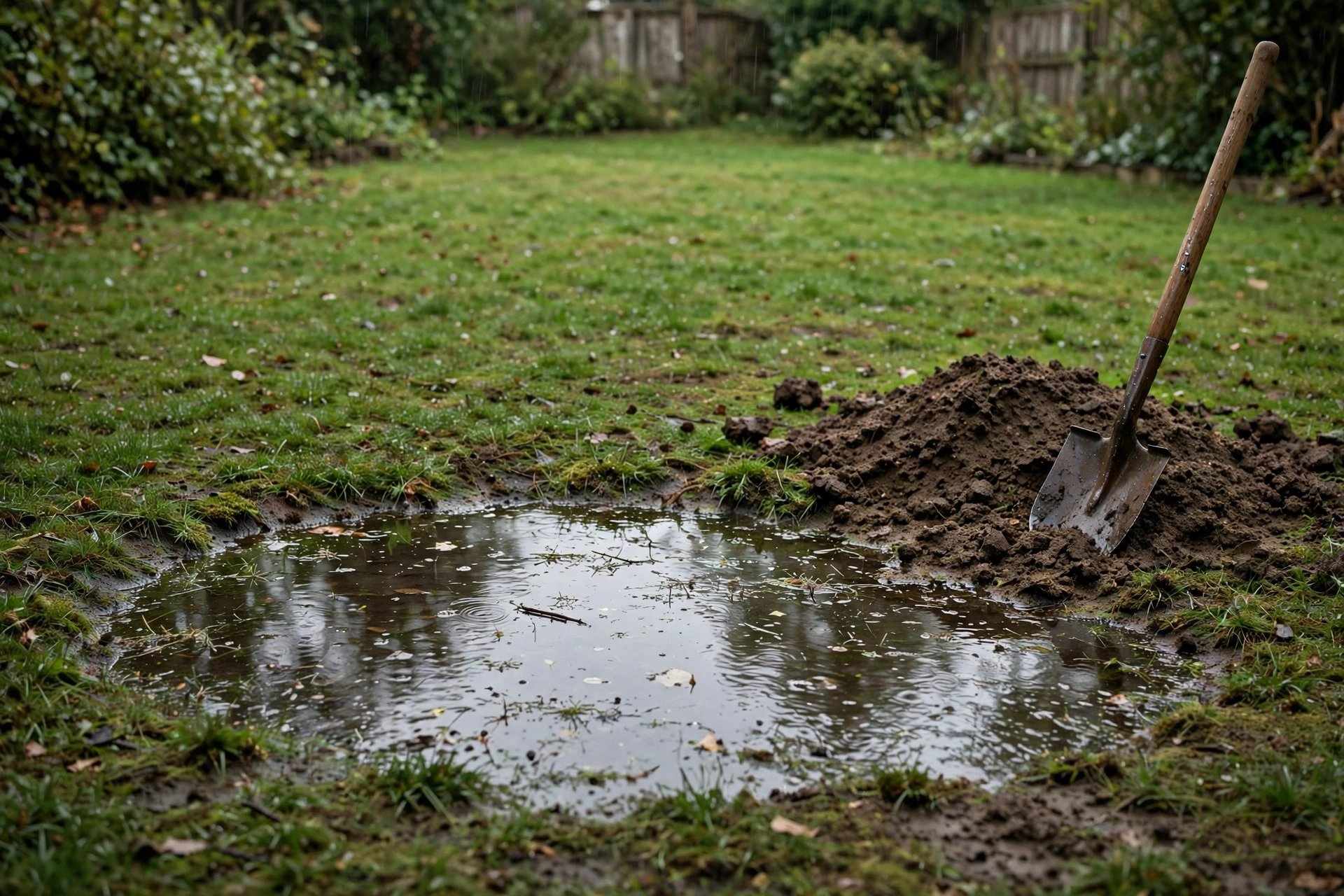
After a rain the downspout dumps a white rush at the corner, and the mulch floats off while the soil underneath stays soaked for days. By the time the bed finally dries, the next storm is already on the forecast, and the corner never quite catches up.
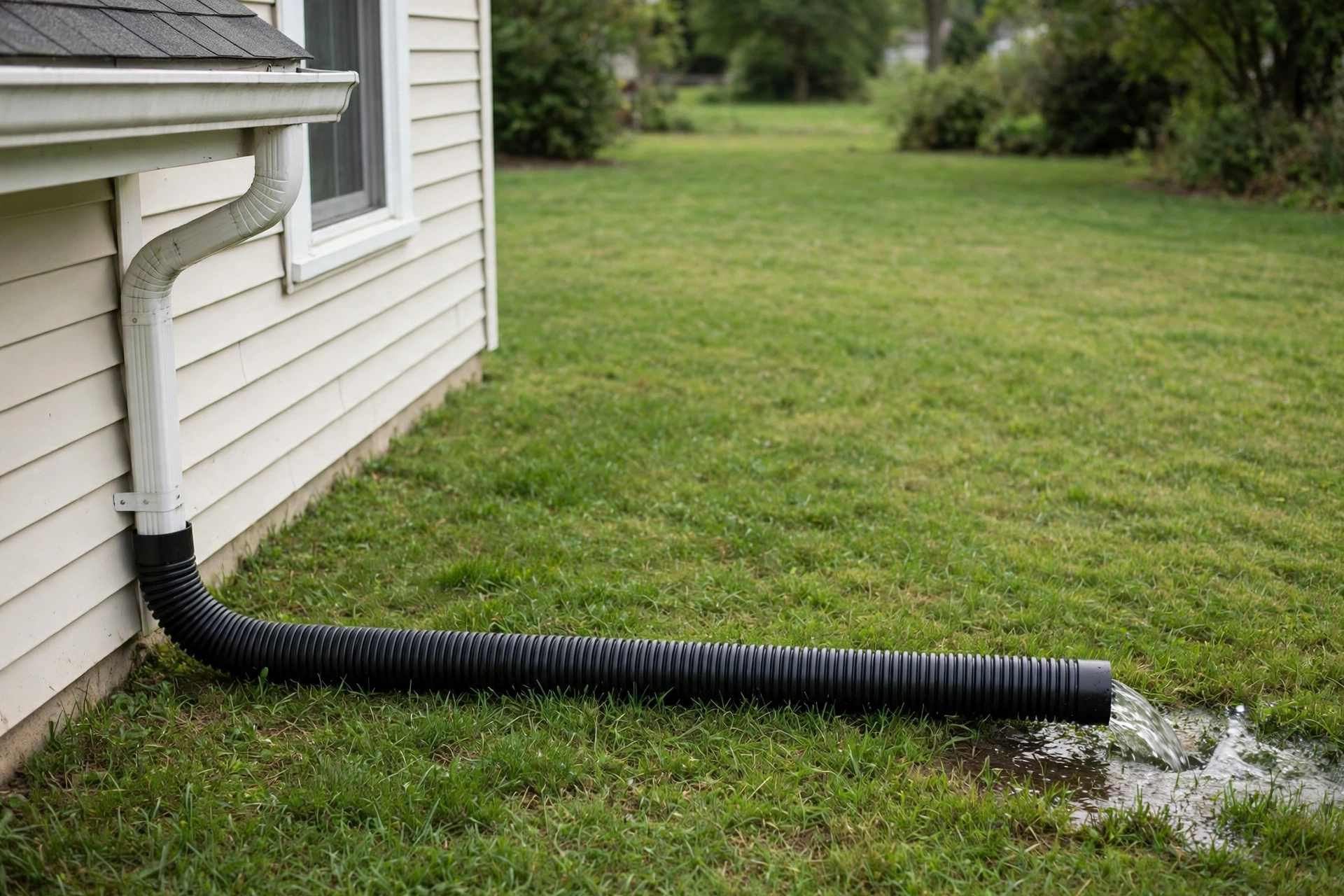
Downspout extensions solve this by giving roof water a longer runway. The distance matters more than the hardware: carry the water at least 4 to 6 feet from the foundation, and plan on 10 feet where the grade is flat or the soil is clay that soaks in slowly.
Why 4 to 6 feet is the minimum, not the goal
The soil right against a house is backfill — dug out during construction and put back looser than the undisturbed ground around it. Loose soil drinks water fast and holds it against the wall, which is exactly where you do not want a roof’s worth of rain delivered.
Four to six feet gets the outlet past most of that loose band and onto firmer ground. On a lot that already falls away from the house, 6 feet is usually plenty, because the slope takes over from there and keeps the water moving.
Flat ground changes the math. With no slope to help, water released at 4 feet can still spread back toward the wall, so 10 feet is the safer target — and the same goes for clay soil, which absorbs so slowly that the puddle lingers wherever it lands.
Above-ground extensions: simple, visible, easy to check
A rigid or flexible extension attached at the elbow is the fastest fix and the easiest to live with honestly. You can see the outlet, you can see whether it is flowing, and you can lift it out of the way to mow or rake.
The trade-offs are plain. Extensions can be kicked loose, crushed by a wheelbarrow, or tripped over where they cross a path, so check the connection after yard work and after the first hard rain of the season.
Before winter in cold climates, make sure an above-ground extension is not holding a plug of ice at the outlet. A quick look during a thaw tells you whether water is still getting out.
Buried extensions: tidy, with one condition
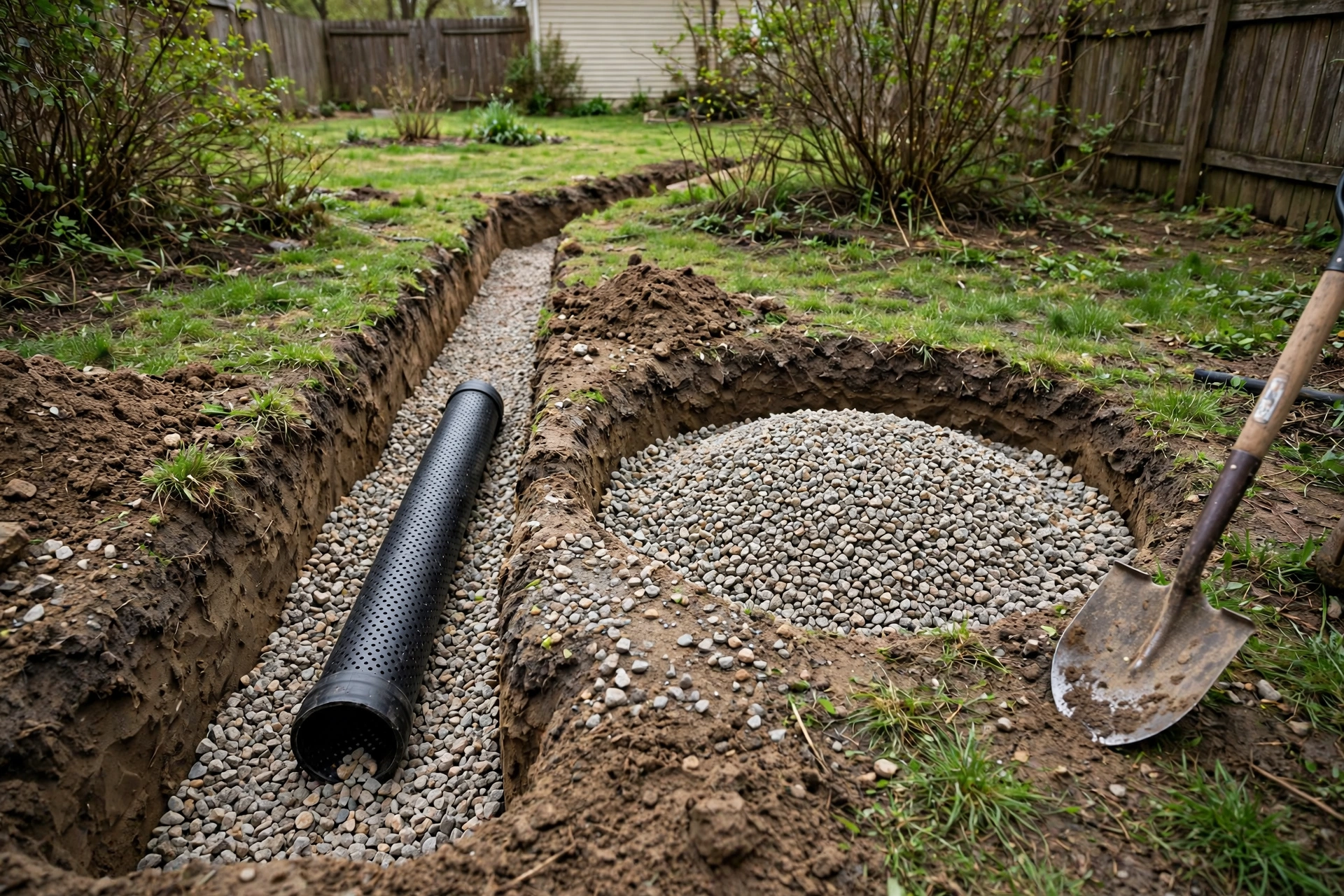
Burying the line in solid pipe keeps the yard clear and the mower happy, and it works well when the pipe runs downhill to a visible outlet at the surface — a pop-up emitter or an open end at a slope. That visible daylight point is the condition, not an extra.
A buried line with no accessible outlet hides its failures. Roots, settled soil, and a single crushed section can back the whole downspout up for a season before anyone notices water at the foundation again.
If you bury an extension, keep the run as straight and short as the 10-foot target allows, and note where it daylights so you can check it each spring. For the bigger picture of what happens when outlets fail at the wall, see how to fix water pooling at your house foundation.
Splash blocks are the minimum, not the fix
A splash block does one honest job: it keeps falling water from blasting a hole in the soil at the base of the downspout. It does not move water away — the block ends about a foot from the wall, and the water leaves the block still well inside the backfill zone.
Treat a splash block as better than bare soil and worse than any real extension. If the ground under the block stays wet a day after rain, the block has told you its limit.
Keep the outlet visible and clear of mulch dams
Midway through the season, this is the check that matters: walk each outlet after a rain and look at it. Mulch migrates, edging shifts, and a shallow dam of bark or soil across the outlet can pond the water right back toward the house, undoing the whole extension in silence.
Clear the outlet so water exits freely onto ground that falls away. If the discharge point itself holds a puddle, extend farther or shift the outlet to where the grade helps you — the fix is distance plus fall, not a bigger pipe.
Where the outlet releases into a low area that already collects water, pair the extension with the grading steps in how to stop water pooling in a low spot in your yard, so the roof water arrives at ground that can actually take it.
Size the extension to the roof above it
Not every downspout carries the same load. A downspout draining a large roof plane, or two valleys that meet above one corner, can carry two or three times the water of a downspout serving a small porch roof — and it deserves the longer end of the range, even on ground with decent slope.
Watch that corner in a heavy rain before you finalize the length. If the outlet at 6 feet still leaves a broad wet fan that creeps back toward the house, go to 10 feet and do not split the difference, because the backfill zone does not care about averages.
Where two downspouts land near the same corner, extend both to the same discharge area rather than staggering them. One shared, visible outlet on ground that falls away is easier to check and far less likely to hide a failure than two separate endpoints in two different beds.
A two-minute check, twice a year
Extensions fail quietly, so put them on the same twice-a-year rhythm as the gutters themselves: once in spring before the heavy rains, once in fall after the leaves drop. Run a hose into the gutter or wait for rain, confirm each outlet flows freely, and clear any mulch, soil, or leaf mat that has crept across it.
On an autumn evening, when the light goes early and the beds are thick with fresh mulch, that walk takes two minutes and a flashlight. It is the cheapest insurance in this whole article, because every other fix in it assumes the outlet is open.
Bottom line
Set every downspout extension to reach at least 4 to 6 feet from the foundation — 10 feet on flat or clay ground — keep the outlet visible, and check it after the first storm each season. That distance, kept clear, does more for a dry foundation than any sealant on the wall.