You finished dividing on a good fall day, and now the extras are sitting in pots along the driveway with nowhere finished to go. The bed is not ready, the ground will freeze before it is, and those divisions still need to get through winter.
That gap matters more than it looks, because a perennial in a pot is far less cold-hardy than the same plant in the ground. This post settles how to store divided perennials over winter: two reliable methods, the mulch timing that protects them, and the storage spots that quietly undo them.
Why pots lose the protection the ground gives
In the ground, a deep mass of soil buffers roots against sharp swings in temperature. In an above-ground container that buffer is gone, and the potting mix can drop into the single digits on a cold night.
Bare divisions have even less around them. Roots that would come through winter underground without trouble can be damaged in a thin pot or left exposed, which is why the storage method matters as much as the storage place.
Method 1: Heel them in, the most reliable option
Wait for dormancy, then move before the soil freezes. Heeling in happens after the plants go dormant but before the soil freezes, in that quiet fall stretch when the beds are emptying and the ground still digs easily.
Set potted divisions pot-to-pot in a spare bed. Sink the pots side by side in an empty garden bed and backfill soil around them as if they were planted, so the surrounding earth does the insulating that the pot cannot.
Or plant bare divisions directly in a nursery row. Bare divisions can go straight into a spare row at their normal depth, firmed in like any planting, where they wait out winter in real soil until you move them to their permanent spots in spring.
The bed looks odd for a while — a tight crowd of pots buried to their rims in ground that was growing something else last month. Once the mulch goes over the whole arrangement later in fall, it disappears, and the divisions underneath are simply plants in the ground again.
Method 2: An unheated structure, checked monthly
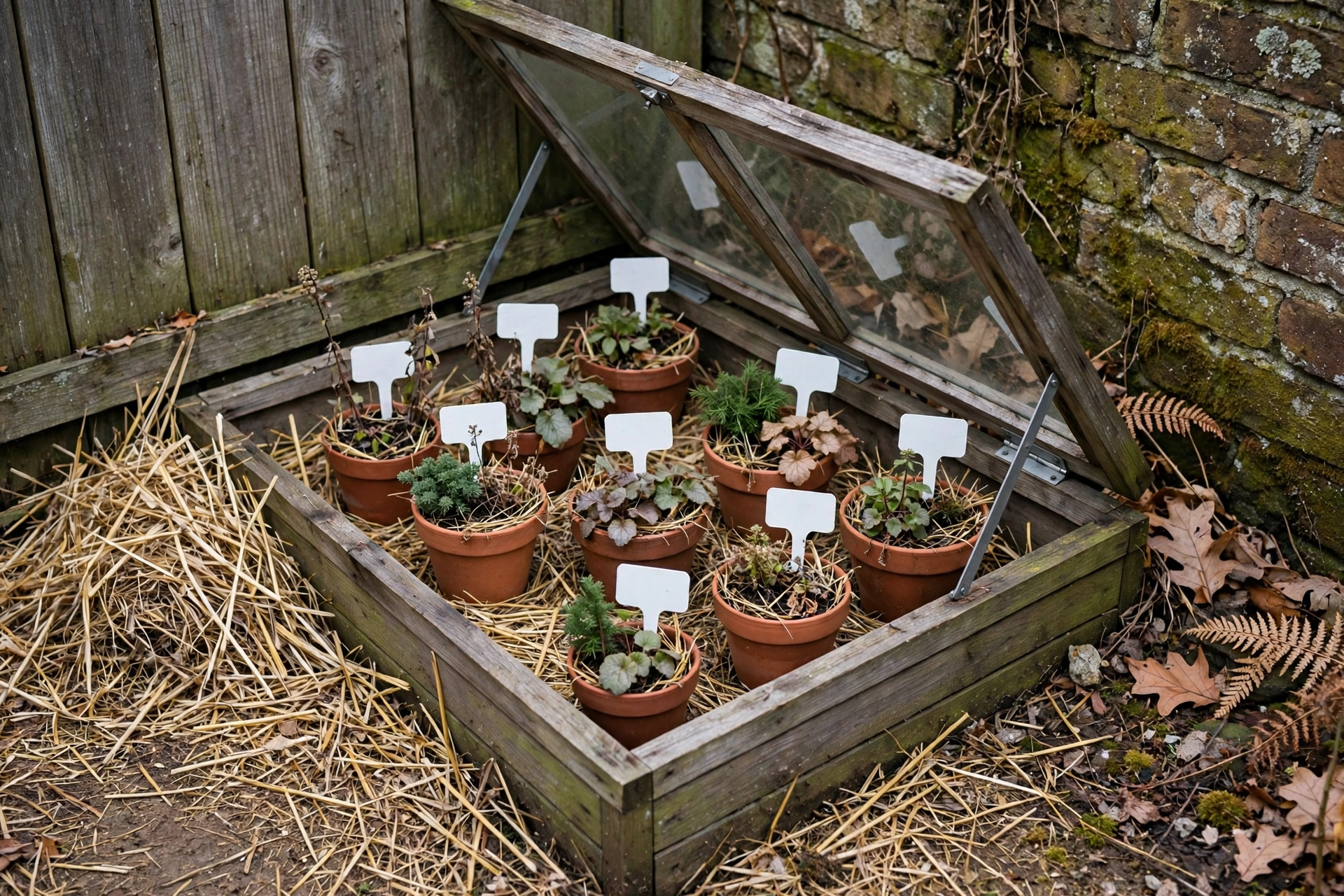
If you have no spare bed, an unheated garage, shed, or cold frame can work. The space needs to stay cold but buffered, holding the divisions dormant without exposing a thin pot to the full swing of outdoor air.
Check stored divisions monthly through winter. Water just enough that the roots never fully dry out, because a dormant division tolerates cold far better than it tolerates months of drying in still, sheltered air.
This method asks more of you than heeling in does. A heeled-in division in the ground mostly looks after itself, while a pot in a garage depends on you remembering it in January and February, when the garden is easy to forget.
Which method fits your situation
Choose heeling in whenever a spare bed or a spare row exists. It puts the divisions back into the one environment they are built for, and it removes the monthly watering from your winter list entirely.
Choose the unheated structure when the ground is spoken for or the divisions are extras you plan to share in spring and want within reach. If you are still weighing whether holding extras is worth the effort at all, dividing perennials vs buying new plants runs the honest comparison.
Mulch after the ground starts to freeze, not before
Once heeled-in divisions are dormant and the ground is cold, cover them with 6 to 12 inches of loose straw or pine needles. Loose material traps air and insulates without packing down over the crowns, and it lifts away cleanly in spring.
Avoid matted leaves for this job. Leaves compact into a dense layer that smothers the plants underneath, holding wet weight against the crowns instead of buffering them.
Timing matters as much as depth here. Mulch after the ground begins to freeze, not before, because early mulch delays dormancy and invites heaving as the soil freezes and thaws around a plant that has not fully settled into winter.
What goes around divisions when they are planted out for good in spring is a separate decision. What soil and mulch to use after dividing perennials covers the planting-out side of it.
The storage spots that do not work
Do not store divisions in a heated room. Warmth tells the plant winter is over, and a division that breaks dormancy indoors in January has spent its reserves before spring arrives.
A refrigerator holding ripening fruit is also off the list. Keep divisions out of standing water at the other extreme, and never let bare roots dry out completely, because roots lost to either soaking or drying do not recover when planting weather returns.
Labels, and the spring wake-up
Label every division before it goes into storage. By spring, dormant crowns and quiet pots all look alike, and the blank-label problem is real: unlabeled divisions get planted in the wrong beds or handed to a neighbor as the wrong plant.
Pull pots and divisions out in spring after the worst cold passes, typically a few weeks before the last frost. That timing lets them wake up gradually outdoors on the tail of the cold season instead of all at once in a warm room.
Timing cuts both ways with divisions, going in as well as coming out. The fall window for the most timing-sensitive perennial in the group is covered in when to divide peonies, and the general fall case is in should you divide perennials in fall.
The short answer
If you have a spare bed, heel your divisions in — it is the most reliable way through winter, and it asks the least of you afterward. Use an unheated garage only when no bed is available, cover heeled-in plants with 6 to 12 inches of loose straw or pine needles after the ground starts to freeze, and label everything before it disappears under that mulch.