You are standing in the nursery aisle doing quiet math in your head, because the bed you want to fill needs a dozen plants and the pots in front of you run $15 to $25 each. That bed is already growing in your yard, in clumps that have quietly outgrown their space.
Dividing the perennials you own is the cheapest way to fill a new bed, and for most clumping perennials it is not even close. Buying new plants wins in a few specific situations, and this guide puts real numbers on both sides so you can decide bed by bed.
The cost math, plainly
A typical 1-gallon perennial at a garden center runs $15 to $25, and premium cultivars in larger pots run higher. Filling a new 100-square-foot bed at 18-inch spacing takes roughly 44 plants, which is $660 to $1,100 at those prices before mulch.
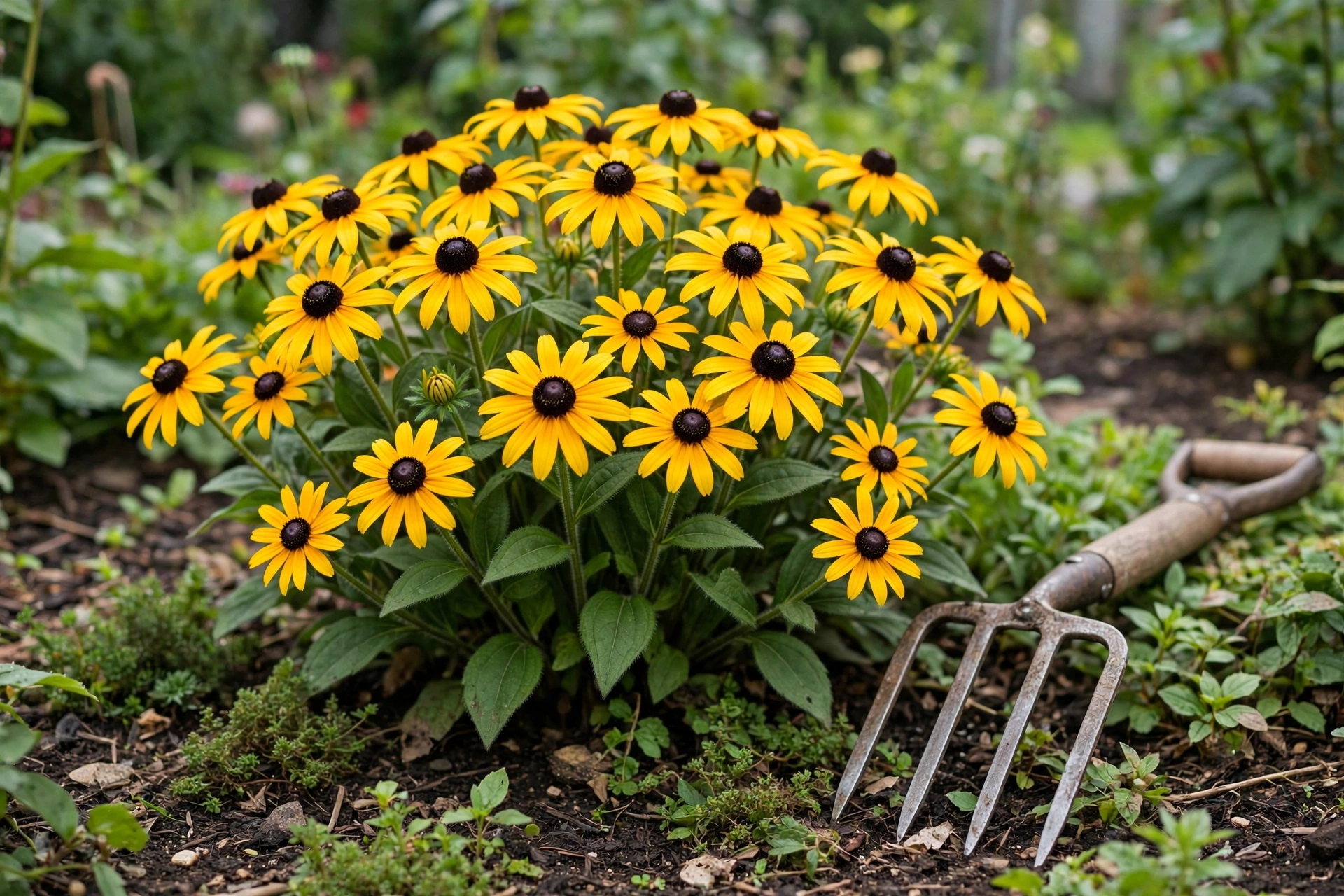
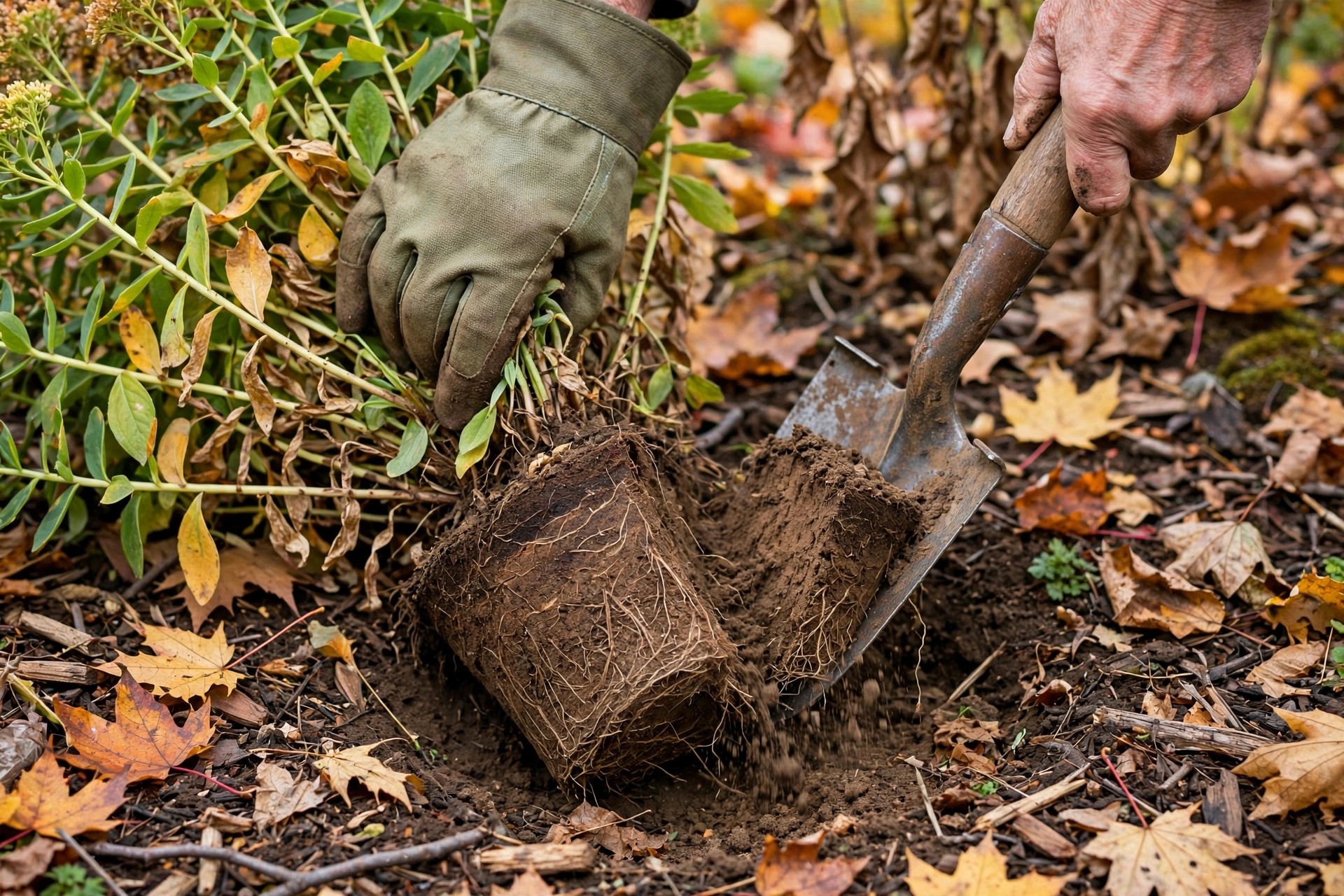
One established hosta, daylily, or coneflower clump commonly yields 4 to 8 divisions, and each division is the same plant, already adapted to your soil and light. Dividing ten mature clumps in an afternoon can produce 40 or more plants at a cost of zero dollars, plus the watering those divisions need while they settle.
| Option | Cost for about 40 plants | Time to a full look | Best for |
|---|---|---|---|
| Divide what you own | $0, plus water and mulch | One season for most clumps | More of a plant that already thrives for you |
| Buy 1-gallon pots | About $600–$1,000 | Fullest look the same season | New varieties, exact colors, instant coverage |
| Buy on fall clearance | About $160–$400 at 50–75% off | Full look the following season | New varieties when timing is flexible |
When dividing wins
Dividing wins when the clump needs it anyway. Most herbaceous perennials benefit from division every 3 to 5 years, when the center thins, flower counts drop, or the plant flops outward from a woody middle. In that situation the divisions are a byproduct of a job the plant already needed, so the new bed is genuinely free.
It also wins when you want more of a proven plant. A division carries the exact flower color, height, and habits of the parent, with no gamble on whether a new cultivar likes your soil. For how to handle the soil side after you split a clump, see what soil and mulch to use after dividing perennials, and for the tools that make the job cleaner, the best tools for dividing perennials.
When buying wins
Buying wins when you want something you do not already grow: a new color, a longer bloom window, or a plant bred for disease resistance your older variety lacks. It also wins when a bed needs to look finished this season for a specific date, because divisions usually need a season to fill in.
Buying is also the honest answer when the parent plant is struggling for a reason division cannot fix. Dividing a plant that is declining from poor drainage or the wrong light just multiplies the problem, so diagnose first and buy only after the site is fixed.
The middle path most gardeners actually use
Divide the backbone plants you already love, then spend the nursery budget only on the few new varieties that change the bed. That approach keeps the cost near the clearance row of the table while still adding something new each year, and it spreads the work across the two good division windows, spring and fall. If you are deciding which of your perennials belong in the fall window, should you divide perennials in fall sorts the split-now list from the leave-alone list.
Bottom line
Start with division. If a clump is mature, healthy, and due to be split, its divisions fill your next bed for nothing, and buying the same plant again is money spent twice. Reserve the nursery budget for varieties you do not own and for beds that must look finished this season.