Landscape & Leisure is reader-supported. When you buy through links on our site, including Botanical Interests seed links, we may earn a commission at no extra cost to you. Prices change, so click through to confirm current pricing.
Should you grow cauliflower or Romanesco? The short answer: grow cauliflower when you want cauliflower — a dense curd, on a 70 to 80 day schedule, that behaves in the kitchen the way you expect. Grow Romanesco when the fall garden has room for a slower, stranger head that eats like a nutty cousin.
That is the decision in one paragraph, because the two crops share almost everything else. Same family, same indoor start, same 24-inch spacing, same ¼-inch depth. What actually differs is the head, the calendar, and one chore. Here is each difference with the packet numbers attached. Both crops sit inside my cauliflower varieties roundup, and the growing steps are in the cauliflower growing guide.
The Differences That Decide It
| Cauliflower (Twister) | Romanesco | |
|---|---|---|
| Days to maturity | 75–80 | 75–100 |
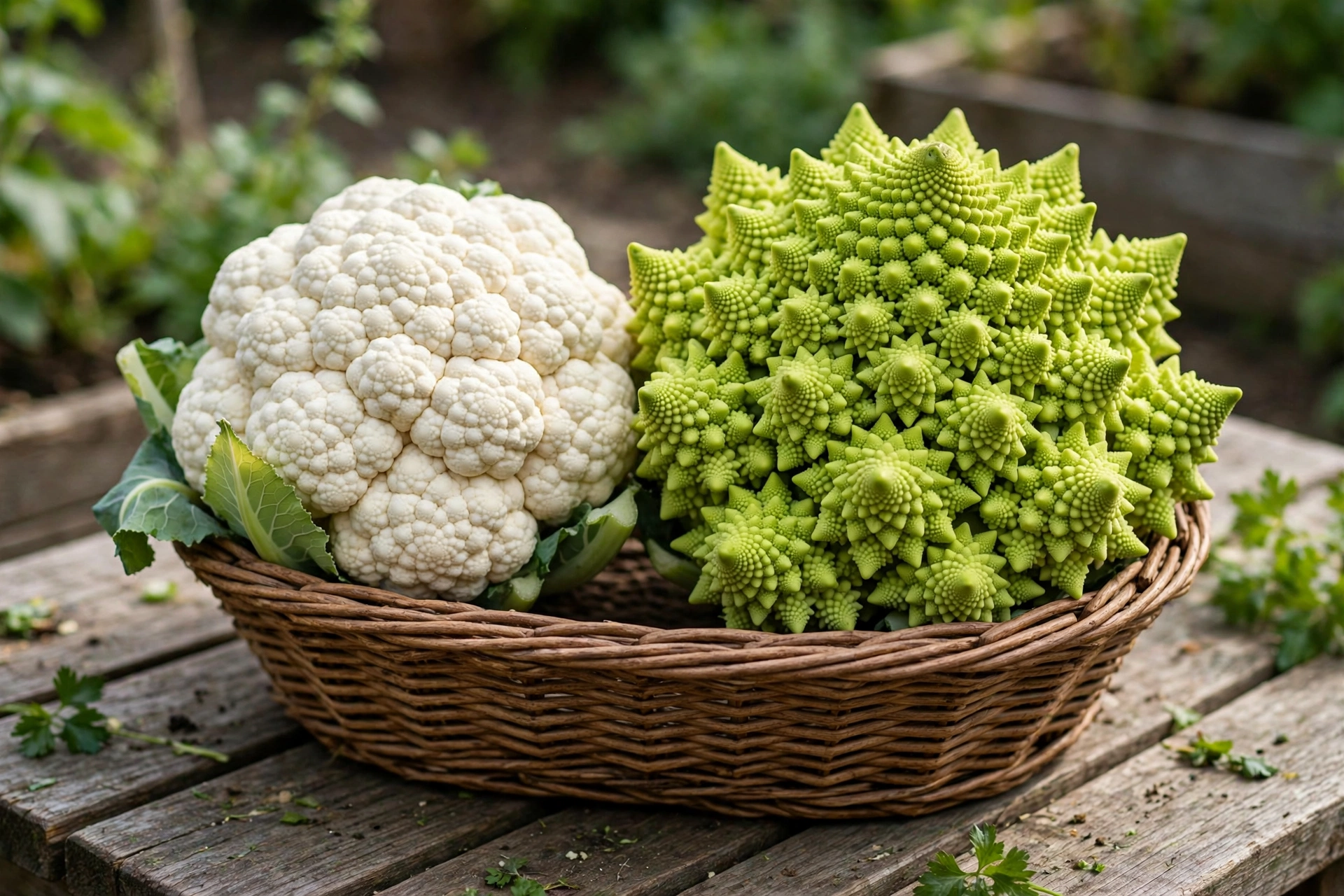
| Head | 6½–7 in, white, dense curd | 5–6 in, lime green, spiraling florets |
| Blanching | Self-blanching leaves; tie if needed | None — green head, sun does not yellow it |
| Best season | Spring or fall; heat tolerant | Fall — a warm spring may delay heads to fall |
| Price and rating | $4.49 · 3.5/6 | $2.69 · 4.6/16 |
What Cauliflower Gives You
A true cauliflower curd is dense, white, and sliceable — it roasts in slabs, mashes smooth, and holds a cheese sauce the way it is supposed to. Twister makes that head at 6½ to 7 inches in 75 to 80 days, and its leaves wrap the curd themselves, which removes the tying chore that puts many gardeners off this crop.
Its weakness is on the record: 3.5 stars from 6 reviews, the lowest rating in the roundup. Amethyst is the other true-cauliflower option — purple, earlier at 70 days, same head size — if color is acceptable and the small, $7.49 packet is not.
Twister Cauliflower Seeds
Dense white curd in 75–80 days, with self-blanching leaves doing the shading work.
Check Price at Botanical InterestsWhat Romanesco Gives You
Romanesco’s packet says it first: it is not actually a cauliflower, but somewhere between a broccoli and a cauliflower. The head is a lime-green spiral of pointed florets, 5 to 6 inches across, and cooked it has what the packet calls a delicious nutty flavor with a texture similar to cauliflower. Similar is the honest word — it is firmer and nuttier, and it does not mash like a curd.

On value, Romanesco wins this page outright: $2.69, a packet that sows up to 160 feet, and a 4.6-star rating from 16 reviews — the best-supported score here. It is an heirloom from 1890, it asks for no blanching, and the plant comes out whole after cutting because it rarely makes side shoots.
The cost is the calendar. Seventy-five to 100 days is a wide, slow window, and the packet warns that a warm spring may delay heads until fall. Plant it for fall on purpose and the warning stops mattering; plant it in spring expecting a June head and you may spend the summer watering a very handsome leaf plant.
Romanesco Cauliflower Seeds
Spiral lime-green heads with a nutty flavor — the fall crop for gardeners who like the odd one.
Check Price at Botanical InterestsWhat They Share (So You Do Not Have to Choose Twice)
Both start indoors 4 to 6 weeks before transplanting, both germinate in 8 to 10 days at 70 to 85°F soil, both thin to one plant every 24 inches, and both cut in the morning and get dunked in ice water to hold quality. If cabbage worms find one, they will find the other — the diagnosis and fixes are the ones in my cabbage worms and brassica problems guide, and the heading-versus-stem shape of this choice echoes broccoli heads vs broccolini.
My Verdict
Grow Twister when the recipe says cauliflower and the calendar says this season. Grow Romanesco when you have a fall bed, a curious kitchen, and no deadline. If the bed only fits one, I plant the true cauliflower first and give Romanesco the fall slot it prefers anyway — each crop in the season it actually wants.