Landscape & Leisure is reader-supported. When you buy through links on our site, including Botanical Interests seed links, we may earn a commission at no extra cost to you. Prices change, so click through to confirm current pricing.
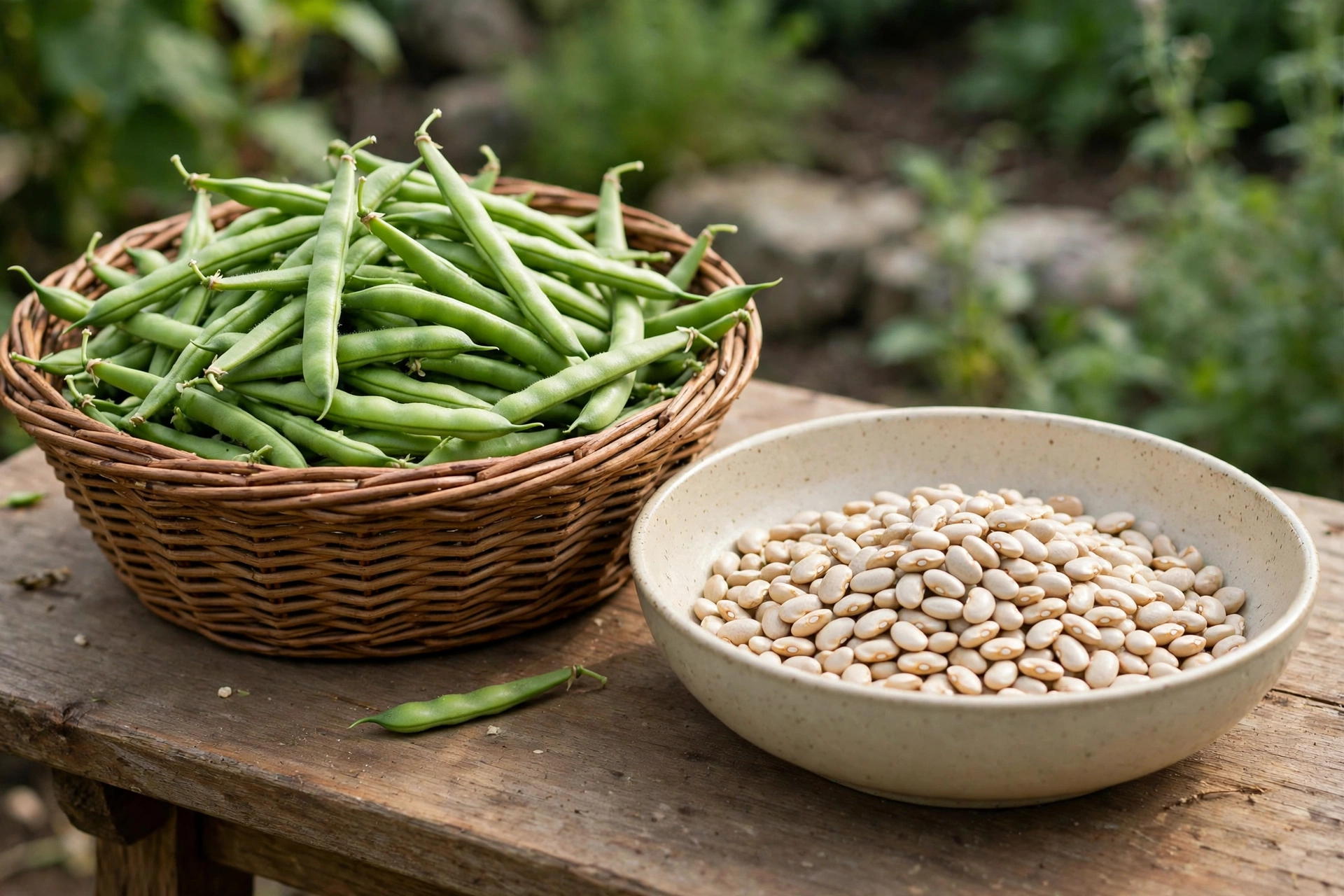
Grow dry beans if the pantry is the point. Grow snap beans if dinner this week is the point.
That is the verdict, and everything below it is the reasoning — because the two crops ask for opposite things from the same trellis, the same soil window, and the same gardener. One pays you in small daily pickings for weeks. The other pays you once, in a bowl of shelled beans that keep for a year. Choosing badly does not fail loudly; it just leaves a trellis of papery pods nobody wanted, or a freezer gap where the soup beans should be.
The season math is not close
A snap bean’s packet number is the whole story: Blue Lake 274 lists 58 days, and at 58 days you are picking round, 6-inch pods off 16- to 18-inch bush plants. Pick them young and often and the plant keeps setting more.
A dry bean’s packet number is only the first chapter. Kentucky Wonder lists 63 days to its snap stage, but the dry harvest waits for the pods to mature and dry on the vine after that — the vine needs the back half of summer to finish the job. Windsor’s 75 days run on a cold-season calendar entirely, sown 6 to 8 weeks before the last frost.
Short-season gardeners feel this difference first. A snap planting that goes in late still gives you beans. A dry planting that goes in late gives you green pods and a lesson.
| Question | Dry beans | Snap beans |
|---|---|---|
| First harvest | After pods dry on the vine, late season | At the packet’s day count — 58 days for Blue Lake 274 |
| Harvest rhythm | One or two big shelling sessions | Small pickings every few days for weeks |
| Storage | Jar on a shelf, no processing | Eat fresh, or blanch and freeze |
| Variety pool at Botanical Interests | Three dual-purpose packets name drying | Most of a 19-product bean catalog |
What each crop asks of you
Snap beans ask for presence. Miss a week in July and the pods go tough and stringy on the plant, and production slows because the seeds inside have started to mature — the plant reads unpicked pods as a finished job.
Dry beans ask for patience and a trellis decision. The two best dry-capable common types here are climbers, so the support question arrives at sowing, and the harvest discipline is mostly leaving pods alone while they look increasingly unappetizing. The full method — calendars, support, and the hard-and-brown harvest test — is in the dry bean growing guide.
There is a middle path, and it is the one I recommend to most gardeners: a dual-purpose pole bean. Kentucky Wonder’s packet names drying, shelling, and green use on one vine. Pick one stretch of trellis young all summer, leave another stretch to dry, and the same packet answers both questions.
BEST OF BOTH
Kentucky Wonder Pole Bean Seeds
One vine, three jobs — drying, shelling, and green — from an 1877 heirloom with brown seeds.
The snap side, honestly stocked
If summer eating wins, Blue Lake 274 is the reference snap bean: a very large crop of 6-inch pods arriving mostly at once on bushy plants, stringless when picked young, resistant to bean common mosaic virus and NY-15, and one of the best for freezing by its packet. That all-at-once habit suits a gardener who freezes; a filet type suits a gardener who grazes. The wider field is ranked in the snap pea and green bean roundup.
BEST SNAP PICK
Blue Lake 274 Bush Bean Seeds
58 days to a heavy, mostly simultaneous crop of 6-inch pods — the freezer gardener’s snap bean.
And the cold-season exception
Windsor fava breaks the frame of this comparison, because it is neither a summer snap nor a summer dry bean. It goes into cold soil weeks before the last frost, tolerates 10°F, and finishes before the heat that its packet says it dislikes — under 75°F is its comfort zone. Northern gardeners with a long, cool spring get a dry bean harvest before the pole beans have finished climbing.
BEST FOR DRY STORAGE
Windsor Fava Bean Seeds
The cold-season dry bean: sow before the last frost, store the harvest when shells turn hard and brown.
The decision
One trellis, one choice: Kentucky Wonder, split down the middle — half picked green, half left to dry. It is the only planting on this page that refuses to make you choose, and its brown seeds in a jar next October will tell you whether the dry half deserves more trellis next year. The full variety ranking is in the dry bean varieties roundup.