Landscape & Leisure is reader-supported. When you buy through links on our site, including Botanical Interests seed links, we may earn a commission at no extra cost to you. Prices change, so click through to confirm current pricing.
Which dry beans can you actually grow from seed this year?
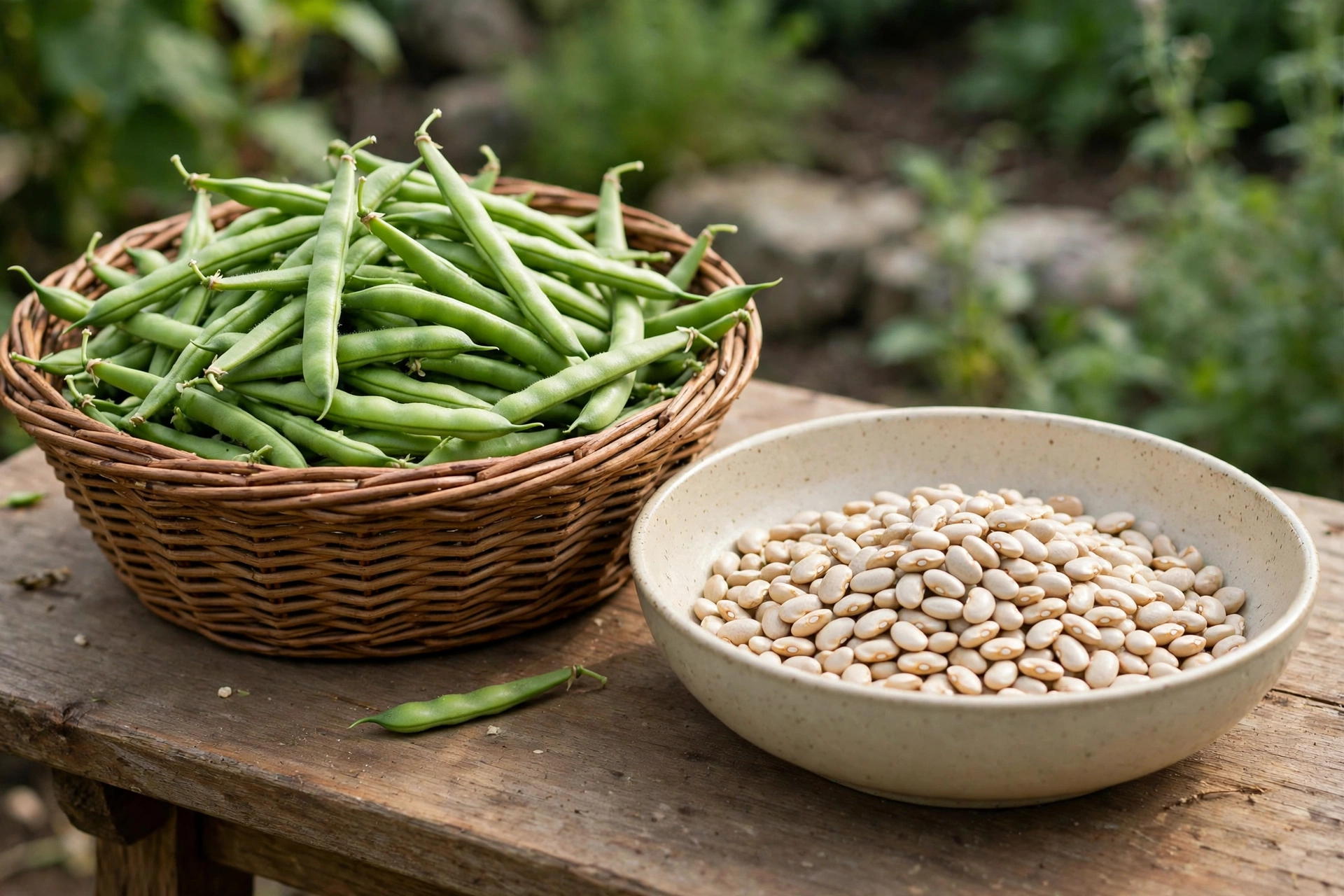
That question trips up more gardeners than any spacing chart, because the packet wall is full of snap beans and nearly empty of beans bred to dry. If you want a jar of beans you grew yourself — for soup, for baked beans, for a winter pantry that feels earned — the variety decision comes first, and it is the decision this page settles.
Here is the plain fact the catalog will not volunteer: Botanical Interests does not sell a dedicated pinto, navy, black, or kidney dry bean. What it sells are three honest dual-purpose beans whose own packets name drying as a job — one pole bean, one fava, and one runner bean — and those three are the roundup. I have ranked them by how well the dry harvest actually works, not by how pretty the summer pods look.
Kentucky Wonder Pole Bean — the dry bean hiding in the snap aisle
Kentucky Wonder is the usual suspect, and I mean that as praise. Its packet calls it a multi-use bean — drying, shelling, and green — which makes it the only common bean in this catalog that claims the dry job outright.
It is an 1800s heirloom, released under this name in 1877, with brown seeds inside gently curved pods that run 7 to 9 inches long. The packet lists 63 days, one seed every 6 inches, an inch deep, and a packet that sows up to 20 feet — the longest run of any pick here, which matters when the whole point is volume for the jar.
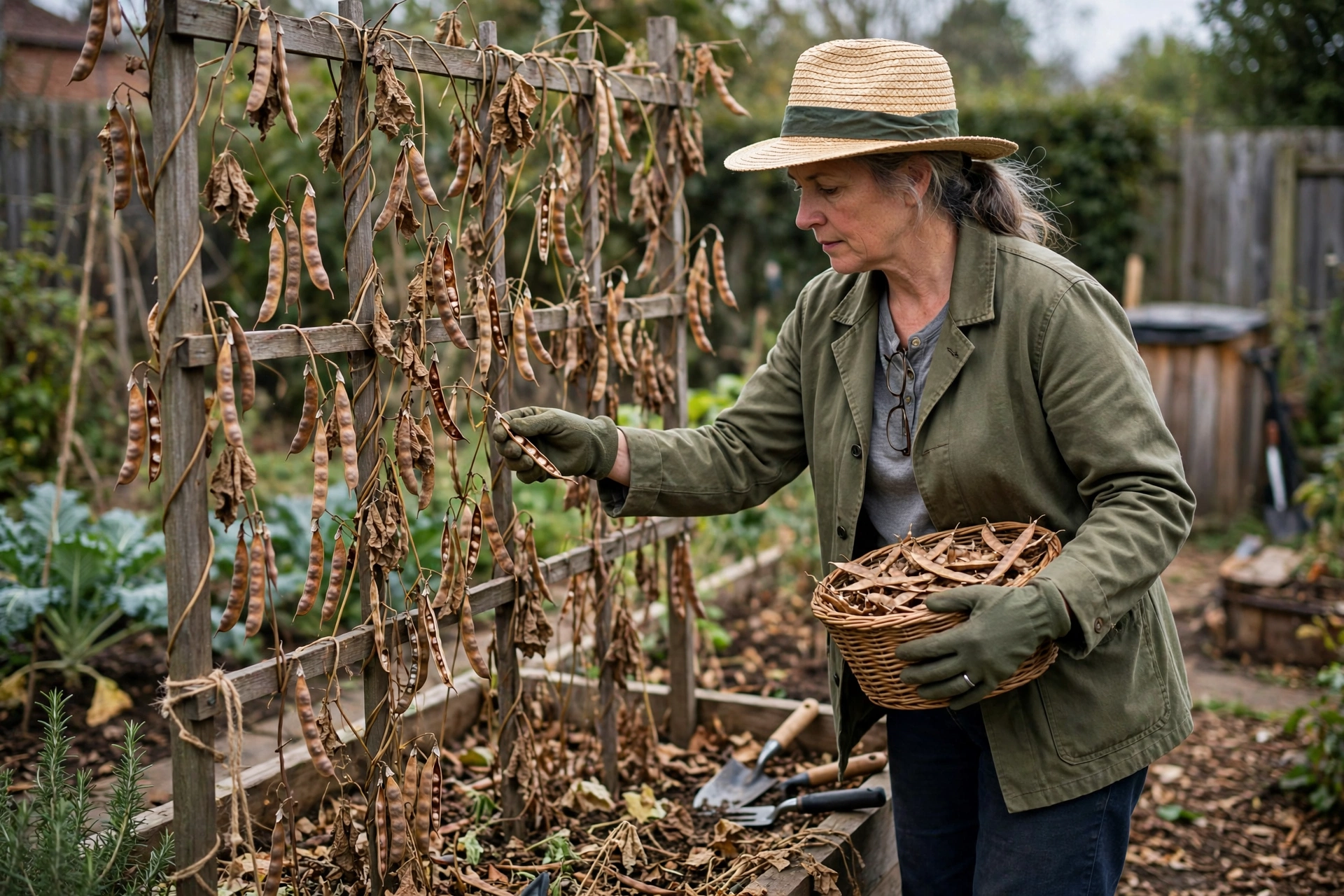
The trade-off is the trellis. A pole bean wants support before it wants anything else, and the dry harvest waits until the pods have gone fully papery on the vine, weeks after the last snap picking. If you can give it a fence or a teepee, this is the bean I would plant first.
- Pros: drying named on the packet; 63 days; resistant to bean common mosaic virus; packet sows up to 20 feet; heavy crops, good production even in hot climates.
- Cons: needs a trellis or poles; the dry harvest is later than the 63-day snap figure suggests, because pods must dry on the vine.
BEST OVERALL
Kentucky Wonder Pole Bean Seeds
The one common bean here whose packet names drying first — an 1877 heirloom with brown seeds and a 20-foot packet run.
Check Price at Botanical InterestsWindsor Fava Bean — the one bred for the storage jar
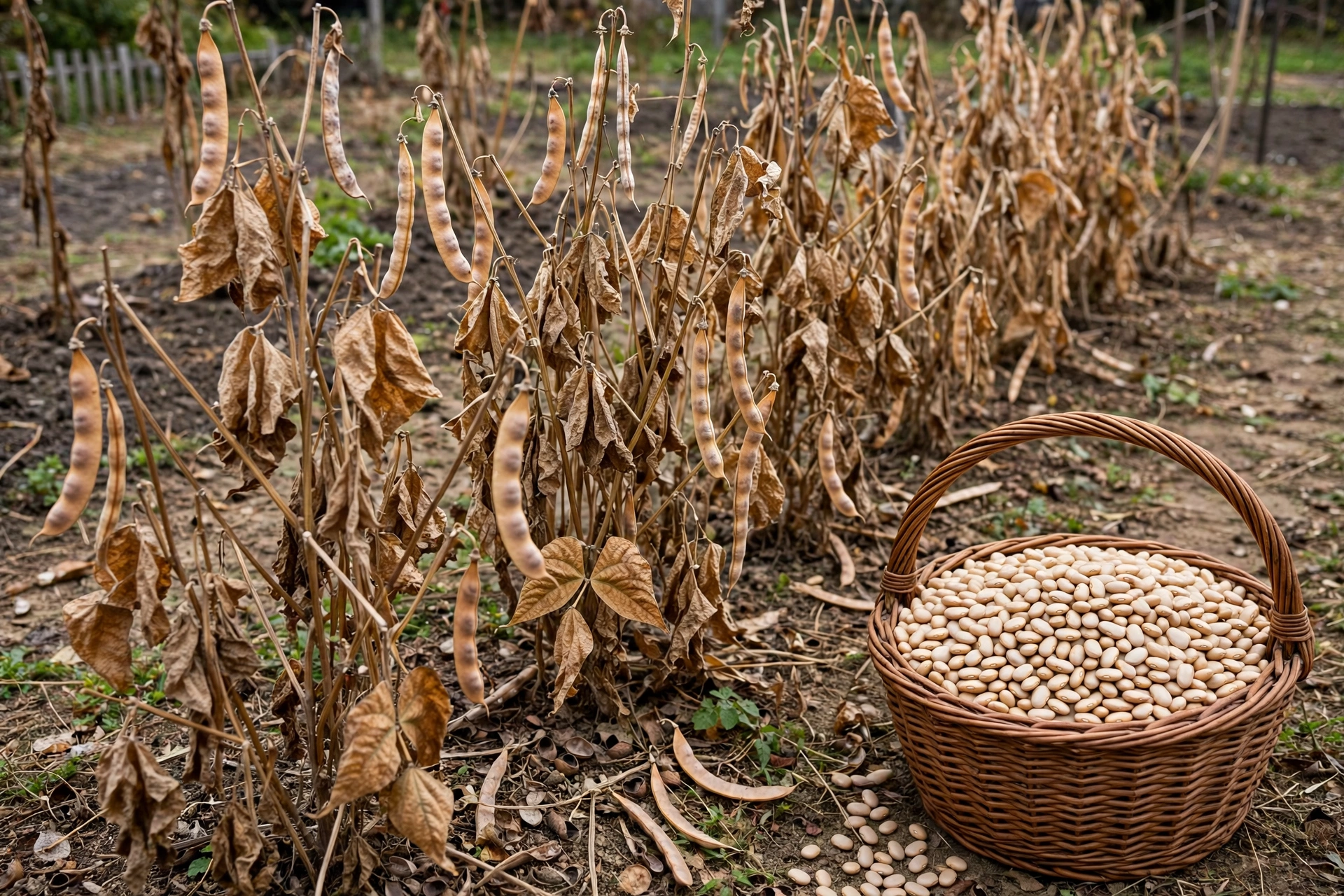
Windsor plays a different season entirely. It is a fava, Vicia faba rather than Phaseolus vulgaris, and its harvest instructions are the clearest dry-bean directions on any packet in this catalog: for dry beans to store, harvest when the shell turns hard and brown and the seeds inside are dry.
Favas are exceptionally cold tolerant, down to 10°F on the packet, and they grow best below 75°F — so Windsor goes in 6 to 8 weeks before the last frost, when the common beans are still in the envelope. The plants stand 24 to 48 inches tall on sturdy stems, each 5- to 6-inch pod holding 3 to 8 large, flat beans, and the packet lists 75 days at one seed every 4 to 6 inches, 1 to 3 inches deep.
Two honest cautions ride with it. The packet carries a G6PD warning: people deficient in that enzyme should not handle the seeds, eat favas, or inhale the pollen. And a fava is a big, mild, starchy bean — it is not a substitute for a small navy bean in a baked-bean pot, however well it stores.
- Pros: explicit dry-storage harvest directions; cold tolerant to 10°F; earliest sowing window of the three; 5.0 stars across 14 reviews, the highest rating here.
- Cons: G6PD caution on the packet; large flat beans cook differently from common dry beans; sulks in hot summers.
BEST FOR DRY STORAGE
Windsor Fava Bean Seeds
A cold-hardy fava with the catalog’s clearest dry-bean harvest rule: pick when the shell is hard and brown.
Check Price at Botanical InterestsScarlet Emperor Pole Runner Bean — the screen that feeds you twice
Most people plant Scarlet Emperor for the show: clusters of rich-red, edible flowers on a vine that covers a fence and pulls in hummingbirds. The packet’s quieter line is the one that earns it a place here — the mature pods, up to 12 inches long, can be shelled for green or dried beans with an extremely rich flavor.
It is Phaseolus coccineus, a runner bean, at 75 days, one seed every 6 inches in rows 36 inches apart, and a packet that sows up to 10 feet or one 4-foot teepee. Young 4- to 6-inch pods eat as snap beans, so the vine pays you in summer while the dry beans finish.
Why is it third? Runner beans sulk about setting pods in sustained heat — the packet warns that temperatures consistently above 90°F will prevent beans from forming — and the seed inside a runner pod is large and boldly patterned, a soup bean rather than an all-purpose baker. Plant it for the fence first and the jar second, and it will not disappoint you.
- Pros: dried beans named on the packet; ornamental red flowers and hummingbirds while you wait; young pods double as snap beans; 4.5 stars across 35 reviews.
- Cons: pod set stalls in sustained heat above 90°F; large seeds suit soups better than baked beans; needs the same trellis commitment as Kentucky Wonder.
RUNNER-UP
Scarlet Emperor Pole Runner Bean Seeds
A flowering screen first, a rich-flavored dried bean second — pods to 12 inches, shelled when mature.
Check Price at Botanical Interests
The three dry-capable beans, side by side
| Variety | Type | Days | Spacing | Dry use, in the packet’s own terms |
|---|---|---|---|---|
| Kentucky Wonder | Pole, Phaseolus vulgaris | 63 | 1 seed every 6 in. | Multi-use: drying, shelling, and green |
| Windsor | Fava, Vicia faba | 75 | 1 seed every 4–6 in. | Dry beans to store, picked hard and brown |
| Scarlet Emperor | Pole runner, Phaseolus coccineus | 75 | 1 seed every 6 in. | Shelled for green or dried beans |
The honest skip: looking for pinto, navy, or black beans
If your recipe card says pinto and nothing else will do, this catalog will not sell you that packet, and I am not going to dress a snap bean up as one. Blue Lake 274 carries white seed and a fine snap harvest, but its packet sells it as a snap bean, full stop — buying it as a dry bean is a hope, not a plan.
Grow the snap beans for summer — the snap pea and green bean roundup covers those picks — and grow one of the three beans above when the jar is the point. The full sowing, support, and harvest method is in my dry bean growing guide, and the head-to-head on season length and pantry payoff is in dry beans vs. snap beans.
Bottom line
Plant Kentucky Wonder. It is the only common bean here that names drying on the packet, it covers 20 feet from one envelope, and the same vine feeds you green beans in July while the dry ones finish. Add Windsor if your spring is cold and long, and let Scarlet Emperor earn its fence space twice.