Landscape & Leisure is reader-supported. When you buy through links on our site, including Botanical Interests seed links, we may earn a commission at no extra cost to you. Prices change, so click through to confirm current pricing.
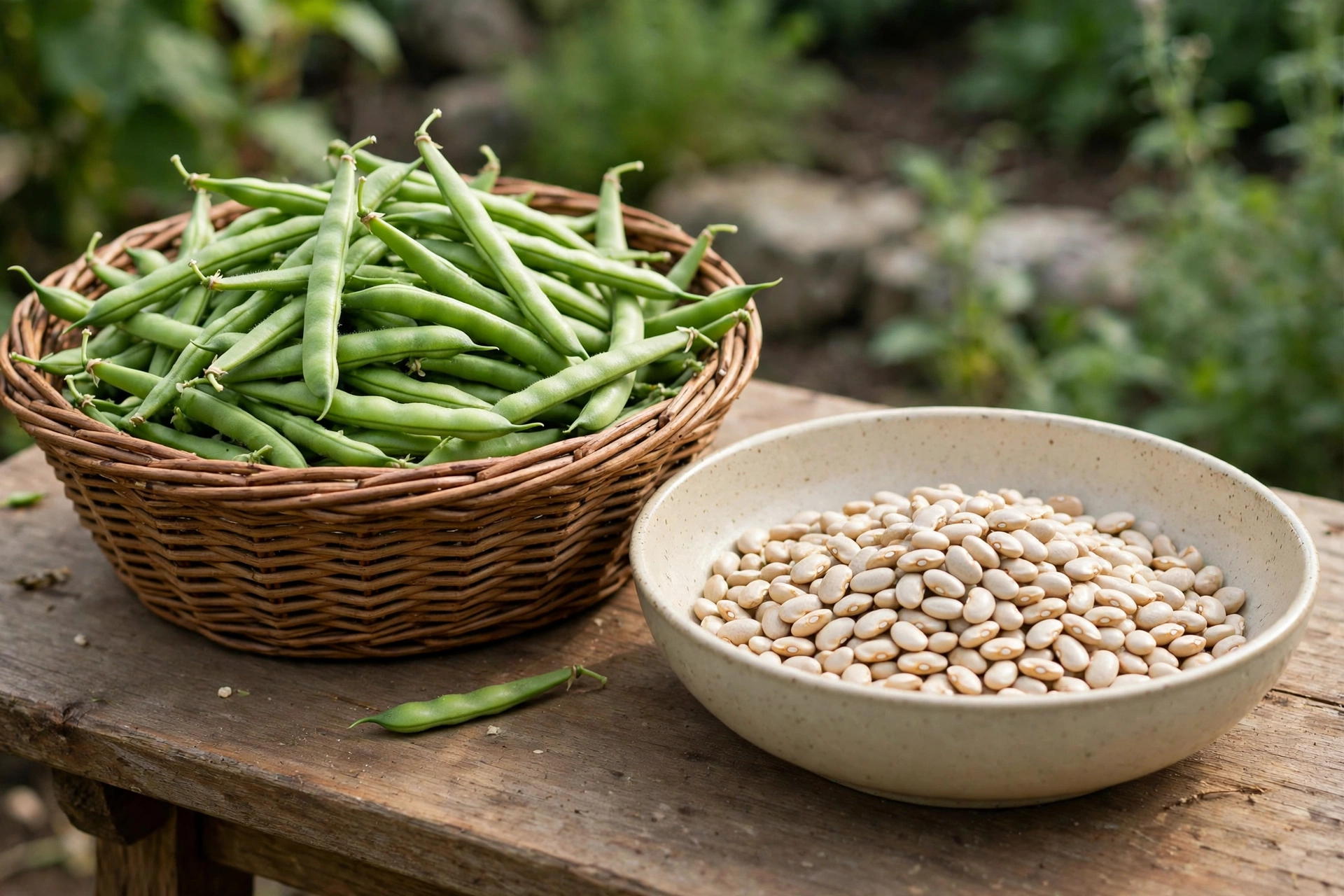
A snap bean rewards the impatient. A dry bean rewards the gardener who can walk past a full pod in August and leave it alone.
That restraint is the whole technique, and it runs against every instinct a summer of snap picking builds. This guide settles how dry beans actually differ in the ground — when each kind goes in, what holds the pole types up, and the harvest signs that tell you the beans inside are ready to store rather than merely big.
Two sowing calendars, not one
Common beans and runner beans are warm-soil crops. The packets put sowing at 1 to 2 weeks after the average last frost, when the soil is at least 65°F and ideally 70 to 85°F, an inch deep, with emergence in 6 to 12 days. Neither type starts indoors — bean seedlings resent root disturbance, and the packets say so plainly.
Favas run the opposite calendar. Windsor goes in 6 to 8 weeks before the last frost, into soil as cold as 35°F in cold climates, or early to mid-winter in mild ones for a spring harvest. Sow it 1 to 3 inches deep, one seed every 4 to 6 inches, and expect emergence in 10 to 15 days.
I plan the bed in that order every year: favas into the cold ground first, then the pole beans once the soil has genuinely warmed. Staggering the two calendars also staggers the shelling bowl work in fall, which is its own quiet benefit.
| Step | Kentucky Wonder (pole) | Windsor (fava) | Scarlet Emperor (runner) |
|---|---|---|---|
| Sow | 1–2 weeks after last frost, soil 65°F+ | 6–8 weeks before last frost | 1–2 weeks after last frost, soil 65°F+ |
| Depth and spacing | 1 in. deep, 1 seed every 6 in. | 1–3 in. deep, 1 seed every 4–6 in. | 1 in. deep, 1 seed every 6 in. |
| Support | Trellis, poles, or teepee at sowing | Stake only in high wind | Trellis, fence, or teepee at sowing |
| Dry harvest sign | Pods papery and rattling on the vine | Shell hard and brown, seeds dry | Pods mature, to 12 in., seeds full |
Support goes in at sowing, not after the lean
Pole and runner beans climb from the first true leaves, and retrofitting a trellis through a tangled vine in June is miserable work. Put the support in the same day the seed goes in: a fence run, poles, or a teepee — one Kentucky Wonder packet sows up to 20 feet or two 4-foot teepees, and one Scarlet Emperor packet covers 10 feet or one teepee.
Rows sit 36 inches apart for both climbers, which leaves you a walking lane for the long dry harvest. Windsor skips the carpentry entirely; its sturdy 24- to 48-inch plants need staking only where wind works them over.
BEST OVERALL
Kentucky Wonder Pole Bean Seeds
The dry-capable pole bean: 63 days, brown seeds, one packet sows 20 feet of trellis.
Check Price at Botanical InterestsThe summer rule: pick the snaps, mark the keepers
A dual-purpose vine asks you to run two harvests on one plant, and the way to keep them straight is to decide early which stretch of trellis is the dry stretch. Pick the rest young and often, because regular picking is what keeps a bean plant flowering.
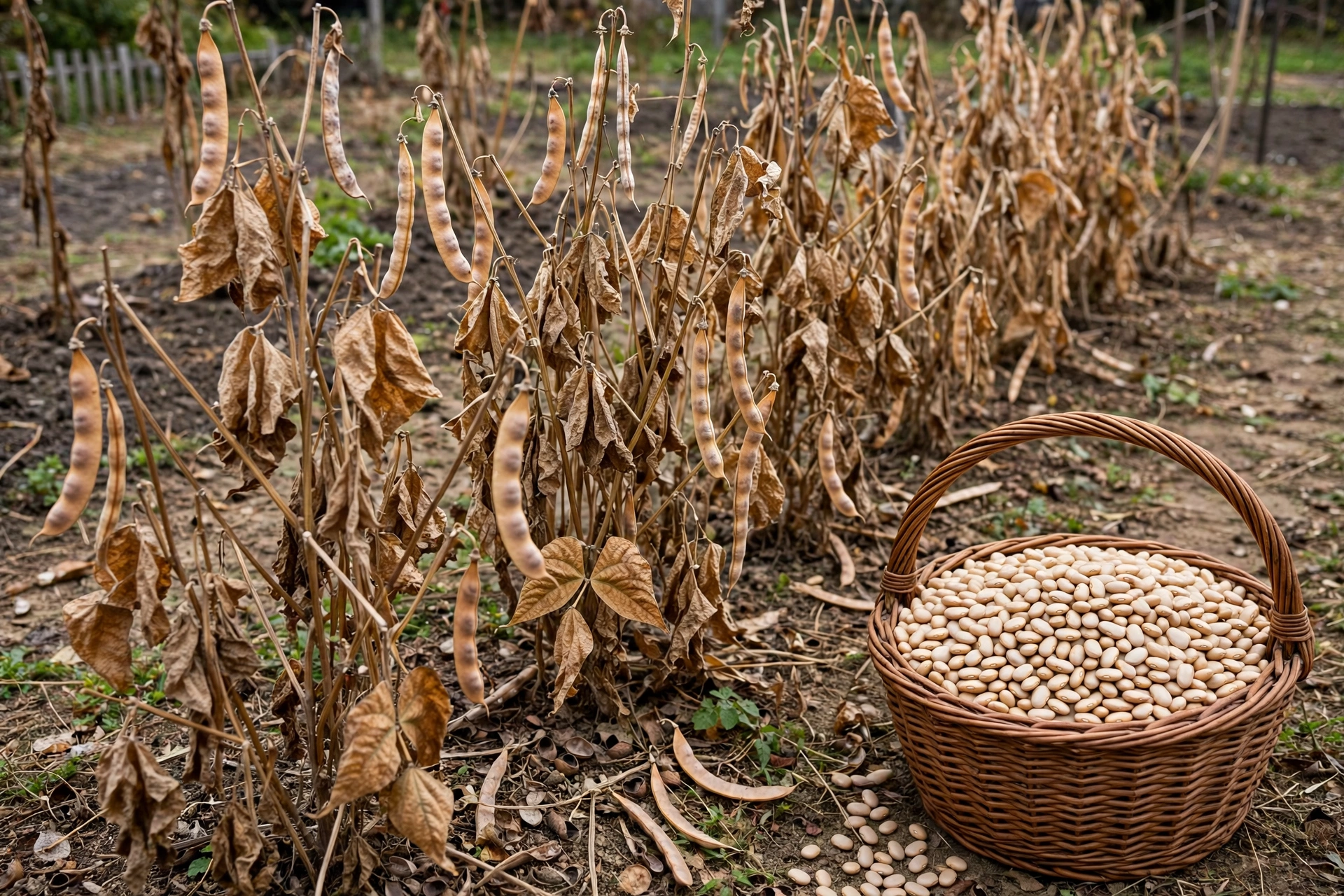
On the dry stretch, hands off. The pods swell, the seeds inside them round out, and the green fades. It looks like neglect from the path. It is the crop.
Heat is the one summer event that can break the plan for runner beans: Scarlet Emperor’s packet warns that temperatures consistently above 90°F will prevent beans from forming, so a heat-wave gap in pod set is weather, not a variety failure. Kentucky Wonder, by its packet, keeps producing well in hot climates.
Harvest: dry means dry

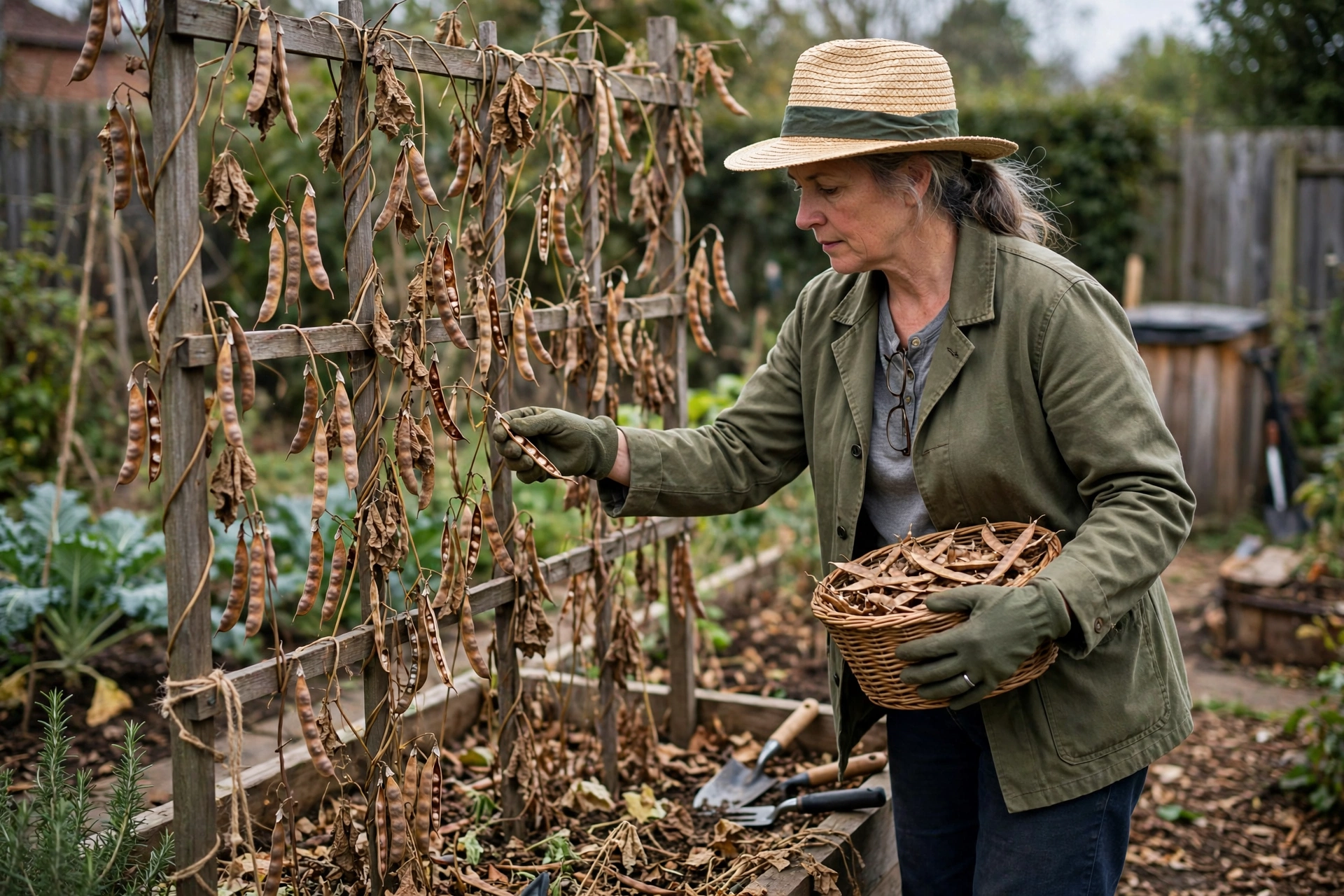
Windsor’s packet states the standard for all three: harvest for storage when the shell has turned hard and brown and the seeds inside are dry. A pod that bends is not ready. A pod that rattles when you shake it is close.
I bring the harvest in by the armload on a dry afternoon and shell at the table the same week. A basket with a mesh bottom earns its shelf space here — the beans cure and rinse clean in the same vessel, and anything still holding moisture shows itself before the jar.
WORTH ADDING
Harvest Basket
Pine, birch, and oak with a vinyl-coated wire mesh — beans rinse and finish drying right in the basket.
Check Price at Botanical InterestsBeans that go into a sealed jar still holding moisture will mold, and the loss is total rather than partial. When a batch feels borderline, I leave it spread in the basket another few days. Storage forgives a late jar. It does not forgive a damp one.
Which bean for your bed
The variety ranking, with prices and ratings, lives in the dry bean varieties roundup. If you are still deciding whether a dry crop deserves the trellis at all, dry beans vs. snap beans works through the season-length math. Gardeners building the summer snap harvest instead will find the trellis timing carries over — the same support-first rule runs the pole beans in the snap pea and green bean roundup.
Start with one trellis run of Kentucky Wonder and one cold-season row of Windsor. Between the June favas and the October pole beans, the pantry shelf fills itself in two short shelling sessions — and the August pods you learned to walk past turn out to be the easiest harvest of the year.