Disclosure: This post contains affiliate links. As an Amazon Associate, we earn from qualifying purchases at no extra cost to you.
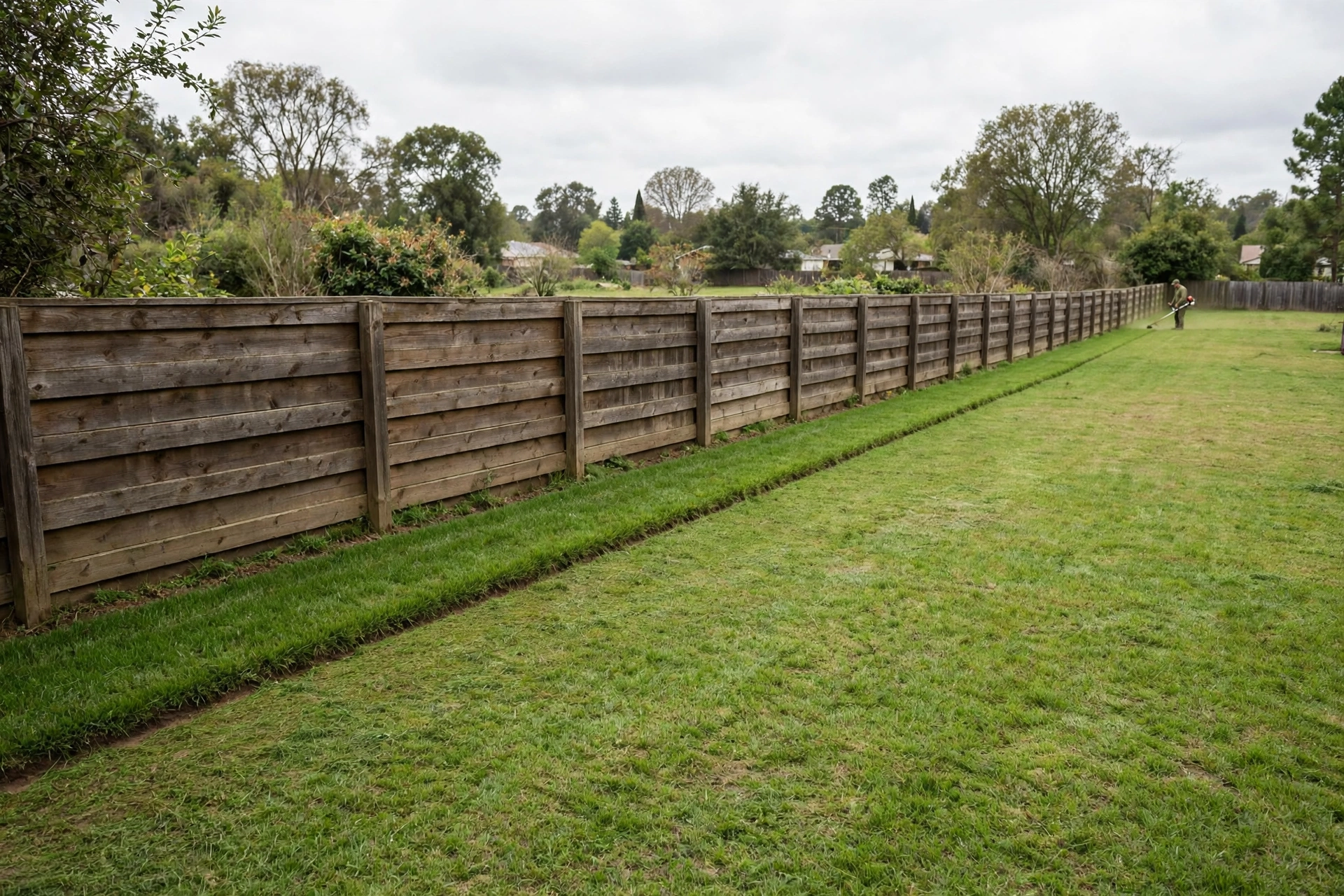
A ragged edge makes a freshly mowed lawn look unfinished, and running a string trimmer sideways to fix it tears the line a little wider every week.
For a small or medium yard, that damage is avoidable. A manual lawn edger costs less than most powered edgers, needs no fuel or battery, and cuts a defined line along a walk, driveway, or bed that a trimmer only approximates.
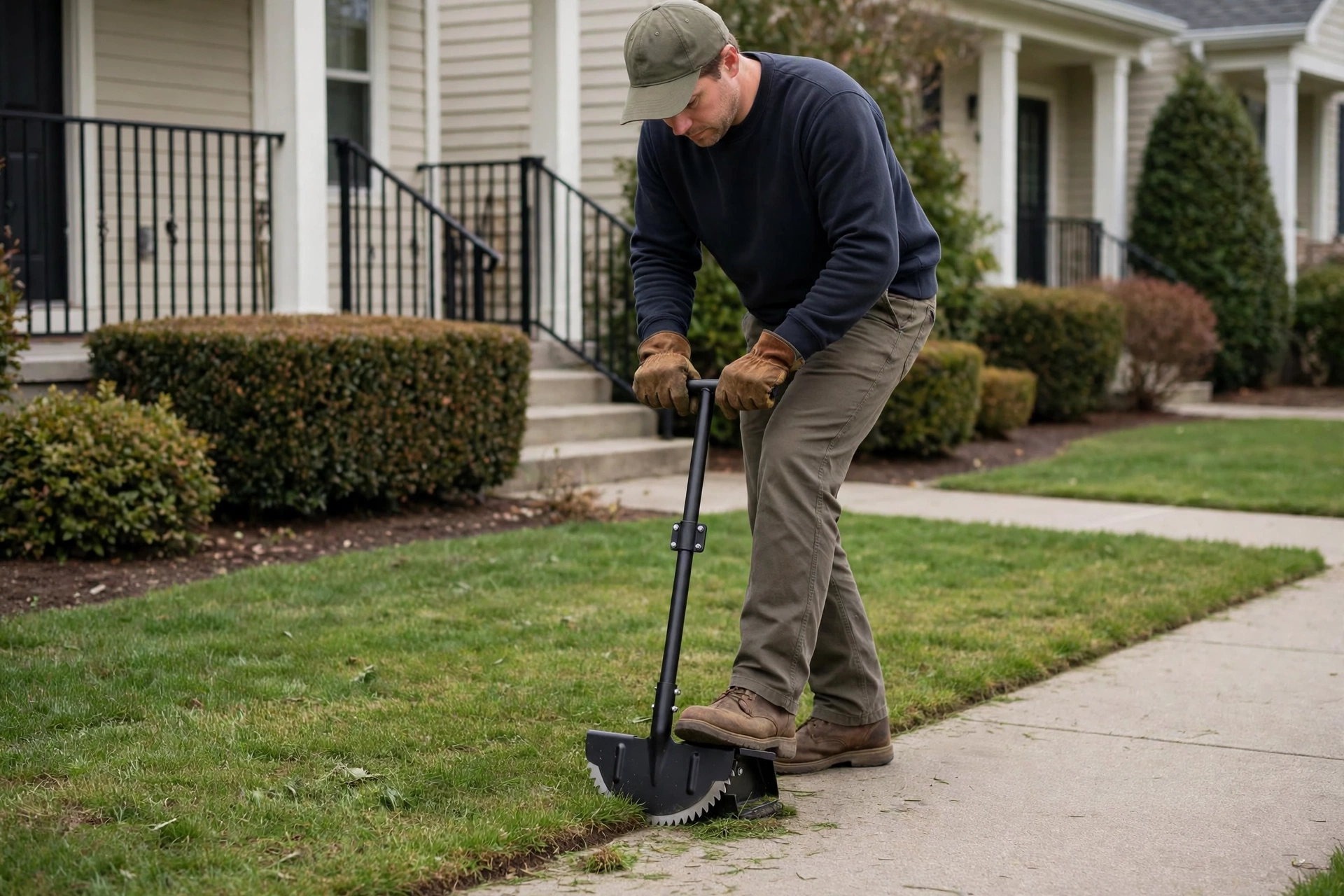
Buy the AMES 2917200 Saw-Tooth Border Edger first. Its 39-inch length, 3-pound build, and 8-7/8 by 4-1/2 inch saw-tooth blade cut straight and curved edges, and the footplate lets your weight do the work instead of your arms.
Three kinds of manual edgers, three different jobs
Half-moon and step edgers cut a new edge. You set the blade on the line, step on the footplate, rock it slightly, and lift out a thin slice of sod.
Rotary or wheel edgers maintain an edge that already exists. A star or serrated wheel rolls along hard surfaces and trims overgrowth back to the line, but it will not cut a clean trench through unbroken turf.
Hand grass shears finish the spots the other two cannot reach. A pair with a swivel head handles the grass against a step, a post, or a bed edge where a long handle will not fit.
Most yards need the first kind and, at most, one of the other two. Buying all three before you have cut your first edge is how a simple job turns into a crowded garage corner.
If you are still deciding between manual and powered tools, lawn edger vs string trimmer lays out where each tool earns its place, and stick edger vs walk-behind edger covers the powered end of that choice.
Best overall: AMES 2917200 Saw-Tooth Border Edger
The AMES is a half-moon step edger with a saw-tooth edge, and that tooth pattern is the reason it wins. Straight blades push through roots; saw teeth cut them on the rock, so the blade keeps moving in soil that stops a smooth edge cold.
The listed specs are plain and checkable: 39 inches overall, 3 pounds, a 15-gauge steel blade measuring 8-7/8 inches wide by 4-1/2 inches high, a T-grip handle, and a footplate for consistent depth.
Pros
- Saw-tooth blade cuts straight and curved trenches, so beds and walks use the same tool
- Footplate turns body weight into cutting force, which matters in compacted soil
- At 3 pounds, it is light enough to carry around a whole yard without a second trip
Cons
- The 39-inch handle runs short for taller users, who will stoop more than they should
- It is still manual work: a long, overgrown edge takes time, not minutes
AMES 2917200 Saw-Tooth Border Edger with T-Grip, 39-Inch
Saw teeth, a real footplate, and a 3-pound build that cuts a new edge without buying power you do not need.
Runner-up: Garden Weasel Edger-Chopper 91714
The Garden Weasel takes a different approach to the same job. Its 8-inch tempered carbon steel blade is wider and flatter, built to chop straight down and lift sod in a clean strip.
It measures 38 inches long, and the extra-wide footplate spreads your weight over a larger surface. On soft or damp soil, that wider plate is easier to control than a narrow step because the tool is less likely to tilt as you push.
Pros
- 8-inch tempered carbon steel blade holds up in sod and compacted soil
- Extra-wide footplate gives steady footing on softer ground
- Rust-resistant carbon steel construction, per the manufacturer
Cons
- The flat chopping blade is slower than saw teeth in root-filled soil
- No tooth pattern means more downward force on dry, hard edges
The trade-off against the AMES is direct: the Garden Weasel is steadier on soft ground, while the AMES cuts faster where roots and compacted soil fight back. Most established lawns have more of the second problem than the first.
Garden Weasel Edger-Chopper 91714
A wider 8-inch chopping blade and extra-wide footplate that stay steady on soft or damp soil.
Rotary wheel edgers and hand shears: buy them second, if at all
A rotary edger earns its keep only after a real edge exists. Roll it along a driveway each week or two and it keeps grass from creeping over the concrete, in a fraction of the time a step edger takes for the same maintenance pass.
Hand shears earn theirs in the last six inches. Around a mailbox post, a step, or a fence corner, a swivel-head pair cuts what a long handle cannot reach without banging into something.
Neither tool creates an edge. If your line has disappeared under a season of overgrowth, start with the step edger and add one of these later only if the maintenance work actually calls for it.
For the technique itself, how to edge a lawn by hand walks through cutting, rocking, and clearing the strip without tearing the line.
Not recommended: bargain rotary edgers with thin star wheels
Skip the cheapest rotary wheel edgers, the no-name kind sold on a thin handle with a small star wheel. The wheel is too light to stay in the cut, so it skips over thick grass instead of trimming it, and a bent star tooth turns every pass into a wobble.
The failure is not subtle. You end up pressing harder, the wheel rides up onto the turf, and the edge comes out less even than the one you started with.
A step edger at a similar price cuts a real edge and has no wheel to bend. Spend the money there first.
How to get a clean edge with a manual edger
Work after rain or watering. A blade enters damp soil with a step; dry, compacted soil takes repeated stomping that dulls the edge and tires you out.
Cut in short sections. Set the blade, step, rock once, and move half a blade width. Overlapping cuts keep the line straight and stop the blade from wandering into the bed.
Clear the strip as you go. Lift the cut slice out with the blade or a hand fork every few feet, before it falls back into the trench and hides your line.
Keep the blade sharp. A dull half-moon tears grass instead of cutting it, which leaves a brown, frayed edge within days. How to sharpen and replace a lawn edger blade covers the file work and the point where replacement beats sharpening.
When a manual edger is the wrong tool
Length is the limit. If your property has hundreds of feet of driveway and walk to edge, a manual tool turns a routine job into an afternoon, and a powered edger starts to make sense.
For that case, best lawn edgers for large lawns covers the step up, and best cordless lawn edgers covers the battery options that skip fuel and cords.
For a typical suburban lot, though, the distance is measured in tens of feet, not hundreds. A manual edger finishes that work quietly, stores on a hook, and never needs a battery charged before it can start.
Bottom line
Buy the AMES 2917200. The saw-tooth blade, footplate, and 3-pound build handle the widest range of real edges for the least money, and it will still be working long after a bargain wheel edger has bent.
Choose the Garden Weasel instead only if your soil runs soft and damp and footing is your main problem. Otherwise, cut the edge by hand, keep the blade sharp, and let the powered tools stay on the store shelf.