Landscape & Leisure is reader-supported. When you buy through links on our site, including Botanical Interests seed links, we may earn a commission at no extra cost to you. Prices change, so click through to confirm current pricing.
Late summer is when kohlrabi earns its keep. The tomatoes are slowing down, the beds have gaps, and this odd little brassica — a swollen stem, not a root, despite how it looks — will size up in the cooling weather while almost everything else is finishing.
You are really making two decisions here: which kohlrabi packet to buy, and what to start it in. The first answer is shorter than most roundups, because Botanical Interests sells exactly one garden kohlrabi. I am not going to pad that into five.
Purple Vienna is the variety. The rest of this page is about growing it well — the indoor start that gives it a head start, and the harvest size that decides whether you get the crisp, sweet bulb or a woody disappointment.
Purple Vienna — the one kohlrabi in the catalog
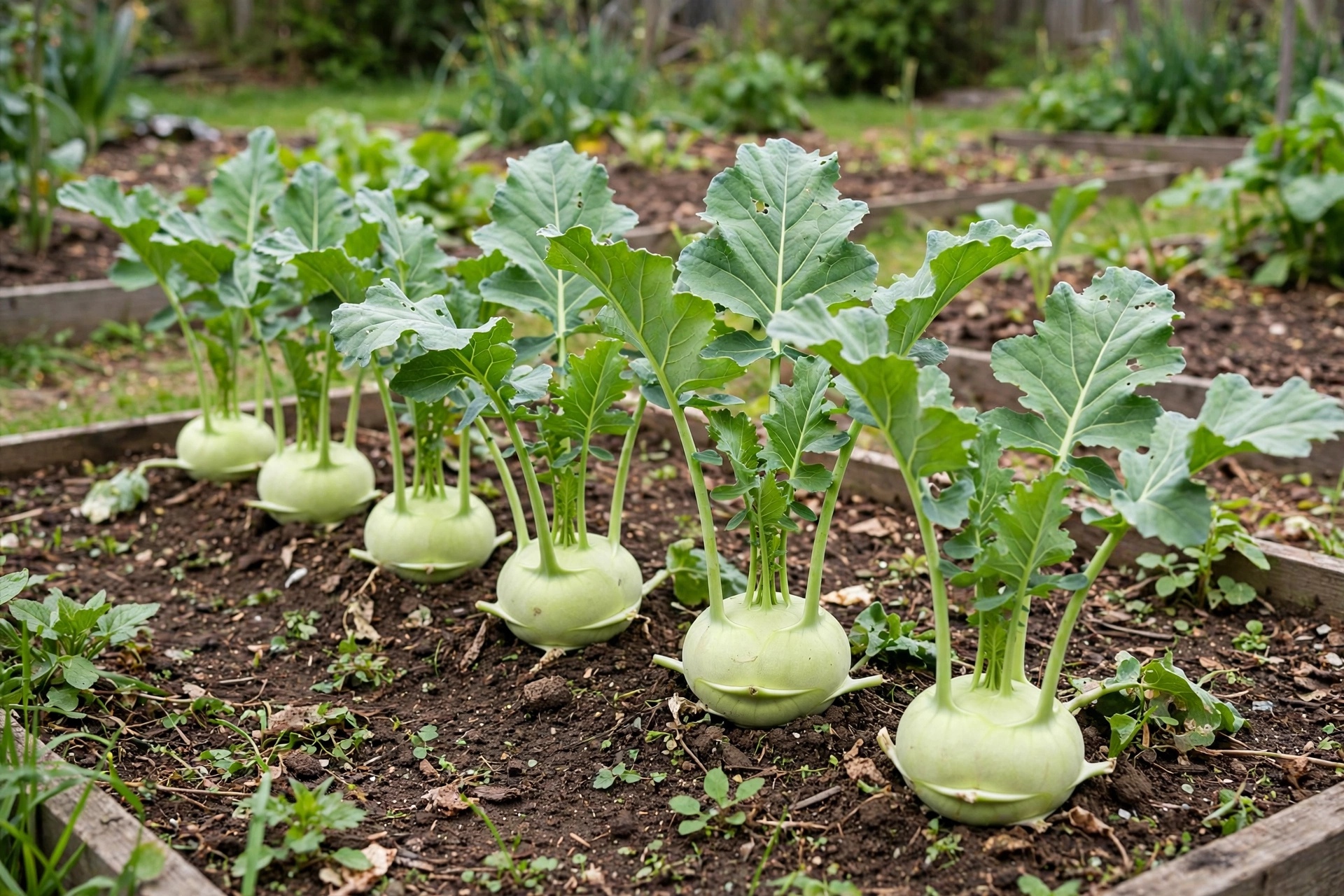
Purple Vienna is a reddish-purple, slightly flattened globe with a tender white interior, and its flavor sits between an apple and a mild turnip — crisp, delicately sweet, a little nutty, with the faintest peppery edge. The packet lists 50 to 69 days, which is a wide window because kohlrabi is a cool-season crop: spring bulbs finish faster than fall ones racing the frost.
The packet numbers are the ones that matter. Sow a group of 3 seeds every 4 inches, a quarter to a half inch deep, and thin to one plant every 4 inches when the seedlings are 2 inches tall. Rows go 12 to 18 inches apart. Germination runs 10 to 14 days, and the plants stay short, under 12 inches, which is why the packet marks it good for containers.
One cup of kohlrabi carries 140% of the recommended daily allowance of vitamin C, per the packet — a useful fact, but not the reason to grow it. The reason is texture. Eaten raw like an apple, or steamed, sautéed, or pickled, a young bulb is the crunchiest thing in a fall salad.
Now the honest part. Gardeners rate Purple Vienna 3.6 stars across 12 reviews — the lowest rating on this page, and I am not going to dress that up. Kohlrabi punishes two mistakes: letting the bulb sit past 2 to 3 inches, when the flesh turns pithy and woody, and letting the soil dry out while it sizes up. Most disappointing kohlrabi is a harvest-timing problem, not a variety problem, and the guide in this cluster, Growing Kohlrabi: Sowing, Spacing, and Harvest, works through both.
- Pros: the only garden kohlrabi Botanical Interests sells; 50–69 days; compact plants under 12 inches, good for containers; crisp raw, and it steams, sautés, and pickles well.
- Cons: 3.6 stars across 12 reviews, the lowest rating here; flesh turns pithy and woody if bulbs grow much past tennis-ball size.
BEST OVERALL
Purple Vienna Kohlrabi Seeds
The catalog’s one garden kohlrabi — a purple globe with white flesh, 50–69 days, at its best picked at 2–3 inches.
Check Price at Botanical Interests
Green kohlrabi — the variety that is not here
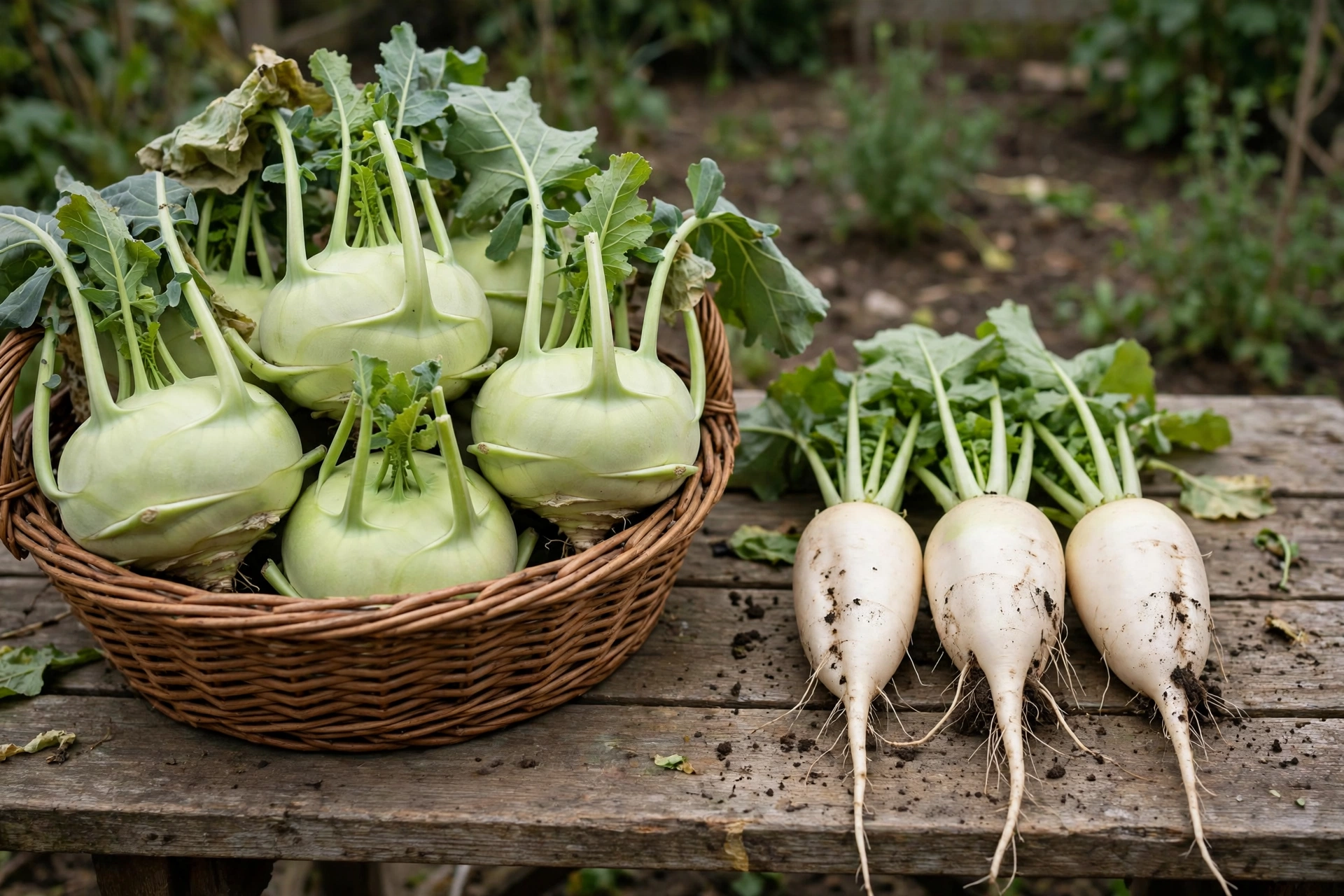
Most seed catalogs pair Purple Vienna with a green or white Vienna type, and the section photo above shows both colors because gardeners picture both. Botanical Interests does not sell a green kohlrabi packet — the only other kohlrabi on the site is a purple kohlrabi sprouting seed grown indoors in a jar, alongside microgreen blends. That sprouting seed is a different product for a different job, and its 2.3 stars across 3 reviews make it an easy skip for this page.
So the color choice is made for you. If purple skin over white flesh bothers you, peel it — the interior is the same pale, crisp flesh either way, and the purple is only skin deep.
Epic 6-Cell Seed Starting Trays — the indoor start
Kohlrabi can be direct sown, and the guide covers when that is the better call. But the packet also gives an indoor window — start 4 to 6 weeks before your average last frost date, and again 10 to 12 weeks before your average first frost date for the fall crop — and a fall start indoors is how you get transplants ready the week the summer crops come out.
The Epic 6-Cell Tray is the tray I would use for it. Each tray is made in the USA from high-strength recycled plastic, UV-treated and BPA-free, and the maker puts it at 500% thicker than standard trays. Air-pruning slots on the cells stop roots circling, the bottoms are open for airflow, and finger holes push a seedling out clean at transplant time — which matters for a brassica you are moving at 4 to 6 weeks.
Gardeners rate the trays 4.9 stars, and twelve of them fit one standard 1020 bottom tray, so a full flat of kohlrabi starts takes one shelf. The trade-off is price per tray against the thin disposable kind; these are a buy-once tool, and they only pay off if you start seed more than one season.
- Pros: 4.9 stars; air-pruning slots and open bottoms for stronger roots; finger holes for clean transplanting; twelve trays fill one 1020 bottom tray.
- Cons: costs more up front than disposable trays; only worth it if you start seeds season after season.
BEST FOR STARTING INDOORS
Epic 6-Cell Seed Starting Trays
Thick, reusable trays with air-pruning slots — the clean way to raise kohlrabi transplants for spring and fall.
Check Price at Botanical InterestsSeed Starting Heat Mat — only for the cool room
Kohlrabi seed wants soil at least 45°F, and ideally 65 to 80°F, per the packet. In a warm house, that range arrives on its own and a heat mat adds nothing. In a cool basement or an unheated porch — which is exactly where a lot of fall starts live — the soil can sit below the ideal range for days, and germination stretches past the packet’s 10 to 14 days.
The Epic mat is 10 by 20.75 inches, sized to fit a 1020 tray, draws 20 watts, and raises soil temperature by 10 to 20 degrees. That lift is the whole product: no thermostat, no timer, just steady bottom heat until the seedlings are up, then you unplug it.
Gardeners rate it 4.7 stars across 50 reviews. I would buy it for a seed-starting shelf that also grows peppers and tomatoes, which genuinely need the warmth, and let the kohlrabi ride along. For kohlrabi alone in a warm room, skip it and put the money toward a second packet.
- Pros: 4.7 stars across 50 reviews; raises soil temperature 10–20°F; fits any 1020 tray; 20 watts, cheap to run.
- Cons: no thermostat or timer; unnecessary when your seed-starting spot already holds 65–80°F.
WORTH ADDING
Epic Seed Starting Heat Mat
Steady bottom heat for cool seed-starting rooms — lifts soil 10–20°F so kohlrabi germinates on schedule.
Check Price at Botanical InterestsThe three picks, side by side
| Pick | Job | Key figure | Gardener rating |
|---|---|---|---|
| Purple Vienna Kohlrabi | The variety — swollen stem, eaten raw or cooked | 50–69 days; harvest at 2–3 inches | 3.6 stars, 12 reviews |
| Epic 6-Cell Trays | Indoor starts, spring and fall | 12 trays fill one 1020 bottom tray | 4.9 stars |
| Seed Starting Heat Mat | Bottom heat for cool rooms | Raises soil 10–20°F; 10 × 20.75 inches | 4.7 stars, 50 reviews |
Bottom Line
Buy Purple Vienna — there is no second kohlrabi packet to weigh against it, and the variety itself is sound: 50 to 69 days, compact, and genuinely good raw when it is picked young. Spend your attention on the two things that decide the crop, which are steady water while the stem swells and a harvest at 2 to 3 inches, and use Kohlrabi vs Turnips: Which to Grow if you are still deciding whether this bed should hold kohlrabi at all. For the wider brassica picture, the short-season brassicas roundup covers the cousins that share its weather.