Three to five years. That is the interval printed in most perennial advice, and it is not wrong so much as unfinished — it describes the middle of a spread that runs from every two years at one end to, functionally, never at the other.
The difference between those ends is not fussiness. Divide a fast clump too late and it chokes itself out of flowering; divide a peony on a schedule it never asked for and it may sit out a season of bloom repaying the disturbance. The plant’s growth rate sets the calendar, and the clump itself reports when the calendar has slipped.
The intervals, plant by plant
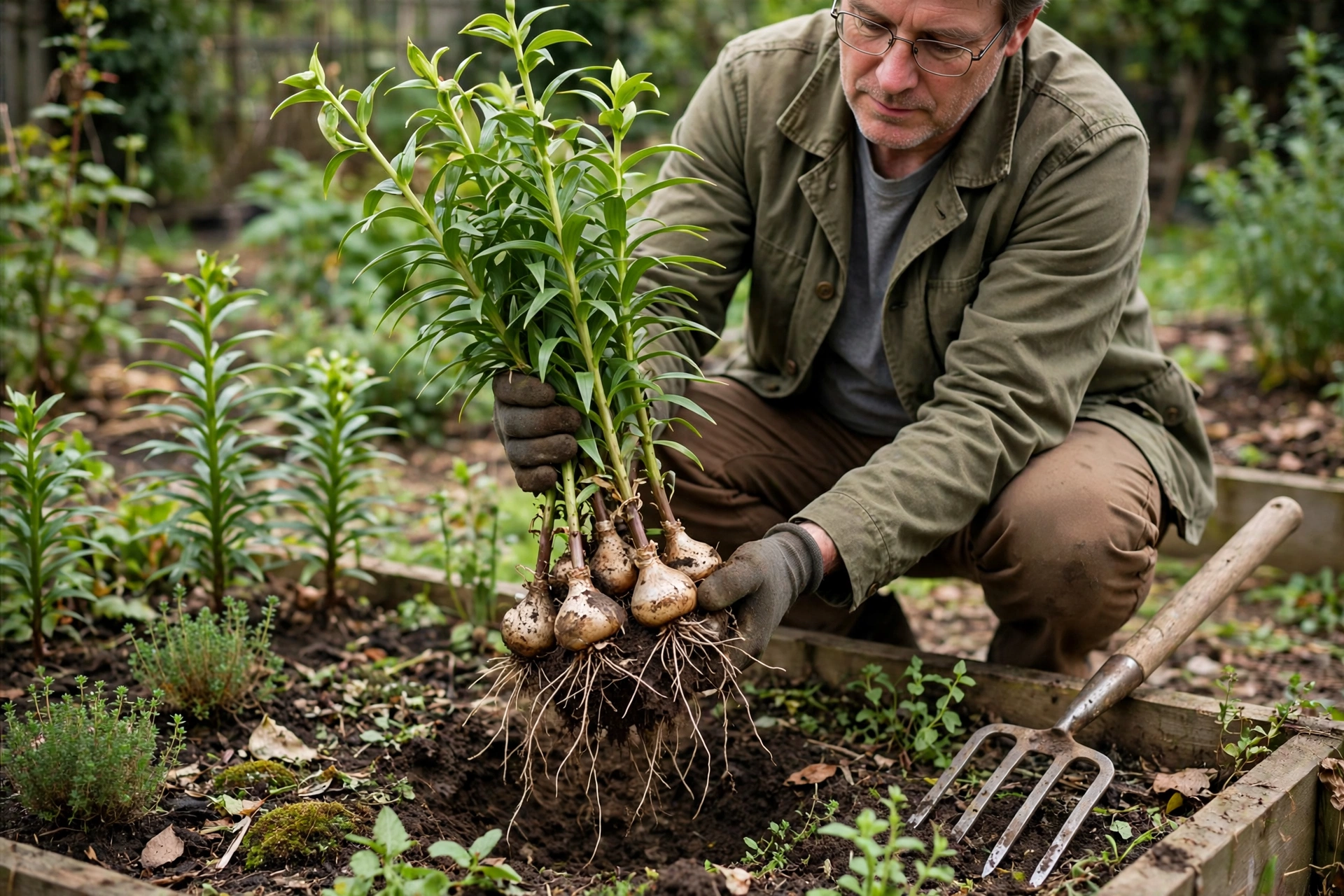
Daylilies sit at the busy end of the range. A vigorous cultivar in good soil wants dividing every 3 to 5 years, and the method is its own job — the daylily dividing guide covers the fork work in full.
Hostas are slower and more forgiving. Most clumps go 5 to 10 years before crowding costs them anything, and a hosta that is still gaining size each spring is giving clear evidence it can be left alone.
Bearded iris run on the shortest clock of the common perennials: every 3 to 4 years. Rhizomes grow outward and pile over each other, and an overcrowded iris bed is one of the more reliable ways to turn a flowering plant into a foliage plant. Timing and replanting depth for iris are covered in how to divide bearded iris.
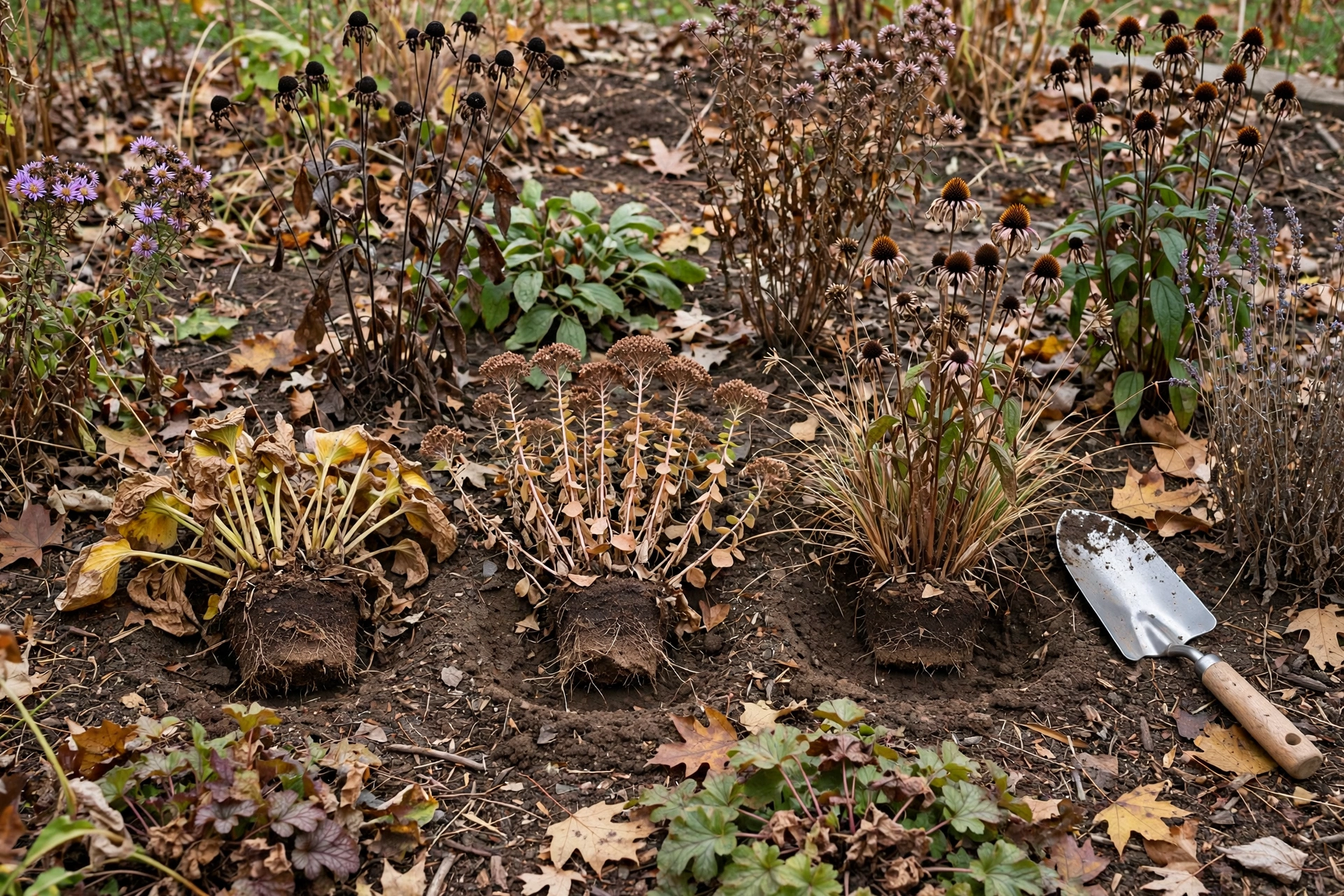
Ornamental grasses split by type. Warm-season grasses such as miscanthus and switchgrass typically need dividing every 3 to 5 years, once the center starts to thin, while slower cool-season types can go longer. Either way, grasses are divided in spring as growth resumes, not in fall.
Coneflowers land in the middle again, every 3 to 4 years, though many gardeners divide them less for the parent plant’s health than for the free plants. Coreopsis and black-eyed Susans, both shorter-lived, want dividing every 2 to 3 years partly to keep the planting going at all.
Peonies are the exception that exposes the rule. An established peony can flower well for decades — plantings are routinely documented past 30 years — without division, and moving one resets its bloom for a year or more. Divide a peony to move it or multiply it, not because a calendar page turned.
Signs a clump needs dividing now
The most legible sign is a dead or woody center. The clump grows outward from its middle, so the oldest growth sits in the center, and when that center turns bare, woody, or thin while the edges stay vigorous, the plant has already told you what it needs.
Fewer flowers on the same amount of foliage is the second sign, and it usually arrives a season before the dead center does. A daylily that produced half the scapes it did two years ago, on a clump the same size or larger, is describing crowding in the only language it has.
Flopping belongs on the list too, with a caveat. Stems that splay outward from a hollow center are a division symptom; stems that flop on a young, solid clump are more often a light or feeding problem, and dividing will not fix shade.
There is a texture to a clump that has gone too long, once it is out of the ground: a dense, wiry mat that resists the fork and comes up in one interlocked piece rather than crumbling at the edges. It sounds dry when it lands on the tarp. That mat is the reason the work takes twice as long at year six as it would have at year four.
Plants that resent division
Peonies lead this list. A gardener who divides one anyway should do it in fall, keep at least three buds — the pink eyes on the crown — on each piece, and expect a year or more before it flowers again.
Taprooted perennials resent disturbance for a structural reason — the root is one deep anchor rather than a divisible mass. Butterfly weed, baptisia, and oriental poppies all sit in this group; baptisia in particular builds a woody crown over a deep root system and can take years to forgive being split.
Lavender and Russian sage, woody at the base, also divide poorly. They are propagated by cuttings instead, and a gardener trying to halve an old lavender usually ends up with two dead halves and a clear lesson.
Timing still governs the work
The interval tells you the year; the season still has to be right. The general pattern is to divide spring bloomers in fall and fall bloomers in spring, so the plant gets a full season to root before it flowers — the full sorting of which plants go in which group is in should you divide perennials in fall?
Whatever the season, the job goes faster and cleaner with the right equipment. The rundown of the best tools for dividing perennials separates the forks that lift cleanly from the spades that slice roots you meant to keep.
And what goes back into the hole matters. Divided pieces replanted into tired, unamended soil recover slowly, which is why the guidance on soil and mulch after dividing perennials is worth reading before the first clump comes up, not after the last one goes in.
Keeping a record that actually helps
A division date written on the plant label, in pencil or paint pen, beats a notebook nobody opens. Three seasons later, when a clump looks tired, the label settles whether it is due or whether something else — drainage, shade creep from a growing tree, a dry year — is the real problem.
That distinction is the whole value of the intervals above. A hosta at year seven with a dead center needs the fork; a hosta at year seven still expanding needs nothing, and the number on the label is what keeps a gardener from fixing a plant that was never broken.
So use 3 to 5 years as the reminder to look, not as the order to dig. The clumps that need it will show a hollow center, a falling flower count, or stems falling away from the middle — and the peony, unbothered at year twenty, will show nothing at all. Believe the peony.