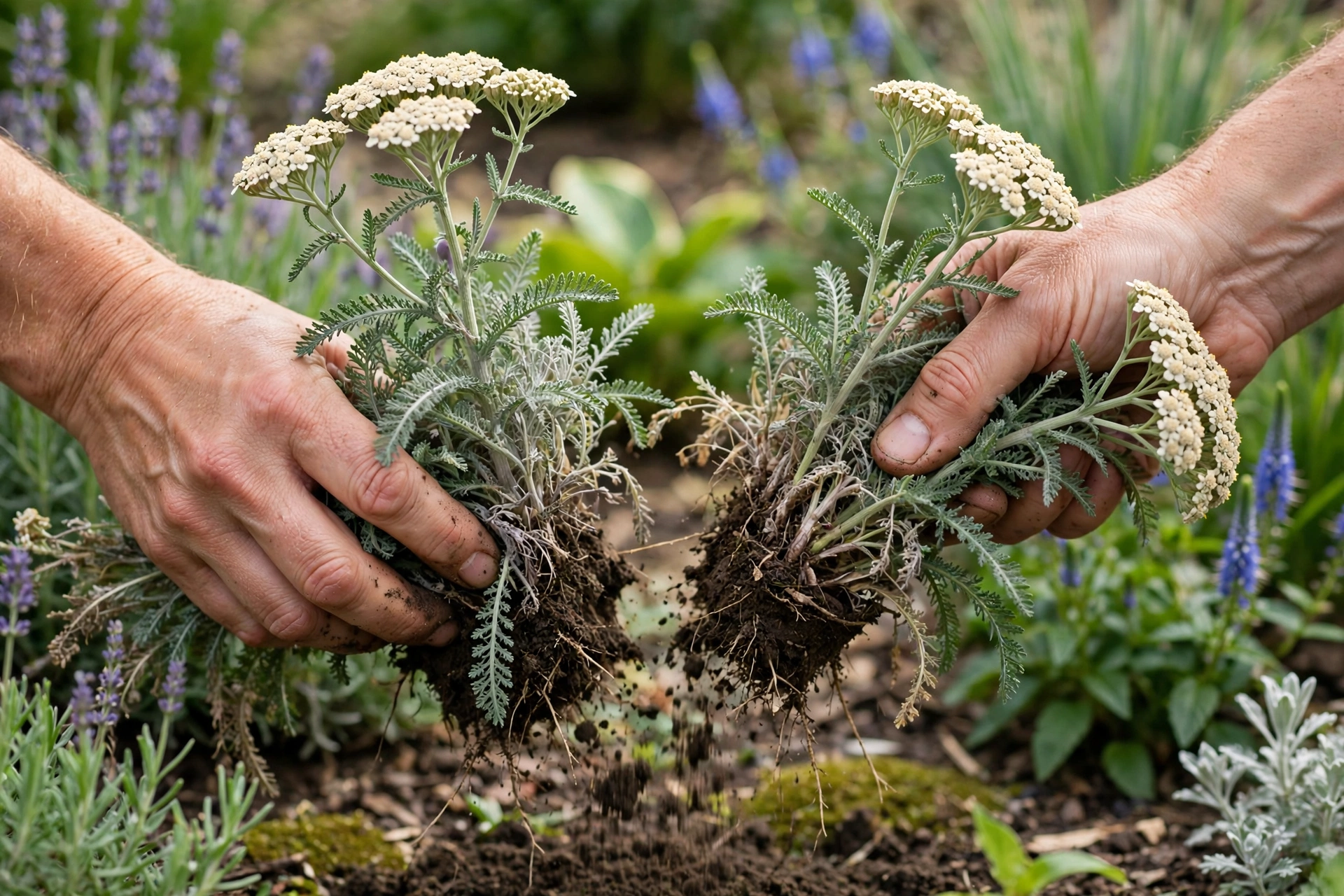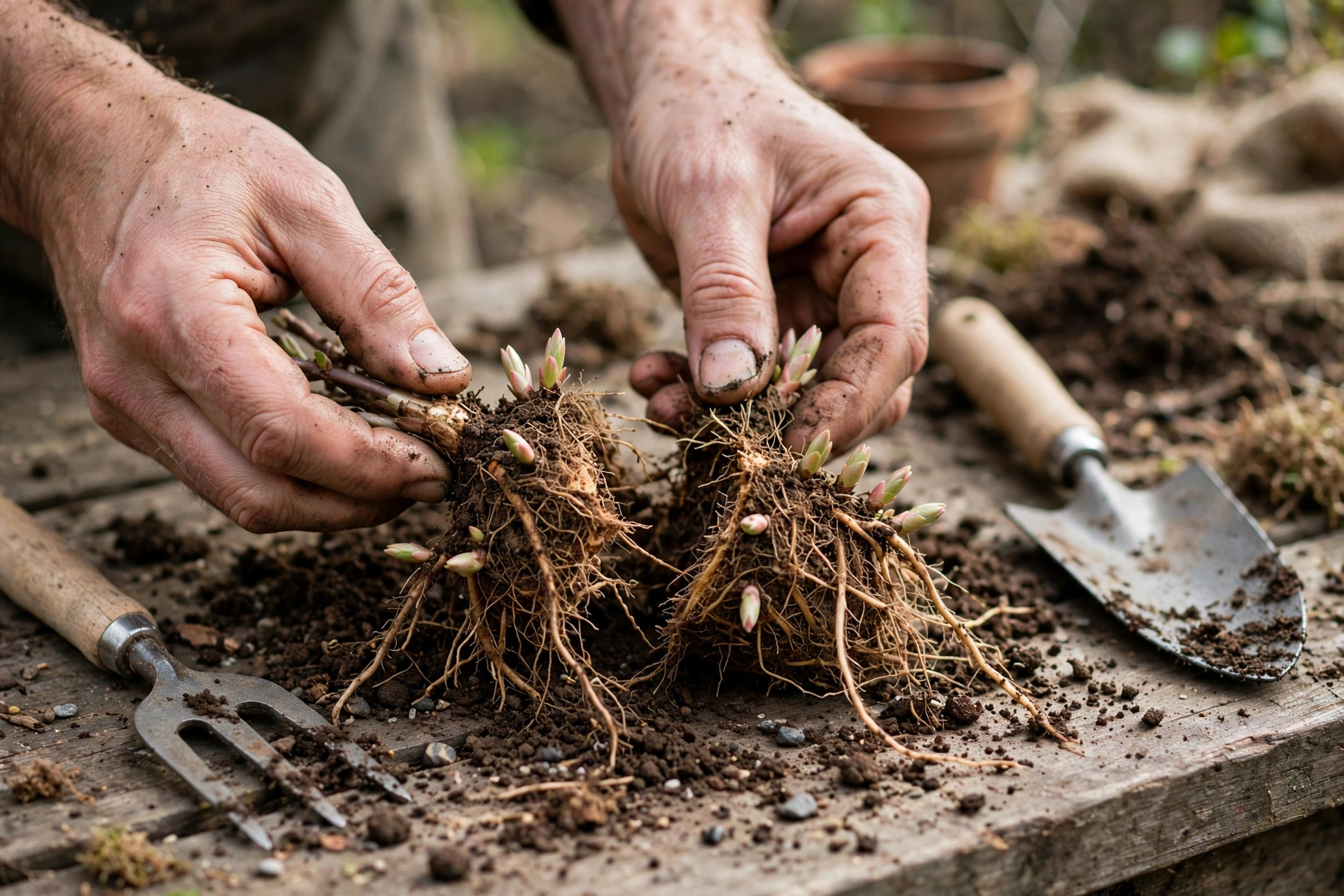
A healthy root, about as thick as a pencil, holds everything a new plant needs. Cut it from a dormant perennial in winter, and the stored food in that one section will push up a shoot in spring — a whole plant from a piece of root most gardeners throw on the compost pile.
Root cuttings suit the perennials that resist the usual methods: Oriental poppies resent division, Japanese anemones spread by their roots anyway, and phlox, sea holly, globe thistle, and verbascum all carry the ability to grow a shoot from root tissue. This post settles which plants qualify, when to cut, and the one detail — which end is up — that decides whether a cutting grows or quietly rots.
Which perennials take from root cuttings
The method works only on plants that can form shoots from root tissue. The reliable list is short and specific: Oriental poppy, Japanese anemone, garden phlox, sea holly, globe thistle, acanthus, verbascum, and drumstick primrose.
Two cautions sort the list further. Variegated plants come back plain from root cuttings — the variegation lives in the shoot tissue, not the root — so propagate variegated forms by division instead, the way our dividing tools guide covers. And a patented plant may not be propagated at all while its patent runs, whatever the method.
When to take them
Take root cuttings in dormancy, from mid-autumn into early winter, when the parent plant’s roots hold their peak store of carbohydrates and there is no top growth demanding support. The plant gives up root sections now at the lowest cost to itself, and the cuttings wait out winter in a cold frame before growing away in spring.
There is a satisfaction to the timing: the border is bare, the fork comes out for a quiet job, and the work of next year’s new plants happens while the garden asks for almost nothing else.
The method, step by step
1. Lift and choose. Lift a vigorous, established clump while it is dormant and wash the soil from the roots. Select young, healthy roots about pencil thickness, and take no more than one-third of the root system. Replant the parent straight away.
2. Cut with a code. Cut each root into sections 2 to 4 inches long. Make the top cut — the end that was nearest the crown — straight across, and the bottom cut at an angle. That flat-versus-slanted code is how you will know, weeks later in a tray of identical-looking pieces, which end is up.
3. Set thick roots upright. Fill a pot with a gritty mix — equal parts peat substitute and coarse sand or perlite works. Push each thick section in vertically, flat end up, about 2 inches apart, with the top just below the surface. Cover with about ⅜ inch of grit.
4. Lay thin roots flat. Thin-rooted plants such as Japanese anemone and phlox need longer sections, 3 to 5 inches, because a slim root holds less stored food. Lay those horizontally about 1 inch apart and cover with ⅜ inch of mix.
5. Wait in the cold. Water lightly and set the pots in a cold frame or unheated greenhouse. Shoots emerge as temperatures warm in spring, typically within 4 to 10 weeks of growth starting. Pot each rooted cutting on individually once it is growing well, and plant out the following season.
What goes wrong
Cuttings planted upside down. Shoots form at the crown end and roots at the far end — that polarity is fixed in the tissue. An inverted thick cutting spends its stored food trying to grow downward. The flat-and-angled cut code exists to prevent exactly this.
Rot in wet mix. A dormant cutting barely drinks. Keep the mix just moist; soggy and cold is the combination that rots sections before spring. Grit on the surface keeps the top end dry.
Taking too much root. Past one-third of the root system, the parent plant pays for your new plants with a weak season. Take less, and take it from the outer roots, leaving the crown’s core intact.
Aftercare for the parent plant
The parent goes back in the ground the same day, at its original depth, watered in once. What it gets afterward is the same care as any freshly divided perennial — the soil and mulch guidance in what to use after dividing applies here unchanged, because a root-cutting parent has had the same disturbance a division causes.
The short version
In dormancy, lift the plant, cut pencil-thick roots into 2-to-4-inch sections — flat on top, angled below — and set them upright in gritty mix under a layer of grit. Oriental poppy, phlox, Japanese anemone, and their short list of companions will do the rest in spring. For clumps that divide cleanly instead, which perennials to split in fall sorts out the timing.
Sources
Royal Horticultural Society, Root Cuttings advice — suitable plants, section lengths, orientation cuts, spacing, and grit covering. NC State Extension — dormancy timing and root carbohydrate reserves.