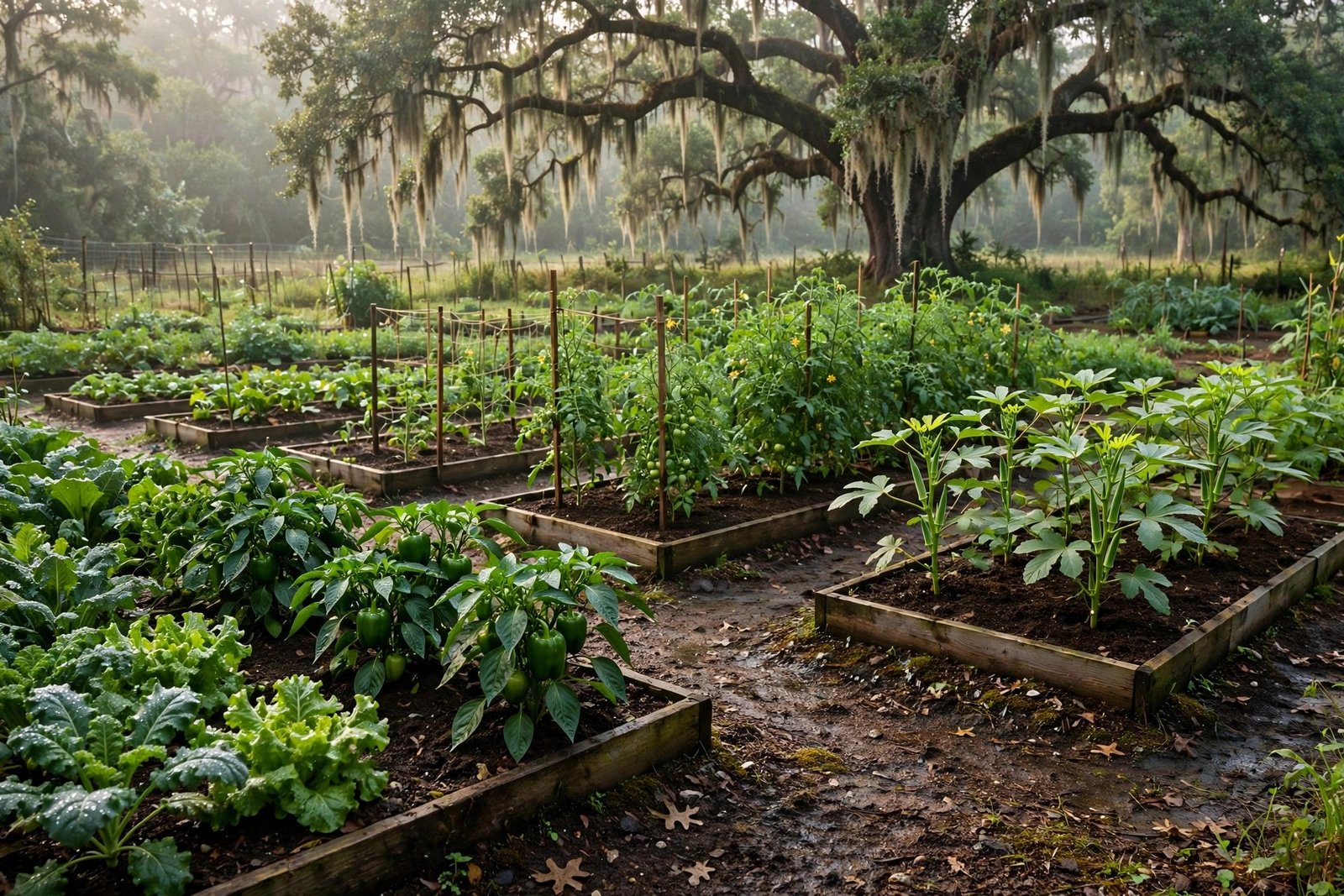
In Louisiana, the garden calendar has no off-season. The LSU AgCenter’s planting guide says it plainly: vegetables can be planted year-round here, and as soon as one crop finishes bearing, the row gets pulled, reworked, and planted again.
That abundance creates the state’s real timing problem, because Louisiana plants at two speeds. The guide prints separate spring and fall dates for south and north Louisiana, and the gap between them is wide enough to lose a crop in: snap beans start February 15 in the south and March 15 in the north, and the AgCenter puts the end of frost danger at March 15 for south Louisiana and April 1 for central and north Louisiana.
The dates on this page are the LSU AgCenter’s, split south and north the way the guide splits them. Central Louisiana follows the guide’s own rule for its in-between position. Frost anchors are NOAA’s 1991–2020 normals. This calendar is one of the state calendars collected in planting calendars by state.
Two Louisianas, one planting guide
The guide’s split follows the state’s geography. South Louisiana gardeners use the south columns. North Louisiana gardeners use the north columns. Central Louisiana gardeners take the north dates for spring crops, when a late freeze is the risk that matters, and may use either set for fall crops.
Coastal gardeners get one more adjustment, and the guide states it directly: freezes seldom occur on the coast, so coastal parishes may extend the fall planting season by about a month in many cases, and warm-season crops can go out as transplants as early as late February.
The state spans USDA hardiness zones 8a through 10a on the map printed in the guide, from the Arkansas line to the Gulf. Zones describe winter cold for perennial plants. The vegetable dates run on frost and heat instead, and Louisiana has enough of both to keep a gardener busy in every month.
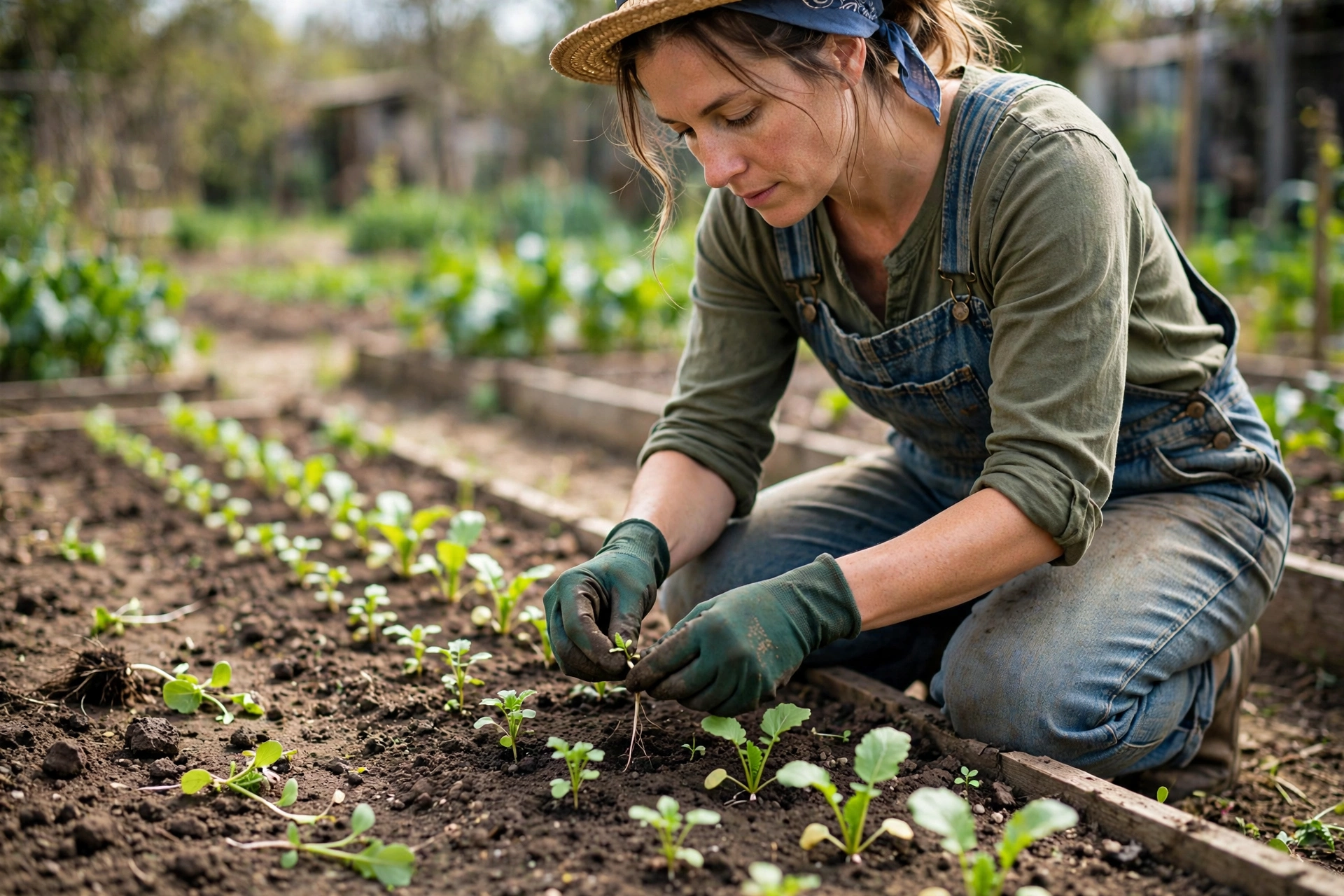
Many of the guide’s dates are for transplants, marked “plants” in the tables. To raise your own, the guide gives the lead times: tomatoes, peppers, and eggplant are seeded six to ten weeks before planting out, with the longer times for the spring crop; cabbage, broccoli, cauliflower, lettuce, kale, and Swiss chard get five to six weeks; cucumbers, squash, and melons need only three to four. Counting back from a transplant date to a seed-start date is the whole mechanism of a calendar like this one, and how planting calendars work walks through that arithmetic in full.
Five stations, five different springs
The frost anchors below are the median dates — the 50% probability dates at 32°F — from NOAA’s 1991–2020 climate normals. A median last frost is a coin flip: in half of the years on record, a freeze arrives after it. What an average frost date does and does not promise is covered in frost dates explained.
| Region | Anchor station | Last spring frost | First fall frost | Frost-free days |
|---|---|---|---|---|
| Northwest | Shreveport Regional Airport | Mar 9 | Nov 18 | 255 |
| Northeast | Monroe Regional Airport | Mar 8 | Nov 15 | 253 |
| Central / Mississippi River | Baton Rouge Ryan Airport | Feb 25 | Nov 26 | 276 |
| South-central | Lafayette Regional Airport | Feb 13 | Dec 4 | 299 |
| Southeast / Gulf Coast | New Orleans International Airport | Jan 30 | Dec 31 | 333 |
At New Orleans International Airport, the median first fall freeze falls on December 31, which means that in half of the years on record no freeze arrived before the new year at all, and the frost-free season runs 333 days.
At Shreveport Regional Airport, 255 frost-free days is still a long season by national standards, but the last spring frost holds until March 9 — five weeks after New Orleans. A tomato planted on New Orleans’ schedule in Shreveport is not early. It is exposed.
Spring planting dates: cool-season crops
Winter in Louisiana is a growing season in its own right. English peas go in from mid-November, bulb onion sets start in mid-December in the south, and the January list — beets, carrots, cabbage, lettuce, Irish potatoes — is longer than the spring list in most states.
| Crop | South Louisiana (spring) | North Louisiana (spring) | Days to harvest |
|---|---|---|---|
| Beets (direct-seed) | Jan 15 – Mar 15 | Feb 1 – Mar 31 | 55–60 |
| Broccoli (plants) | Jan 15 – Mar 15 | Jan 15 – Mar 15 | 50–90* |
| Cabbage (plants) | Jan 15 – Mar 15 | Jan 15 – Mar 15 | 50–75* |
| Carrots (direct-seed) | Jan 15 – Mar 15 | Jan 15 – Apr 1 | 70–75 |
| Cauliflower (plants) | Jan 15 – Feb 15 | Feb 1 – Mar 15 | 55–65* |
| Chard, Swiss | Jan 15 – May 1 | Jan 15 – May 1 | 45–55 |
| Collards (direct-seed) | Jan 15 – Mar 15 | Jan 15 – Mar 15 | 75 |
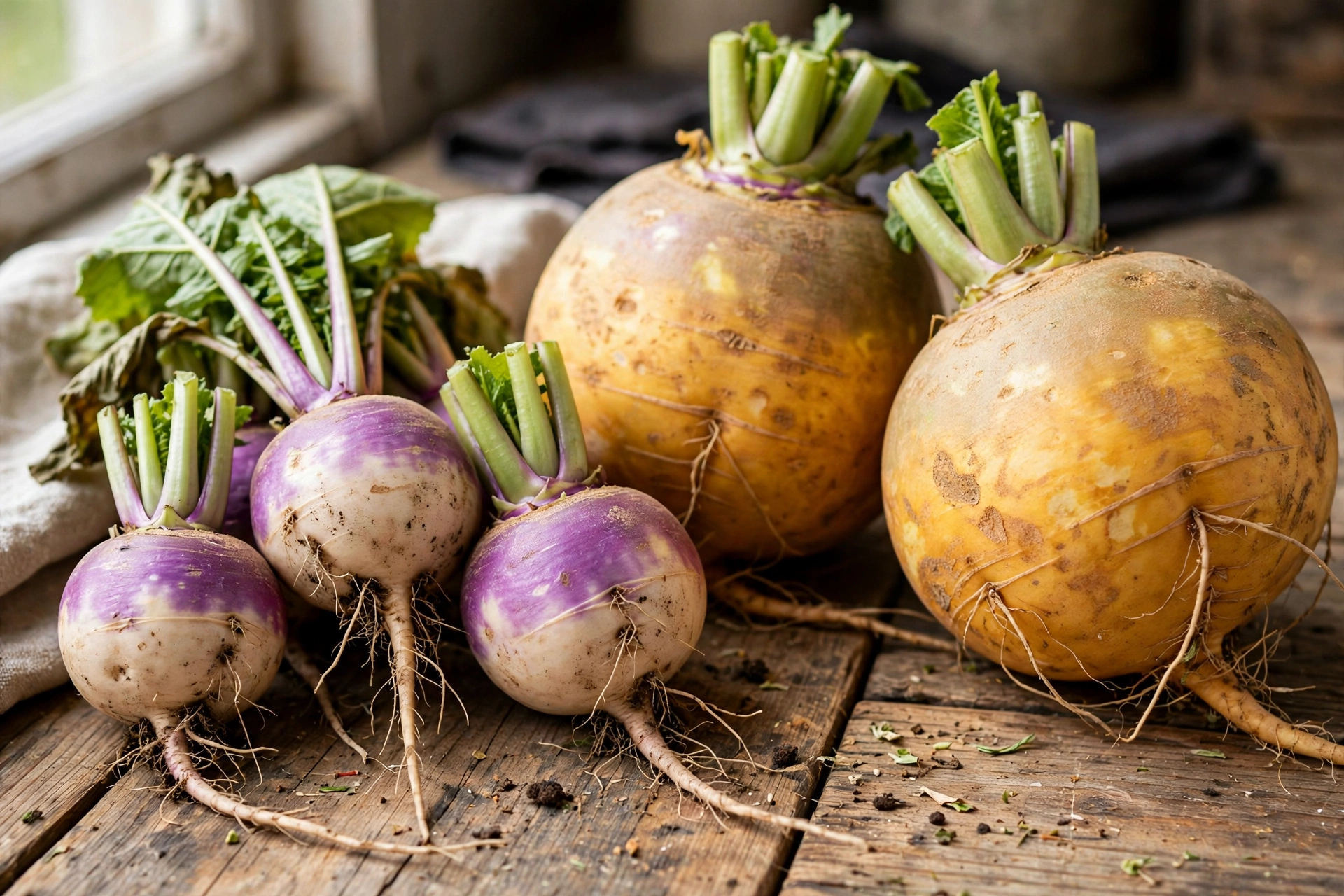
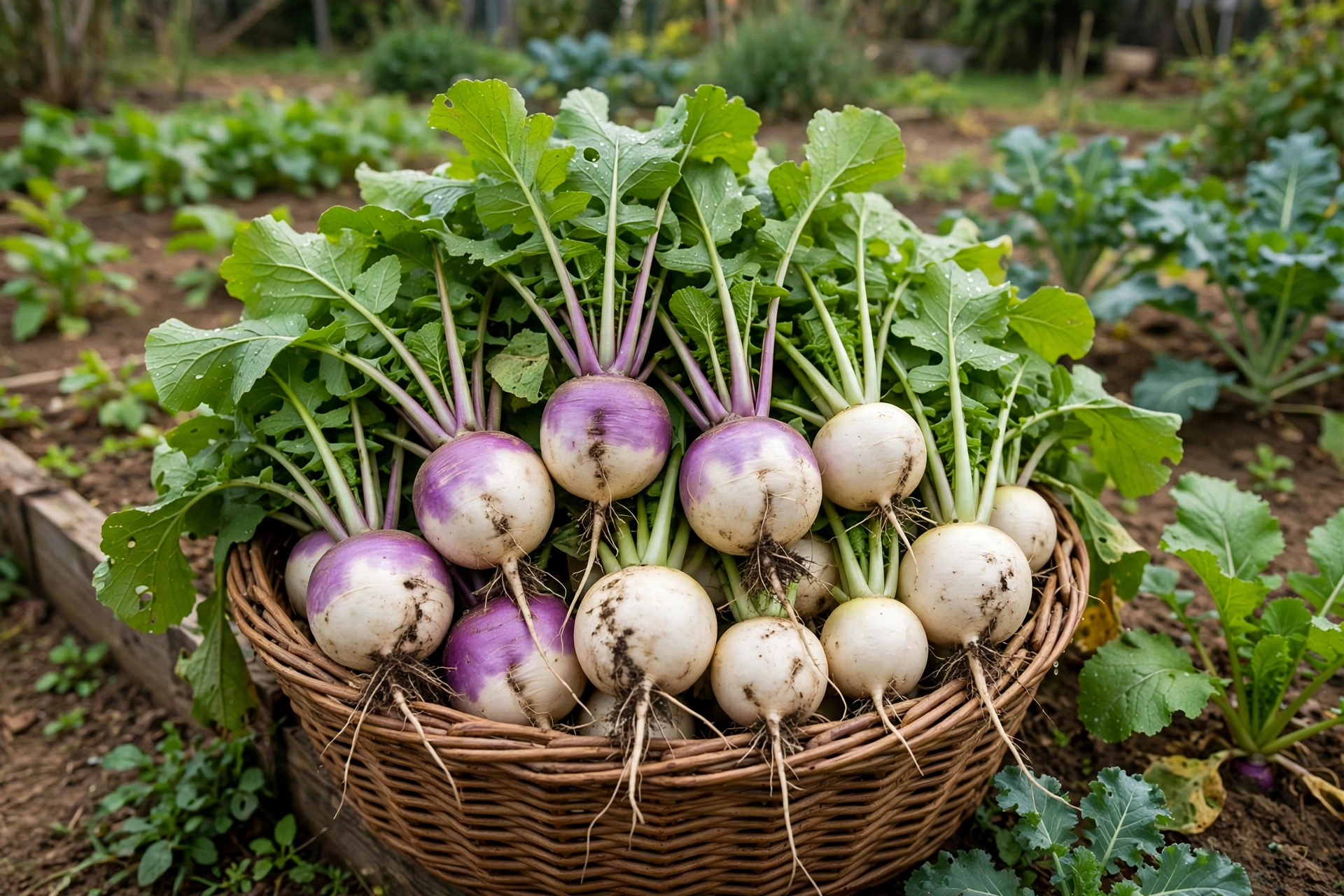
| Greens, mustard and turnip (direct-seed) | Feb 1 – Mar 15 | Feb 1 – Mar 30 | 35–50 |
| Kale (direct-seed or plants) | Feb 1 – Mar 15 | Feb 1 – Mar 15 | 50–70 |
| Kohlrabi (plants) | Jan 1 – Mar 30 | Feb 1 – Mar 15 | 55–75 |
| Lettuce (direct-seed or plants) | Jan 15 – Mar 15 | Jan 15 – Mar 15 | 45–80 |
| Onions, bulb (sets) | Dec 15 – Jan 31 | Jan 31 – Mar 1 | 120–150 |
| Peas, English (direct-seed) | Nov 15 – Feb 1 | Nov 15 – Feb 1 | 60–70 |
| Potatoes, Irish (pieces) | Jan 20 – Mar 10 | Feb 15 – Mar 10 | 90–120 |
| Radishes (direct-seed) | Jan 15 – Mar 31 | Feb 1 – Mar 15 | 22–28 |
| Spinach (direct-seed) | Feb 1 – Mar 15 | Feb 1 – Mar 30 | 35–45 |
| Turnips for roots (direct-seed) | Jan 15 – Mar 15 | Feb 1 – Mar 30 | 40–50 |
* Days to harvest marked with an asterisk are counted from transplanting, not from seed. The guide’s unmarked figures run from direct seeding or from setting out sets and pieces, as the crop row states.
Spring planting dates: warm-season crops
The warm-season start is staggered by tenderness. Sweet corn and snap beans open the season in the south in mid-February, after frost danger is mostly past, while tomatoes, peppers, eggplant, and okra wait for mid-March in the south and the start of April in the north.
| Crop | South Louisiana (spring) | North Louisiana (spring) | Days to harvest |
|---|---|---|---|
| Beans, snap, bush (direct-seed) | Feb 15 – May 15 | Mar 15 – May 15 | 48–55 |
| Beans, snap, pole (direct-seed) | Feb 15 – May 15 | Mar 15 – May 15 | 60–66 |
| Beans, lima, bush (direct-seed) | Mar 1 – May 30 | Apr 1 – May 30 | 60–67 |
| Cantaloupes (direct-seed or plants) | Mar 15 – Jun 30 | Apr 1 – Jun 30 | 80–85 |
| Corn, sweet (direct-seed) | Feb 15 – May 1 | Mar 1 – May 15 | 69–92 |
| Cucumbers (direct-seed or plants) | Mar 1 – May 15 | Apr 1 – May 15 | 50–65 |
| Eggplants (plants) | Mar 15 – May 15 | Apr 1 – May 15 | 80–85* |
| Okra (direct-seed or plants) | Mar 15 – Jun 30 | Apr 1 – Jun 30 | 60 |
| Peanuts (direct-seed) | Apr 1 – Jun 15 | Apr 1 – Jun 15 | 110–120 |
| Peas, Southern (direct-seed) | Apr 1 – Jun 30 | Apr 15 – Jul 31 | 70–80 |
| Peppers, bell (plants) | Mar 15 – May 15 | Apr 1 – May 30 | 60–80* |
| Peppers, hot (plants) | Mar 15 – Jun 30 | Apr 1 – Jun 15 | 70–80* |
| Potatoes, sweet (sets) | Apr 15 – Jun 30 | May 1 – Jun 30 | 90–120* |
| Squash, summer (direct-seed or plants) | Mar 15 – Jun 30 | Apr 1 – Jun 30 | 50–90 |
| Tomatoes (plants) | Mar 15 – May 15 | Mar 20 – Jun 30 | 60–75* |
| Watermelons (direct-seed or plants) | Mar 15 – Jul 15 | Mar 15 – Jun 30 | 90–110 |
Southern peas and peanuts take the heat that shuts other crops down, and both plant into June. Sweet potato sets go in last of the spring crops, from mid-April in the south and May 1 in the north, because the slips need warm soil and a long, hot run to size up.
What to plant, month by month
January. The cool-season garden is planted now, not planned: beets, carrots, cabbage and broccoli plants, lettuce, collards, kohlrabi, and turnips across the state, with Irish potatoes from January 20 in the south and onion sets finishing their window in the south while just opening in the north.
February. South Louisiana starts snap beans and sweet corn on February 15 and spinach, kale, and mustard greens at the start of the month. North Louisiana plants beets, kohlrabi, and turnips, sets out Irish potatoes from February 15, and finishes English peas by February 1.
March. The warm season opens in the south: tomato, pepper, and eggplant plants from March 15, cucumbers from March 1, and okra, summer squash, cantaloupes, and watermelons from March 15. The north starts snap beans and sweet corn mid-month and its first tomato plants on March 20.
April. North Louisiana’s warm crops go in — cucumbers, eggplant, peppers, okra, and squash from April 1 — and peanuts and Southern peas plant statewide. South Louisiana adds sweet potato sets from April 15.
May. Spring windows close in order: beans and tomatoes finish in the south by mid-May, lima beans run to May 30, and the heat crops — okra, Southern peas, squash — carry the garden from here.
June. Okra, Southern peas, and sweet potatoes plant through June 30. Pumpkins for a Halloween harvest go in between June 15 and July 10, and the first fall plantings, eggplant in the south, open June 15.
July. The fall garden starts in the heat: fall tomato plants from July 1, cauliflower plants, Irish potatoes, collards, and mustard greens from mid-month. This is deliberate timing, counted back from the fall frost anchors.
August. Fall beans, cucumbers, and squash plant early in the month, broccoli plants go in from August 1, and carrots for fall follow from August 15.
September. Garlic cloves go in from September 1 and keep planting through November. Fall snap beans finish October 1, English peas get a short September window, and lettuce and spinach for fall are going in.
October. The fall greens are still going in — collards, kale, mustard greens, and turnips plant through October 31 — while broccoli plants finish at the end of the month.
November. South Louisiana plants lettuce and spinach through November 15 and beets through November 15, and English peas for winter open November 15 statewide. Garlic finishes November 30.
December. The south sets out bulb onion sets from December 15, and the coastal parishes are still working the extended fall season the guide allows them.
The fall garden, planted in summer heat
Louisiana’s second season is a full season. Fall tomatoes go in at the start of July, a timing that looks wrong until the frost anchors explain it: a tomato planted July 1 in Baton Rouge has until November 26, the median first freeze, to finish, and the same planting in New Orleans has until the end of the year.
The guide’s succession advice fits this long calendar. Successive plantings made a week or two apart keep bush snap beans, peas, and greens coming instead of arriving all at once, and the fall windows are wide enough — greens from mid-July into November in the south — to plant in repeated waves. Succession planting covers the intervals crop by crop.
| Crop | South Louisiana (fall) | North Louisiana (fall) | Days to harvest |
|---|---|---|---|
| Beans, snap, bush (direct-seed) | Sep 1 – Oct 1 | Sep 1 – Oct 1 | 48–55 |
| Beans, lima, bush (direct-seed) | Aug 1 – Sep 1 | Aug 1 – Sep 1 | 60–67 |
| Beets (direct-seed) | Aug 15 – Nov 15 | Sep 15 – Nov 15 | 55–60 |
| Broccoli (plants) | Aug 1 – Oct 31 | Aug 1 – Oct 31 | 50–90* |
| Cabbage (plants) | Aug 15 – Nov 30 | Aug 1 – Nov 30 | 50–75* |
| Carrots (direct-seed) | Aug 15 – Nov 15 | Aug 15 – Oct 15 | 70–75 |
| Cauliflower (plants) | Jul 1 – Oct 15 | Jul 15 – Oct 31 | 55–65* |
| Collards (direct-seed) | Jul 15 – Oct 31 | Jul 15 – Oct 31 | 75 |
| Cucumbers (direct-seed or plants) | Aug 1 – Sep 15 | Jul 15 – Aug 31 | 50–65 |
| Garlic (cloves) | Sep 1 – Nov 30 | Sep 1 – Nov 30 | 210 |
| Greens, mustard and turnip (direct-seed) | Jul 15 – Nov 10 | Jul 15 – Oct 31 | 35–50 |
| Kale (direct-seed or plants) | Jul 15 – Nov 15 | Jul 15 – Oct 31 | 50–70 |
| Lettuce (direct-seed or plants) | Sep 15 – Nov 15 | Sep 15 – Oct 30 | 45–80 |
| Peas, English (direct-seed) | Sep 1 – Sep 15 | Sep 1 – Sep 15 | 60–70 |
| Potatoes, Irish (pieces) | Jul 1 – Sep 15 | Jul 15 – Sep 1 | 90–120 |
| Radishes (direct-seed) | Aug 1 – Nov 1 | Aug 1 – Oct 30 | 22–28 |
| Spinach (direct-seed) | Sep 15 – Nov 15 | Sep 1 – Nov 15 | 35–45 |
| Squash, summer (direct-seed or plants) | Jul 1 – Sep 15 | Jul 1 – Aug 31 | 50–90 |
| Tomatoes (plants) | Jul 1 – Aug 15 | Jul 1 – Aug 10 | 60–75* |
| Turnips for roots (direct-seed) | Jul 15 – Oct 31 | Jul 15 – Oct 31 | 40–50 |
Start with the July tomatoes. A Louisiana gardener who plants only in spring gives away the five months between the first fall tomato window and the New Orleans freeze anchor, and those months grow the best greens of the year.
Sources
LSU AgCenter, Louisiana Vegetable Planting Guide, Publication 1980 (revised May 2020) — the governing source for every planting date, spacing, and days-to-harvest figure on this page, fetched in full November 25, 2026: Louisiana Vegetable Planting Guide (PDF). The guide is also published by the LSU AgCenter at lsuagcenter.com.
NOAA National Centers for Environmental Information, U.S. Climate Normals 1991–2020, annual/seasonal freeze probabilities at 50% probability and 32°F (stations USW00013957 Shreveport Regional, USW00013942 Monroe Regional, USW00013970 Baton Rouge Ryan, USW00013976 Lafayette Regional, USW00012916 New Orleans International), fetched November 25, 2026: U.S. Climate Normals 1991–2020.
USDA Plant Hardiness Zone Map (zones cited as printed in the LSU AgCenter guide): planthardiness.ars.usda.gov.