This post contains affiliate links. We may receive a commission if you make a purchase after clicking on one of these links.
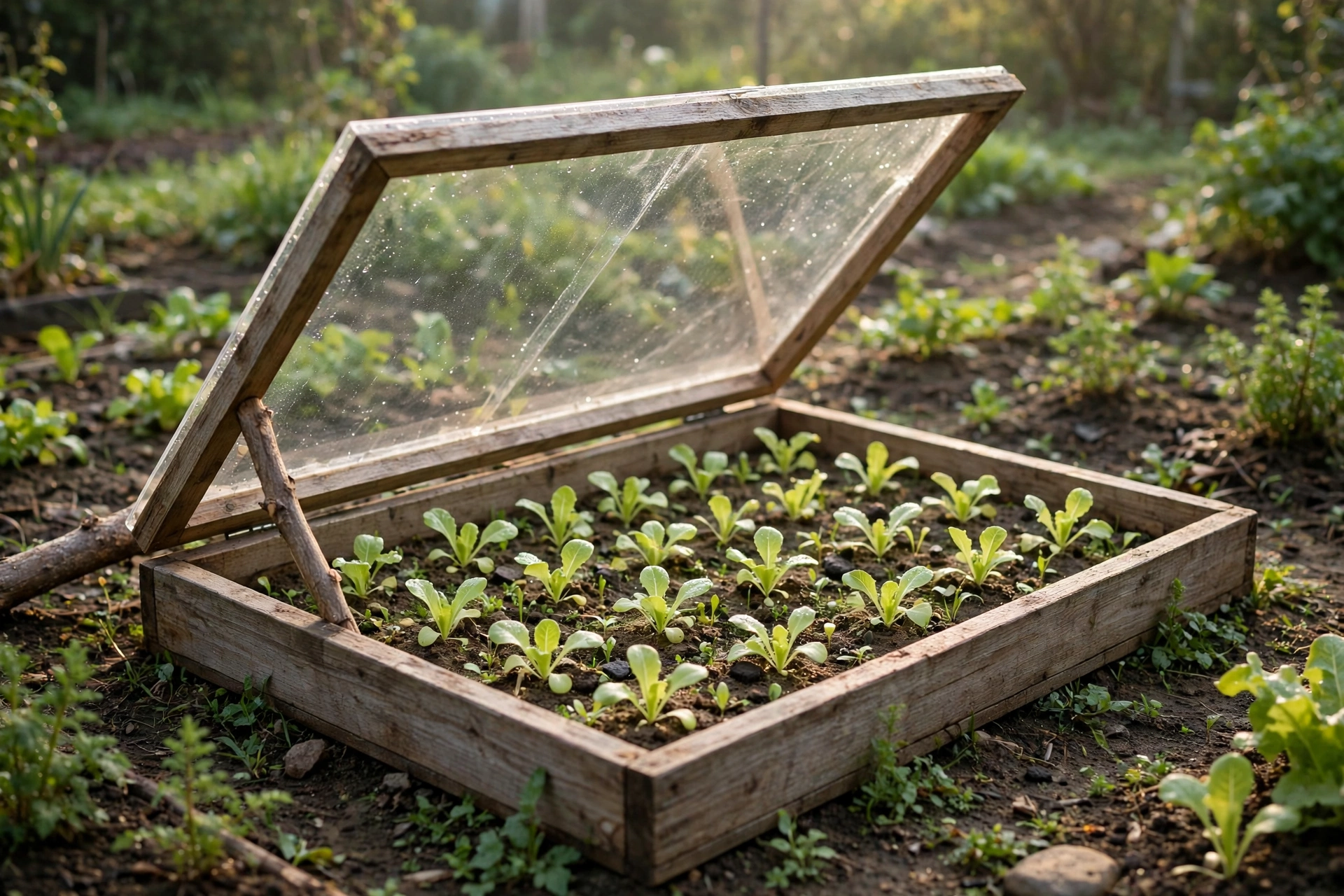
A polycarbonate lid beaded with condensation at dawn, soil dark and unfrozen beneath it, tells you the frame held the night’s warmth.
That small overnight difference is the whole case for a cold frame. Seedlings started indoors stall when they meet cold outdoor air too fast, and unprotected beds lose tender plants to a single late frost, so a frame that keeps the soil workable and the air calmer buys weeks at both ends of the season.
Rigid panels, a lid that vents before the heat builds, and a frame that survives being opened and closed every day separate the frames worth buying from the rest. Two frames meet that standard in different ways, and one popular style does not.
Best cold frames for season extension, at a glance
| Pick | Frame | Lid and panels | Venting | Standout feature |
|---|---|---|---|---|
| Backyard Discovery Aggie 4 x 2 | Cedar wood with powder-coated steel legs | Polycarbonate lid | Automatic, opens above 70°F | Raised planter with mesh drainage |
| MCombo Wooden Cold Frame Greenhouse 0760 | Fir wood | Frosted, translucent polycarbonate panels | Openable roof, manual | Two slatted shelves for pots and trays |
| Soft-cover cloches (PE film over a tube frame) | Light steel tube | Flexible polyethylene film | Zippered roll-up panel | Folds away flat for storage |
Best overall: Backyard Discovery Aggie 4 x 2 Cedar Cold Frame
The Aggie solves the failure that ruins more cold frame crops than frost does. Its temperature-activated hinge opens the lid on its own when the inside warms past 70°F and closes it again as the air cools, with no electricity and no one home to remember.
The build suits year-round outdoor use. Solid cedar carries the planter, powder-coated steel legs and hardware resist rust, and the polycarbonate lid keeps the weather off while the light comes through.
At 4 by 2 feet, the planting space is honest rather than generous. Mesh drainage in the base keeps excess water moving, and the frame arrives pre-cut and pre-drilled, backed by a 5-year warranty.
The trade-off is built into the design. Because the planting space is part of the unit, the Aggie works as a raised planter and cannot simply be lifted and set over an existing in-ground bed, and cedar with steel legs costs more than a plain fir box.
Pros
- Temperature-activated lid opens above 70°F and closes as it cools
- Cedar frame with powder-coated steel legs and hardware
- Built-in raised planter with mesh drainage, 5-year warranty
Cons
- Fixed 4 x 2 ft planter cannot be set over an existing bed
- Premium price next to basic wooden frames
Backyard Discovery Aggie 4 x 2 Cedar Cold Frame
Cedar raised cold frame with a temperature-activated polycarbonate lid that vents itself above 70°F.
Runner-up: MCombo Wooden Cold Frame Greenhouse 0760
The MCombo takes the cabinet approach instead of the planter approach. Two slatted wooden shelves hold pots and seed trays at working height, the shelves drain freely, and frosted polycarbonate panels keep the temperature and humidity steadier than open air while softening harsh light.
That format fits a patio or a small yard where plants live in containers. The natural fir frame weighs 26.7 pounds, light enough to reposition at the start of a season, and the roof opens for watering and for air on warm afternoons.
Venting here is manual, so a sunny morning still needs a hand on the roof before the heat builds. Shelves also set the limit: potted plants and trays belong in this frame, while crops growing in the ground do not.
Pros
- Two slatted shelves for pots and trays, with free drainage
- Fir frame with frosted polycarbonate panels that diffuse light
- Openable roof for access and ventilation
Cons
- Manual venting only, with no automatic opener
- Shelf format does not cover plants growing in a bed
MCombo Wooden Cold Frame Greenhouse 0760
Fir cabinet cold frame with two slatted shelves and frosted polycarbonate panels for pots and trays.
Not recommended: soft-cover cloches
The cheapest way to cover a bed is a tube frame wrapped in polyethylene film with a zippered front, and the low price is the whole appeal. As a season-long cold frame, it is the wrong purchase.
Film is a consumable, not a panel. It flexes in wind, tears at fixing points, and clouds as sunlight degrades it, so the cover becomes a replacement item while the frame underneath offers little insulation value of its own.
For one short stretch of frost cover, a cloche does a job. For hardening off seedlings in spring and carrying greens into fall, rigid panels hold heat and hold up, and film does neither for long.
Owning the frame is the easy half
A cold frame earns its weeks through daily handling, not through the purchase. How to use a cold frame covers the venting, watering, and timing that keep seedlings growing instead of cooking or damping off.
Frame material decides how many seasons that handling lasts. Our comparison of wood vs aluminum vs polycarbonate cold frames sets out which builds rot, which never do, and what upkeep each one asks for.
Size is the other fork in the road. If a low frame feels too small for the job you have in mind, the head-to-head on cold frame vs mini greenhouse shows where a frame stops being enough, and our best greenhouse kits for backyard gardeners covers the walk-in step up.
Bottom line
Buy the Backyard Discovery Aggie if you want the frame that manages its own venting, because the self-opening lid removes the one daily task that cooks seedlings when it gets forgotten. Choose the MCombo 0760 for pots and trays on a patio, and leave the film cloches for someone who only needs a cover for a week.