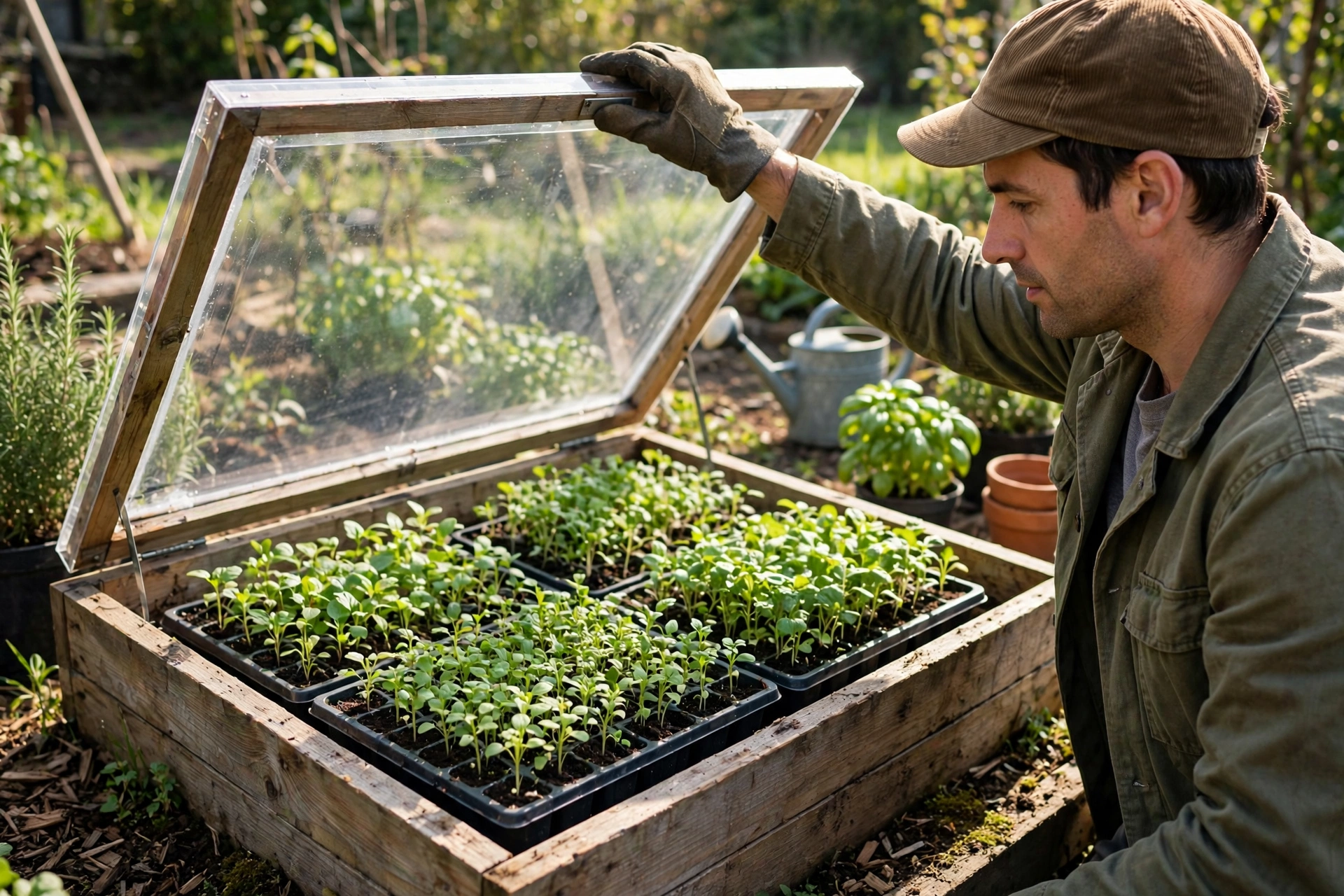
Late winter light returns before the soil warms, and a cold frame sits in that gap, holding seedlings between indoor trays and open ground.
That gap is where young plants are most often lost. Seedlings raised under lights meet cold nights, drying wind, and hard sun all at once when they move outside, while the garden soil is still too cold to receive them directly.
A cold frame softens each of those changes, but only when it is vented, watered, and timed on the plants’ schedule rather than the calendar’s.
Why the frame works, in plain terms
Sunlight passes through the lid and warms the soil inside, and the soil gives that warmth back slowly after the lid closes. The walls block wind, which matters more than most gardeners expect, because wind strips moisture from leaves faster than cold air alone does.
The same seal that holds warmth also traps it. On a bright day the air inside a closed frame climbs far faster than the air outside it, which is why venting is a daily habit and not an occasional chore.
If you are still deciding whether a frame fits your garden at all, the comparison of cold frame vs mini greenhouse lays out what each structure can hold and protect.
Venting: open early, close before evening
Prop the lid on every sunny morning. Even when the outdoor air still feels cold, direct sun through polycarbonate or glass heats a small sealed box quickly, and seedlings scorch at temperatures that would suit them fine in open air.
Match the opening to the day. A crack of a few inches handles a mild, bright morning, while a warm afternoon calls for the lid propped wide or removed entirely, because the goal is moving air rather than a specific lid angle.
Close the lid before the evening cools. Closing while some warmth remains in the soil gives the frame a store of heat to spend overnight, and a lid left open after sunset spends that store in the first hour.
Automatic openers exist for gardeners who are away all day, and the better ones begin lifting the lid once the inside warms past 70°F. The best cold frames for season extension include a cedar model with that hinge built in, which removes the morning round entirely.
Watering: the rain does not reach
A closed lid sheds rain off the frame, so plants inside can sit in dry soil through a wet week. Check the soil with a finger pressed an inch down, and water when that inch feels dry rather than when the surface looks pale.
Water in the morning, at soil level, and soak the root zone instead of misting the leaves. Morning watering lets foliage dry during the day, and dry foliage going into a cool, sealed night is far less inviting to the fungal problems that thrive in still, damp air.
Midday inside a vented frame has its own sound and feel: warm air, the faint smell of damp soil, leaves dry to the touch. That combination, soil moist and leaves dry, is the condition to aim for every time the lid closes.
Seed trays dry faster than beds do, because a shallow tray holds little soil. Expect trays to need water more often than plants growing in the ground under the same lid, and lift a tray to judge its weight before assuming it needs more.
Timing: hardening off and the two working seasons
Hardening off is the frame’s main spring job, and it takes 7 to 10 days done properly. Seedlings start with a few sheltered hours and the lid vented, then take longer stretches open each day, until they spend a full day and night outside with the lid closed only against frost.
Moving plants straight from a windowsill to an open bed skips that adjustment, and the setback shows up as stalled growth even when nothing visibly dies. The frame turns a sudden move into a graded one, which is the entire point of owning it in spring.
Fall runs the same shelter in reverse. Hardy greens sown in late summer keep growing under a closed lid weeks after open beds slow down, because the soil inside stays warmer and the leaves stay out of the wind.
Frame material changes none of this handling, though it changes how long the frame itself lasts. The breakdown of wood vs aluminum vs polycarbonate cold frames covers lifespan and upkeep if a replacement or a second frame is on your list.
The mistakes that undo the frame
Leaving the lid shut on a sunny day. One forgotten morning can cook a tray of seedlings outright, and it remains the most common way cold frame plants die.
Watering on a schedule instead of by the soil. A frame in a rainy spell and a frame in a dry, windy spell need opposite amounts of water in the same week.
Rushing the hardening-off days. Cutting the process down to two days saves nothing, because a checked plant spends those saved days recovering in the bed instead of growing.
What to do with this
Vent on sunny mornings, water by the soil and not the calendar, and harden plants off gradually before they move to open ground. A cold frame handled that way starts plants earlier in spring and keeps greens growing later in fall, which is all it ever promised to do.