Landscape & Leisure is reader-supported. When you buy through links on our site, including Botanical Interests seed links, we may earn a commission at no extra cost to you. Prices change, so click through to confirm current pricing.
Every northern gardener with limited space and a short season faces the same pepper question: sweet or hot? The honest answer is usually both — but in what proportion, and which varieties, depends on how you cook, how much heat you actually enjoy, and how much of your season you are willing to spend on plants that need more warmth than your climate easily gives. Sweet and hot peppers are the same species in most cases, grown the same way, but they behave differently in the kitchen and, subtly, in the garden. Here is how to decide.
The Real Difference: Capsaicin
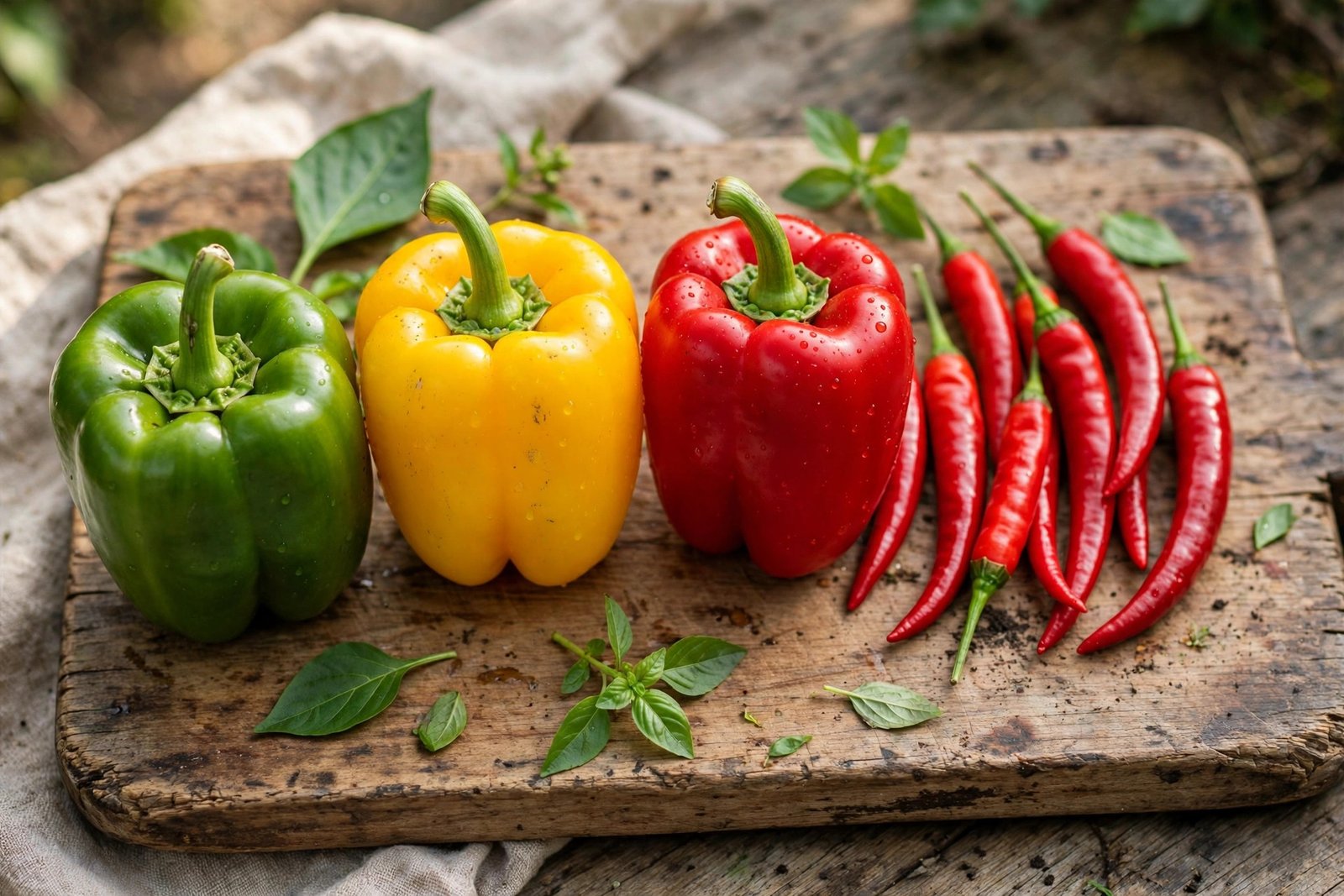
What makes a hot pepper hot is capsaicin, concentrated in the seeds and the whitish membrane inside the fruit. Sweet peppers contain essentially none of it. That single chemical explains the practical differences: hot peppers demand gloves at harvest and care in the kitchen, sweet peppers can be eaten straight off the plant by anyone, and removing the seeds and membrane from a hot pepper drops its heat substantially without removing its flavor. University of Minnesota Extension makes exactly this point for home cooks: seed and membrane removal is the heat dial.
Sweet Peppers: The Case For
Sweet peppers are the workhorse crop. A bell like California Wonder ripens in 75 days from transplanting, produces heavily, and feeds a household in salads, stir-fries, stuffing, and grilling from midsummer to frost. Sweet banana types like Sweet Banana ripen even faster — 70 days — and fit containers. Sweet peppers have no heat barrier: kids eat them, guests eat them, and a glut is easy to freeze or give away. If your household eats peppers mostly as a vegetable — an ingredient rather than a seasoning — sweet types should take most of your pepper space.
California Wonder Sweet Pepper Seeds
The reliable 75-day bell — the sweet side’s workhorse for stuffing, stir-fry, and freezing.
Sweet Banana Sweet Pepper Seeds
A fast 70-day mild pepper that bridges sweet and hot cooking — and fits a container.
Hot Peppers: The Case For
Hot peppers earn their space differently: a little goes a long way, so a few plants produce a season’s worth of salsa, pickling, and cooking heat. A jalapeño like Megatron — extra-large, thick-walled, 2,500–5,000 Scoville units — is a fresh-use pepper for stuffing and pickling. A serrano at 10,000–20,000 Scoville units is the salsa pepper, and its plants are famously prolific. The northern caveat is real but manageable: hot types generally need as much or more season than sweet types, and the very hottest — Scotch Bonnet at 100,000–325,000 Scoville units — need a long, hot season northern gardens rarely provide. Stick to jalapeño and serrano heat levels in zones 3–4, start them with the rest of your peppers in March, and give them your hottest microclimate.
Megatron Jalapeño Chile Pepper Seeds
An extra-large, thick-walled, early jalapeño — the hot side’s most useful plant in a short season.
Sweet vs. Hot in the Northern Garden
| Factor | Sweet Peppers | Hot Peppers |
|---|---|---|
| Heat | 0 Scoville units | 2,500–325,000 depending on variety |
| Days from transplant | 70–75 for bells and bananas | Similar for jalapeño/serrano; longer for super-hots |
| Kitchen role | Vegetable: salads, stuffing, stir-fry | Seasoning: salsa, pickling, hot sauce |
| Plants needed per household | 4–8 for fresh eating and freezing | 2–4 — a little goes a long way |
| Harvest handling | Bare hands fine | Gloves; wash hands after seeding |
| Northern risk | Low — bells finish reliably | Moderate — stick to jalapeño/serrano heat levels |
Frequently Asked Questions
Can I grow sweet and hot peppers side by side?
Yes, with one caveat: peppers can cross-pollinate, and if you save seed from a sweet pepper grown next to a hot one, the next generation may carry heat. The current season’s fruit is unaffected — your bells will not turn hot because a jalapeño grew nearby. Only seed savers need to worry, and only by separating varieties or bagging blossoms.
Do hot peppers need more heat than sweet peppers?
Not dramatically at the jalapeño and serrano level — both start indoors 8 to 10 weeks before transplanting and go out when nights stay above 50°F. The gap opens with super-hot types, which need a longer season to ripen than northern gardens reliably offer. That is why the variety choice matters more than the category.
Which should a beginner grow first?
Start with sweet peppers — a bell and a banana — and add one hot plant, a jalapeño, the same season. You will learn the crop’s rhythm on forgiving plants and still have salsa peppers by August. Our beginner vegetable seed roundup takes the same approach across the whole garden.
Bottom Line
For most northern gardens, the right split is roughly two-thirds sweet, one-third hot: enough bells and bananas to eat fresh all summer, plus two or three hot plants for salsa and cooking. Start them all indoors in late March — our pepper-starting guide has the zone 4 calendar — and choose varieties that finish in your season from our pepper variety roundup. Sweet peppers feed the household; hot peppers season it. Grow both, and neither crowds out the other.