Landscape & Leisure is reader-supported. When you buy through links on our site, including Botanical Interests seed links, we may earn a commission at no extra cost to you. Prices change, so click through to confirm current pricing.
Here is the mistake: you plant paste tomatoes because you heard they are the serious tomato, then spend August eating them in salads and wondering why they taste like damp cardboard. Or you plant nothing but cherries because they are sweet and easy, then try to make sauce in September and end up with a thin, watery pot that never thickens. Both mistakes come from the same wrong idea — that a tomato is a tomato. Cherry and paste tomatoes are built for opposite jobs, and the only way to get both right is to plant both, on purpose, and use each one for what it was bred to do.
This comparison settles the question in plain terms: what each type does well, what it does badly, and which one deserves how much of your garden. For the full variety list, see our cherry and paste tomato roundup, and for the growing routine, our support, water, and harvest guide covers both types. If you are weighing heirloom against hybrid more broadly, our heirloom-versus-hybrid comparison covers that decision, and our short-season tomato roundup covers the fastest ripening varieties.
Cherry Tomatoes: Built for Snacking
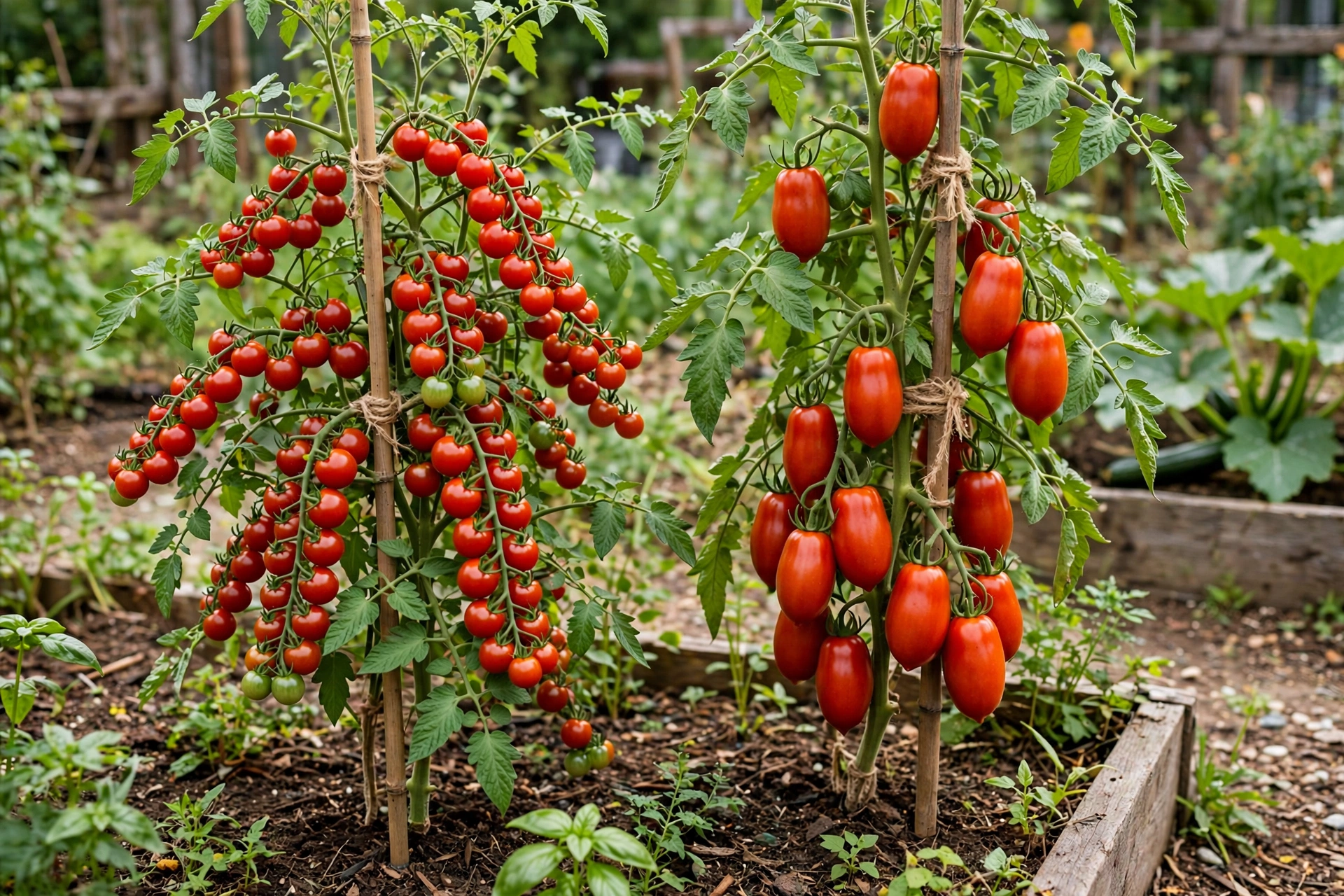
A cherry tomato is a small, sweet fruit on a vigorous vine, and its whole job is to be eaten fresh. Sun Gold is the clearest example: plump, tangerine-colored, very sweet and juicy, low-acid, and disease resistant, with vines that easily reach 6 feet or more. Gardeners rate it 4.7 from 106 reviews, and the reviews keep coming back to the same scene — people eating them standing in the garden, straight off the vine. Gardener’s Delight is the same idea at less than half the price: a 1950s German heirloom, extra sweet, producing clusters of 6 to 12 tomatoes all summer until frost, rated 4.9 from 19 reviews. Sweetie is the workhorse of the three, with 3/4-inch to 1-inch fruit in grape-like clusters and an early harvest, rated 4.6 from 14 reviews.
What cherries do badly is sauce. Their juice is thin, their skins are proportionally large, and a pot of cherry tomatoes simmers down to very little. If your plan is a sauce garden, cherries are the wrong plant for the main event — they are the snack you eat while the paste tomatoes do the real work. That is the job they were bred for, and they do it well.
Pros: sweet, ready to eat off the vine; prolific, with clusters ripening all summer; low-acid options in Sun Gold and Sweetie.
Cons: thin juice that never thickens into sauce; small fruit means more picking for the same weight.
Sun Gold Pole Cherry Tomato Seeds
The sweetest cherry here — tangerine, juicy, and disease resistant, with the biggest review base of any variety.
Paste Tomatoes: Built for the Sauce Pot
A paste tomato is a meaty, thick-walled fruit with few seeds and little juice, bred to cook down into sauce without a day of simmering. San Marzano is the famous one: a large paste tomato cherished for generations as the very best for sauce and canning, on vigorous vines that reach 6 feet or more. It costs $2.69 and carries 61 reviews, the largest paste-tomato review base here, but it is also the lowest-rated pick in the roundup at 4.2 — so buy it for the generations of proof, with the rating in mind. Costoluto Genovese is the Italian heirloom with 6- to 8-ounce ribbed fruit, thick walls, and a balance of sweetness and acidity, rated 4.8 from 8 reviews. Amish Paste is the biggest of the three at 8 to 12 ounces, acorn-shaped, with few seeds and a meaty texture, rated 5.0 from 2 reviews.
What paste tomatoes do badly is fresh eating. A San Marzano in a salad is mealy and dull next to a cherry, and that is not the tomato’s fault — it was never bred for the salad bowl. The exception is the one variety that crosses the line, which is the next section.
Pros: meaty, thick-walled, few seeds; cooks down fast into thick sauce; stores and cans well.
Cons: dull and mealy eaten raw; San Marzano carries the lowest rating here at 4.2 from 61 reviews.
San Marzano Roma Pole Tomato Seeds
The classic sauce and canning tomato — large paste fruit, generations of proof, at $2.69.
The One That Crosses the Line: Amish Paste
Most paste tomatoes fail the fresh-eating test, and Amish Paste is the one in this roundup that does not. Its 8- to 12-ounce acorn-shaped fruit is meaty enough for rich sauces and flavorful paste, and it is also good sliced fresh, because it has few seeds and a firm, meaty texture that holds up on the cutting board. It takes 80 to 85 days from transplanting and yields continually all summer long, and one packet sows about 20 plants when started indoors.
The trade-off is the thin evidence. A 5.0 rating sounds perfect until you see it rests on 2 reviews, the smallest sample in the roundup, so treat it as a good sign rather than a verdict. It also costs $2.99, a little more than the other paste tomatoes here, and the large fruit means fewer tomatoes per plant. But if you can only grow one paste tomato and you want it to work in the salad as well as the sauce pot, this is the one.
Amish Paste Pole Tomato Seeds
An 8- to 12-ounce meaty paste tomato that sauces richly and slices cleanly — the most flexible fruit here.
Cherry vs Paste, Side by Side
| Cherry tomatoes | Paste tomatoes | |
|---|---|---|
| Best for | Snacking, salads, eating off the vine | Sauce, canning, cooking down |
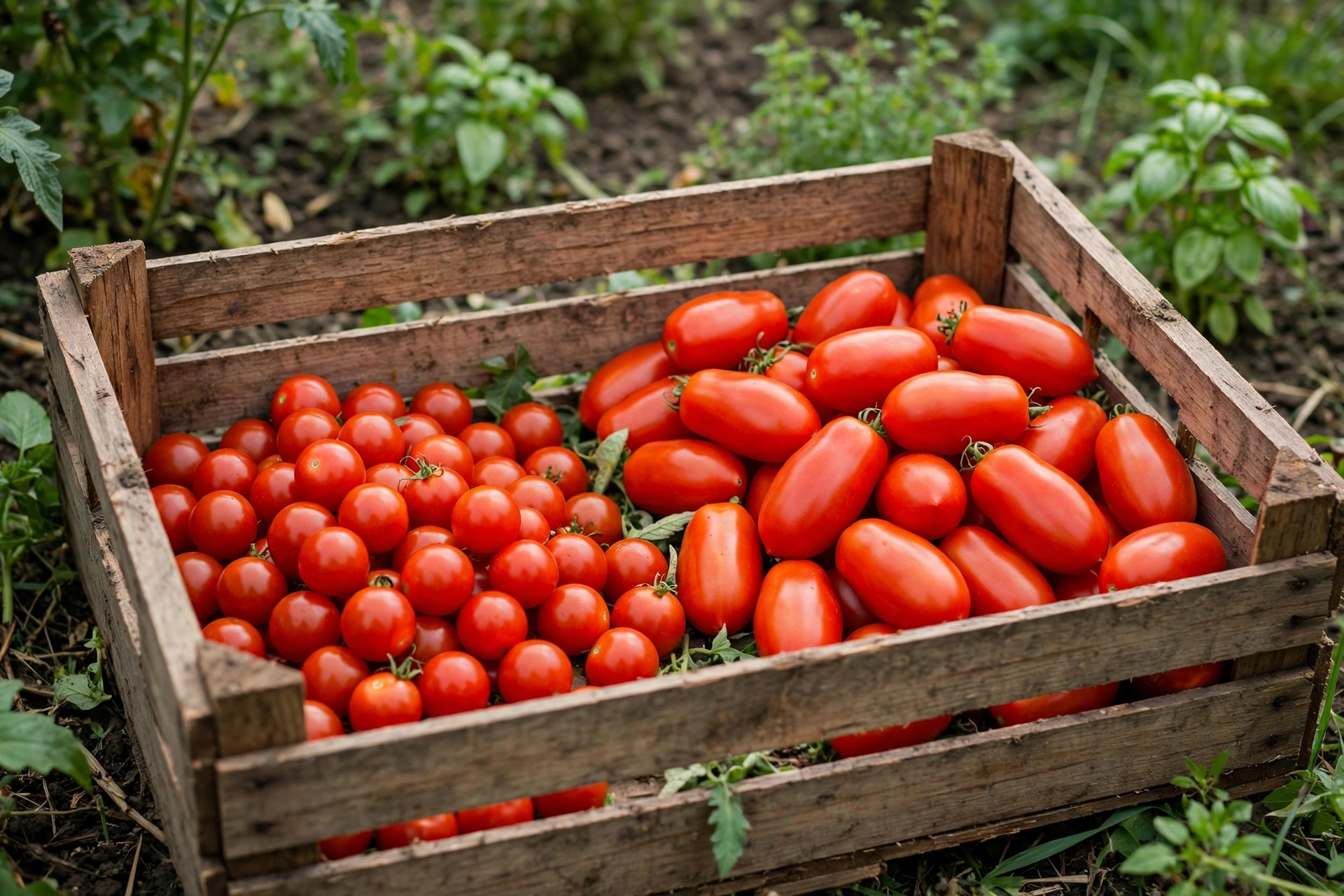
| Fruit | 3/4 to 1 inch, in clusters | 6 to 12 ounces, meaty, few seeds |
| Flavor fresh | Sweet and juicy; Sun Gold is the sweetest here | Dull and mealy raw — except Amish Paste, which slices well |
| In sauce | Thin juice, simmers down to very little | Thick walls and little juice cook down fast |
| Vines | Vigorous, 6 feet or more; tall support needed | Tall and vigorous; San Marzano reaches 6 feet or more |
| Harvest | Pick fully colored, every couple of days; Sun Gold a bit early | Pick fully red with a slight give, or at first blush to ripen indoors |
| Price | $2.69 to $5.99 a packet | $2.69 to $2.99 a packet |
Bottom Line
Grow both, and give each its own job. Plant a cherry — Sun Gold if flavor is the point, Gardener’s Delight if you want the same sweetness for $2.69 — for the snacking and the salads, and plant a paste — San Marzano for the classic sauce, Amish Paste if you want one tomato that also slices — for the pot. The vines need the same tall support and the same steady water either way, so the only real decision is the split: two cherry plants and two paste plants cover a household, and neither type has to do a job it was never built for. For the full variety list, see our cherry and paste tomato roundup, and for the routine, our growing guide.