Landscape & Leisure is reader-supported. When you buy through links on our site, including Botanical Interests seed links, we may earn a commission at no extra cost to you. Prices change, so click through to confirm current pricing.
By the time the tassels show above the stalks, your corn has already decided how full the ears will be. The work that matters happens weeks earlier — in the soil temperature on sowing day, in the shape of the patch, and in whether anything else was growing close enough to cross with it. Sweet corn is not a fussy crop. It is a crop that punishes three specific mistakes, and all three are made before the plants are knee-high.
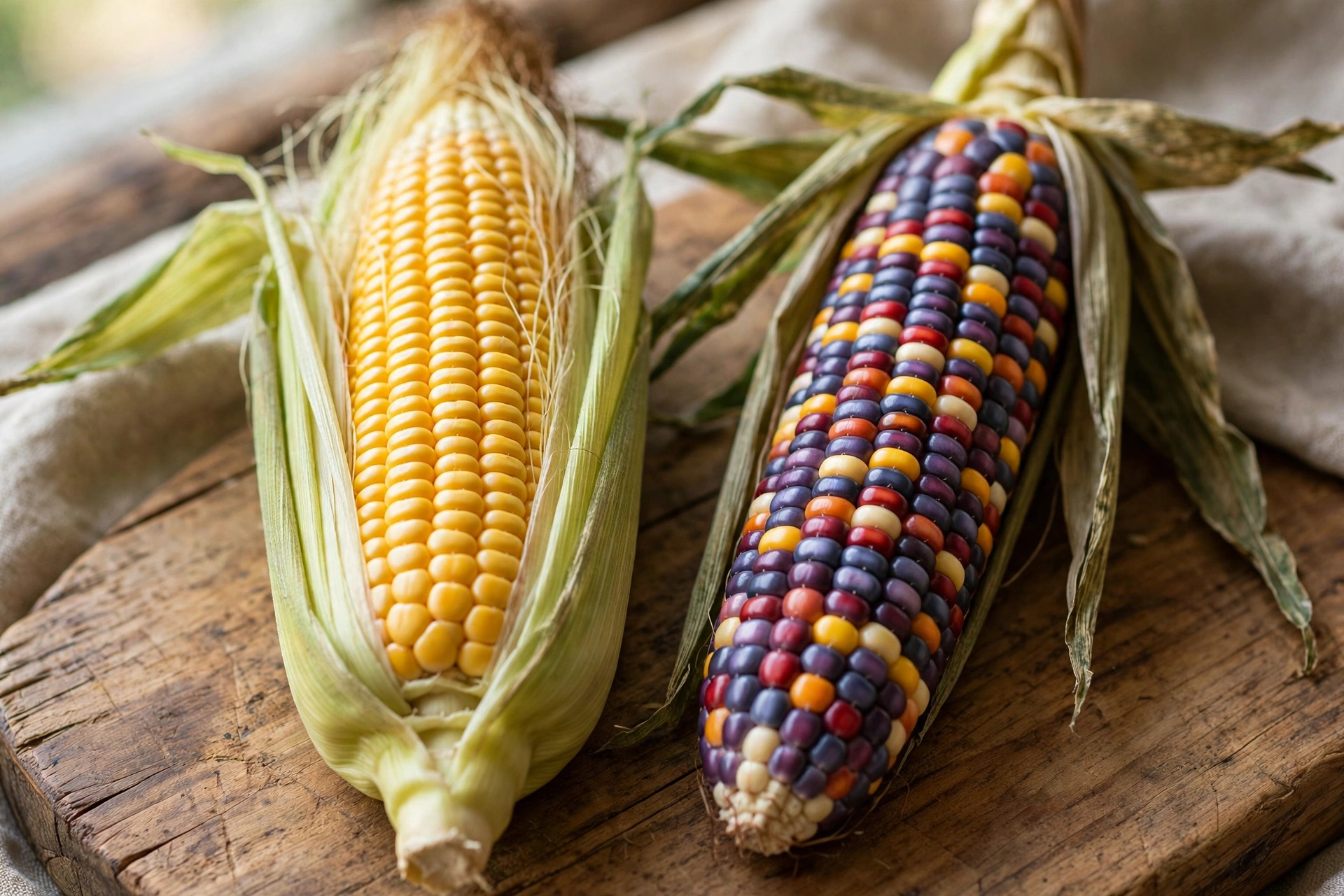
This guide covers the three decisions that fill an ear: when to sow, how to plant the patch, and when to pick. If you have not chosen a variety yet, start with our sweet corn roundup. If you are weighing sweet corn against popcorn or field corn, see our sweet vs. popcorn vs. field corn comparison. And if you are new to sowing seed straight into the ground, our direct-sowing guide covers the same soil-warmth rules for a different crop.
Wait for Warm Soil
Corn is a heat lover, and it shows it from the first day. Sow 1 to 2 weeks after your average last frost date, when the soil is at least 60°F — ideally 65° to 90°F. Seed sown into cold, wet soil sits there and rots instead of sprouting, and a packet lost to a cold snap is a packet you cannot get back. If you are unsure of your soil temperature, a cheap soil thermometer settles the question in a minute; your last frost date only tells you when the air stopped freezing, not when the ground warmed up.
Sow the seed where it will grow. Starting corn indoors is not recommended — the roots are sensitive to transplanting, and the best results come from seedlings transplanted less than two weeks old, which is a fussy window for a crop that sows so easily outside. Direct sow is the method the seed packet recommends, and it is the right call.
Plant in Blocks, Not Rows
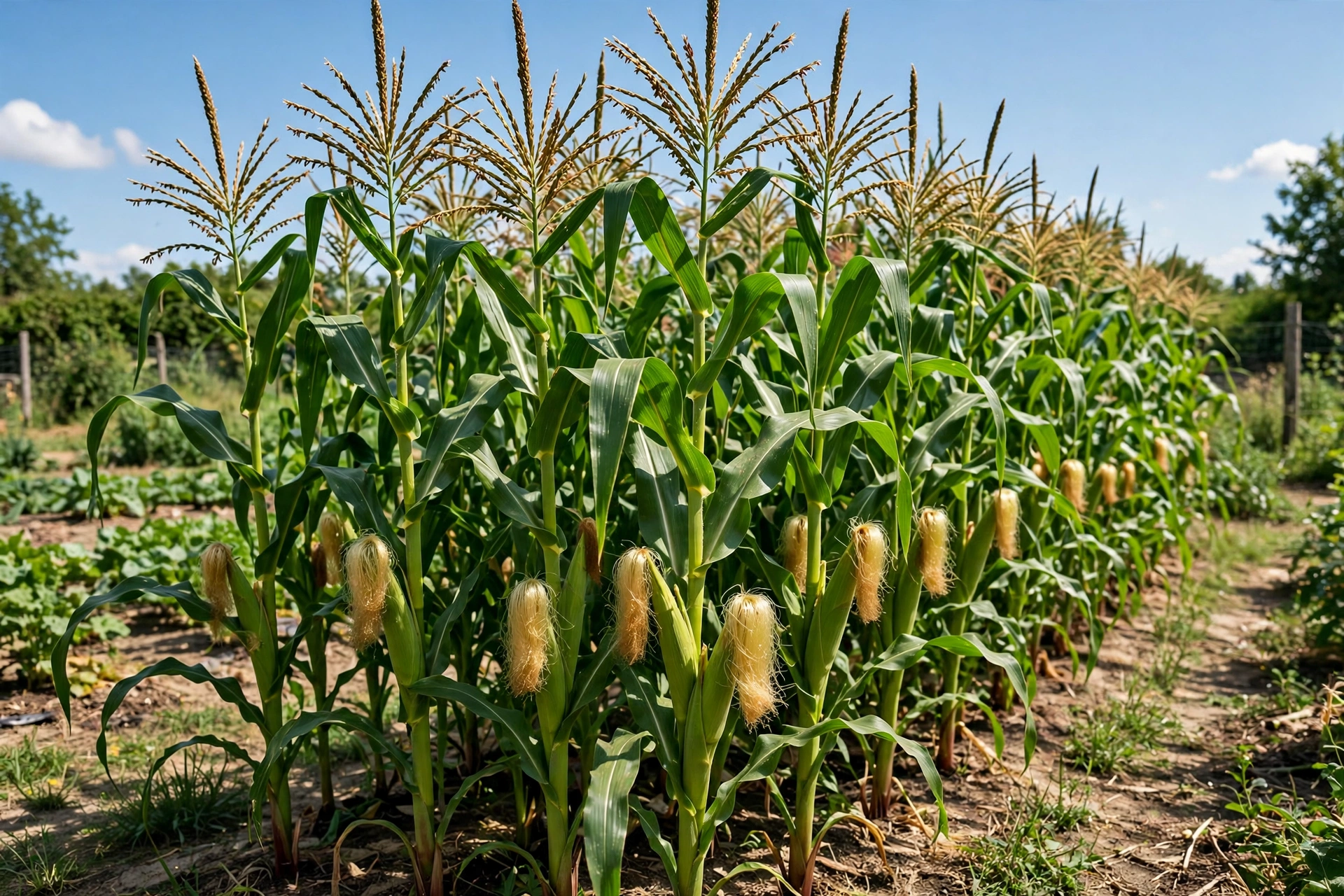
Corn is pollinated by the wind, and wind does not work down a single long row. Sow corn in a block — at least four short rows side by side — or in parallel rows, so the pollen drifting off one plant lands on the silks of its neighbors. A single row of corn is the classic beginner’s mistake: the ears come out half-filled, with blank spaces where kernels should have been, and the gardener blames the variety when the planting pattern did the damage.
The spacing is simple and worth following exactly. Sow a group of 2 seeds every 12 inches, in rows 24 to 36 inches apart, at a depth of 1 to 1½ inches. When the seedlings are 4 inches tall, thin to 1 plant every 12 inches. Germination takes 5 to 10 days in warm soil. One packet sows up to 25 feet of row, which is a generous block for a home garden.
When the tassels open, give pollination a hand. Gently shake the tassels to release the pollen onto the silks below, or pull off a tassel from one plant and wipe it across the silks of several ears. Every silk that gets pollinated becomes a kernel; every silk that does not stays a blank space on the cob.
The photo below shows what a good block looks like in midsummer: tassels open above, silking ears below, plants close enough to share pollen.

Keep Them Fed and Weeded
Corn is a heavy feeder, and it tells you so by going pale and stalling if the soil runs thin. Side-dress with compost or a balanced fertilizer when the plants are about knee-high, and keep the patch weeded while the plants are young — corn roots run shallow early on, and weeds steal the water and nutrients before the stalks are tall enough to shade them out. Once the plants are waist-high, they shade their own ground and the weeding mostly takes care of itself.
Water matters most when the silks appear. A dry stretch at silking means poor pollination and thin ears, so if the rain stops for a week while the silks are out, water deeply and keep the soil evenly moist until the ears start to fill.
The Varieties to Start With
Three varieties cover most home gardens, and they are the same three that top our roundup. Ambrosia is the forgiving one — disease resistant and sweet for days after picking. Bodacious is the classic yellow ear with the deepest disease package. Honey and Cream is the one to plant when the freezer is the plan. Pick one for the table and one for the freezer, and plant them in blocks at least 14 days apart so they cannot cross-pollinate.
Ambrosia Sweet Corn Seeds
Bicolor ears that stay sweet after picking, with disease resistance built in — the one-block corn.
Bodacious Sweet Corn Seeds
The classic yellow ear with the strongest disease package on the shelf.
Honey and Cream Sweet Corn Seeds
Creamy bicolor ears that can and freeze well — the corn for putting summer away.
Harvest at the Milk Stage
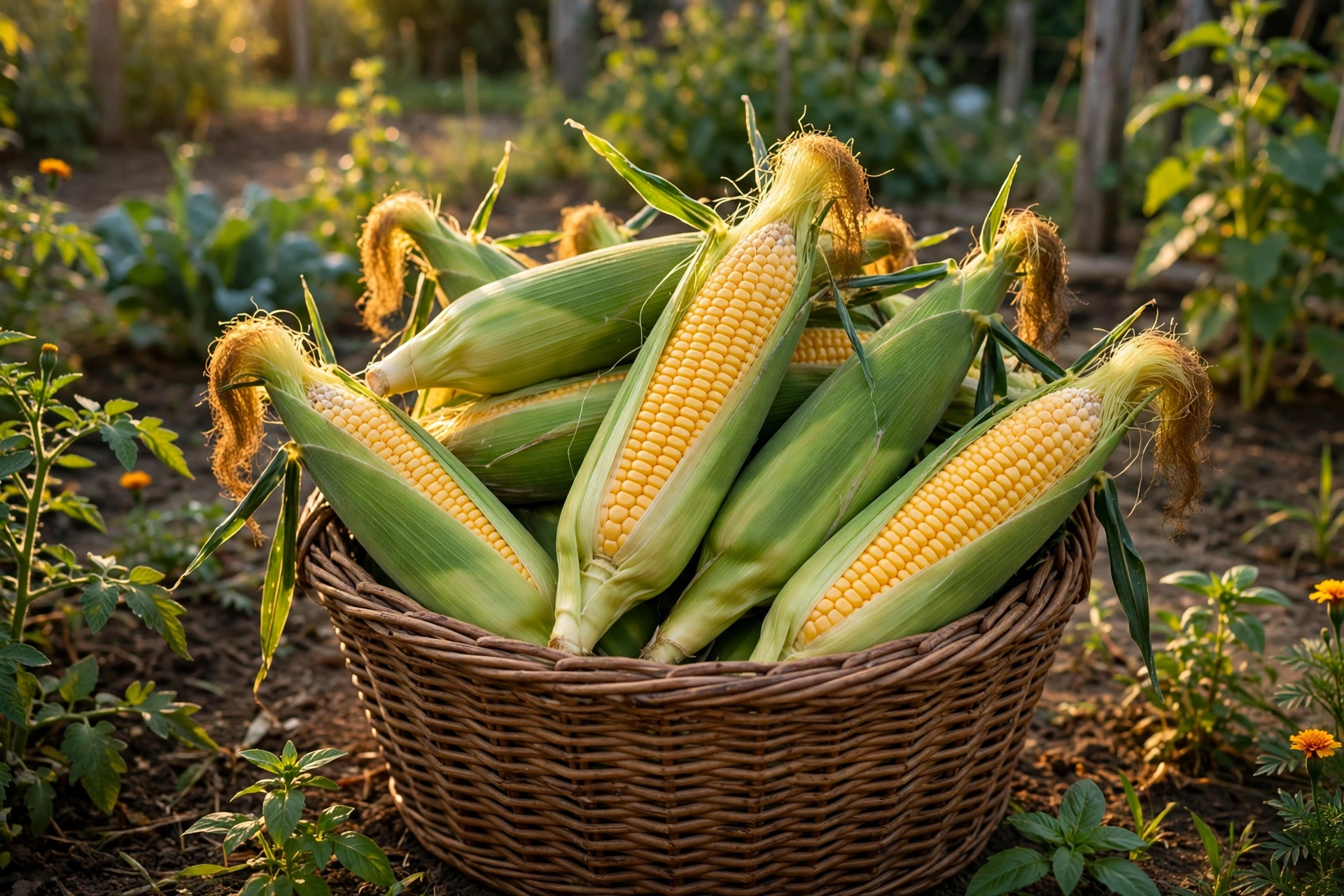
Sweet corn is ready about 3 weeks after the silks appear. Harvest when the silks are brown but not dried out, the husks are dark green, and the ears feel plump and rounded at the tip rather than pointed. To test for ripeness, gently pull back the husk and pop a kernel with your thumbnail: the liquid inside should be whitish and milky. If it is still clear, the ear is not quite ready; if it is thick and doughy, you waited too long.
Pick in the morning, when the ears are cool, and cook or chill the corn the same day. The sugars start turning to starch the moment an ear leaves the stalk, and sugary types lose their sweetness within hours. Sugar-enhanced types like Ambrosia and Bodacious forgive a day or two. Either way, the corn you eat tonight should have been on the stalk this morning.
The Season at a Glance
| Stage | When | What to watch |
|---|---|---|
| Sow | 1–2 weeks after last frost, soil 60°F or warmer | Cold soil rots seed — wait for warmth, not the calendar |
| Germinate | 5–10 days after sowing | Thin, even emergence; gaps mean cold soil or old seed |
| Thin | Seedlings 4 in tall | Thin to 1 plant every 12 in; crowded corn starves itself |
| Tassel and silk | About 8–10 weeks after sowing, by variety | Shake tassels to help pollination; water if the silks dry out |
| Harvest | About 3 weeks after silks appear | Brown silks, dark green husks, milky kernel juice |
The Mistake That Empties Ears
The most common corn failure is not disease or weather. It is a single long row, or two varieties sown side by side on the same day. A single row starves the silks of pollen, and two varieties that tassel together cross-pollinate — sweet corn crossed with popcorn or field corn eats badly, and even two sweet corns crossing can dull the flavor of both. Stagger sowings of different varieties so they mature at least 14 days apart, and give each variety its own block. The corn you grow next door can cross with yours, too, so the stagger matters even when the neighbor’s patch is the one you did not plan for.
Final Thoughts
Plant a block, not a row. Wait for warm soil, feed the plants when they reach your knee, and pick the ears the morning you plan to eat them. Start with Ambrosia if you only plant one variety — it forgives the most mistakes — and add Honey and Cream if you want the freezer full by September. The corn that fills every kernel is the corn that was planted in a block, in warm soil, and picked on time.