Landscape & Leisure is reader-supported. When you buy through links on our site, including Botanical Interests seed links, we may earn a commission at no extra cost to you. Prices change, so click through to confirm current pricing.
Most people buy the corn they like to eat and find out at harvest that they grew the wrong kind for the job. Sweet corn picked a week late is starchy and dull. Popcorn picked at the milk stage never pops. Field corn eaten fresh off the stalk is chewy and bland. The packets look alike, the plants look alike, and the harvests could not be more different — because each type is grown for a different dinner.
Here is the whole decision in one sentence: sweet corn is eaten fresh, popcorn is dried and popped, and field corn is dried and milled. If you know which dinner you want, the rest of this article is just the varieties and the spacing. For the sweet corn varieties in full, see our sweet corn roundup. For how to grow whichever type you pick, see our sweet corn growing guide.
The Three Kinds, Side by Side
| Type | Kernel | Harvest stage | Days | Best use |
|---|---|---|---|---|
| Sweet corn | Tender, sugary | Milk stage, about 3 weeks after silks appear | 70–90 | Eating fresh, grilling, freezing |
| Popcorn | Small, hard, flinty | Fully dry on the stalk; kernels hard under a fingernail | 95–105 | Popping, kettle corn, caramel corn |
| Field corn | Hard, starchy dent | Fully dry at season’s end | Long season | Cornmeal, flour, animal feed |
Sweet Corn: Eat It Fresh
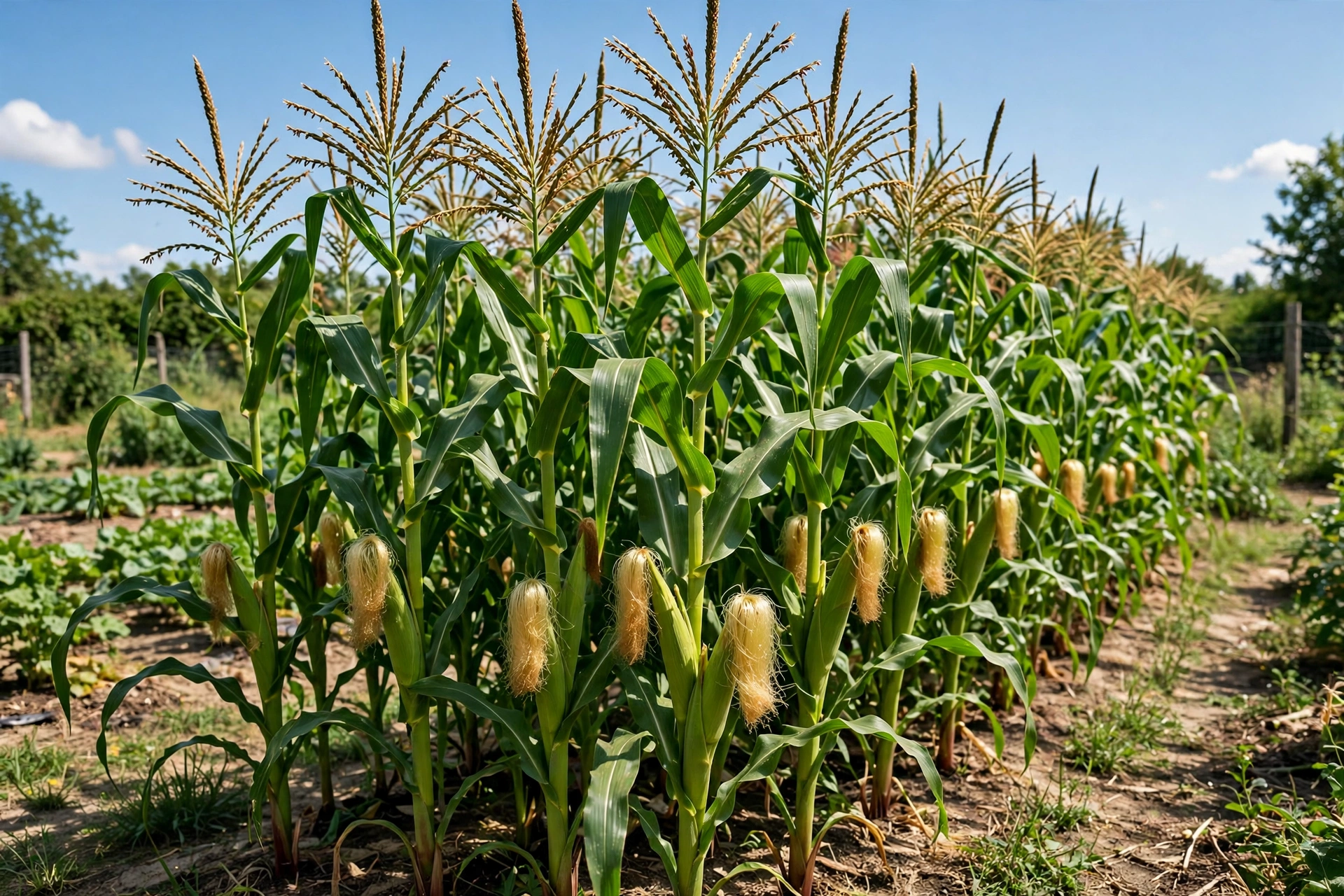
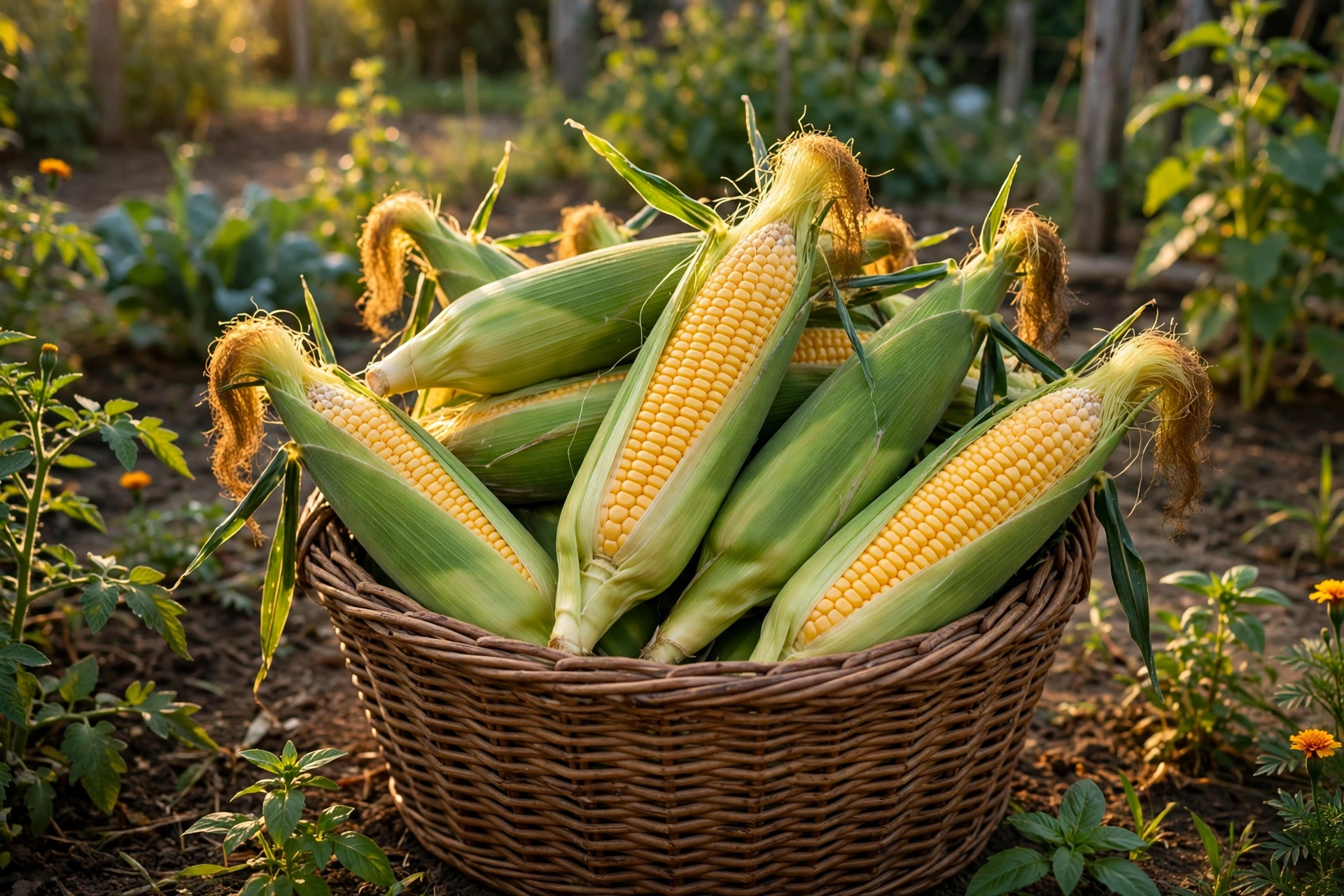
Sweet corn is the corn most gardens should grow, and it is the only one of the three you eat the day you pick it. The kernels are tender and sugary at the milk stage — about 3 weeks after the silks appear — and the sugars start turning to starch the moment the ear leaves the stalk. Sugary types need to be eaten within hours; sugar-enhanced types hold their sweetness for a day or two. Either way, sweet corn is a dinner crop, not a storage crop.
Ambrosia is the sweet corn to buy if you only grow one kind. It matures in 75 days, carries resistance to Stewart’s wilt and northern corn leaf blight, and its bicolor ears stay sweet after picking longer than the old sugary types. Gardeners rate it 4.6 from 12 reviews — the highest gardener rating on the sweet corn shelf.
Ambrosia Sweet Corn Seeds
Bicolor ears that stay sweet after picking, with disease resistance built in — the one-block corn.
Popcorn: Dry It on the Stalk
Popcorn is a different crop wearing the same plant. The kernels are small and hard — a flint type — and they pop because the moisture trapped inside turns to steam and bursts the kernel. That only works if the ear dries fully on the stalk first. Pick popcorn at the milk stage and you get wet kernels that never pop; pick it dry and you get a jar of popcorn that cost you a packet of seed and a patch of garden.
Leave the ears on the stalks until the kernels are hard and you can no longer leave a mark on them with your fingernail, then harvest and finish drying them indoors before shelling. Popcorn needs a longer season than sweet corn — 95 to 105 days — and the same block planting, because it is wind-pollinated too.
Robust Pop R400MR is the popcorn to buy if you want actual popcorn and not a science project. It is the mushroom type — large, round popped kernels sturdy enough to hold a coating and stay in one piece, the same type found in Cracker Jacks — and gardeners rate it a perfect 5.0 from 8 reviews. One good ear per stalk is a solid result for this variety.
Robust Pop R400MR Popcorn Corn Seeds
Big round kernels that hold a coating — the popcorn that tastes like the movie theater’s better cousin.
Strawberry Popcorn is the one to plant with kids, or for the fall table. Each compact 4-foot stalk carries two or more 2- to 3-inch ruby-red ears shaped like strawberries, and the kernels turn white when they pop — a small piece of garden theater that earns its row. Gardeners rate it 4.8 from 12 reviews. It also doubles as fall decor: save a few ears and the dried stalks for the porch.
Strawberry Popcorn Corn Seeds
Ruby-red ears on 4-foot stalks, and kernels that pop white — the popcorn kids actually remember planting.
Field Corn: The One You Probably Do Not Need
Field corn is grown for grain, not for dinner. Dent corn is harvested fully dry at the end of the season and milled into cornmeal and flour, or used as animal feed. It needs a long season and a lot of space, and a home garden that grows it is a garden that gave up its sweet corn patch for a sack of meal it could have bought for a few dollars.
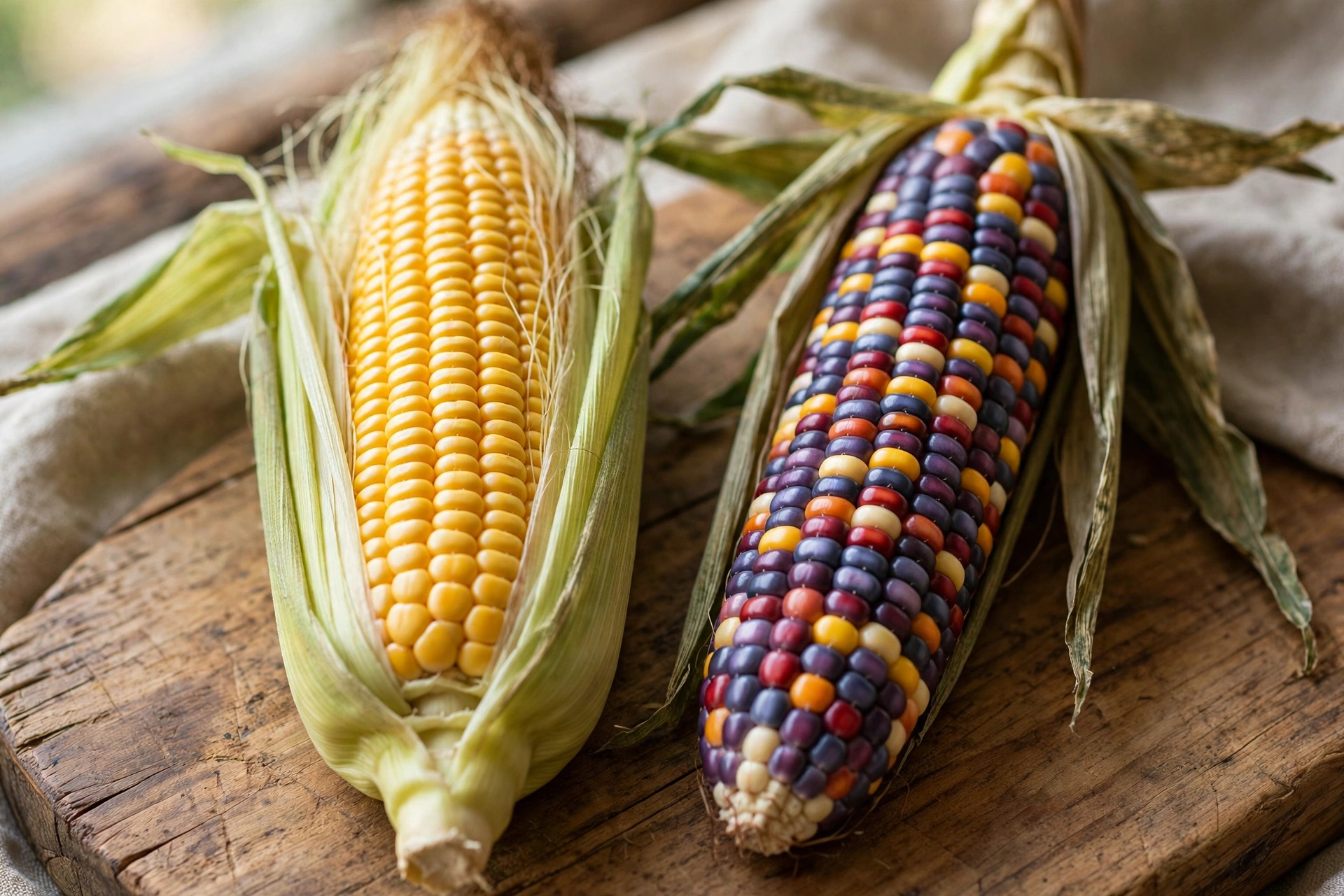
Botanical Interests carries no dedicated field corn variety, so there is no field corn pick here — and that is the honest answer for most home gardens. The closest thing on the shelf is Glass Gem flint corn, a rainbow-kerneled variety that can be ground into cornmeal or flour as well as popped, but it is sold out right now. If you want to mill your own meal, a flint corn like Glass Gem is the way to try it; if you want dinner, grow sweet corn.
The Cross-Pollination Trap
Here is the mistake that ruins all three kinds at once. Sweet corn will cross-pollinate with other sweet corns, with field corn, and with popcorn, and the result is poor eating-quality corn in every direction. A sweet corn patch that tassels the same week as the neighbor’s popcorn patch comes out starchy and disappointing, and the popcorn comes out soft and useless.
The fix is distance or timing. Stagger sowings of different corn types so they mature at least 14 days apart, and give each type its own block. Corn grown in a nearby garden can cross with yours, so the stagger matters even when the other patch is not your own. One type per patch, two weeks apart, is the whole rule — and it is the rule most people learn the year after they needed it.
Bottom Line
Grow sweet corn for the table — Ambrosia if you only plant one kind. Add a popcorn patch if you have the room and the patience to let it dry on the stalk; Robust Pop is the one that actually pops the way you want it to. Skip field corn unless you are milling meal, and never plant two kinds of corn to tassel in the same week. Pick the type for the dinner you want, then plant it in its own block.