This post contains affiliate links. If you buy through them, we may earn a commission at no extra cost to you.
When do turnips actually go in the ground? Earlier than most gardeners put them there — 2 to 4 weeks before your average last frost date, as soon as the soil reaches 50°F. They are a cool-weather crop that happens to grow fast, and the whole routine that follows is built around that timing.
That one date settles the rest of the questions this crop raises: why indoor starting is a dead end, why thinning is not optional, and why the harvest window is measured in inches rather than weeks. The varieties themselves are compared in the turnip varieties roundup.
Sow outside, where they will grow
Both Botanical Interests turnips say the same thing on the packet: start indoors is not recommended, because the roots are sensitive to disturbance. Direct sow a group of 3 seeds every 4 to 6 inches, 1/4 inch deep, in rows 18 inches apart.
Soil temperature does the gating. Germination runs 5 to 10 days at 50°F and moves faster in the packet’s ideal range of 65 to 80°F, so a cold, slow start is a soil problem before it is a seed problem. I sow, mark the row, and give it the full ten days before I start worrying.
| Step | Packet figure | Timing |
|---|---|---|
| Sowing | Group of 3 seeds every 4 to 6 inches, 1/4 inch deep | 2 to 4 weeks before last frost |
| Germination | 5 to 10 days | Soil 50°F, ideally 65 to 80°F |
| Thinning | Thin to 1 every 4 to 6 inches | Once seedlings are established |
| Succession | Sow every 2 weeks | Until 8 to 10 weeks before first fall frost |
Thinning is the harvest decision
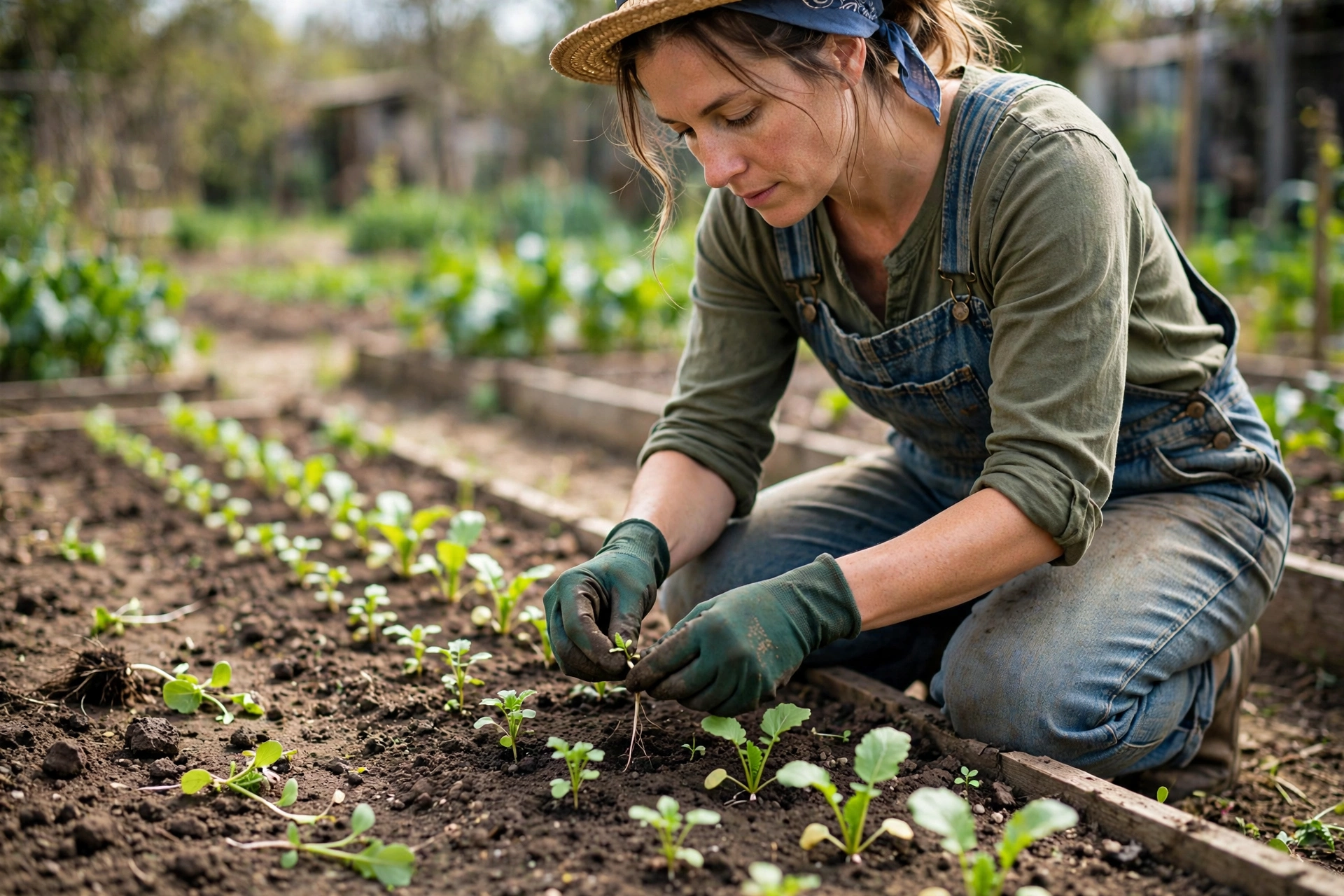
An unthinned turnip row makes greens and disappointment. Three seedlings sharing one station compete for the same few inches of soil, and none of them builds a root worth pulling, which is why the packet’s instruction is blunt: thin to 1 every 4 to 6 inches.
The thinnings are not waste. Pulled young, they are the first greens of the row, and the packet’s greens guidance is generous — harvest leaves at 2 to 4 inches tall for baby greens, and take no more than 25 percent of a plant’s leaves at a time if the root underneath is meant to keep growing.
Harvest by inches, not by the calendar
The calendar says 30 to 40 days for White Lady and 50 days for Purple Top White Globe, but the root in your hand is the better instrument. White Lady is a baby turnip at 2 inches around day 30 and a full root at 4 to 5 inches by day 40, most tender at no larger than 5 inches.
Purple Top runs the other way: most tender at just 2 inches, still good at 3, and fine for cooking — not raw eating — if it gets away from you toward 6 inches. Left too long in warm weather, any turnip turns woody and hot, so a row that is ready gets pulled, not admired.
A succession sowing every 2 weeks is what keeps that window from slamming shut all at once. The last useful sowing lands 8 to 10 weeks before your average first fall frost, and in mild climates the crop simply flips to a fall sowing for a cool-season harvest.
Turnip White Lady Seeds
The fast salad turnip for this routine: baby roots in 30 days, full roots in 40, sown in groups of 3 every 4 to 6 inches.
Harvest Basket
Wood and vinyl-coated wire basket for rinsing root harvests in the garden, in 8-quart and 16-quart sizes.
The routine, settled
Sow early, thin hard, pull by size. That is the entire crop, and it is why turnips repay a beginner faster than almost any other root: thirty days after the first sowing, the row is already answering back. If a longer, storing root sounds more useful than a fast one, read turnips vs. rutabaga before you give this bed away.