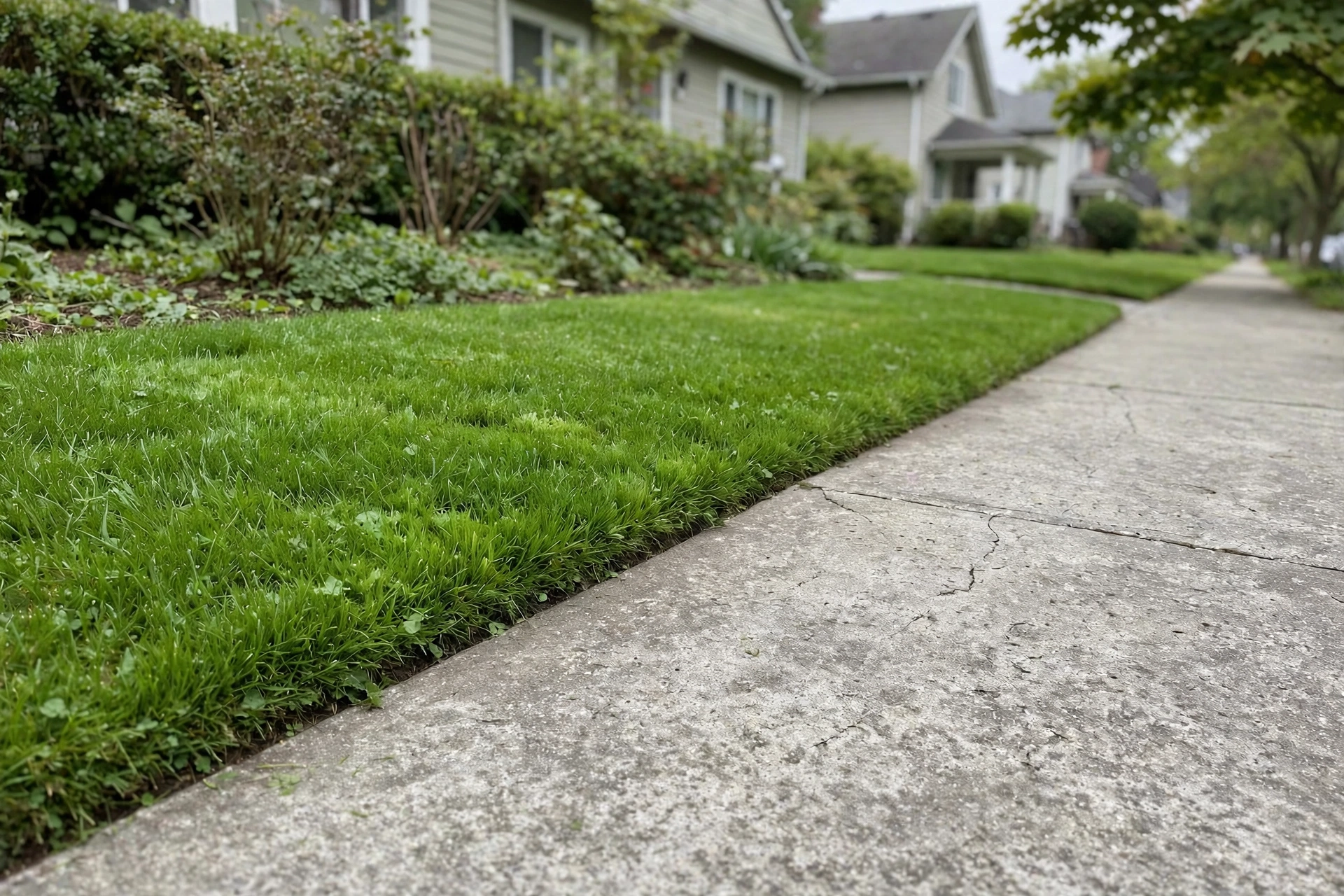
By November, your lawn has stopped arguing with the sidewalk. Growth has slowed, the edge you cut in spring has softened and spread, and the line between grass and paving has gone fuzzy at the corners. That is the season doing its work — and it is also your cue that the edging calendar has flipped from keeping up to winding down.
Edging on a fixed schedule wastes effort in slow months and loses the line in fast ones. The schedule that works follows how fast your grass is actually growing, which means it changes with your grass type and with the season. Here is the timing that holds, month by month.
The rule behind the schedule
Growth drives edging, not the calendar. Grass grows fastest in its own peak season, and that is when the edge blurs fastest. In the slow season, the edge holds for weeks with no attention at all.
Texas A&M AgriLife Extension’s guidance makes the split concrete: cool-season lawns like bluegrass and fescue grow fastest in spring and fall, so edge at every mow during those peak periods and every other mow in midsummer, when heat slows them down. Warm-season lawns grow most in summer, and several of them spread by runners that creep over pavement — Bermuda spreads by both stolons and rhizomes — so edge those lawns every week during summer to keep the runners from rooting in sidewalk joints.
That is the whole schedule in one paragraph: edge when the grass is growing fast, ease off when it slows, and stop when it goes dormant. Everything below is that rule applied to each season.
Spring: set the line early
Spring is the first real edging of the year, and for cool-season lawns it is the most important one. Fescue and bluegrass surge as the soil warms, and an edge that survived winter blurred and soft will not sharpen itself.
Wait until the ground firms up. Cutting an edge through soft, thawed soil leaves a ragged line that washes out in the next rain. Once the soil holds your weight without squishing, make the first cut. If winter blurred the edge badly, open it again with a hand tool before you try to maintain it — the technique is in how to edge a lawn by hand.
Through the spring peak, edge at every mow. That sounds like a lot, but a maintenance pass on an edge that was cut last week takes minutes, because the cut is shallow and the grass has only just started to creep. Letting it go three weeks means re-cutting a blurred edge, which takes longer than three weekly passes combined.
Warm-season lawns wake up later, so spring edging for Bermuda, zoysia, and St. Augustine starts when green-up is clearly underway, not on the first warm weekend. An early cut on a lawn that is still half-dormant just exposes brown turf along the paving.
Summer: two lawns, two schedules
Summer is where the two grass families split, and edging the wrong one on the wrong schedule is the most common timing mistake of the season.
Cool-season lawns slow down in summer heat. Tall fescue and bluegrass go quiet when temperatures climb, and the edge you set in spring holds for two or three weeks with only a light touch-up. Edge every other mow in midsummer. Cutting every week in July does not make a cool-season edge look better — it widens the trench a little more each time, and a wide, dry trench is where the edge grass browns first.
Warm-season lawns do the opposite. Bermuda, zoysia, and St. Augustine hit their stride in summer heat, and Bermuda’s runners will cross a sidewalk and root in the joints if you give them a week. Edge warm-season lawns every week through the summer peak, and check the joints after rainy stretches, when the runners move fastest.
One rule covers both families in summer: edge when the grass is dry. Wet clippings smear across the pavement, your footing is worse, and the cut itself comes out ragged. Mow and edge in the morning after the dew has dried, not in the damp of early evening.
Fall: the second peak and the last cut
Fall brings the second growth surge for cool-season lawns, and it catches people off guard. The lawn that coasted through August wakes up as nights cool, and the edge that held all summer starts creeping again in September.
For fescue and bluegrass, go back to edging at every mow through the fall peak. This is also the season to make the last real cut of the year. A clean edge going into dormancy stays readable all winter, and it gives you a visible line to follow for the first cut in spring. Leave the edge ragged in November and you will spend the first warm weekend in spring re-finding it.
Warm-season lawns taper in fall. As nights cool, Bermuda and zoysia slow down, and edging every two to three weeks is enough. By the time the lawn starts to brown, the edging season is over — cutting a dormant edge only exposes dead turf along the paving.
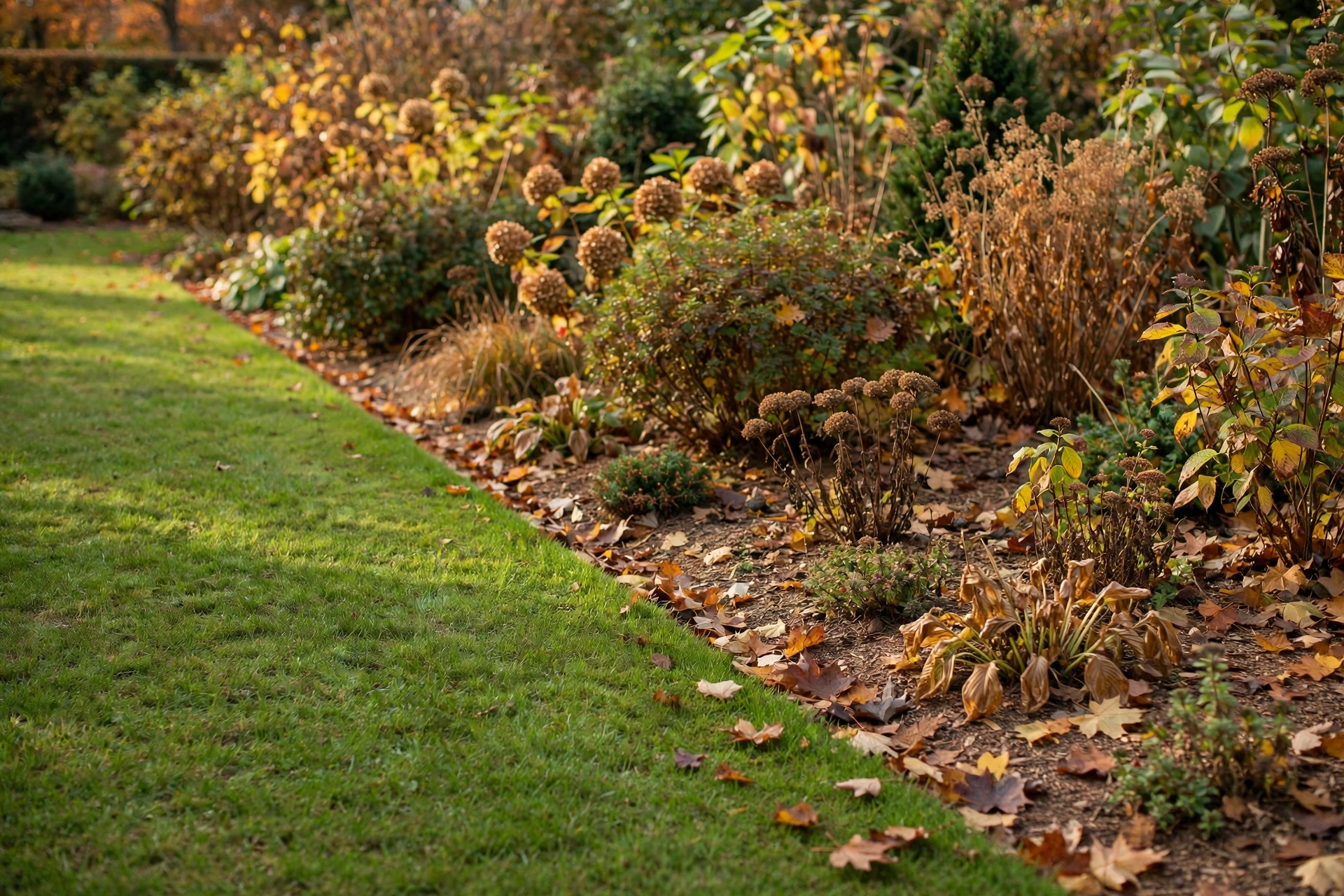
Fall is also leaf season, and a defined edge earns its keep here. Leaves and pine needles collect against a sharp border instead of sliding across a blurred one, so cleanup along walks and beds goes faster. Edge before the heavy leaf drop, not after it, so you are not cutting through a mat of wet leaves.
Winter: put the edger away
Once the grass goes dormant, stop edging entirely. There is nothing to gain: dormant grass does not grow back over the paving, and cutting a frozen or half-frozen edge damages the crowns along the border. The edge will look a little soft by February, and that is fine — it is dormant, not neglected.
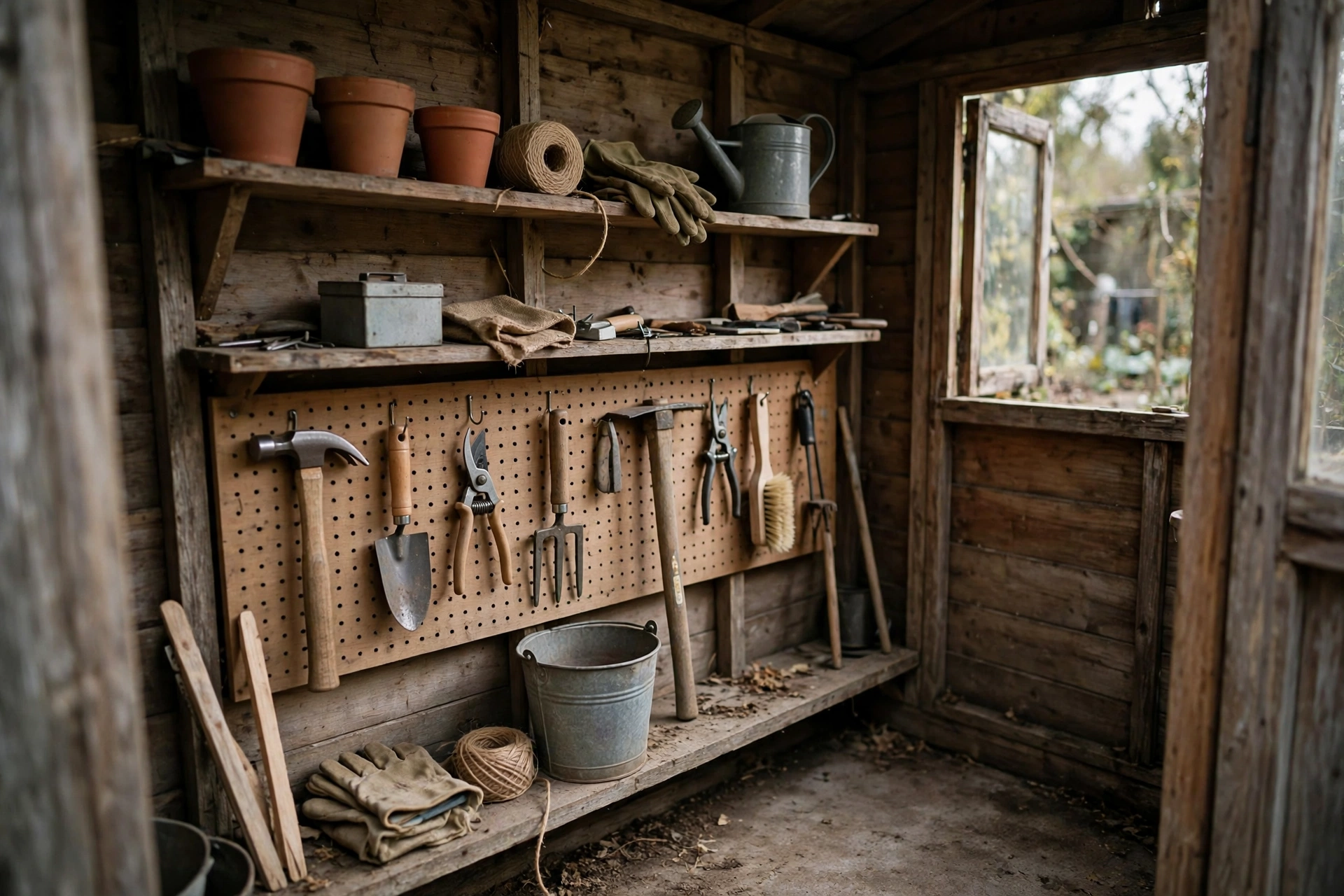
Winter is the season for the tool, not the lawn. Clean the blade, oil it lightly if it is steel, and store it dry. If you run a powered edger, winter storage takes a little more care — fuel, battery, and blade all have their own steps, covered in how to winterize and store your lawn edger. A hand edger needs only a wipe and a hook on the wall.
If winter brings a warm spell and the lawn greens up for a week, resist the urge to edge. A single warm week does not restart the growth season, and the cut will sit open and ragged until real spring growth fills it in.
How to tell it is time
The calendar is a starting point, but your lawn will tell you when the edge actually needs cutting. Three signs mean it is time, whatever the month says.
First, grass is visibly creeping over the paving. If you can see green past the edge line from a standing position, the runners have already crossed it. Cut now, while the growth is still shallow.
Second, the edge has gone round. A sharp edge casts a clean line; a neglected one softens into a curve where grass and soil have slumped into the trench. A round edge needs a full re-cut, not a touch-up.
Third, the lawn just had a growth surge. A rainy week in May or a fertilized lawn in September will push the edge faster than the schedule expects. After heavy rain or a feeding, check the edge before your next mow and cut it if it has moved.
Frequency also depends on the tool in your hand. A powered edger makes weekly passes cheap in time, while hand edging rewards a slightly slower rhythm on a small lawn. If you are still deciding which tool fits your yard, manual vs powered lawn edgers lays out the trade-off.
What to do next
Edge with the mow while the grass is growing, taper off as growth slows, and make the last cut before dormancy. Cool-season lawns want your attention in spring and fall, warm-season lawns want it weekly through summer, and both want you to stop once the grass sleeps. A lawn edged on its own growth rhythm holds a crisp line all season with fewer passes than a lawn edged on a calendar — and the first edge of next spring will take minutes instead of an afternoon.