Acorn squash is the vegetable that autumn built for a fire pit. It is sturdy enough to sit in the coals, sweet enough to need almost nothing added, and shaped like its own serving bowl. Wrapped in foil and buried in embers, it steams itself tender and picks up just enough smoke to taste like October.
The method is the whole recipe: coals, not flames, foil doing the work, and a maple-cinnamon butter spooned into the hollow at the end. No grill, no grate, no special equipment beyond a roll of heavy-duty foil and a pair of long tongs.
Ingredients
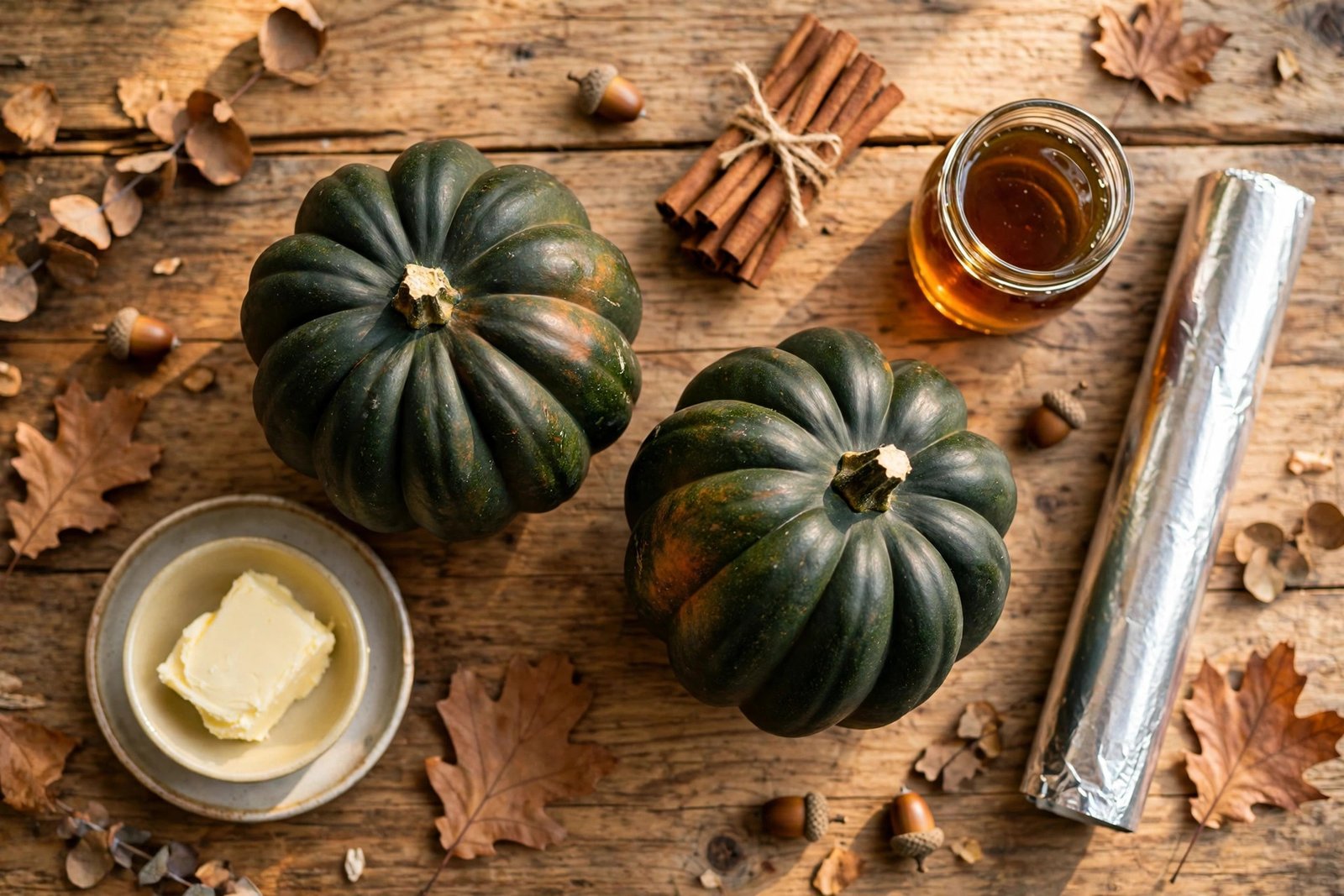
- 2 medium acorn squash (about 1 1/2 pounds each), scrubbed
- 2 tablespoons olive oil or melted butter, for brushing
- 1/2 teaspoon kosher salt
- 1/4 teaspoon black pepper
- 4 tablespoons unsalted butter, softened
- 2 tablespoons maple syrup
- 1 teaspoon ground cinnamon
- 1/4 teaspoon ground nutmeg
- Heavy-duty aluminum foil
- Chopped pecans or walnuts, to serve (optional)
Build the Right Fire
Start the fire early and let it burn down. You want a deep bed of glowing coals with low or no flame, the same coal bed that works for mulled cider and hot chocolate over a fire pit. Flames lick and scorch; coals cook evenly. If the fire is still flaming when the squash is ready, wait. The squash can sit on the table. The fire cannot be hurried.
While the fire settles, cut each squash in half from stem to bottom with a heavy knife. Acorn squash are hard and round, so set each one on a flat side, cut side down, before halving, and keep your guiding hand well clear of the blade. Scoop out the seeds and stringy pulp with a spoon. The seeds can be cleaned and roasted like pumpkin seeds over a fire pit if you like, but they are optional. The squash is the main event.
Wrap and Roast in the Coals
Step 1: Oil and season. Brush the cut sides and skin of each half with olive oil or melted butter, and season with the salt and pepper. The oil keeps the flesh from sticking to the foil and helps the skin crisp at the edges.
Step 2: Wrap tightly. Place each half cut side up on its own large sheet of heavy-duty foil, and fold the foil over to make a sealed packet, crimping the edges firmly. Double-wrap if your foil is thin: a torn packet in the coals means ash in the squash. The packet should be snug but not crushed, with a little air space above the cut surface.
Step 3: Nestle the packets in the coals. Using long tongs, push the packets into the coal bed along the outer edge of the fire, where the heat is steady rather than fierce, and pull a few coals over the top of each packet. The squash should be surrounded by heat, not sitting in flame.
Step 4: Turn once, halfway. After about 25 minutes, turn each packet with the tongs so the heat reaches the other side. Total roasting time runs 45 to 60 minutes depending on the size of the squash and the heat of the coals. The squash is done when the thickest part of the flesh gives easily under a fork, or when an instant-read thermometer in the thickest part reads about 208°F, the doneness point used for grilled squash.
Step 5: Rest, then open carefully. Lift the packets out with tongs and let them rest 5 minutes. Open the foil away from your face: the steam inside is hot and sudden. If a packet tore and ash got in, wipe the cut surface with a damp cloth rather than rinsing the squash, which washes away the smoky surface.
Finish With Maple-Cinnamon Butter
While the squash rests, mash the softened butter with the maple syrup, cinnamon, and nutmeg until smooth. Spoon a generous tablespoon into the hollow of each half while it is still hot, and let it melt into a pool. The heat does the mixing for you. Scatter chopped pecans or walnuts over the top if you have them, and serve the halves in their foil boats or tipped onto plates, cut side up.
The flavor lands exactly where fall cooking should: sweet from the squash itself, which concentrates as it roasts, warm from the cinnamon and nutmeg, and just smoky enough to remind you it came out of a fire. It needs nothing else, and it pairs with anything else coming off the fire that evening.
Choosing the Squash, and What to Do With the Rest of the Harvest
Pick squash that feel heavy for their size, with dull, unblemished skin and no soft spots. A green acorn squash with an orange patch on one side is ripe; that patch is where it sat on the ground. Avoid squash with shiny skin or cuts, which will not store well.
Acorn squash is a winter squash, which means it stores for weeks in a cool, dry spot, unlike its summer cousins. If you are sorting out what you grew this year, our summer squash vs winter squash guide explains the difference, and the best summer squash and zucchini varieties roundup covers what to plant next spring for the other end of the season.
One last practical note: do not try this over a gas fire pit with ceramic logs. The method needs real wood coals and the ash and ember bed they make. On a propane fire pit, roast the foil packets on a grate over the burner instead, turning them the same way, and expect a cleaner flavor with less smoke. It is still good squash. It is just not fire-pit squash.