Disclosure: This page contains affiliate links. We may receive a commission if you make a purchase after clicking on one of these links.
South Dakota State University Extension publishes exactly one planting table for the whole state — one set of months per crop, from the Missouri River to the Black Hills — and then tells you to pair it with your own frost map. That instruction is the whole calendar. The state is too spread out for one set of dates to mean the same thing everywhere: Sioux Falls gets 157 frost-free days on the NOAA 1991–2020 normals, while Aberdeen and Rapid City each get 139, and Rapid City sits at 3,160 feet. The table gives you the months. The frost data and the maps tell you which end of each month is yours.
This page follows SDSU Extension’s own method. The planting months and days-to-harvest figures come from Table 4 of Vegetable Gardening in South Dakota (Rhoda Burrows, SDSU Extension, publication P-00123, revised March 2026), read from the current booklet PDF and checked against the December 2012 copy — the table is unchanged (see the comparison note in Sources). Frost anchors are NOAA 1991–2020 normals at the 50% probability for 32°F, re-fetched October 27, 2026. Days to maturity for named varieties come from Botanical Interests variety pages checked October 27, 2026, and are kept separate from Extension’s crop ranges throughout. The method here mirrors our Minnesota planting calendar, but the structure is South Dakota’s own: one schedule, localized by maps, not by bands.
The one schedule SDSU actually publishes
Table 4, “Planting details for home gardens in South Dakota,” is organized by crop, in calendar months — “April–May,” “May–June,” “May–early July” — not by region, and not shifted by frost date inside the table. That is deliberate. The booklet’s text says to use the frost maps on its back cover to determine the average date of the last spring frost and first fall frost for your location, and that comparing the maps with the table will help you determine planting dates and the average length of the growing season in your area. Its own worked example puts most of the southeast frost-free between May 1 and September 24, for 147 frost-free growing days — on the booklet’s 1983–2012 map data, a different period from the NOAA normals used for the station anchors below, so treat it as the booklet’s illustration, not as a station figure.
What the table assumes: months are planting windows, not planting dates. “April–May” for broccoli means the window opens in April; whether you plant in early April or late May depends on your frost map and your soil temperature, covered in the next two sections. The table also carries spacing, planting depth, days to germinate, and harvest cues per crop — this page reproduces the planting months, days to harvest, frost hardiness, and how to start each crop; go to the booklet itself for spacing and depth. Two crops in the table are perennials with multi-year establishment: asparagus (2–3 years) and rhubarb (1 year). They are planted once, in April, and the wait is the point — the booklet says not to cut any asparagus spears the first two years, and not to harvest rhubarb until the second year. If you are starting seeds indoors for the first time, the transplant lead times in the table (5–7 weeks for tomatoes, peppers, eggplant, broccoli, cabbage, and cauliflower) are the numbers to count back from your last-frost date, and our guide to leggy seedlings covers the most common way indoor starts go wrong.
| Crop | Plant | Days to harvest (Extension) | Frost-hardy? | How to start |
|---|---|---|---|---|
| Asparagus | April | 2–3 yr | Yes | One-year-old crowns; no harvest the first two years |
| Beans, lima | Late May/June | 80–90 (pole); 75–80 (bush) | No | Direct sow |
| Beans, snap | May–July | 60–65 (pole); 50–60 (bush) | No | Direct sow |
| Beets | April–July | 50–65 | Semi | Direct sow |
| Broccoli | April–May | 65–75 | Yes | Transplant; 5–7 weeks to transplant size |
| Cabbage | April–May | 60–90 | Yes | Transplant; 5–7 weeks to transplant size |
| Carrots | April–June | 55–80 | Semi | Direct sow |
| Cauliflower | April–June | 65–75 | Semi | Transplant; 5–7 weeks to transplant size |
| Corn, sweet | May–early July | 60–95 | No | Direct sow |
| Cucumbers | May–June | 50–70 | No | Direct sow; transplant only in individual containers |
| Eggplant | May–June | 80–90 | No | Transplant; 5–7 weeks to transplant size |
| Kohlrabi | April–May | 50–70 | Yes | Direct sow |
| Lettuce (leaf / head) | April–May | 35–50 (leaf); 50–75 (head) | Semi | Direct sow or transplant; 4 weeks to transplant size |
| Muskmelon | May–June | 70–100 | No | Direct sow; transplant only in individual containers |
| Onions (seed) | April–May | 85–100 | Yes | Seed indoors, 10–12 weeks; sets and plants also listed, no dates given |
| Parsley | April–May | 75–90 | Yes | Direct sow |
| Parsnip | April–May | 120–150 | Yes | Direct sow; best after first hard frost |
| Peas (green, sugar, snow) | April–May | 50–80 | Yes | Direct sow |
| Peppers | May–June | 60–100 | No | Transplant; 5–7 weeks to transplant size |
| Potatoes | April–May | 100–120 | Semi | Seed pieces |
| Pumpkin | May–June | 100–120 | No | Direct sow; transplant only in individual containers |
| Radish | April–May | 22–30 | Yes | Direct sow |
| Rhubarb | April | 1 yr | Yes | Crown pieces; no harvest until the second year |
| Squash (summer / winter) | May–June | 50–70 (summer); 80–100 (winter) | No | Direct sow; transplant only in individual containers |
| Tomatoes | May–June | 55–90 | No | Transplant; 5–7 weeks to transplant size |
| Turnips | April–June | 40–50 | Yes | Direct sow |
| Watermelon | May–June | 80–130 | No | Direct sow; transplant only in individual containers |
Frost-hardy key, as Table 4 prints it: Yes means the crop is frost-hardy, Semi means semi-hardy, No means tender — damaged or killed by frost. The booklet adds that, except for potatoes, the cool-season crops in its temperature table can withstand light frost. Days to harvest are Extension’s figures for the crop; a named variety’s own number can sit anywhere inside — or occasionally outside — that range, and the varieties section keeps the two apart.
Three anchors, east to west
Three NOAA stations, one per third of the state, mark the spread the single table has to cover. All three figures are the 50%-probability column for 32°F from the 1991–2020 normals — the median date, meaning half of years saw the last spring frost later (or the first fall frost earlier) than the date shown. Sioux Falls, in the southeast corner at 1,430 feet, has the longest season in either Dakota: last spring frost May 1, first fall frost October 6, 157 days. Aberdeen, north-central at 1,302 feet, runs May 9 to September 26, 139 days. Rapid City, at 3,160 feet on the western edge, runs May 12 to October 1 — also 139 days, but the latest spring of the three, because elevation beats latitude. The practical read: an Aberdeen gardener and a Rapid City gardener have the same number of days and different springs, and a Sioux Falls gardener has nearly three extra weeks.
| Station | Elevation | Last spring frost (50%) | First fall frost (50%) | Frost-free days |
|---|---|---|---|---|
| Sioux Falls (USW00014944) | 1,430 ft | May 1 | Oct 6 | 157 |
| Aberdeen (USW00014929) | 1,302 ft | May 9 | Sep 26 | 139 |
| Rapid City Rgnl AP (USW00024090) | 3,160 ft | May 12 | Oct 1 | 139 |
On hardiness zones: secondary summaries of the 2023 USDA map disagree at South Dakota’s cold edge — some give the state as 4a–5b, others as 3b–5b — and the USDA map itself is an interactive lookup, not a statewide range printed in text. This page asserts no single statewide range. Check your address on the USDA Plant Hardiness Zone Map zip-code search. Zones measure average annual extreme minimum winter temperature, which matters for perennials like asparagus and rhubarb; they do not set vegetable planting dates. Your frost dates do that, and the next section is how to get yours.
Read your own frost map
The booklet’s frost maps live on, updated, at the Mesonet at SDState — the South Dakota State University weather-station network at climate.sdstate.edu, confirmed live October 27, 2026, with more than 120 stations reporting. SDSU Extension’s frost-date articles describe the map tool’s three choices: which season (spring or fall), what temperature threshold (24, 28, 32, or 36°F for the fall maps; the spring set also includes 38°F), and what percentile (10th through 90th). Start with spring, 32°F, 50th percentile — the median last spring frost for your spot — then check the same for fall. The 50th percentile is the one SDSU calls “the recommended and most commonly used percentile for estimating frost dates in agriculture and horticulture”: half of years frosted before that date, half after.
Use the other percentiles to see your risk, not to pick a planting date. The 30th percentile shows a somewhat early frost; the 10th shows a very early one; the 70th and 90th show late ones. A gardener deciding whether to chance an early tomato transplant wants the 30th-percentile spring date; a gardener deciding whether a 130-day watermelon is a reasonable bet wants the 30th-percentile fall date, the early end. And read the fine print SDSU prints with the maps: they are built from daily minimum temperatures only, with no record of how many hours the temperature stayed at or below the threshold. A spot that touched 32°F for a few minutes is not the same as one that sat there all night, which is why SDSU notes that a “killing frost” is often defined at 28°F — air that cold has usually stayed below freezing long enough to do real damage. Finally, SDSU’s own framing: the growing season in South Dakota has been lengthening, with earlier last spring frosts and later first fall frosts, so these maps are historical observations, not a forecast. They tell you what has happened, which is the best available guide to what usually happens — not a promise about next spring.
Planting windows by crop group
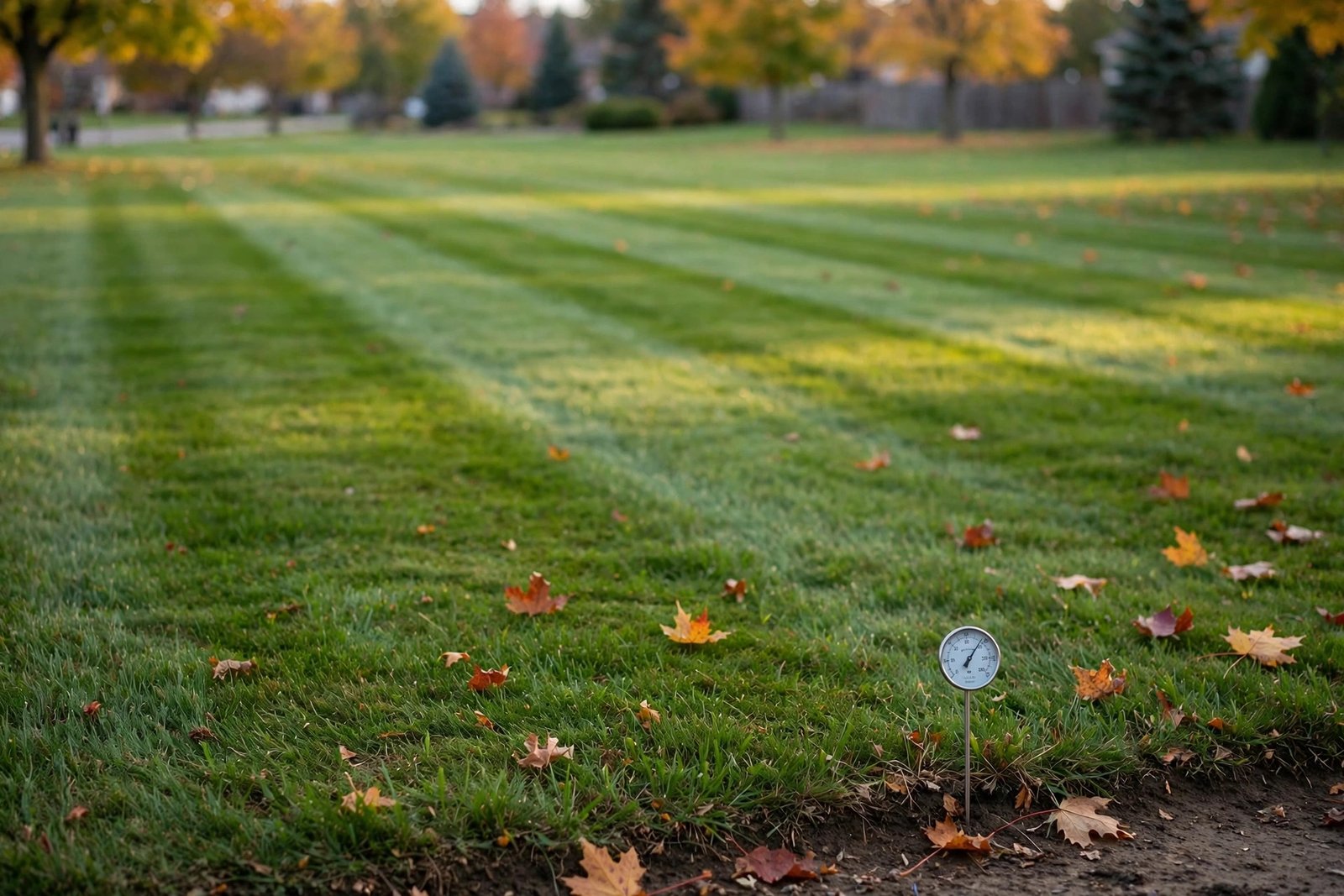
Table 1 in the booklet sorts the same crops by soil temperature instead of by month, and it is the better tool for the actual day you plant. Cool-season crops need a minimum soil temperature of 40–45°F and grow best at 60–65°F; warm-season crops do not grow well below 50°F, are damaged by frost, and want soil at 60–75°F. Group A cool-season crops go in during April or early May and will not grow well in hot weather. Group B goes in as early as Group A or shortly after and tolerates some heat. Warm-season crops split by the minimum soil temperature they will tolerate: 50, 60, or 65°F. A soil thermometer, checked over several days, settles arguments a calendar cannot — SDSU’s warm-season article points to the Mesonet’s 4-inch soil temperatures and to a thermometer of your own used the same way.
| Group | Crops | Minimum soil temperature | Plant |
|---|---|---|---|
| Cool-season, Group A | Spinach, peas, radishes, cauliflower*, head lettuce* | 40–45°F | April or early May; will not grow well in hot weather |
| Cool-season, Group B | Broccoli*, onions, cabbage*, chard, leaf lettuce, Irish potato, carrots, turnips, beets, celery, kohlrabi | 40–45°F | As early as Group A or shortly after; tolerate some hot weather |
| Warm-season, 50°F | Lima beans, sweet corn, squash, pumpkins, snap beans | 50°F | After frost danger; soil at least 50°F |
| Warm-season, 60°F | Cucumbers, muskmelons, watermelons | 60°F | After frost danger; soil at least 60°F |
| Warm-season, 65°F | Tomatoes*, eggplant*, pepper* | 65°F | After frost danger; soil at least 65°F; usually grown from transplants |
The asterisk means “usually grown from transplants,” the booklet’s own marking. Tomatoes, peppers, and eggplant are started indoors and transplanted when temperatures warm up; corn, beans, melons, squashes, and cucumbers are direct-seeded into warm soil, per SDSU’s warm-season article. Two honest gaps in the group table: chard and celery appear in the booklet’s temperature groups but have no row in Table 4, so no statewide month window is published for them — this page does not invent one. Spinach is in Group A and in the fall-garden table below, but likewise has no Table 4 row. If you grow chard or celery, plant them on the Group B timing and watch your own frost map. Transplants need hardening off before they go out — a week of gradually increasing outdoor exposure, not a single afternoon — and peppers in particular want heat from the start: our guide to starting peppers indoors covers timing and soil warmth, and the tomato seed-starting guide does the same for the crop most South Dakota gardeners start first.
West River vs. East River
The Missouri River is the booklet’s real dividing line, and the differences are soil, wind, and water — not planting months. Most South Dakota garden soils run pH 6.5 to 7.5, suitable for vegetable production. But in some parts of the state, especially West River, pH may reach 8 to 8.5 or even higher, making some vegetables difficult to grow. The booklet is candid that lowering pH is slow work; the practical move west of the river is to pick crops that tolerate alkalinity and to build organic matter — the booklet calls 6% soil organic matter generally ideal — rather than fight the soil chemistry in one season. East River gardeners in the river valleys mostly skip this problem, but nobody in the state skips the wind. The booklet treats windbreaks as a first-order topic: trees and shrubs, snow fences, or rows of sweet corn, millet, sunflowers, or Sudan grass planted as living screens, and it warns that a windbreak closer than 50 feet can shade and compete with the garden.
Water is the same statewide: vegetables typically need 1 to 1½ inches of water per week, rain or irrigation, for good growth, and the booklet warns that productivity and quality drop before wilting is even visible — check the soil, don’t wait for the plants to tell you. West River’s drier conditions make that inch-and-a-half a requirement to plan for, not a hope. Rotation is the same statewide too, and the booklet states it as a rule, not a suggestion: because they are closely related and carry the same diseases, do not plant potatoes, eggplant, peppers, or tomatoes where any of the four grew the previous year, and the same principle follows for the cole crops — broccoli, cauliflower, cabbage, and the rest. In a small garden that rule is the argument for keeping a simple sketch of what grew where, year to year; the booklet’s own advice is to keep records for exactly this reason. Frost protection — hotcaps, row covers, milk jugs, “wall-of-water” devices — is the booklet’s answer to the spring nights that arrive after the transplants do, and it is worth having ready before the warm-season crops go in, not after the forecast turns.
Warm-season discipline and succession counting
Warm-season crops are where South Dakota gardens are won or lost, and the discipline is arithmetic, not optimism. SDSU’s warm-season article states the method plainly: knowing how many days a plant takes to mature and how many days are left until frost tells you whether it will mature in time to harvest. Run the numbers before you buy the seed. A 130-day watermelon — the long end of Table 4’s 80–130-day watermelon range — sown around May 18 at Aberdeen, once the soil is warm, matures around September 25 against a median first fall frost of September 26: one day of margin at the median, none at all in an early-frost year. The same watermelon sown around May 10 at Sioux Falls matures around September 17 against an October 6 median first frost: nineteen days of margin. The variety, the soil, and the summer are the same; the map is what changes the bet. That is why the varieties section below leads with short-season numbers, and why the 130-day end of any range should be read as a Sioux Falls number, not a statewide promise.
Succession planting is the same arithmetic run forward. SDSU defines it as multiple harvests of the same crop by staggering planting dates, so plants mature at varying intervals up to the end of the growing season — and the booklet prints a fall-garden table that is succession planting with the dates filled in. The fall table assumes an average mid-September frost, which is earlier than the median first-frost dates at Aberdeen (September 26) and Sioux Falls (October 6), so its latest dates carry slack for most of the state rather than cutting it fine. Plant the fall garden in ground vacated by early-maturing crops or between their rows, keep water available — fall crops start growth in hot, dry weather — and remember the booklet’s footnote: its days-to-harvest figures carry the warning “your variety may differ.” Our guide to growing salad greens from seed covers the cut-and-come-again habit that makes succession greens pay, the best lettuce and greens for cut-and-come-again harvests names the varieties, and the best carrot, beet, and radish varieties covers the root crops that fill the fall table’s July sowings.
| Crop | Latest planting | Days to harvest |
|---|---|---|
| Green beans | July 10 | 55 |
| Carrots | July 7–15* | 55–70 |
| Cucumbers | July 15 | 50–60 |
| Green onion | July 15 | 50–60 |
| Peas | July 15 | 50–60 |
| Beets | July 15 | 50 |
| Summer squash | July 20 | 50–60 |
| Salad greens | Aug 1–15* | 30–50 |
| Kohlrabi | Aug 1 | 40–50 |
| Turnip | Aug 1 | 40–50 |
| Kale* | Aug 15 | 60 |
| Radish | Aug 20 | 26 |
| Spinach* | Sept 5 | 40 |
* Earlier dates should be used for longer-day varieties, per the booklet. ** Can tolerate light to moderate frosts, per the booklet. The booklet adds that, except for potatoes, the cool-season crops in its temperature table can withstand light frost — which is what makes the August and September sowings work: a light frost ends the warm-season crops, not the fall garden. One more SDSU list belongs here with a warning label. The warm-season article names plants that thrive when temperatures are above 70°F — okra, sweet potatoes, tomatillos, southern peas, Malabar spinach among them — but Table 4 gives those crops no planting window, and this page gives them no dates either. They are thriving examples, not a schedule. A South Dakota gardener who wants to try them is experimenting past the Extension table, and should do it with eyes open and a short-season variety.
Varieties that fit 139–157 days
The rule for this section is short numbers, honestly labeled. Extension’s days-to-harvest is the range for the crop; a Botanical Interests variety page gives the number for one variety. Where the two disagree, the page says so — in this table, no variety’s published number falls outside its crop’s Extension range except ‘All American’ parsnip, whose 95–125 days runs shorter than the crop’s 120–150, which is noted rather than smoothed over. All variety figures were checked on Botanical Interests product pages on October 27, 2026, and every page was re-confirmed live the same evening with an in-stock variant. No prices are quoted; seed prices move with packet sizes and sales. For the full vegetable seed collection, start there. If you are planting your first South Dakota bed, the best vegetable seeds for beginners is the shorter list, and the tomato varieties that actually ripen in short growing seasons and best sweet and hot pepper varieties to grow from seed go deeper on the two warm-season crops that most need a short-season pick.
| Variety | Extension days to harvest | Botanical days to maturity | Fit for 139–157 days |
|---|---|---|---|
| ‘Glacier’ tomato | 55–90 | 55 from transplanting | Comfortable anywhere in the state; the short-season tomato to beat |
| ‘California Wonder’ pepper | 60–100 | 75 from transplanting | Tight: transplant, 65°F soil, earliest start |
| ‘Blue Lake 274’ bush bean | 50–60 (bush) | 58 | Comfortable; direct sow into warm soil |
| ‘Oregon Sugar Pod II’ snow pea | 50–80 | 60 | Comfortable; first crop in, first crop out |
| ‘Little Finger’ carrot | 55–80 | 57 | Comfortable; at the fast end of the Extension range |
| ‘Detroit Dark Red’ beet | 50–65 | 60 | Comfortable; sow in waves through July |
| ‘Cherry Belle’ radish | 22–30 | 24 | Comfortable; the fastest crop on this page |
| ‘Buttercrunch’ lettuce | 35–50 (leaf) | 21–65 | Comfortable; cut leaves young for repeat harvests |
| ‘Bloomsdale’ spinach | 40 (fall table) | 28–45 | Comfortable; fall sowing September 5 per the booklet |
| ‘Black Beauty’ summer squash | 50–70 | 55 | Comfortable; warm soil only |
| ‘Spacemaster 80’ cucumber | 50–70 | 62 | Comfortable; direct sow after frost danger |
| ‘Waltham 29’ broccoli | 65–75 | 75 | At the long end: start indoors 5–7 weeks |
| ‘Bodacious’ sweet corn | 60–95 | 75 | Tight at the short end: earliest sowing, warmest soil |
| ‘Crimson Sweet’ watermelon | 80–130 | 85 | Tightest fit on this page: transplant, warmest spot, frost protection ready |
| ‘Minnesota Midget’ muskmelon | 70–100 | 60–70 | Comfortable for a melon; the short-season pick |
| ‘Black Beauty’ eggplant | 80–90 | 80 from transplanting | Tight: transplant, 65°F soil, warmest nights |
| ‘All American’ parsnip | 120–150 | 95–125 | Shorter than the Extension range; still a long-season crop — sow in April, leave until after frost |
Two crops in the table deserve a second look before you order. Parsnip’s Extension range, 120–150 days, is the longest on this page against the shortest seasons in the state — and its harvest cue is “best after first hard frost,” so the frost that ends everything else is what finishes parsnip. Watermelon’s range tops out at 130 days, longer than any variety needs to be: ‘Crimson Sweet’ at 85 days is the honest watermelon for a 139-day season, and the 130-day end of the range belongs in Sioux Falls, if anywhere. The tight fits are flagged tight on purpose. A calendar that calls everything comfortable is not a calendar; it is an advertisement.
Sources
Planting months, days to harvest, frost hardiness, transplant lead times, soil-temperature groups, windbreak, water, pH, rotation, perennial, and fall-garden figures: Rhoda Burrows, Vegetable Gardening in South Dakota (SDSU Extension, publication P-00123, original publication July 2019, revision date March 2026), Tables 1 and 4 and text, fetched October 27, 2026. Table 4 was compared value-by-value against the December 2012 copy read in research; every crop window and days-to-harvest figure matches, and the only material text change found is the frost-map worked example (southeast 147-day example in the current revision, Brookings 142-day example in the 2012 copy). Frost anchors: NOAA National Centers for Environmental Information, Sioux Falls USW00014944, Rapid City USW00024090, and Aberdeen USW00014929, Summary of Annual Normals 1991–2020, 50% probability, 32°F, re-fetched October 27, 2026. Frost-map method, percentile guidance, daily-minimum caveat, and lengthening-season observation: SDSU Extension, First Fall Frost Dates (Edwards/Lang, September 19, 2022) and Last Spring Frost Dates; live maps at the Mesonet at SDState. Warm-season temperature preferences, soil-temperature checks, succession counting, transplant vs. direct-seed split, and above-70°F examples: SDSU Extension, When Should I Plant My Warm-Season Vegetables? (Ogan, 2024). Zone guidance: 2023 USDA Plant Hardiness Zone Map zip-code lookup — no statewide range is asserted on this page because secondary summaries disagree (see the zone note above). Days to maturity: Botanical Interests variety pages, checked October 27, 2026. Full value trace, including the Table 4 comparison and the variety-page check log, is in the companion sources file held with this draft.