Landscape & Leisure is reader-supported. When you buy through links on our site, including Botanical Interests seed links, we may earn a commission at no extra cost to you. Prices change, so click through to confirm current pricing.
Late winter is when peppers start, even though the garden is still months from ready — and that long lead time is the whole trick to growing them. A pepper plant needs eight to ten weeks indoors before it ever sees the sun, and it needs real warmth to germinate at all, which is why so many first attempts end with a tray of bare soil and a gardener wondering what went wrong. Give them heat first, then light, then a slow move outside, and the plants will be flowering by the time the soil is warm enough to hold them.
This guide covers the five varieties in our hot pepper roundup — Megatron Jalapeño, Serrano, Scotch Bonnet, Santaka, and NuMex Lemon Spice — and the timing works for all of them, though the slowest, Scotch Bonnet at 75 to 100 days, wants the earliest start you can give it. If your flowers fall without fruit once the plants are outside, our fruit-set guide sorts out why. For the zone-by-zone calendar, our Zone 4 pepper timing guide pins the dates to a short season.
Why Peppers Need Heat Before Anything Else
Pepper seed germinates slowly even in good conditions — 10 to 25 days — and it does that only when the soil sits between 70 and 90 degrees. A cool windowsill in February will not get there, which is the single most common reason pepper seeds fail. The seed does not rot right away; it just sits, and a gardener who keeps watering a cold tray ends up with damp soil and no seedlings.
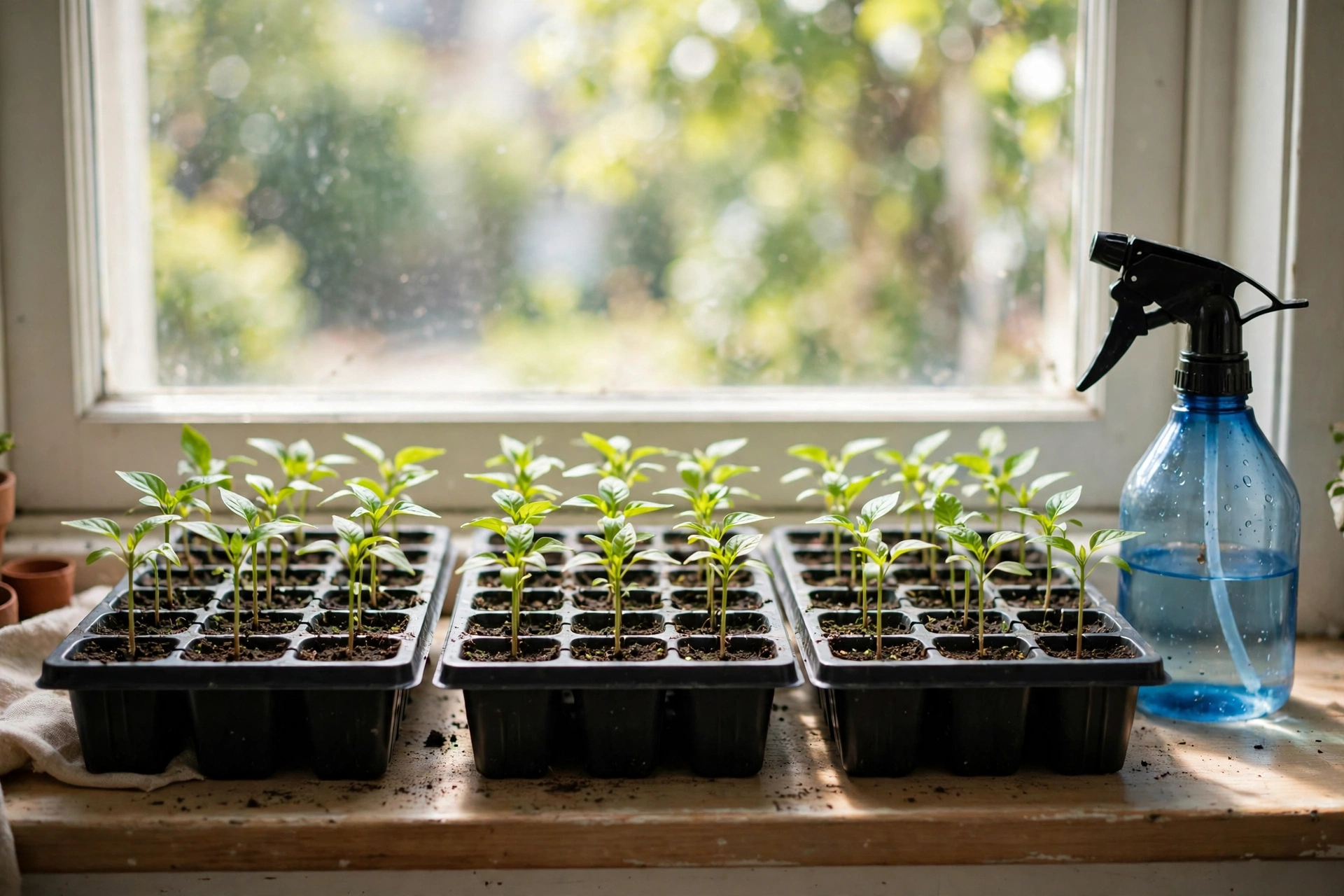
The fix is a heat mat under the tray, or a warm room that holds steady in the 70s, and patience for the full germination window. Once the seedlings are up, the heat matters less than the light: a bright window is rarely enough in late winter, so a grow light a few inches above the seedlings keeps them short and sturdy instead of tall and floppy. Peppers started warm and lit well are the ones that transplant without sulking.
Seed Starting Heat Mat
The one piece of gear that fixes the most common pepper failure — it warms the soil 10 to 20 degrees, which is what gets pepper seed to germinate.
Epic 6-Cell Seed Starting Trays
Sturdy, reusable cells with room for pepper roots to grow before transplanting — a better home than a flimsy tray for a 10-week start.
When to Start: Count Back From Your Last Frost
Start hot peppers indoors 8 to 10 weeks before transplanting, and transplant 2 to 4 weeks after your average last frost date, when daytime temperatures are at least 70 degrees and nighttime temperatures are at least 55. That puts the sowing date in late winter for most gardeners — a full two months before the plants go out — and it is the reason peppers feel slow: they are on a longer clock than tomatoes, and they punish anyone who rushes them into cold soil.
In a mild climate you can also sow in late summer for a fall and winter crop, but for most of the country the spring start is the one that matters. The varieties that need the most time — Scotch Bonnet at 75 to 100 days from transplanting — should go in at the early end of the window, while the fast ones, Megatron and NuMex Lemon Spice at 65 days, can wait a week or two longer without losing the season.
The Steps, in Order
1. Sow 1/4 inch deep, indoors. Use a seed-starting mix, not garden soil, and sow at 1/4 inch deep. Keep the soil just slightly moist — not wet — and set the tray on the heat mat or in the warmest room you have.
2. Wait for germination, 10 to 25 days. Do not give up on day 12. Pepper seed is slow, and a tray that looks empty for two weeks can still be fine. Keep the mat on and the soil warm until seedlings appear.
3. Give them strong light. As soon as seedlings are up, move the tray under a grow light or into the brightest spot you have, with the light a few inches above the leaves. Leggy seedlings are almost always a light problem, not a seed problem.
4. Pot up before they get rootbound. If seedlings become rootbound, their growth may stall, so move them into bigger pots while the roots still have room. A 6-cell tray that held them at sowing may not hold them for ten weeks.
5. Harden off for a week or two. Move the plants outside for a few hours a day, lengthening the time and the sun exposure, before they live outside full time. Our hardening-off guide covers the day-by-day routine.
6. Transplant 18 to 24 inches apart. Set plants out 18 to 24 inches apart in rows 24 to 36 inches apart, in full sun, only once days are reliably 70 degrees and nights are 55 or warmer. Water them in well and mulch to hold the warmth in the soil.
NuMex Lemon Spice Jalapeño Chile Pepper Seeds
The compact plant in this roundup at 12 to 24 inches, ripening bright yellow with a citrus tang — the easiest hot pepper to grow in a pot.
The Season at a Glance
| Step | When | The detail |
|---|---|---|
| Sow indoors | 8 to 10 weeks before transplanting | 1/4 inch deep, in seed-starting mix, on a heat mat |
| Germination | 10 to 25 days | Soil at 70 to 90 degrees; keep it just slightly moist |
| Pot up | Before plants get rootbound | Bigger pots, strong light a few inches above the leaves |
| Harden off | 1 to 2 weeks before transplanting | A few hours outside daily, lengthening time and sun |
| Transplant | 2 to 4 weeks after last frost | Days at least 70 degrees, nights at least 55; 18 to 24 inches apart |
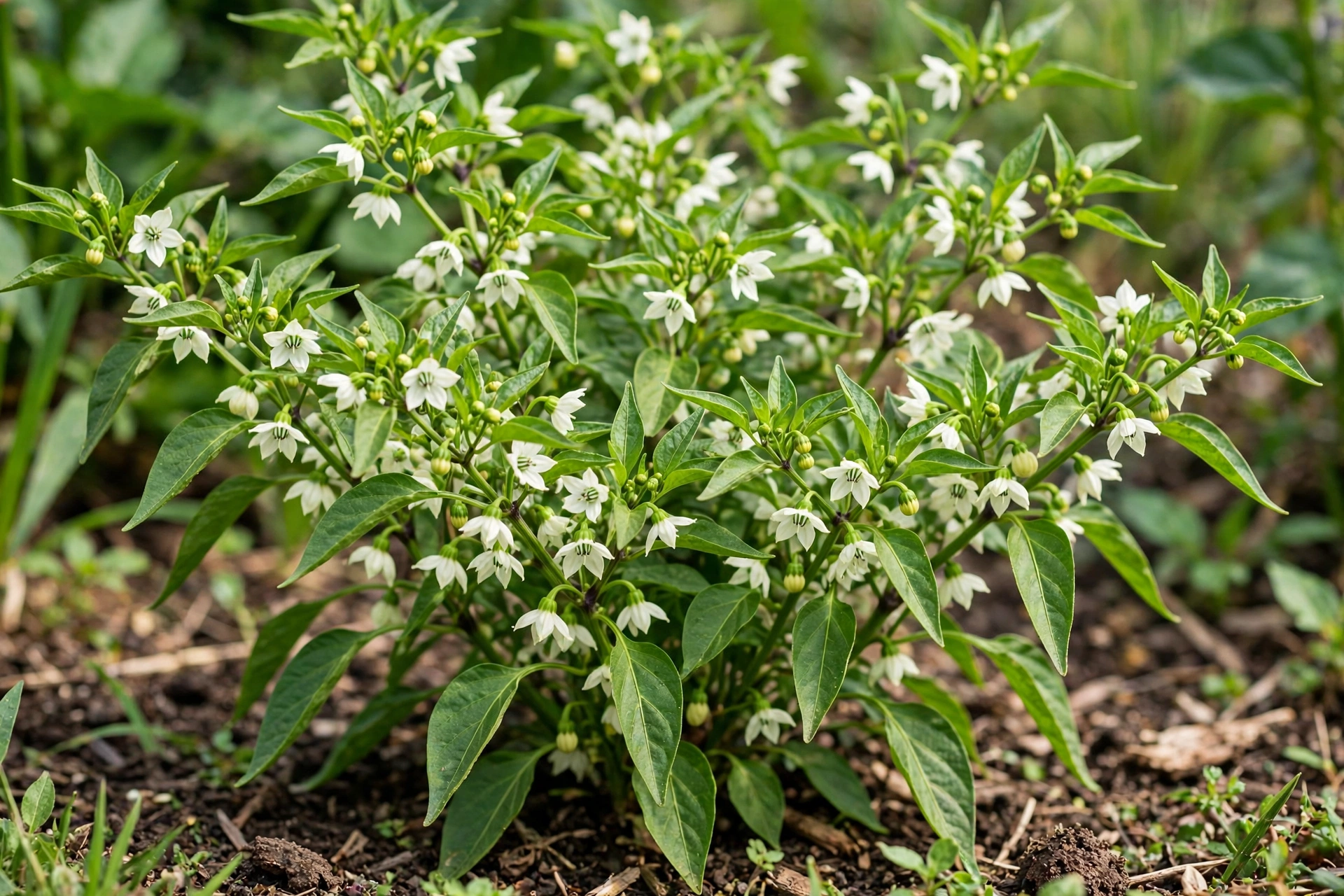
What to Watch Next
A pepper plant that went out warm, hardened off, and spaced right will flower within a few weeks of transplanting, and the first fruits follow about two months later for the fast varieties. If the flowers fall instead of setting fruit, the temperature is the first thing to check — our fruit-set guide walks through the causes in order. The one mistake that undoes a good start is transplanting into cold soil, so if a late frost is coming, wait: a pepper set out a week late will outgrow one set out a week early.