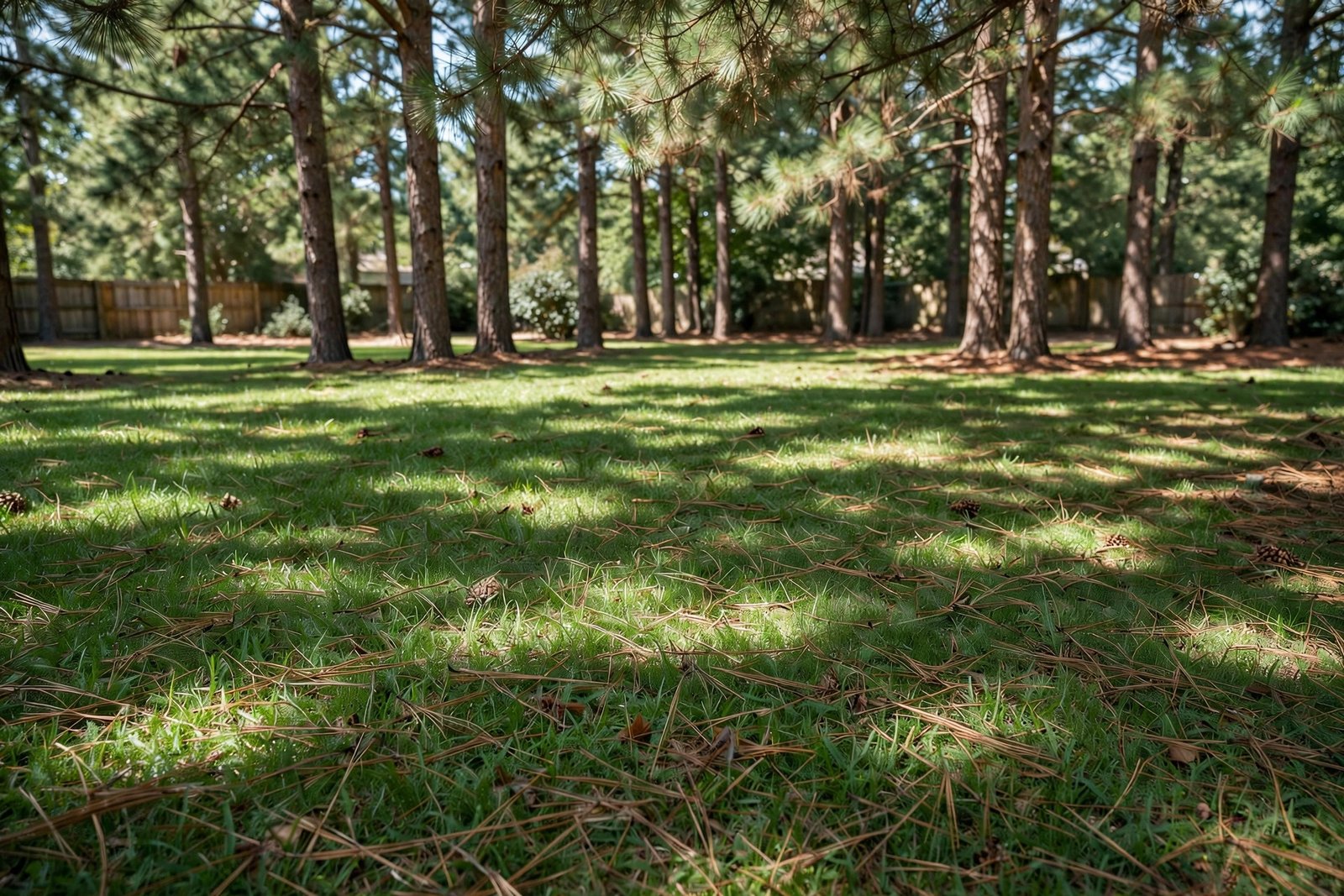
Grass under a pine tree lives a hard life. The canopy steals the light, the roots steal the water, and the ground stays dry even after rain. Most lawns under pines fail for those three reasons, not because of the needles on the ground.
That distinction matters, because it changes what to plant. Pick a grass built for shade and root competition, and you have a chance. Plant a sun-loving lawn grass and hope for the best, and you will be reseeding the same bare patch every spring.
Why Most Grass Fails Under Pines
Three forces work against turf under a pine, and they stack.
First, shade. Even a thin pine canopy cuts light sharply, and the light that gets through is filtered and shifting. Sun grasses like bermuda and zoysia need hours of direct sun and simply thin out in that light.
Second, water competition. Pine roots are wide and shallow, and they drink first. The soil under a mature pine dries faster than open lawn, and new seedings are the first to suffer.
Third, acidity gets blamed too often. University extension services consistently note that pine needles themselves do not acidify soil nearly as much as gardeners assume; weathered needles test close to neutral. The real soil problem under pines is dryness and low organic matter, plus the tree’s own nutrient uptake. A soil test tells you the truth for your yard, and it is cheaper than a bag of seed.
The Best Grass Types by Region
Northern lawns: fine fescues
Fine fescues, including creeping red fescue, chewings fescue, and hard fescue, are the standard answer for shade in cool climates. They tolerate low light better than any other common lawn grass, need less fertilizer and water than bluegrass, and handle the dry, lean soil under pines reasonably well. Hard fescue is the toughest of the group in poor soil, while creeping red spreads to fill thin spots.
Fine fescues are not wear-tolerant, so they suit the quiet ground under a pine rather than a play area. Mow them a little taller than a sun lawn, around 3 inches or more, so the blades catch what light there is.
Transition zone: turf-type tall fescue blends
In the transition zone, where summers run hot and winters bite, turf-type tall fescue is the workhorse. It handles shade better than Kentucky bluegrass, roots deeper than fine fescue, and tolerates the heat that fine fescues dislike. Look for blends that list shade tolerance on the bag rather than a generic sun-and-shade mix with a token amount of fescue.
Tall fescue wants water during establishment. If the pine’s roots will win every watering contest, plant in fall when the tree’s demand drops and rain is more reliable.
Southern lawns: St. Augustine and shade-tolerant zoysia
In warm climates, St. Augustinegrass is the most shade-tolerant warm-season grass, handling moderate shade better than bermuda or centipede. It still needs some filtered light; deep, all-day shade under a dense pine defeats it too. Where winters stay mild and the canopy is high, St. Augustine is the first choice.
Some newer zoysia varieties tolerate light shade, but zoysia is a slow starter and a slow spreader. Under a pine, that slow fill means bare soil and weeds while you wait. Plant zoysia only if the site gets several hours of dappled sun.
What Fails and Why
- Kentucky bluegrass: needs full sun and steady water. Under a pine it thins within a season or two, then weeds move in.
- Perennial ryegrass: germinates fast, which tempts people to use it under trees. It fades in shade and heat and rarely survives a second summer under a pine.
- Bermudagrass: a full-sun grass. In pine shade it grows thin, pale, and weedy. No amount of fertilizer fixes a light shortage.
- Centipedegrass: tolerates low fertility but not shade or root competition. It stalls under pines and invites weeds into the gaps.
How to Give Grass a Fighting Chance
Start with a soil test through your local extension service. If pH is genuinely low, lime helps, but do not lime on the assumption that needles soured the soil. Test first.
Thin the canopy if an arborist says it is safe for the tree. Removing a few lower limbs raises the light level more than any seed choice will. Keep the tree’s health first; a stressed pine drops more needles and shades worse as it thins unevenly.
Seed in fall for cool-season grasses, when soil is warm, tree demand is falling, and weed pressure is lower. Water new seedings consistently, because the pine will not share. A light mulch of compost over the seeding holds moisture without smothering the seed.
Mow high and mow less often under trees. Taller blades photosynthesize more in low light, and less frequent mowing means less stress on already-stressed grass.
When Grass Is the Wrong Answer
Some spots under pines will never hold turf, and that is fine. Deep shade, heavy root mats at the surface, and constant needle drop defeat even fine fescue. In those spots, shade plants are the honest answer, and our guide to plants that grow well under pine trees covers the best options.
If the lawn itself is thinning, check whether pine needles are actually bad for your lawn before blaming the mulch layer. And if you rake needles off the lawn anyway, they make a useful mulch elsewhere; see how to use pine straw in garden beds.
The Bottom Line
Under northern pines, plant fine fescues. In the transition zone, plant turf-type tall fescue. In the warm South, plant St. Augustine where the light allows. Everywhere, test the soil, water through establishment, and accept that the deepest shade belongs to plants, not turf.
Related: needles from those pines also end up in the roofline — see how to keep pine needles out of your gutters.