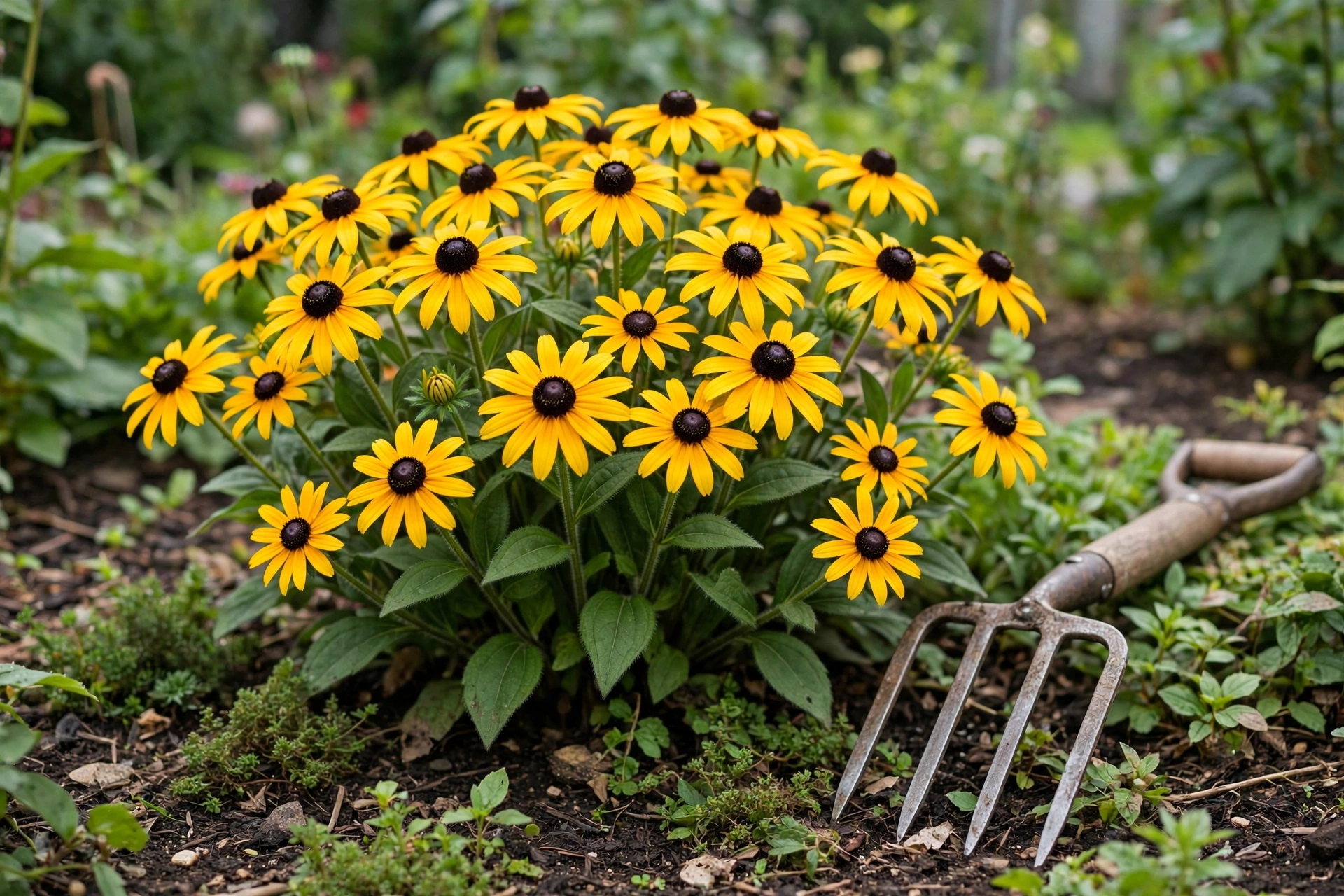
The gold patch that stopped traffic two summers ago is thinner this year, with fewer flowers and a middle that looks tired even though the edges still bloom. That thinning center is the plant asking to be divided, and black-eyed Susans answer division quickly when the timing is right.
Black-eyed Susan here means the true perennial, Rudbeckia fulgida — the ‘Goldsturm’ type that spreads by rhizomes and returns for years. The short-lived Rudbeckia hirta types are a different case, covered below, because dividing a plant that lives only a few seasons rarely pays.
How to tell it is time
Look for three signs together. The center of the clump thins or goes bare while the outer ring still flowers, flower counts fall even though the clump keeps getting wider, and the patch needs dividing every 3 to 4 years as a matter of routine maintenance.
Individual R. fulgida plants are relatively short-lived, often 3 to 4 years, but the clump persists because it spreads by rhizomes and self-seeding. Division keeps the vigorous outer growth and discards the tired center, which is the same pattern behind how to divide Shasta daisies.
When to divide black-eyed Susans
Divide in spring or fall. Spring division, as new growth appears, gives the pieces a full season to establish, and it is the safer window in cold climates. Fall division works where you can finish at least 4 to 6 weeks before the ground freezes, so the new roots settle while the soil is still warm.
Avoid dividing in summer heat or while the plant is in full flower, when roots recover slowest. If your clump is a fall-blooming type, spring is the better window. For the wider fall list, see which perennials to divide in fall.
The fix, step by step
- Water the day before. Moist soil lifts cleaner and keeps roots from tearing.
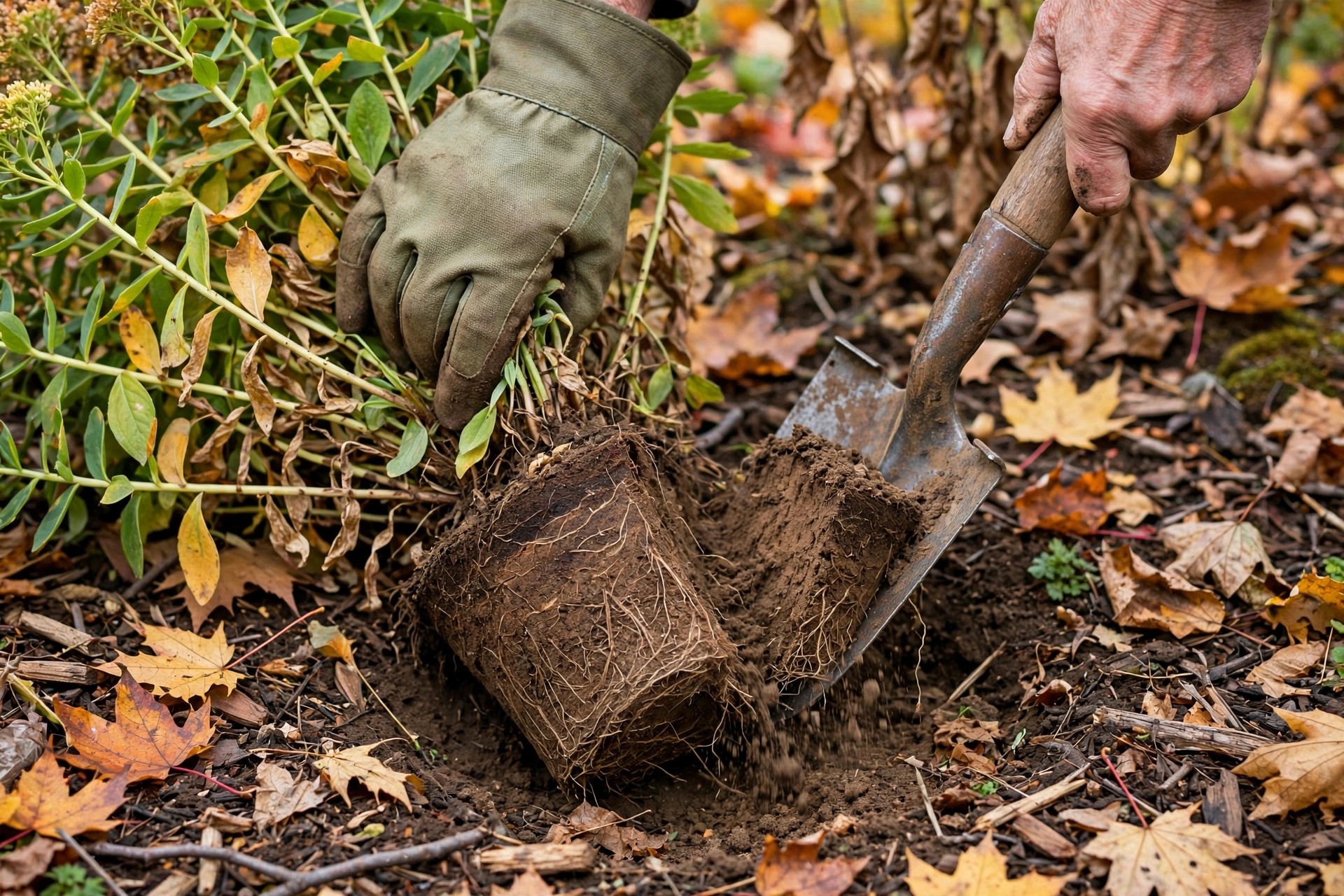
- Dig the whole clump. Work a spading fork around the outside and lever the clump out in one piece, keeping the rhizomes intact.
- Cut fist-sized sections. Each section needs healthy roots and at least one crown with growth points. Discard the woody, bare center.
- Replant at the same depth. Set divisions 12 to 18 inches apart, at the depth they grew before, and firm the soil around them.
- Water in and mulch lightly. Keep the soil evenly moist for the first few weeks while roots take hold.
The right tools make the cutting step far easier on the roots; the best tools for dividing perennials covers the forks and knives that suit rhizome clumps like this one.
What success looks like
Divisions replanted in spring usually flower the same summer, lightly, and return to full bloom the following year. Keep the new pieces watered through dry spells in their first season, and leave late seed heads standing if you want self-sown seedlings to thicken the patch for free.
Divide the clump in front of you this season rather than replacing it. A healthy R. fulgida patch, split on schedule every 3 to 4 years, renews itself indefinitely — buying new plants is only necessary when you want a different cultivar.