The expensive mistake is building a shed for a fire pit’s worth of wood — or buying a rack when you heat with wood all winter and the rack holds a fraction of what the season needs. One wet winter is all it takes to learn which side of that mistake you are on, because wood stored wrong does not just get wet, it stays wet, and a season of damp splits is a season of smoky fires.
The right answer follows from how much wood you actually burn: a rack covers a season of weekend fires, while a shed is built for a winter of heat. Here is how to tell, with the numbers attached.
What each one actually holds
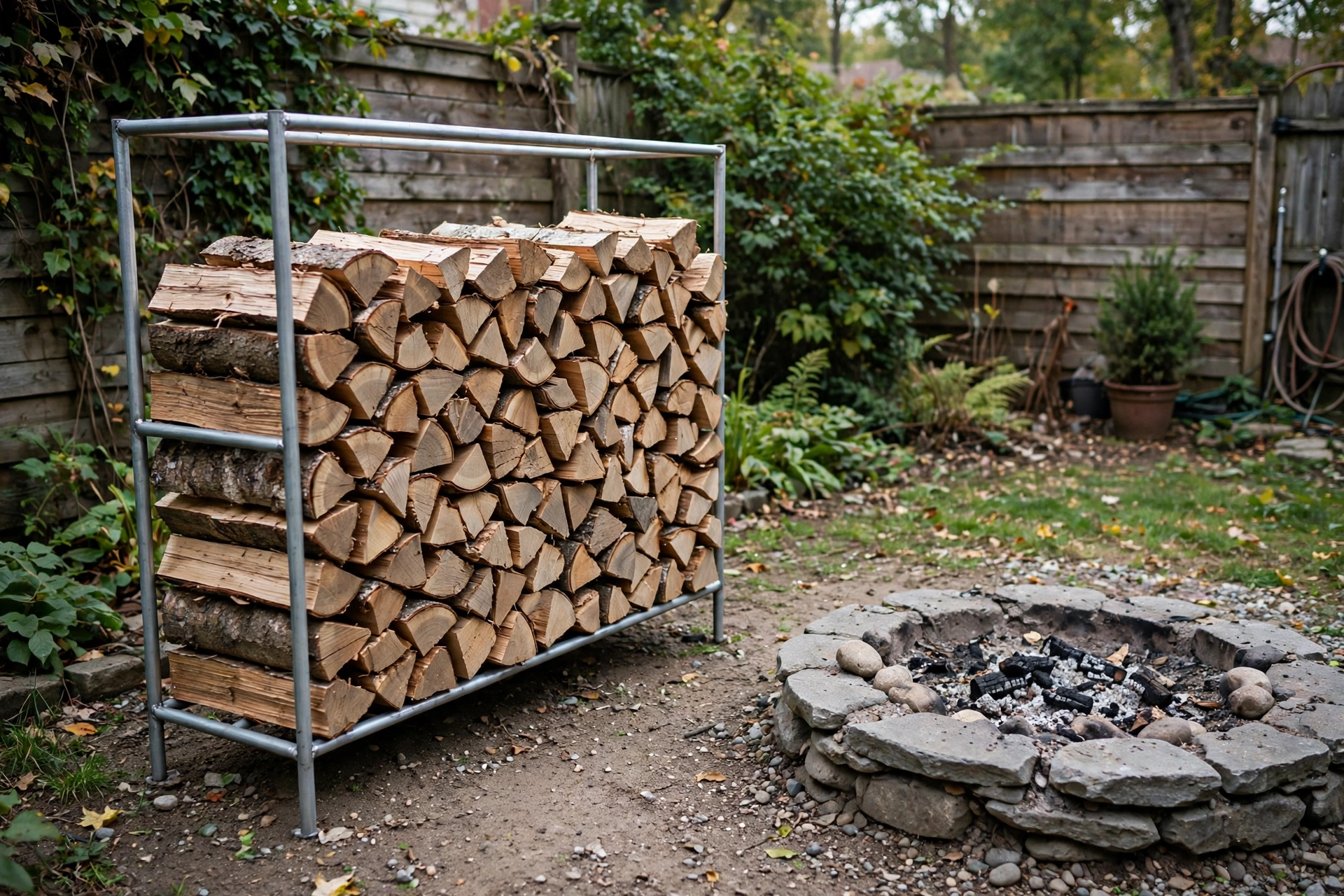
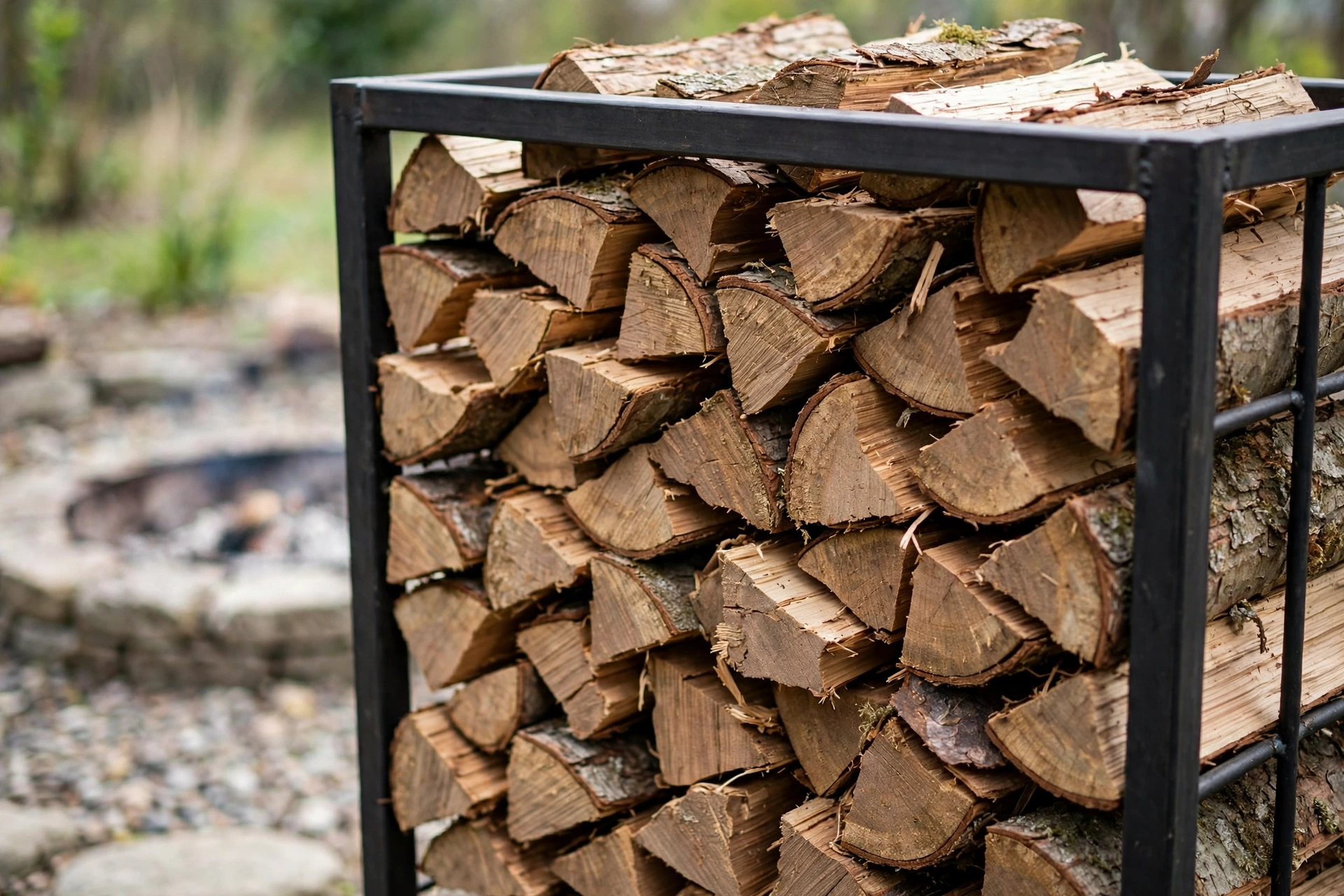
A rack is one row deep, so its capacity is easy to count. An 8-foot rack stacked 4 feet high holds one face cord of 16-inch splits, which is 42.7 cubic feet, or a third of a full cord. Three of those racks side by side hold one full cord, and a 5-foot rack holds about 27 cubic feet of the same splits. Our guide to how much firewood a rack holds works through the sizes, and the roundup of the best firewood racks for backyard fire pits matches a rack to each household.
A shed holds wood the way a rack cannot: more than one row deep, under a solid roof, with walls that block wind-driven rain from the sides. The same footprint that holds a single-row rack holds several rows in a shed, so a garden shed stores cords where a rack stores a fraction of one. That is the whole difference in capacity, and it is the difference that decides the purchase.
Rack vs shed, side by side
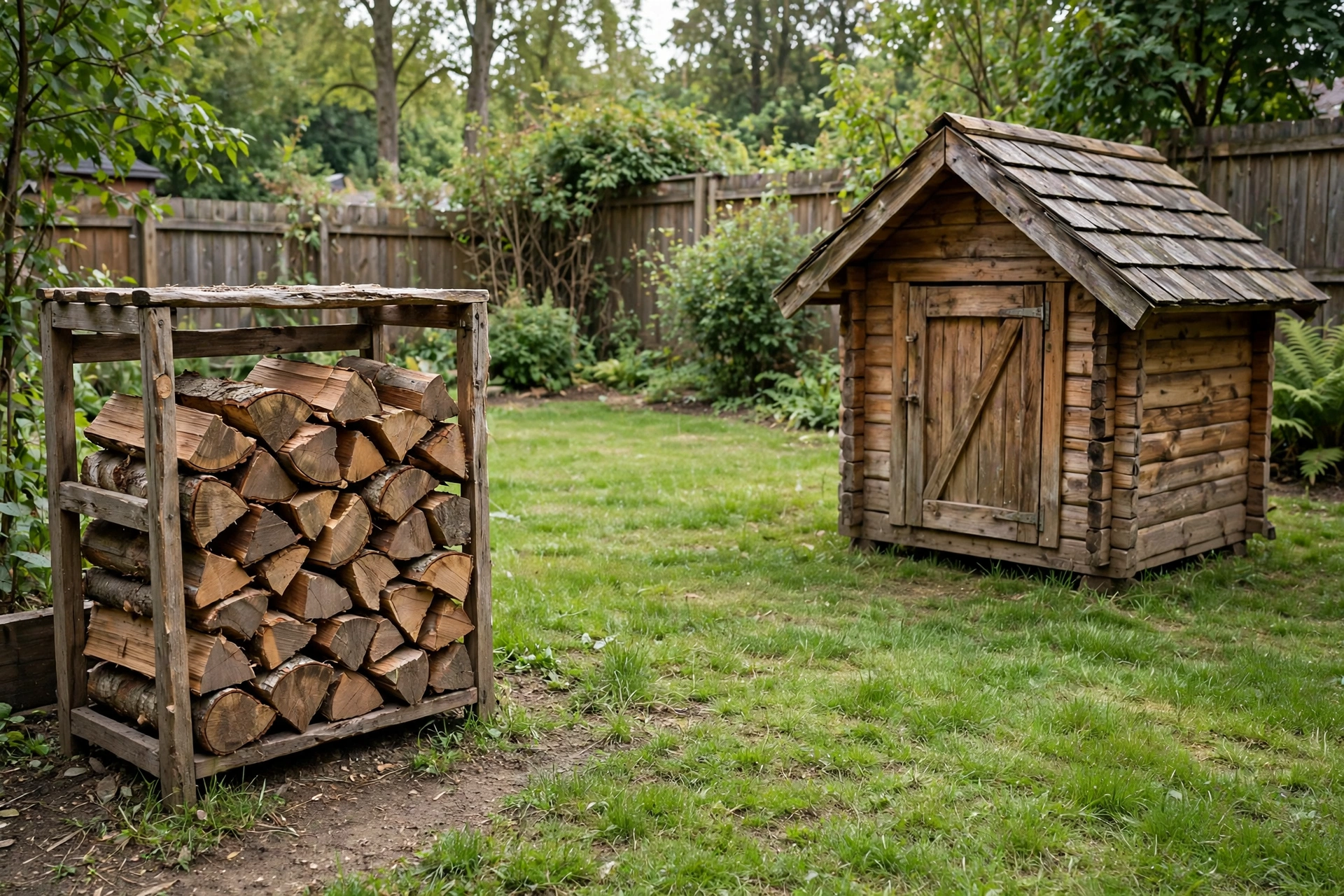
A rack costs a fraction of a shed, assembles in an afternoon, and dries wood faster because the wind moves through the open sides. A shed costs real money and real time — a level base, a roof, and in many towns a check of the local rules before you build — but it keeps a winter’s supply dry through weather a rack cover cannot handle. The mistake is buying one for the other’s job.
When the rack wins
Buy the rack if the fire pit is the reason you buy wood. A household that burns on weekends from the first cold snap through spring needs a face cord or two in a season, and one or two 8-foot racks hold that supply with room to spare. The rack goes up in an afternoon and sits close enough to the fire pit to grab an armload without a trip across the yard, while the open sides keep seasoning the wood between fires. If the wood runs out mid-season, ordering another face cord is a phone call, not a project.
The rack also wins when the yard is the constraint. A rental, a small lot, or a patio with one spare stretch of fence fits a rack and does not fit a shed, and a rack comes apart and moves when the household does, which a shed never will.
When the shed wins
Build the shed if you heat with wood. A household burning through several cords a winter needs the supply under one roof, stacked more than one row deep, where a tarp or a rack cover will not keep up with months of rain and snow. The shed also wins when the wood arrives green, because seasoning a full cord takes months of airflow under a roof, and a rack leaves the sides open to every storm that blows through while the wood is still drying. Our guide to how to stack firewood so it dries covers the airflow rules that apply inside a shed as well as on a rack: sides open, top covered, wood off the ground.
The shed has one more advantage that does not show up in a capacity table. It stores the splitter, the wheelbarrow, and the kindling box alongside the wood, which means the whole job happens in one place instead of three corners of the yard.
The mistake to avoid
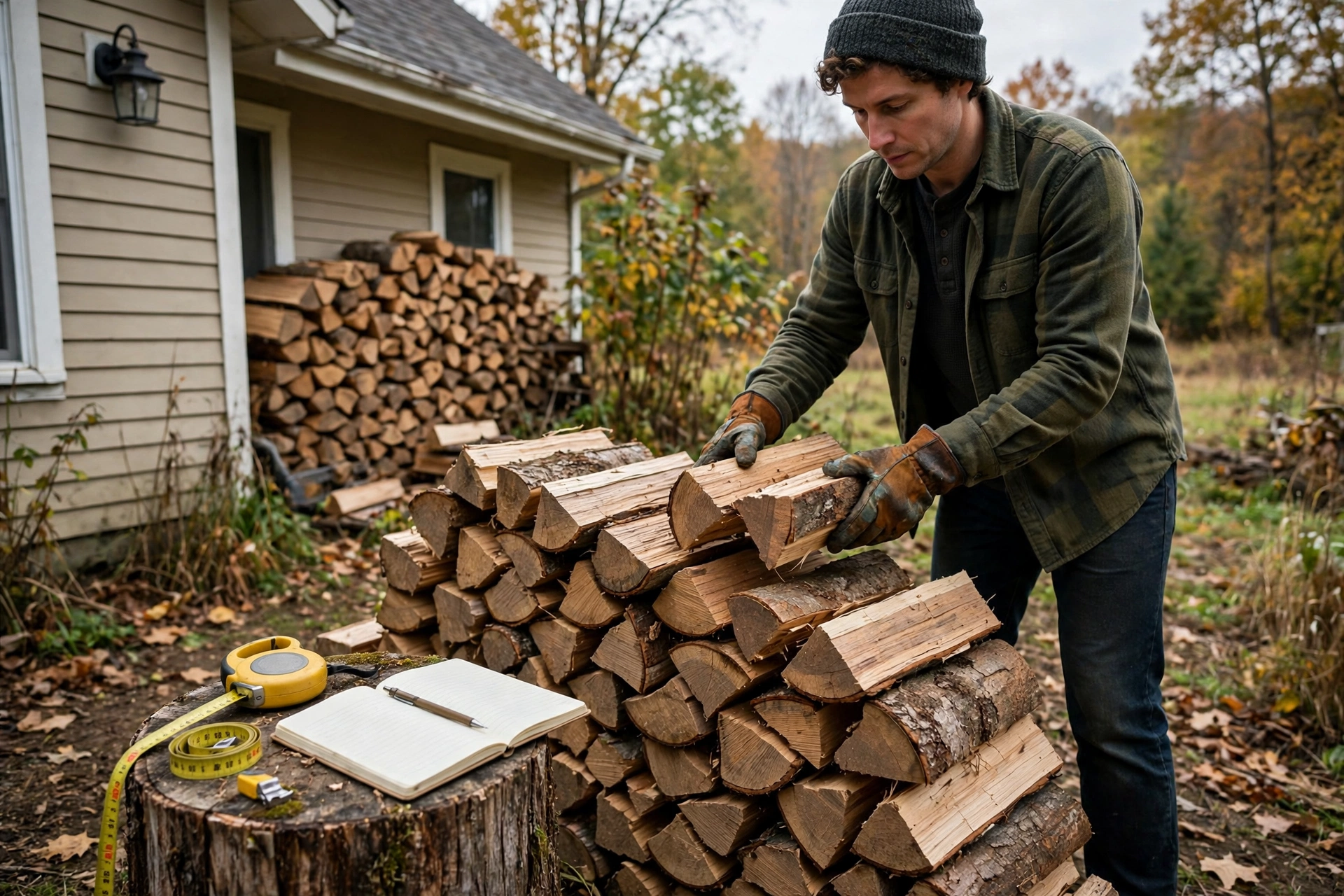
Do not put either one against the house. Wood stacked tight to the siding gives insects and rodents a covered highway indoors, and it holds moisture against the wall all winter. Keep the rack or the shed about 20 feet from the house, on ground that drains, with the open side facing the sun and the wind. And do not buy the shed before you know your burn rate — fill a rack, count the fire nights until it is empty, and multiply by the season. If the answer is one face cord, the shed would have been a monument to a problem you do not have.
Wood or propane?
If the shed question has you wondering whether the wood habit is worth it at all, compare the fuel before you compare the storage. Our propane vs wood fire pits guide runs the cost, heat, and hassle side by side, and for a household that burns once or twice a month, a tank beside the patio beats a shed full of wood on every measure except the smell of a real fire.
The verdict
Buy the rack if the fire pit is the reason you buy wood: a 5-foot or 8-foot rack holds a season of weekend fires, costs a fraction of a shed, and goes up in an afternoon. Build the shed if you heat with wood, because several cords under one roof is a job a rack cannot do. And if you burn all winter and still gather around the fire pit on weekends, buy both — the shed holds the winter supply, and the rack by the patio holds the wood for tonight.