The edge along your sidewalk looked sharp on Saturday, and by the next weekend the grass is already leaning back over the concrete like nothing happened. Or the opposite: you cut a deep, confident trench, and now the edge crumbles every time the mower wheel rolls past it. Both problems come from the same mistake, and it is not the tool. It is the depth.
Depth is the one number that decides whether an edge holds. Cut too shallow and the grass runners cross back over in days, because you never severed them. Cut too deep and you disturb the roots and soil that were holding the line together, which invites weeds into the fresh wound and leaves a ragged edge that crumbles. The right depth depends on one question: are you maintaining a line that already exists, or cutting a new one?
The short answer
For routine upkeep along a sidewalk or driveway, cut about 2 inches deep. That is the standard depth most power edgers are built for, and it is deep enough to sever the grass roots crossing the line without turning the job into excavation. For a brand-new edge along a flower bed, cut 4 to 5 inches deep with a half-moon edger, because a new line needs a real trench that turf roots cannot easily cross. If you are installing a physical edging product, dig the trench 3 to 4 inches deep so the edging sits firm with its top about half an inch above the soil.
What the depth does
A shallow cut only clips the grass blades at the surface. The runners underneath — the stolons that creeping grasses like Bermuda and St. Augustine send out sideways — stay intact, and they push new growth across the line within a week or two in peak season. A 2-inch cut severs those runners at the point where they cross, which is why the edge holds for two to three weeks instead of a few days.
A deeper cut does more than sever runners. At 4 to 5 inches, you are cutting below the grass crown and through the top layer of roots, which creates a physical gap the grass has to regrow across from scratch. That is the depth a new bed line needs, because there is no established trench holding the boundary yet. Go deeper than that on a maintenance pass and you gain nothing: you only disturb more soil, which gives weed seeds a fresh place to germinate, and you risk nicking shallow irrigation lines and low-voltage cable near the house.
Depth by tool and job
| Tool or job | Typical depth | Best for |
|---|---|---|
| Power or wheeled edger | 1 to 2 inches | Routine upkeep along sidewalks and driveways |
| String trimmer, flipped vertical | 1 to 2 inches | Quick touch-ups on an established line |
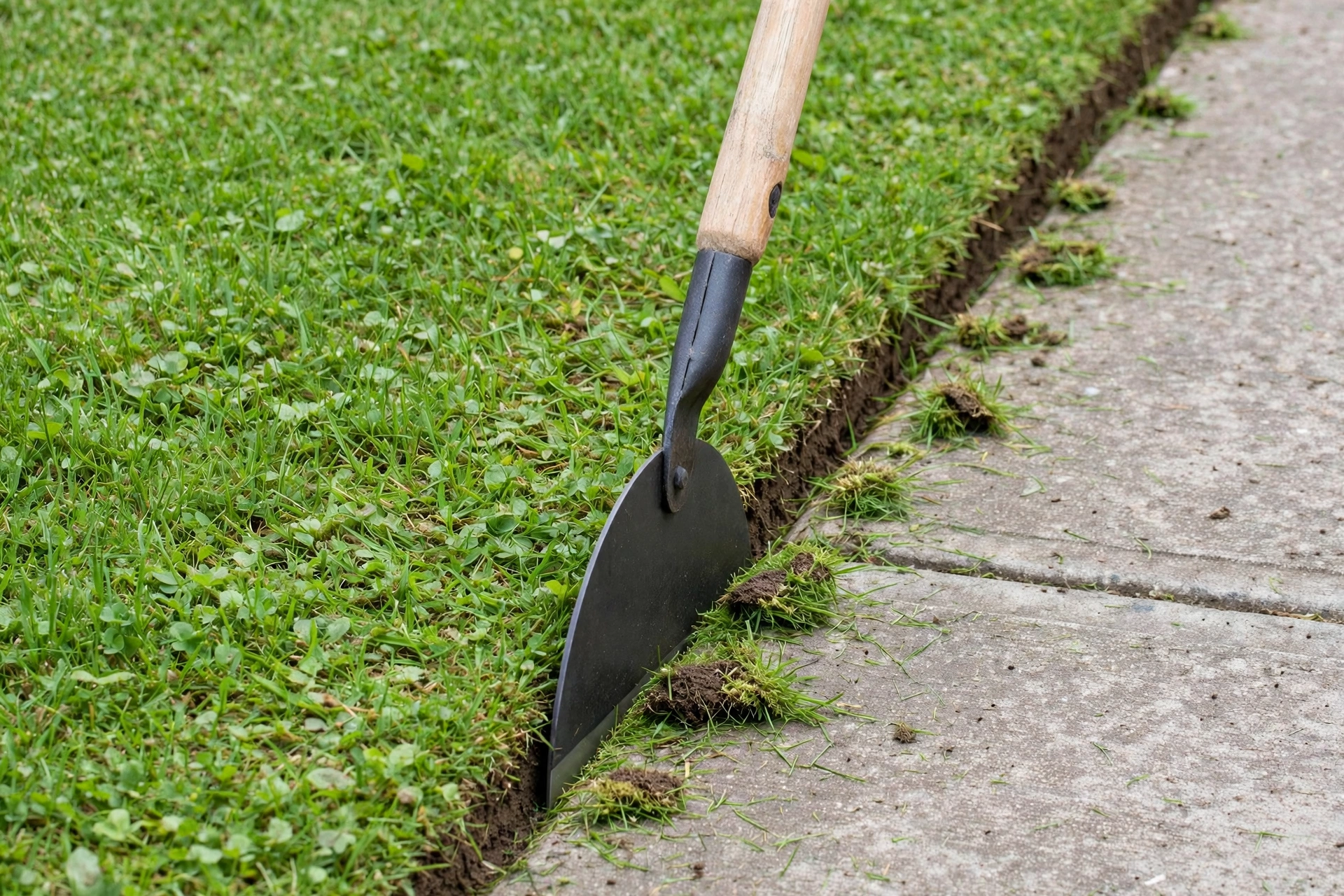
| Half-moon edger, new bed line | 4 to 5 inches | Cutting a fresh edge around a flower bed |
| Half-moon edger, recutting | 2 to 3 inches | Refreshing a soft, grassy bed line |
| Installing edging material | 3 to 4 inches | A trench that holds plastic, steel, or stone edging |
The tool matters because each one has a depth it is built to hold. A wheeled edger rides on a guide wheel and holds a steady 2 inches all the way down a straight run, which is why it is the right tool for long driveways. A string trimmer is fast for touch-ups, but it wanders without a guide, so it is a poor choice for cutting a new line. A half-moon edger goes as deep as you push it, which is exactly what a new bed line needs and exactly why it is slow on a long straight run.
When deeper is the wrong move
There are three situations where the deeper cut causes real damage. The first is near the house, where irrigation lines, low-voltage lighting cable, and invisible fence wire often sit only a few inches down. Before you cut a new 4-inch line anywhere near the foundation, check where those lines run, and call 811 if you are unsure what is buried in the path.
The second is around trees, where shallow feeder roots spread well past the drip line. A deep cut through those roots stresses the tree and opens a wound that invites disease. Edge around trees at maintenance depth, and keep the blade off the trunk itself.
The third is a lawn that is already stressed — drought, heat, or a recent overseed. A deep cut in a stressed lawn removes roots the grass cannot afford to lose, and the edge will look worse, not better, for the rest of the season. Wait until the grass is actively growing, and edge when the soil is dry, never when it is wet and soft.
How to hold the depth you choose
Walk slowly, and let the existing edge guide the blade instead of steering by eye. On a power edger, set the depth before you start and do not adjust it mid-pass, because every adjustment shows up as a wobble in the line. On a half-moon edger, step firmly on the tool’s ledge and push the blade to the same depth with each step, working in short sections so you can check the line as you go.
Edge after mowing, not before, so the cut line sits at the same height as the freshly mowed grass. Then blow or sweep the clippings off the hard surface, because a pile of loose clippings hides a sloppy line and smothers the grass at the edge. Step back to the curb and look at the line the way a neighbor would: small wobbles you cannot see from above are obvious from the street.
Bottom line
Cut 2 inches for upkeep and 4 to 5 inches for a new bed line, and do not go deeper than the job asks for. The edge that lasts is the one cut at the right depth, with the right tool, on dry grass — and the one you check from the street before you call it done. For the timing of the job, see when to edge your lawn, and for the hand-tool technique, see how to edge a lawn by hand. If you are choosing between a blade edger and a string trimmer for the job, our lawn edger vs string trimmer comparison settles it, and the best cordless lawn edgers roundup covers the tools that hold depth best.