The most common mistake with lilies happens before the fork ever goes in the ground: treating a true lily like a daylily and expecting a fibrous clump that can be pried and torn apart. A true lily grows from a scaly bulb, and a bulb that gets torn loses scales it cannot spare.
That difference decides everything about the job. Get the structure right and division is gentle work — lift, separate what the bulb has already made, and replant at the right depth. Get it wrong and the plant spends a season recovering instead of flowering.
True lilies are not daylilies
A daylily grows from a fan of leaves over a dense mass of roots and crowns, which is why the daylily dividing guide can talk about prying clumps apart with forks. A true lily — Asiatic, Oriental, trumpet, and martagon types in the genus Lilium — grows from a single bulb underground.
That bulb is a stack of fleshy scales attached to a hard basal plate at the bottom, with no papery tunic covering it. A tulip or daffodil bulb arrives wrapped in that dry outer skin; a lily bulb does not, so its scales dry out and bruise faster once they are out of the soil.
Two practical consequences follow from the structure. Lily bulbs should be replanted the same day they are lifted whenever possible, and they should never be left sitting in the sun while the new holes are dug.
When to divide lilies
Fall is the main window, after the foliage has yellowed and died back on its own. Yellowing leaves mean the plant has finished moving energy down into the bulb for the year, so lifting then interrupts the least growth.
Early spring works as a second window, before the new shoot gets tall. A lily shoot that has already grown several inches is easy to snap during lifting, and a snapped shoot costs that bulb its flower for the season.
What tells you a clump is due? Stems crowding closer together year after year, flowers getting smaller, or a clump that has sat untouched for four or five years and now produces more stems than blooms worth cutting.
How to divide lilies, step by step
Step 1: Cut back and mark. Once the foliage has yellowed, cut the stems down to a few inches so the clump is easy to find and the fork has a clear target. If the foliage is still green, wait — green leaves are still feeding the bulb.
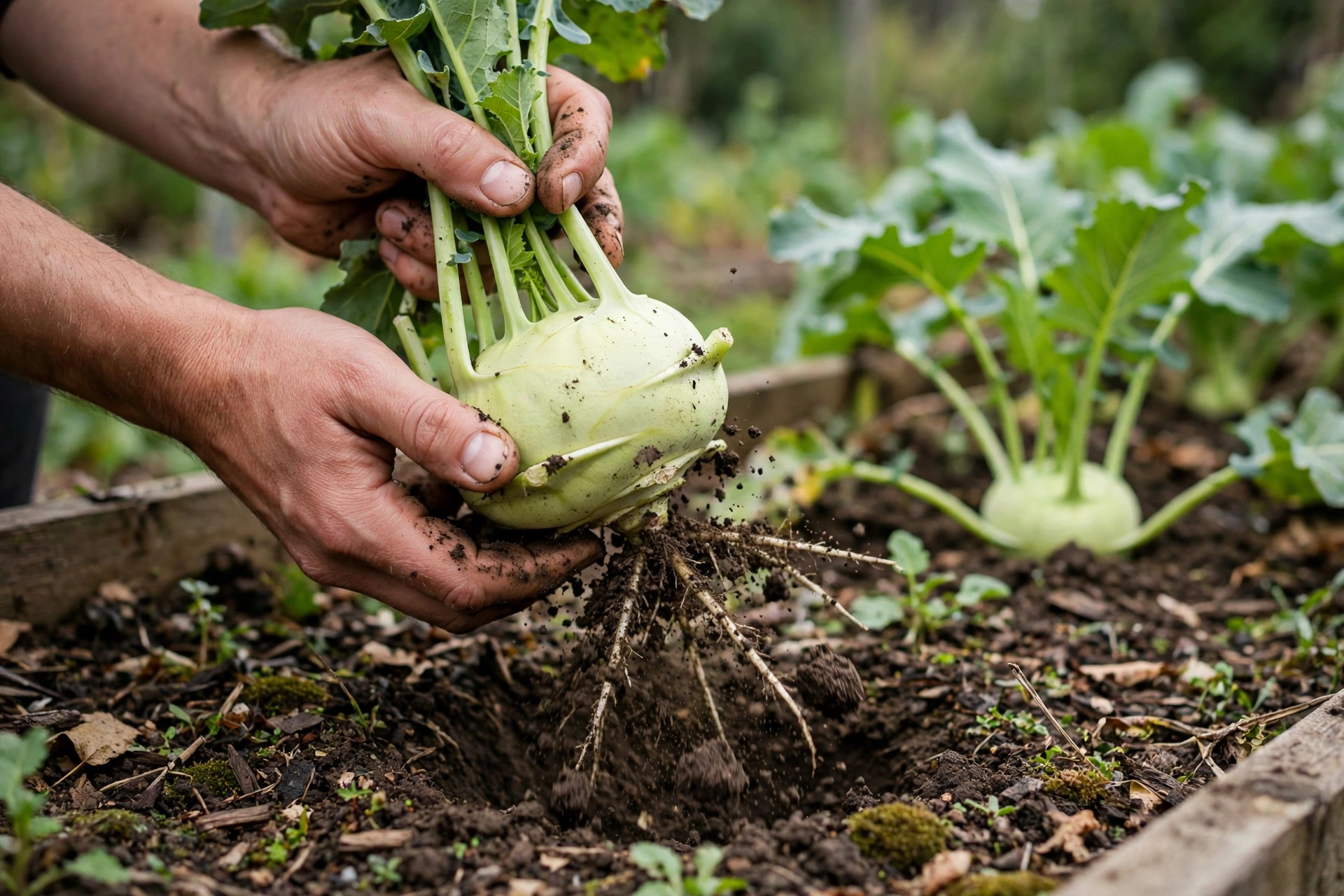
Step 2: Lift wide. Push a garden fork in a full 6 to 8 inches out from the stems and lever the whole clump up, working around it rather than prying from one side. Lily bulbs sit deeper than most gardeners expect, and a fork driven too close will spear straight through a scale.
The soil that comes up with a healthy clump has a particular feel to it — cool, crumbly, and smelling faintly sweet from the roots — and the bulbs inside should look pale and firm, like cloves on an oversized head of garlic. Soft, dark, or sour-smelling scales are a different diagnosis: cut those away and discard them rather than replanting them.
Step 3: Shake off and inspect. Shake and crumble the soil away by hand instead of washing the bulbs hard. Look for firm white or pale pink scales, a solid basal plate, and roots that are still pliable.
Step 4: Separate the offsets. A mature bulb usually carries smaller offset bulbs attached at the basal plate. Work each offset free with a gentle twisting pull, keeping its own piece of basal plate attached where you can, because an offset with no plate grows slowly or not at all.
Step 5: Save the bulblets. Small bulblets often form along the underground part of the stem, just above the main bulb. Pick them off and keep them separate from the full-size offsets, since they need shallower planting and more time — most take two to three years to reach flowering size.
Stem bulblets: the second harvest on the same plant
Some lilies also form bulblets in the leaf axils along the stem, where the leaf meets the stalk. Tiger lilies are the familiar example, producing dark, pea-sized bulblets that drop to the ground and sprout if nobody collects them.
Gather those stem bulblets when they loosen easily, usually in late summer. Plant them about 1/2 inch deep in a nursery corner or a pot, keep them watered, and treat them as a patience project rather than next year’s flowers.
The right tools make the lifting part calmer work. A fork with some weight to it and a knife for the stubborn joins are covered in the guide to the best tools for dividing perennials — lilies need the gentle end of that kit, not the saw.
Replanting depth and spacing
Plant each bulb at a depth of three times its own height. A bulb that measures 2 inches from base to tip goes in with its base 6 inches down, which puts roughly 4 inches of soil over the top of it.
That three-times rule is the specific number to hold onto, because lilies also root from the stem above the bulb. Stem roots feed the plant during the growing season, and they only form if the bulb sits deep enough to have stem underground.
Set full-size bulbs 8 to 12 inches apart, in groups rather than single rows where the bed allows it. Point the basal plate down and the growing tip up, firm the soil around the bulb so no air pocket sits against the scales, and water the planting in well.
Soil and mulch choices after the move matter more than most gardeners give them credit for. The guide to what soil and mulch to use after dividing perennials covers drainage and mulch depth in detail; for lilies the headline is drainage, because a scaly bulb sitting in wet winter soil rots from the basal plate up.
Aftercare for divided lilies
Water deeply right after replanting, then keep the bed evenly moist — not soaked — while the bulbs settle and root in the fall. Fall-planted lilies do much of their root growth before the ground freezes, which is why a dry October can undo careful lifting work.
Add mulch after the soil cools, not before. Mulch laid over still-warm soil invites the bulbs to start growth they cannot sustain, while mulch over cold soil simply holds the temperature steady through freeze-and-thaw swings.
Expect offsets of flowering size to bloom the following season, sometimes on slightly shorter stems. Bulblets and small stem bulblets will show leaves first and flowers later, and marking where they went in saves a confused spring of wondering what the thin green shoots are.
The mistakes that cost flowers
Dividing while the foliage is still fully green tops the list, because the bulb loses the last weeks of food it was counting on. Close behind it is planting too shallow, which leaves stem roots with nothing to grow from and bulbs exposed to heaving in winter.
The third mistake is treating every bulb plant the same way. Bearded iris, covered in how to divide bearded iris, grows from a rhizome that wants to sit at the soil surface in the sun — nearly the opposite prescription from a lily bulb that needs depth. Read the structure before reaching for the fork, and the right method follows from it.
Divide lilies in fall, by hand, at three times the bulb’s height, and replant them the same day. That sequence, done gently, is the whole job.