You mulch the beds in spring, step back pleased, and by October the pines have covered your work in a fresh tan blanket of needles. Left alone they mat over the mulch, hide the bed’s edge, and make a tidy planting look abandoned, so out they come — the trick is taking the needles and leaving the mulch.
Why needles settle into mulch instead of sitting on top
Pine needles are long, thin, and slightly springy, so they do not lie flat like a leaf. They weave. A needle fall works its way down between bark chunks and shredded mulch fibers until the top inch of the bed is a knitted layer of both, which is why a hard raking pulls up as much mulch as needle. The longer the layer sits through rain, the tighter it knits, so beds under pines want little and often rather than one heroic cleanup a year.
Pick a dry day, and work after a breeze
Dry needles are light and separate cleanly; wet needles cling to mulch and to each other and come up in sodden ropes that take the mulch with them. The best cleaning weather is a dry afternoon after a breezy morning, when the newest fall sits loose on top. If the beds are wet, give them a day. This one bit of timing does more for the result than any tool below.
The method, bed by bed
Start with your hands at the crowns. Around the base of each plant, lift needles out by hand in small bunches, working outward. Needles packed against a crown hold moisture against stems, and this is the one spot worth doing slowly.
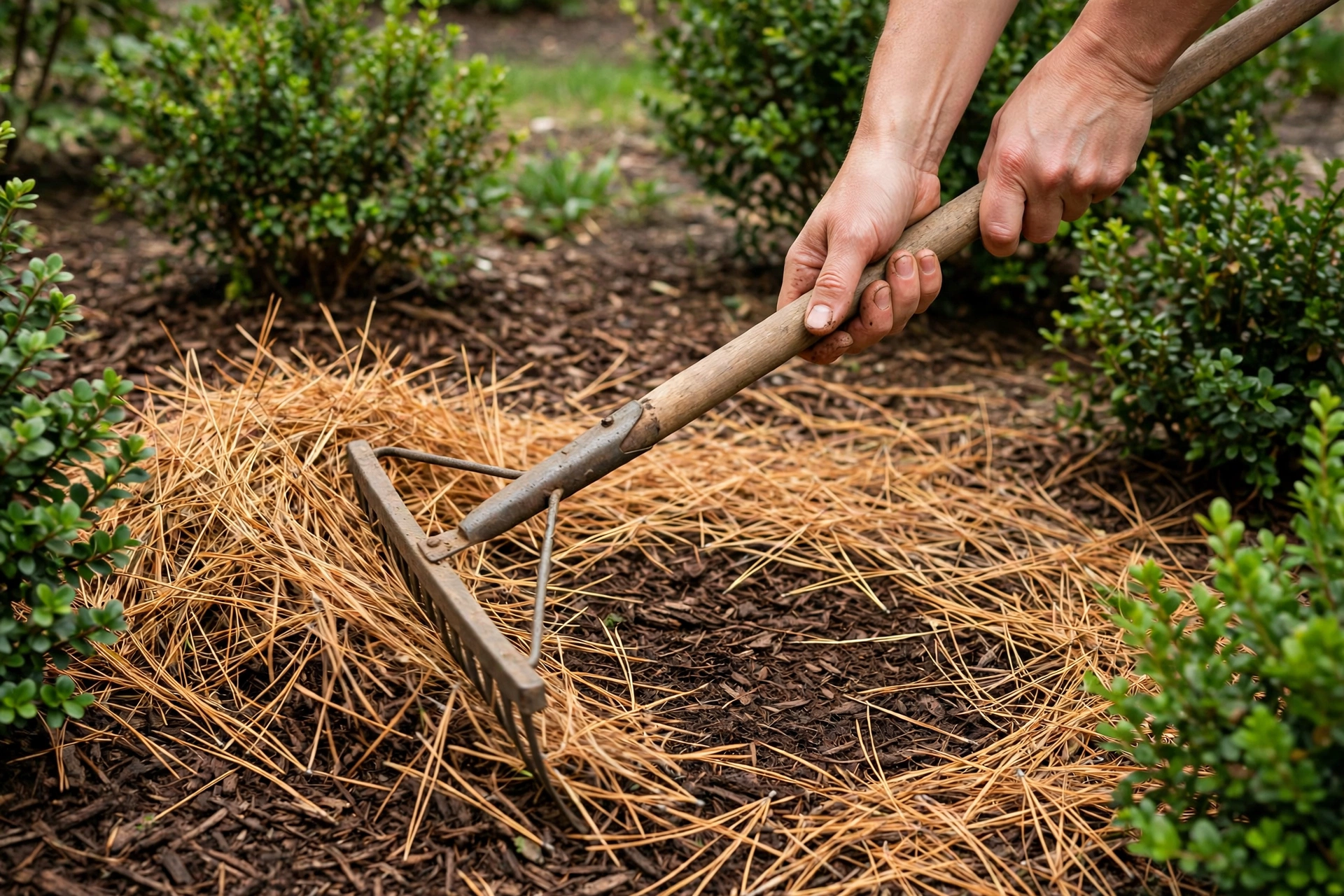
Rake the open bed with a light touch. Use a flexible leaf rake, not a stiff garden rake, and pull in short strokes with the tines skimming the surface. You are combing, not digging. Two light passes lift more needles and less mulch than one deep pass, and the mulch you save is money still in the bed.
Use the blower on its lowest setting for the finish. A gentle stream of air at a shallow angle rolls loose needles off the surface and out to the lawn, where they are easy to gather. Full throttle buries needles deeper and blows mulch into the grass, so keep the angle low and the trigger light, the same judgment call covered in should you blow leaves from under pine trees.
Gather from the lawn, not the bed. Once needles are out on the grass, rake or sweep them up from there. The full set of gathering options, with times for each, is in the pine needle cleanup guide.
How much needle is fine to leave
A scattered few needles worked into the mulch do no harm at all. Plenty of gardeners skip the fight entirely in back beds and let needles become part of the mulch layer, which is a legitimate choice — can you use pine needles as mulch covers where that works well. The beds worth cleaning are the ones where the needle layer mats thick enough to shed rain off the surface instead of letting it soak in, and the ones at the front of the house where the look is the point.
What you pull out has options beyond the trash. How to dispose of pine needles runs through composting, municipal pickup, and using them under acid-loving shrubs, where a needle mulch is welcome instead of a nuisance.
Keep the mulch layer honest afterward
Cleaning lifts a little mulch no matter how careful you are, so check the depth when you finish. Beds want about 2 to 3 inches of mulch settled, kept a few inches back from stems and trunks. If cleaning dropped a bed below that, top up just that bed rather than re-mulching the whole yard, and note that pine needle mulch vs bark mulch is a real choice for beds under pines — a bed mulched in pine straw stops fighting the trees and starts agreeing with them.
The short answer
Work dry, comb lightly with a flexible rake, finish with low air, and gather from the lawn. Do the beds under the pines a few times each fall instead of once, and the job stays a half hour of combing instead of a weekend of stripping and re-mulching.