This post contains affiliate links. If you buy through them, we may earn a commission at no extra cost to you.
A compacted lawn past a half acre is too much ground for a walk-behind aerator and too regular a job for a rental counter. Twice a year behind a riding mower, a tow-behind plug aerator pays for itself against rental fees — but only if it actually pulls plugs in hard soil instead of skating across the top of it.
Buy the Agri-Fab 48-inch plug aerator (45-0299) first. It pulls plugs up to 3 inches deep with 32 galvanized knives, its weight tray is rated for 140 pounds of added ballast, and it costs less than the Brinly that matches it on width. The Brinly is the runner-up, and it wins one specific fight, covered below.
What decides whether a tow-behind aerator works
Three specs decide the job. Width sets the pass count: at 48 inches, an acre takes roughly a sixth fewer passes than at 40 inches, which is real time on a seat. Plug depth sets the value: a core aerator earns its money at 2 to 3 inches, deep enough to open the root zone instead of dimpling the surface.
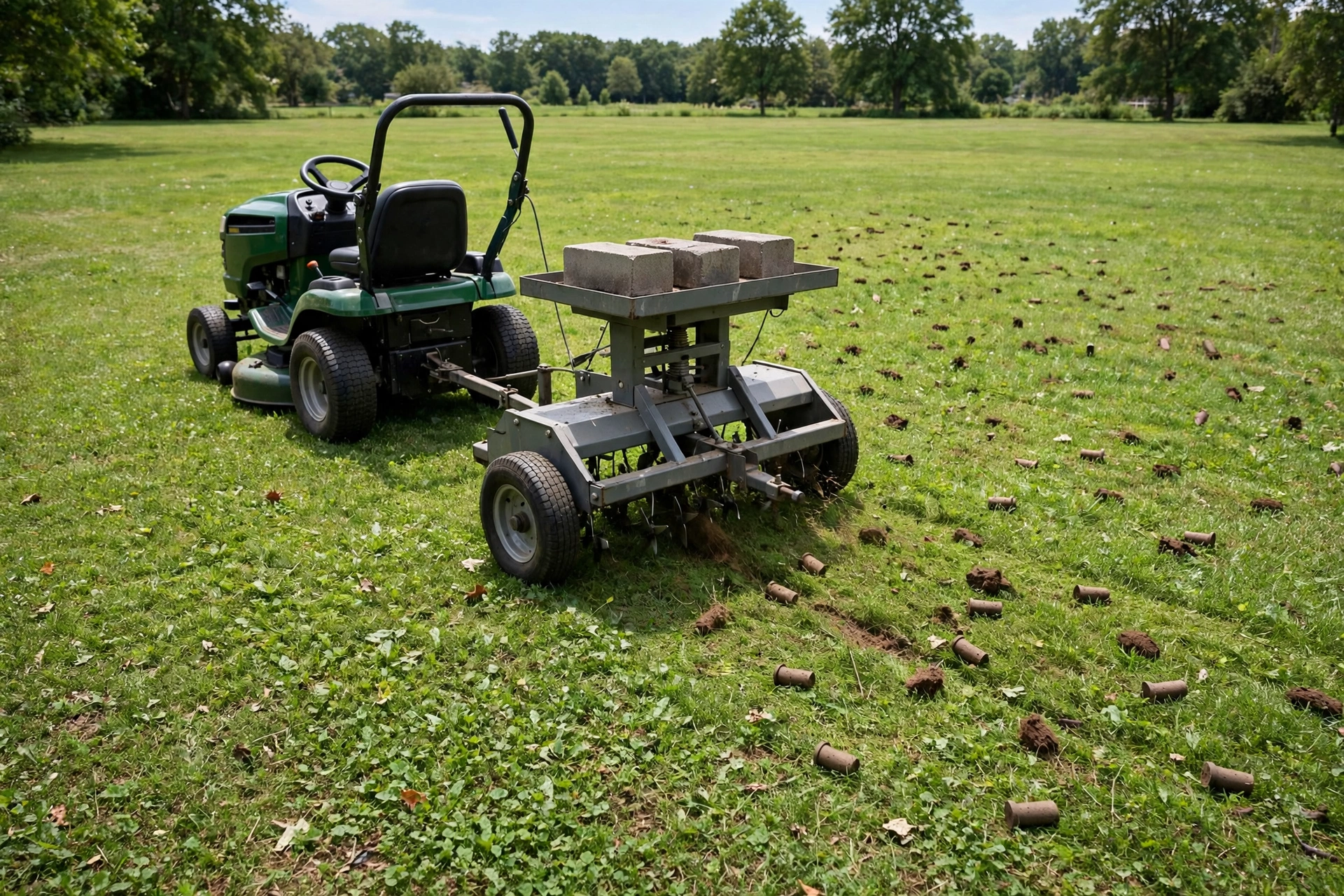
Weight-tray capacity is the third spec, and the one buyers skip. Tines enter hard, dry, or clay soil only when the machine carries enough weight to push them in, so a tray rated for 140 to 200 pounds is the difference between plugs in the tray’s soil and tines polishing the top of a compacted lawn. If the tow-behind question itself is still open, Walk-Behind vs Tow-Behind Aerator settles it by lawn size and tractor ownership.
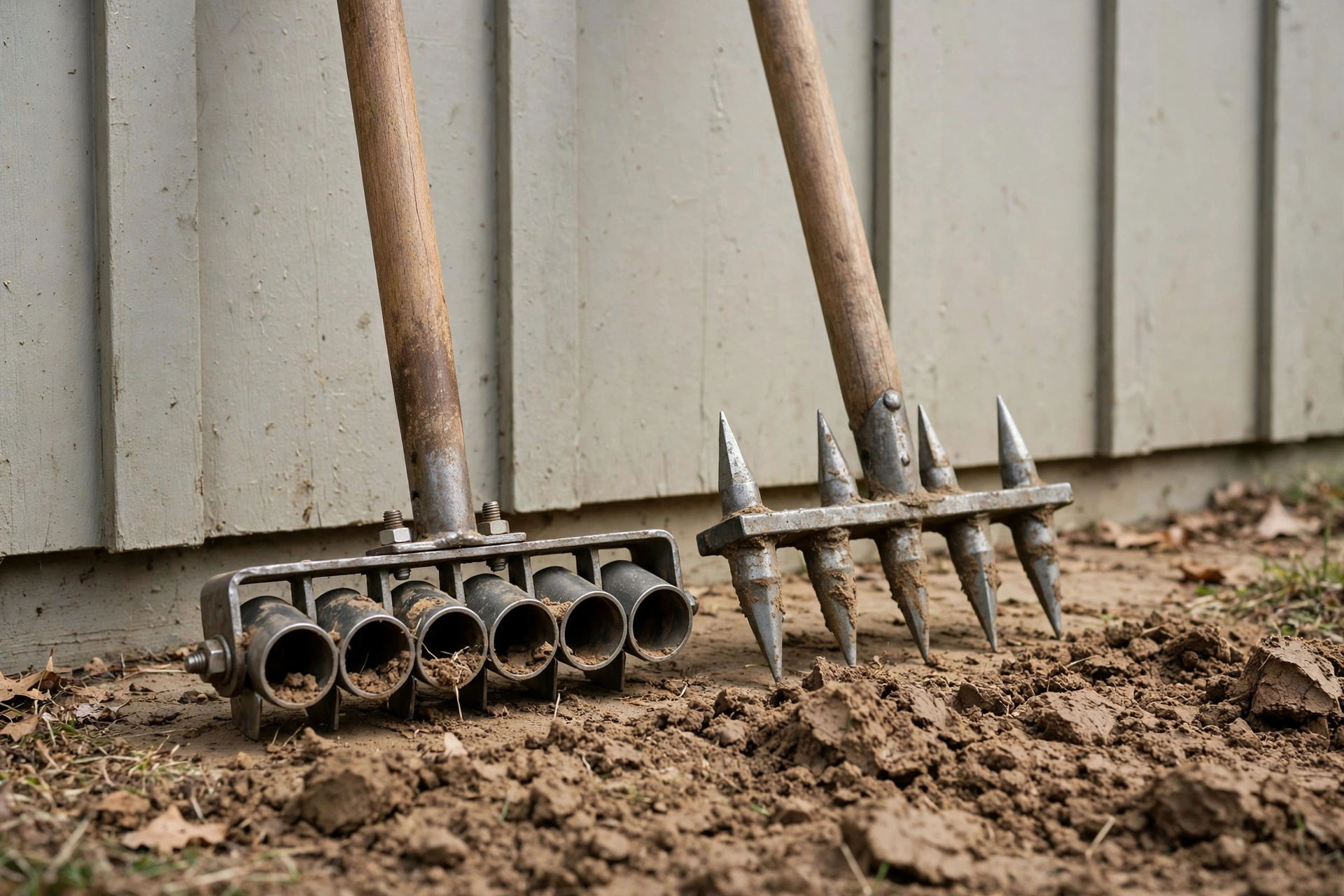
One more distinction matters before any brand name does: plug versus spike. A plug aerator removes a core and leaves a hole that stays open. A spike pushes soil aside to make its hole, compacting the walls of the hole in ground that was already too compacted. For compacted soil, that difference is the whole purchase, and it is why Best Core Aerators for Compacted Soil stays a plug-only list.
The picks at a glance
| Aerator | Width | Tines | Plug depth | Weight tray |
|---|---|---|---|---|
| Agri-Fab 45-0299 | 48 in | 32 galvanized knives | Up to 3 in | Up to 140 lb |
| Brinly PA-482BH-A2 | 48 in | 32 heat-treated steel spoons | Up to 3 in | Up to 200 lb |
| Tow-behind spike aerators | 40–48 in | Spike wheels, no spoons | No plugs pulled | Varies |
Best overall: Agri-Fab 48-inch plug aerator (45-0299)
The Agri-Fab does the core job at the lowest cost in this class. Thirty-two galvanized plug knives pull cores up to 3 inches deep across a 48-inch working width, and the galvanized finish matters on a tool that lives in a garage and works in wet soil every spring and fall.
The weight tray holds up to 140 pounds of added weight, which is enough ballast for most loam and moderately compacted clay when the soil is damp. The cantilever transport handle is reachable from the tractor seat, so crossing a driveway means lifting the knives from the seat instead of climbing down at every strip of concrete.
Flat-free tires close out the practical list. An aerator gets used twice a year, and a pneumatic tire that went flat in storage is the classic reason the spring pass never happens. At about 92 pounds, the machine itself is heavy enough to need two hands to move around the garage, and that is its real trade-off: it is the least graceful of these picks to store and maneuver unhitched.
Pros: 48-inch width with 32 galvanized knives; plugs up to 3 inches deep; 140-pound weight tray; flat-free tires; transport handle works from the seat.
Cons: About 92 pounds to move and store; 140-pound tray is outgunned by the Brinly on hard clay; assembly required.
Agri-Fab 48-Inch Tow-Behind Plug Aerator (45-0299)
32 galvanized knives, 3-inch plugs, and a 140-pound tray at the lowest cost in the 48-inch class.
Runner-up: Brinly 48-inch plug aerator (PA-482BH-A2)
The Brinly matches the Agri-Fab on the headline specs — 48 inches wide, 32 plugging spoons, cores up to 3 inches — and then beats it on the spec that matters in hard ground. Its fully enclosed steel weight tray holds up to 200 pounds, 60 pounds more than the Agri-Fab, and enclosed means concrete blocks and sand tubes stay put instead of bouncing off an open tray.
Two build details back that up. The 32 spoons are heat-treated 16-gauge steel and each one is individually replaceable, so a bent spoon after a rock strike is a small parts order instead of a new shaft. The spoons also ride on four independently rotating sections, which lets the sections turn at different speeds in a corner instead of dragging and tearing turf.
The trade-off is price and tires. The Brinly typically costs noticeably more than the Agri-Fab for the same width and plug depth, and its pneumatic tires can go flat in storage where the Agri-Fab’s flat-free tires cannot. On loam or sandy soil, that extra money buys capacity that never gets used. On hard clay, it buys the penetration the job actually needs.
Pros: 200-pound enclosed weight tray for hard clay; heat-treated spoons, each individually replaceable; four independently rotating tine sections protect turf in turns.
Cons: Costs more than the Agri-Fab at the same width and depth; pneumatic tires can go flat between seasons.
Brinly 48-Inch Tow-Behind Plug Aerator (PA-482BH-A2)
The hard-clay pick: a 200-pound enclosed tray and individually replaceable heat-treated spoons.
Not recommended for compacted lawns: tow-behind spike aerators
Spike aerators are cheaper, lighter, and sold with the same “aerator” label, which is how they end up behind tractors on lawns they cannot help. A spike wheel pushes a slit into the soil and shoves the displaced dirt sideways, so the wall of every hole is more compacted than the ground around it.
On a sandy or already-loose lawn used for overseeding prep, that slit is harmless and sometimes useful. On the compacted clay or high-traffic lawn that sends most buyers shopping, a spike pass can leave the root zone tighter than it found it. If compaction is the problem being solved, a spike machine is money spent against the goal.
Getting real plugs out of either pick
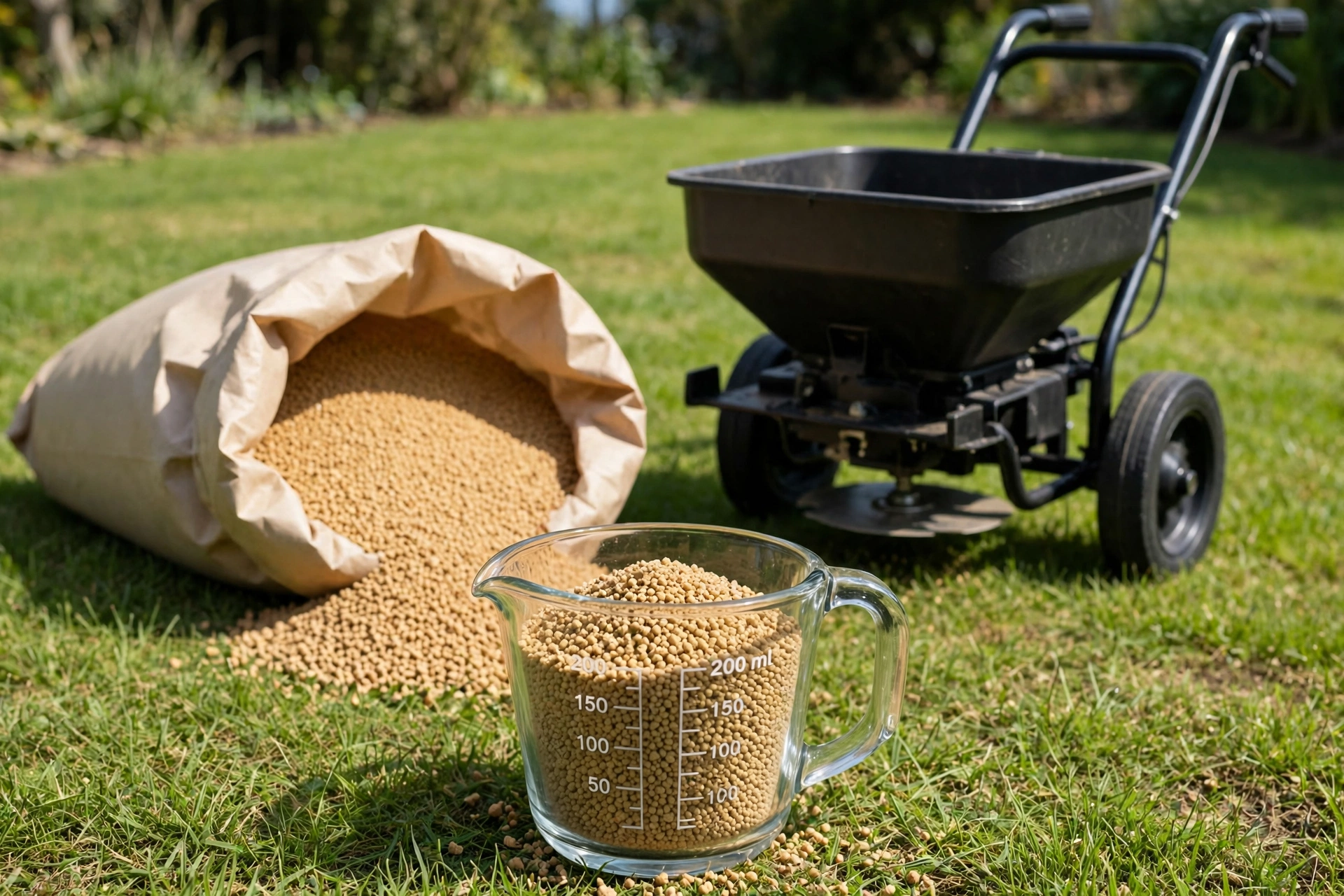
Soil moisture decides more than ballast does. Aerate a day or two after rain or a deep watering, when a screwdriver pushes into the lawn with one hand; bone-dry soil defeats a 200-pound tray, and mud plugs the spoons instead of releasing cores.
Load the tray in steps. Start with the machine’s own weight, make one pass across the worst strip, and check the cores on the ground: full 2- to 3-inch plugs mean the weight is right, while shallow dimples mean add ballast before doing the whole lawn at the wrong depth. Hitch height, transport-lever use, and pass pattern are covered step by step in How to Set Up and Use a Tow-Behind Aerator.
Leave the cores where they fall. They break down within a week or two of mowing and return the soil’s own microbes to the surface, and raking them up throws away part of what the pass just accomplished.
Bottom line
Buy the Agri-Fab 45-0299. It pulls the same 3-inch plugs across the same 48 inches as the Brinly for less money, and its 140-pound tray is enough ballast for most lawns. Step up to the Brinly PA-482BH-A2 only when hard clay is the known problem and the extra 60 pounds of tray capacity will actually get loaded.