Most people edge every border the same way: blade down, walk fast, same pass along the sidewalk, the flower bed, and the tree. The sidewalk forgives that. The tree does not, the flower bed does not, and the curb does not. One pass at the wrong depth or the wrong angle, and you have bark damage that invites disease, perennial roots sliced clean through, or a blade chattering across concrete. The mistake is treating three different edges like one job.
Here is the fix, in one sentence: keep the blade off the trunk, cut the bed from the lawn side, and let the curb guide the blade instead of fighting it. The rest of this article is the detail — the tool, the distance, and the pass for each of the three edges.
Around trees: the trunk is not an edge
The most expensive mistake in edging is a nicked trunk. Bark is the tree’s skin, and a cut through it opens a wound that disease and insects can use all season. Purdue Extension’s guidance on mechanical tree damage is blunt about it: wounds from mowers and trimmers are one of the most common causes of decline in yard trees, because the damage is small, repeated, and easy to ignore until the canopy thins.
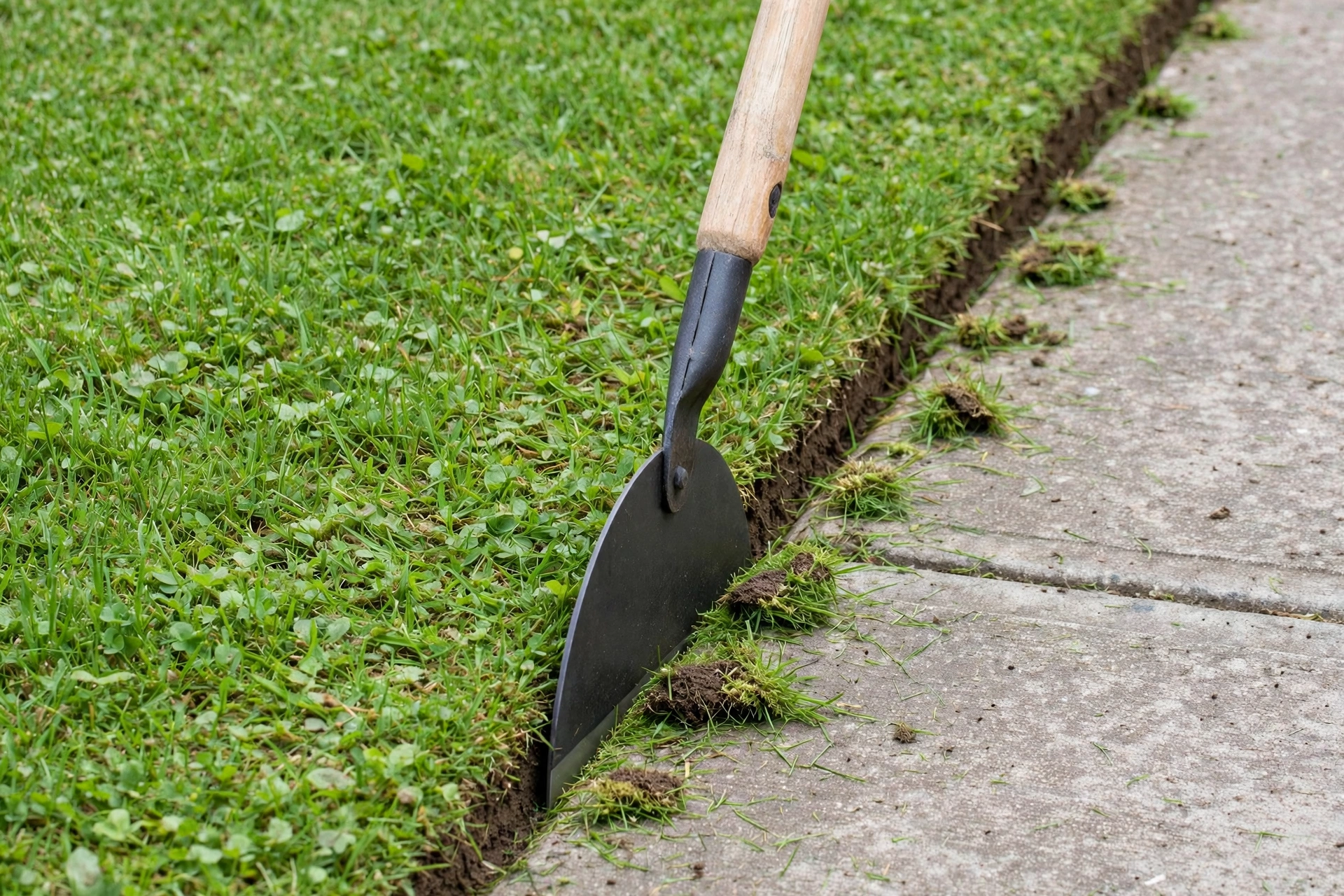
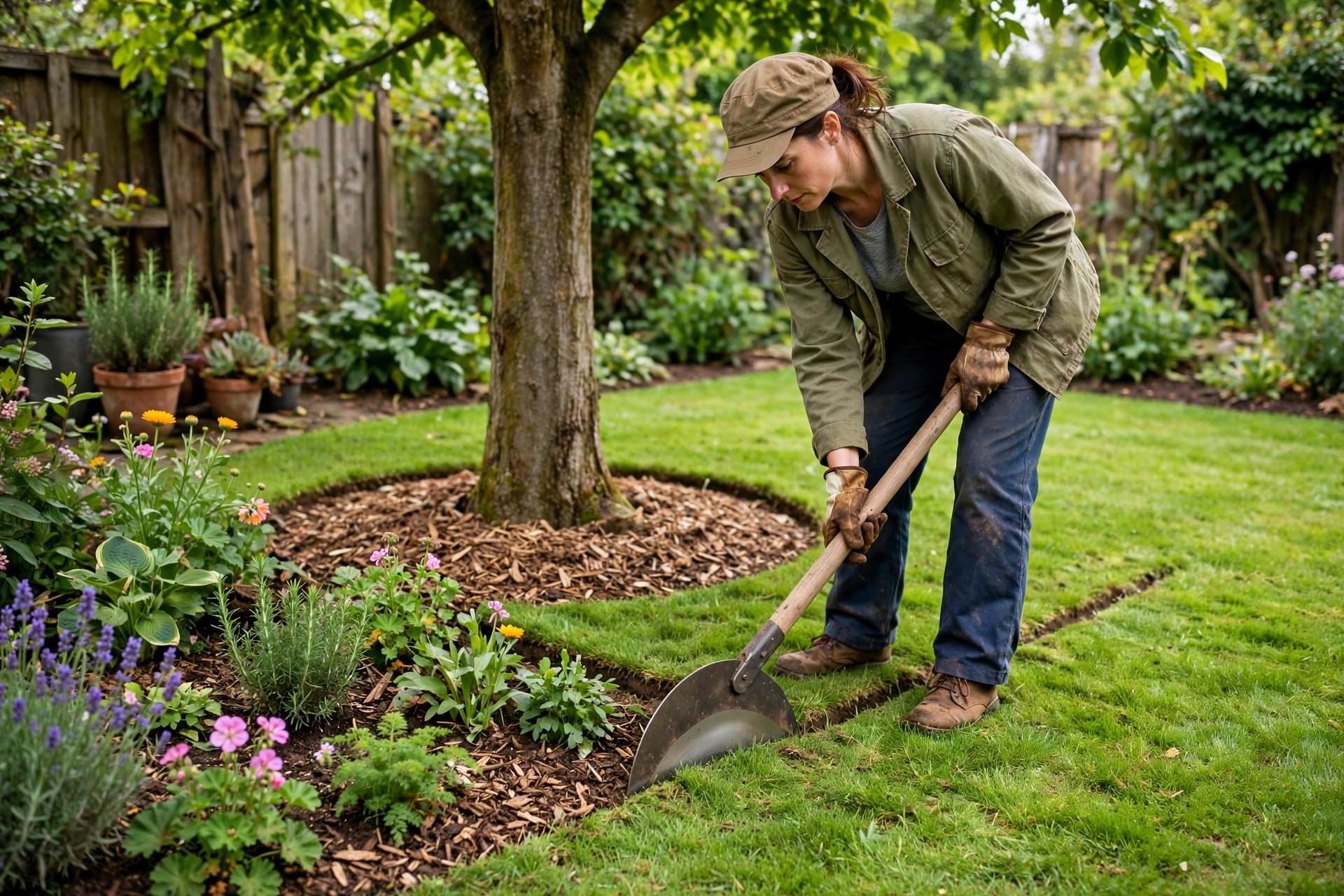
Do not edge against the trunk at all. Keep the blade at least a few inches away from the bark, and finish the ring by hand — hand shears or a half-moon edger, worked slowly, with the blade angled away from the trunk. The fastest protection is a mulch ring: a 2- to 3-foot circle of mulch around the base keeps the grass — and the edger — away from the trunk entirely, and it keeps the mower from scalping the root flare. If the tree already has a mulch ring, edge the outside of the ring, not the inside.
Watch the roots, too. A tree’s feeder roots spread well past the drip line, often just a few inches below the surface, and a deep edging pass slices through them. Edge around trees at maintenance depth — about 2 inches — and never cut a new 4- to 5-inch trench through a root zone. If the edge around a tree has gone soft and grassy, reclaim it in two shallow passes a week apart rather than one deep one.
Around flower beds: cut from the lawn side
A flower bed edge fails in two ways: the grass creeps in, or the edger cuts the bed’s own plants. Both come from cutting from the wrong side. Stand on the lawn, not in the bed, and cut the line from the grass side with a half-moon edger, pushing the blade straight down so the cut face is vertical on the lawn side. The bed side can slope; the lawn side is the wall that holds the line.
For a new bed line, cut 4 to 5 inches deep, which is the depth that stops turf runners from crossing back over. For a line that already exists and has just gone soft, 2 to 3 inches is enough — you are refreshing the wall, not digging a new one. Work in short sections, and check the line from the lawn side as you go, because a wobble that looks fine from inside the bed is obvious from the grass.
Keep the blade out of the bed soil. Perennial roots — daylilies, hostas, iris rhizomes — sit right at the edge of the bed, and a blade that wanders into the soil slices them. If a clump has grown over the line, divide it back before you edge, rather than cutting through it with the edger. And edge the bed before you mulch, not after, so the fresh mulch does not spill into the trench you just cut.
Along curbs: let the concrete do the guiding
A curb is the easiest edge to cut and the easiest to wreck. The mistake is riding the blade up onto the concrete, which dulls the blade in seconds and leaves a chipped, chewed line. The fix is the guide wheel: on a wheeled edger, the wheel rides on the curb and holds the blade vertical against it, so the cut stays true without you steering by eye. On a stick edger or a flipped string trimmer, keep the blade tight to the concrete and walk slowly — speed is what makes the line wander.
Cut 1 to 2 inches deep along a curb, which is all a maintenance pass needs, and keep the blade vertical. A tilted blade undercuts the grass and leaves a lip that crumbles the first time a tire rolls over it. If the edge is buried under an inch of overgrowth, do not force it in one pass: make a shallow first pass to find the concrete, then a second pass at full depth. The overgrowth is hiding the line, and a blind deep cut is how blades hit buried cable and irrigation fittings near the street.
After the pass, blow or sweep the clippings off the curb and the gutter. A pile of clippings left on the concrete washes into the storm drain with the next rain, and it hides the line you just cut, which defeats the point of edging it at all.
The pass that works on all three
Edge when the grass is dry, after mowing, and walk slowly enough that the blade — not your stride — sets the pace. Check the line from the street before you call it done, because the angle from above hides the wobbles. And when you are choosing the tool for the job, match it to the edge: a wheeled edger for long curb runs, a half-moon for beds and trees, and a string trimmer only for touch-ups on a line that already exists. For the depth each of those tools should cut, see how deep to edge your lawn, and for the timing, see when to edge your lawn. The lawn edger vs string trimmer comparison and the best edger for sidewalks and curbs roundup cover the tools, and how to edge a lawn by hand covers the half-moon technique in detail.